
Boats and seasickness: which trips make people sick
Ask any charter crew and you get the same answer: the queasiest part of a boat trip is usually the part where the boat stops. 31 kinds of trip are rated below, from the fishing charter that anchors offshore for hours to the jet ski you steer yourself, plus the air tours, cable rides and in-water sports people ask about. 6 sit in the high or very high band: on the water, every one involves long stretches stopped, moored or head down, and in the air it is the circling.
Key facts
- 31 kinds of trip are rated here, boat trips plus the air, cable and in-water activities, with 6 in the high or very high band and 14 rated low.
- A stopped, anchored or drifting boat in swell is commonly reported as worse than the same boat underway, because a hull with no way on swings beam on and rolls slowly.
- Deep-sea fishing is the worst trip in the set: hours at anchor or on the drift, eyes down on tackle, and no early exit.
- Jet skis, kayaks, paddleboards and rafting rank low for the same reason: you initiate the motion, so you can anticipate it.
- Motion sickness research consistently finds slow oscillation more provocative than fast pounding, which is why a wallowing hull beats a fast RIB for making people ill.
Try Dizzout free. Put it on your phone before you go, so it is there when you need it. Drug-free, any headphones.Free · works with any headphones · no account to try
Stop seasickness on the water. Free to try, no card needed. Or go straight to the App Store or Google Play.
The thing nobody warns you about: the stop
Most people board expecting the rough bit to be the fast bit. It usually is not. A boat under power is driven along a heading, and the motion it makes is comparatively steady and predictable. Take the drive away and the hull tends to lie beam on to the wind and swell, where it rolls side to side at the slow rhythm that motion sickness research has repeatedly found most provocative: roughly one long roll every few seconds, far worse than the fast pounding of a planing hull.
This is commonly reported rather than proven. No controlled study has compared anchored against underway. But the evidence stacks up from several directions at once. Fishing charters put it in their own advice pages: if you feel ill at anchor, pulling the anchor and getting underway might help. Whale watch operators state that boats roll when stopped in wavy seas and that is when passengers get sick. Sailors describe a boat under sail as more comfortable than the same boat under power, because loaded sails damp the roll. And an entire product category exists to fight rolling at rest: flopper stoppers, steadying sails and at-anchor gyro stabilisers, sold separately from the fin stabilisers used underway.
Once you know it, the ratings below stop looking arbitrary. The water trips in the high and very high band all spend long stretches stopped, moored or head down, the one airborne entry up there earns it by circling, and the 14 rated low are the ones where you are in control, in a rapid, inside a harbour, on still water, on a hull that will not roll, drifting with the wind, or on a cable for only minutes at a time.
Every trip at a glance
| Trip | What drives the motion | Typical length | Reported risk |
|---|---|---|---|
| Deep-sea fishing charter | Hours anchored or drifting over structure | Half day 4 to 6 hours, full day 8 to 12 hours | very high |
| Dive boat | Long moored surface intervals | Half day two-tank trips with long moored surface intervals | high |
| Glass-bottom boat | Head down in an enclosed viewing well | 1 to 2 hours, nearshore | high |
| Snorkel tour | Moored in swell, then face down over the reef | 3 to 5 hours with one or two moored snorkel sessions | high |
| Tandem paragliding | Thermal circling and spiral descents | Flights average about 20 minutes | high |
| Whale watching boat | Long stops in open swell at sightings | 2.5 to 4 hours in open coastal water | high |
| Helicopter tour | Banking turns, and a seat you do not choose | From short city hops to hour-long flights | moderate |
| Open water swimming | Swell you cannot see with your face in the water | Training swims and races, minutes to hours in swell | moderate |
| Parasailing | Smooth aloft, rocking deck while you wait | About 6 to 12 minutes aloft in an hour-plus boat trip | moderate |
| Party boat and head boat | Anchored fishing, or a crowded harbour deck | Head boats half or full day, harbour cruises 2 to 4 hours | moderate |
| Sailing monohull | Steadier under sail, rollier under power | Day sails of 2 to 6 hours, charters and passages run for days | moderate |
| Seaplane | Loud, hot cabin and a bobbing float dock | Hops commonly 10 to 30 minutes in the air | moderate |
| Small plane sightseeing flight | Afternoon thermals low over sun-heated ground | Scenic flights usually under an hour in the air | moderate |
| Speedboat and RIB tour | Fast slam underway, wallow at the stop | 30 minutes to 2 hours | moderate |
| Surfing | The wait in the lineup, not the ride | Sessions commonly an hour or two, most of it waiting | moderate |
| Tall ship voyage | Open sea, then sea legs by day two or three | Day sails to multi-day offshore voyages | moderate |
| Tourist submarine | Calm submerged, choppy shuttle and surface wait | About 90 minutes end to end, roughly half of it submerged | moderate |
| Aerial tramway | A bump at each tower, a rock in the wind | Typically around 10 minutes per leg | low |
| Airboat swamp tour | Flat marsh water, so even the stops stay flat | Tours of about 1 to 2 hours on protected marsh | low |
| Canal boat and narrowboat | Still water at 4 mph, almost nothing to feel | Hour-long city cruises to week-long hires | low |
| Catamaran | Twin hulls resist roll, quicker in chop | Day charters of 2 to 8 hours, sailing cats also run multi-day | low |
| Dinner cruise | Protected water, unless it is an ocean sunset sail | 2 to 3 hours in protected water | low |
| Duck boat tour | More bus than boat, with 20 calm minutes afloat | 60 to 90 minutes, about 20 of them on the water | low |
| Gulet cruise | Short coastal hops, long swims at anchor | Multi-day cruises built of short coastal legs | low |
| Hot-air balloon | Moves with the wind, so almost nothing to feel | About 45 to 60 minutes aloft, flown at dawn or dusk | low |
| Jet ski | Driver control protects, the stops do not | 20 minutes to 2 hour guided tours | low |
| Kayak and paddleboard | You are the engine, so you anticipate the motion | 1 to 3 hour tours, coastal or flat water | low |
| Ski gondola and chairlift | Sway, mid-line stops and fogged windows | Rides of a few minutes, repeated all day | low |
| Venice gondola | Calm back canals, wake chop on the Grand Canal | The standard ride is about 30 minutes | low |
| White-water rafting | Rapids match what you see, flat water does not | Half day to full day on the river | low |
| Zipline | Straight, fast and visible, so mostly fine | Each line lasts well under a minute | low |
Risk levels summarise what passengers, crews and published marine guidance commonly report for a kind of craft. They are not a rating of any operator, and the weather on the day matters more than the category does.
The honest lows: the trips that rarely do it
A rating scale only means something if some things score well. 14 of the trips here are rated low, and the reasons are worth knowing, because they point at what actually protects you.
Jet skis, kayaks and paddleboards put you in charge of the motion. You choose the turn, the throttle or the paddle stroke, so your brain predicts the movement before your body feels it, which is the same reason car drivers rarely get carsick. Passengers riding pillion lose that advantage, and so does anyone sitting still: bobbing at a swim stop or standing static on a board in long swell is where the reports come from.
White-water rafting works the opposite way round from what people expect. In a rapid your eyes see exactly the motion your body feels, the riverbank holds still as a reference, and you are usually paddling. Outfitters report sickness as a rarity. When it does happen, riders describe it on the slow flat float stretches in between.
Catamarans are geometry rather than luck: two hulls set wide apart resist rolling, so the boat moves through much smaller angles, and dive guidance recommends them specifically for divers prone to seasickness. Not immune, though. Anchored in beam swell a cat still rocks, and in short steep chop its quicker, flatter motion catches a minority of passengers out.
Harbour dinner cruises are low for the dullest reason of all: they never leave protected water. Operator FAQs say so directly. The one that catches people is the open-coast sunset cruise sold under the same name, which sails on genuine ocean swell.
- Aerial tramwayA bump at each tower, a rock in the wind
- Airboat swamp tourFlat marsh water, so even the stops stay flat
- Canal boat and narrowboatStill water at 4 mph, almost nothing to feel
- CatamaranTwin hulls resist roll, quicker in chop
- Dinner cruiseProtected water, unless it is an ocean sunset sail
- Duck boat tourMore bus than boat, with 20 calm minutes afloat
- Gulet cruiseShort coastal hops, long swims at anchor
- Hot-air balloonMoves with the wind, so almost nothing to feel
- Jet skiDriver control protects, the stops do not
- Kayak and paddleboardYou are the engine, so you anticipate the motion
- Ski gondola and chairliftSway, mid-line stops and fogged windows
- Venice gondolaCalm back canals, wake chop on the Grand Canal
- White-water raftingRapids match what you see, flat water does not
- ZiplineStraight, fast and visible, so mostly fine
Prepare before you board
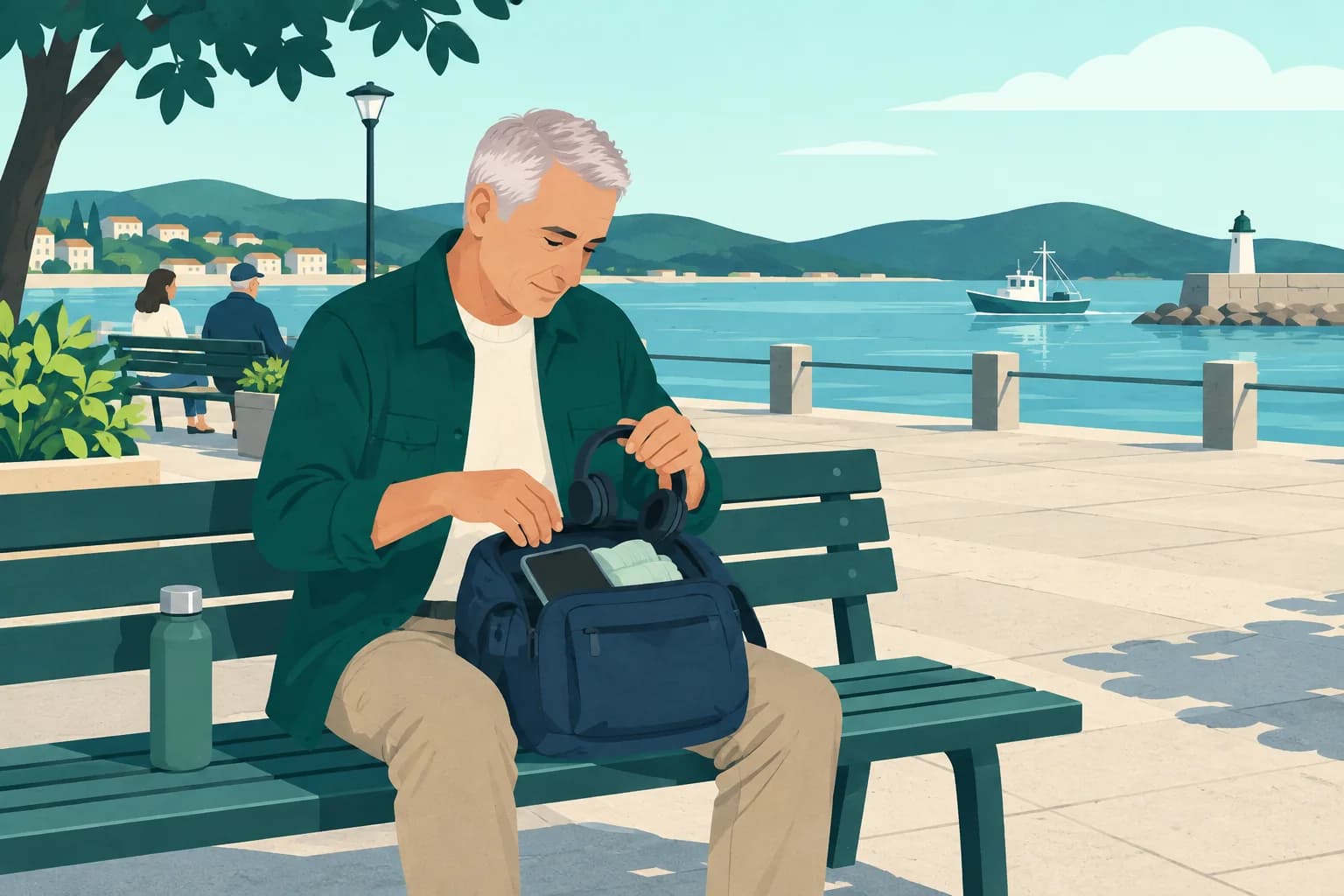
Check your kit from the waiting bench before boarding. Keep your phone and headphones packed during boarding, then prepare Dizzout once seated.
Heading out on the water? Check the trip first
Check your tripFree, two minutes, and it scores the trip you actually have ahead.
Free to download. Paid subscription for full access. Or go straight to the App Store or Google Play.
 Scan to open on your phone
On a computer? Dizzout installs on your phone. Scan the code, or open dizzout.com/get on your phone and it'll take you straight to the right store.
The trips that get a mention rather than a guide
Water taxis. Point-to-point harbour hops of 5 to 30 minutes, with the shoreline in view the whole way. Operators report that most passengers feel nothing, and the trip is usually over before symptoms have time to build. Sit midships, face forward, arrive.
Houseboats. Wide, heavy hulls, moored on sheltered lakes and rivers, and stationary most of the time. Rocking aboard is minimal in fair weather and guests commonly adapt within a day or two. The question houseboaters actually ask is the reverse one: why the rocking follows them onto dry land afterwards. That is land sickness, it is normal, and it usually passes within hours.
Frequently asked questions
Why do I feel seasick when the boat stops?+
Because a boat with no forward drive tends to swing beam on to the wind and swell, and rolling side to side at a slow rhythm is the motion people tolerate worst. Underway, the hull is driven along a chosen heading and the movement is steadier and easier to anticipate. This is commonly reported rather than proven: no controlled study has compared anchored against underway. But charter crews put it in their own advice, whale watch operators describe boats rolling when stopped in wavy seas, and an entire product category, from flopper stoppers to at-anchor gyro stabilisers, exists to fight rolling at rest.
Which boat trip is worst for seasickness?+
Deep-sea fishing, by a distance. It combines everything: a long run offshore, hours anchored or drifting over structure while the hull rolls, fishing tasks that keep your eyes down instead of on the horizon, and no early exit. Whale watching, snorkel tours, dive boats and glass-bottom boats sit in the next tier down, each for a different reason: long stops in swell, floating face down at the surface, moored surface intervals, and a head-down enclosed viewing well.
Which boats are least likely to make you seasick?+
The ones where you are in control or the water is protected. Jet skis and paddle craft rank low because you initiate the motion and can anticipate it, the same reason a car driver rarely gets carsick. Rafting ranks low because in a rapid your eyes see exactly what your body feels, and the bank stays fixed in view. Catamarans rank low because two hulls set wide apart roll through much smaller angles. Harbour dinner cruises rank low because they never leave sheltered water.
Can you get seasick on a houseboat?+
Rarely while you are aboard. Houseboats are wide, heavy and moored on protected lakes and rivers, so rocking is minimal in fair weather and guests commonly adapt within a day or two. The thing houseboaters actually ask about is the opposite: still feeling the rocking after stepping ashore. That is land sickness, it is normal, and it usually fades within hours.
What about water taxis and short harbour hops?+
Not really a problem. A water taxi is a 5 to 30 minute point-to-point hop inside a protected harbour, which is usually shorter than the time symptoms take to build, and the shoreline stays in view the whole way. Sit midships, face forward, and arriving normally solves it. That is why there is no separate guide for one below.
Related
Explore more
Written from operator guidance, marine and diving sources, and published passenger reports as of August 2026. Ratings describe kinds of craft rather than particular operators, and conditions on the day matter more than the category does. Operator and brand names are trademarks of their respective owners; Dizzout is not affiliated with or endorsed by them. This page is informational and not medical advice.