
Ski gondola and chairlift and motion sickness: what to expect
Lift queasiness is a real, minor, well-mapped thing on ski forums: a rocking chair, a long slow lift, a gondola with fogged windows. The protective fact is duration. Most rides are over in minutes, which is usually less time than symptoms need to build.
Enclosed cabins and open chairs on a circulating cable · Rides of a few minutes, repeated all day · Reported motion sickness risk: commonly reported as one of the easier trips in this guide.
- Low
- Moderate
- High
- Very high
Risk summarises what riders and operator guidance commonly report for this kind of lift, not a measurement of any one system.
Key facts
- Skiers report rocking chairs, long slow lifts and fogged-up gondola windows as the lift triggers, and stopping the rocking settles it promptly.
- Ride time is the protection: individual lift rides last minutes, which is usually under the time real symptoms need to build.
- Nausea at a ski area has a second suspect, altitude, and skiers commonly cannot tell which one the lift ride was.
Going on a ski gondola? Dizzout is drug-free sound therapy you can start on board, with relief in about 90 seconds.Starts in your browser · works with any headphones
Stop seasickness on the water. Get your personalized Dizzout plan. Paid subscription for full access.

On your phone? Scan to start there.
Why a ski gondola sets people off
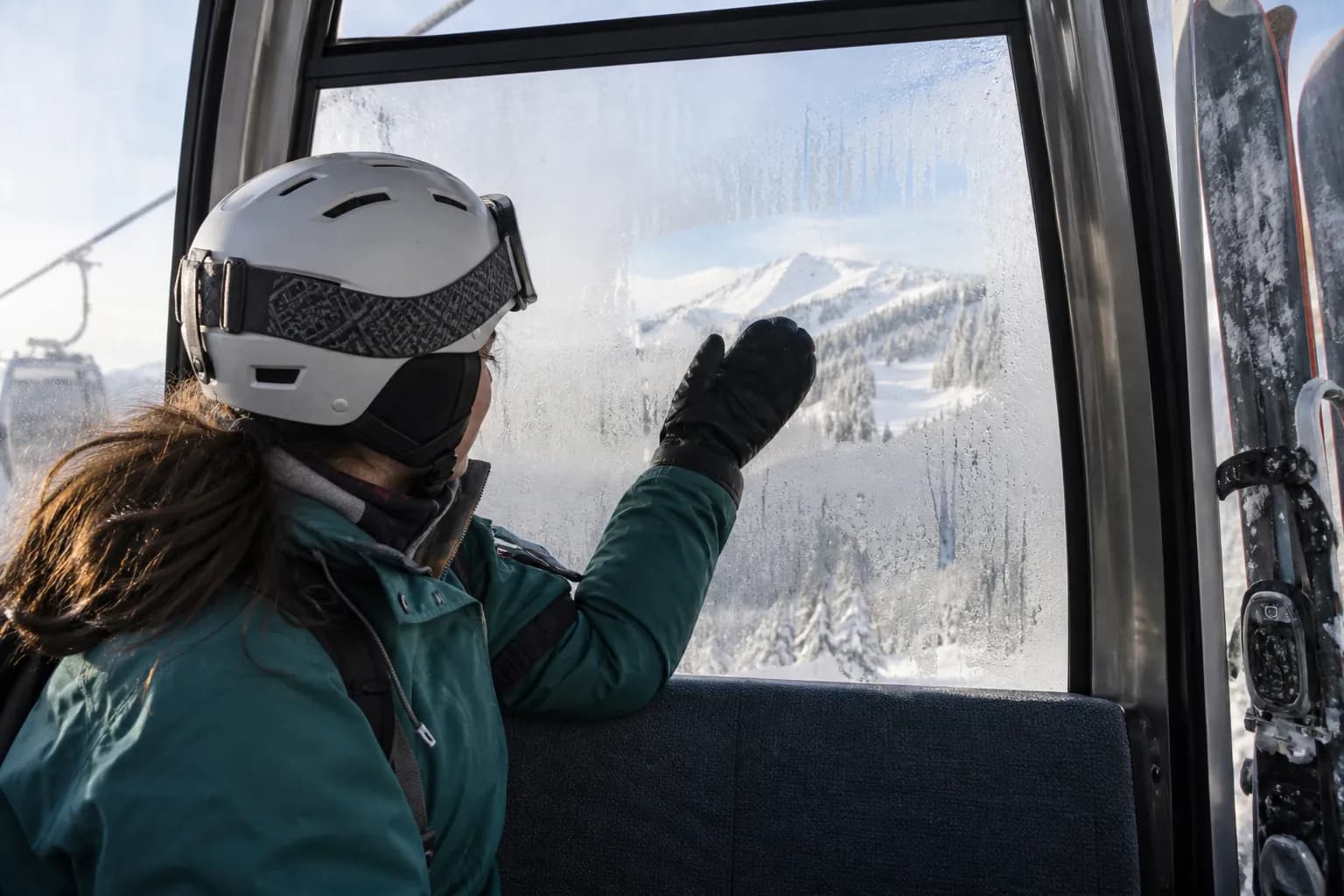
A chair or cabin hanging from a moving cable swings, and swinging at a slow rhythm is the classic trigger. Skiers' own reports map the pattern: a chair deliberately rocked becomes promptly sickening and settles when the rocking stops; long, slow lifts give the motion time to work; a fast gondola over rolling terrain adds the view rushing past; and a cabin with fogged-up windows takes the fix away, because you can no longer see out to anything stable. Add altitude gain, and the confusion skiers report between lift nausea and altitude is understandable. The counterweight is exposure time: as one forum regular put it, you are simply not on a lift long enough for most people to get properly sick.
Moving or stopped on the cable: which is worse
Moving is fine; stopped and swinging is the moment. When the line halts to load someone, your chair or cabin keeps rocking on the cable with nothing to push against, which is the lift system's version of the anchored boat. It settles as soon as the line restarts. The other bad state is self-inflicted: a chair rocked for fun sickens its occupants faster than anything the lift itself does, and skiers say exactly that to each other.
Cabin or chair: making either easier
Sit still and ask the chair-rockers to stop, which skiers report works immediately. In a gondola, stand or sit where you can see out, wipe a clear patch if the windows have fogged, and watch the terrain ahead rather than the cable overhead. On a long slow lift, treat it like a deck: eyes out to the far ridge line, not down at your phone.
Going on a ski gondola? Have Dizzout ready
Stop seasickness on the water
A lift ride is minutes long, but a mountain day is not: the drive up the switchbacks, laps on the lifts, the drive back down. Put the app on your phone before the day starts, so the recovery tool rides with you. Dizzout is a drug-free app that plays precisely calibrated audio through any headphones you already own, with relief in about 90 seconds. Free to download.
Get your personalized Dizzout plan. Paid subscription for full access.
30,000+ travelers in 30+ countries · How we count

On your phone? Scan to start there.
Comparing apps first? See how the motion sickness apps compare
Not travelling yet? Remind me the day before my trip
Know someone who gets motion sick?
Send them the app that helps stop it, drug-free, in about 90 seconds, works with any headphones. Free to download.
What helps on this trip
- Ask for a still chair. Deliberate rocking is the fastest route to lift nausea, and it stops working on you the moment it stops.
- Keep a clear window. A fogged gondola cabin removes the outside reference; wiping a patch and watching the terrain restores it.
- Look at the ridge line, not the phone, on the long slow lifts. The short ones are over before it matters.
- Eat and drink something between laps: skiers report an empty morning making the lifts noticeably harder, and water helps at elevation anyway.
- Earbuds under a helmet are normal on a lift. If a ride sets you off, use the next one to recover: Dizzout is drug-free sound therapy designed to help after symptoms start, and it works with any headphones.
For what actually holds up under testing, see the remedy verdicts, and for the water itself rather than the boat, how rough your sea usually is. Anything you take before travelling is a question for a pharmacist or doctor.
Frequently asked questions
Why do ski lifts make me feel sick?
Because a hanging chair or cabin swings at exactly the slow rhythm inner ears dislike, and a ski day stacks small doses of it: a rocked chair here, a stop-and-swing there, a long slow lift into the wind. Skiers' reports add two multipliers, fogged gondola windows that hide the outside world, and altitude, which produces a nausea of its own that is easy to blame on the lift. The saving fact is that rides are short: most people are off and skiing again before symptoms can properly build.
What do I do if the gondola windows are fogged and I feel queasy?
Make yourself a view. Wipe a clear patch with a glove and watch the terrain moving past, which gives your eyes the stable reference the fog removed; skiers report the fogged-cabin version of gondola nausea easing once they can see out. Sit rather than stand if the cabin allows, breathe slowly, and remember the ride is minutes long. On the next lap, pick the chair instead if conditions allow: open air and a full view solve the same problem differently.
Is it the lift or the altitude making me nauseous at a ski resort?
Skiers genuinely cannot always tell, and the forums show both camps. The lift version arrives with the swinging and eases quickly once you are off and moving; the altitude version does not care whether you rode a lift, builds over hours on your first day at elevation, and often brings a headache with it. If it is following you around the mountain rather than clustering on the rides, think altitude first: water, food and an easier first day, and it usually improves as you acclimatise.
Other trips and excursions
Related
- Seasickness: the full guideWhy ships do it, the steadiest cabin, and a survival kit for the crossing.
- Is your sea rough? Sea by seaEvery crossing in one table, roughest first, each with a month-by-month page.
- Cruise ships & motion sicknessNamed ships sorted by how much they move, grouped by cruise line.
- Feeling it right now: the 90-second stepsThree steps over 90 seconds, with a timer that waits if you lock the screen.
Sources & further reading
Your next question, probably
Feeling rough right now?
The 60-second protocol: your eyes, the air and your breathing
Not your question? What actually works?Get motion sick on every trip?
Written from operator guidance, marine, aviation and specialist sources, and published passenger and participant reports as of September 2026. Risk levels describe a kind of trip, not any particular operator's craft, and conditions on the day matter more than the category does. Operator and brand names are trademarks of their respective owners; Dizzout is not affiliated with or endorsed by them. Sensitivity varies from person to person; this page is informational and not medical advice.