
Plane Motion Sickness: Why It Happens and the Best Seat
In short
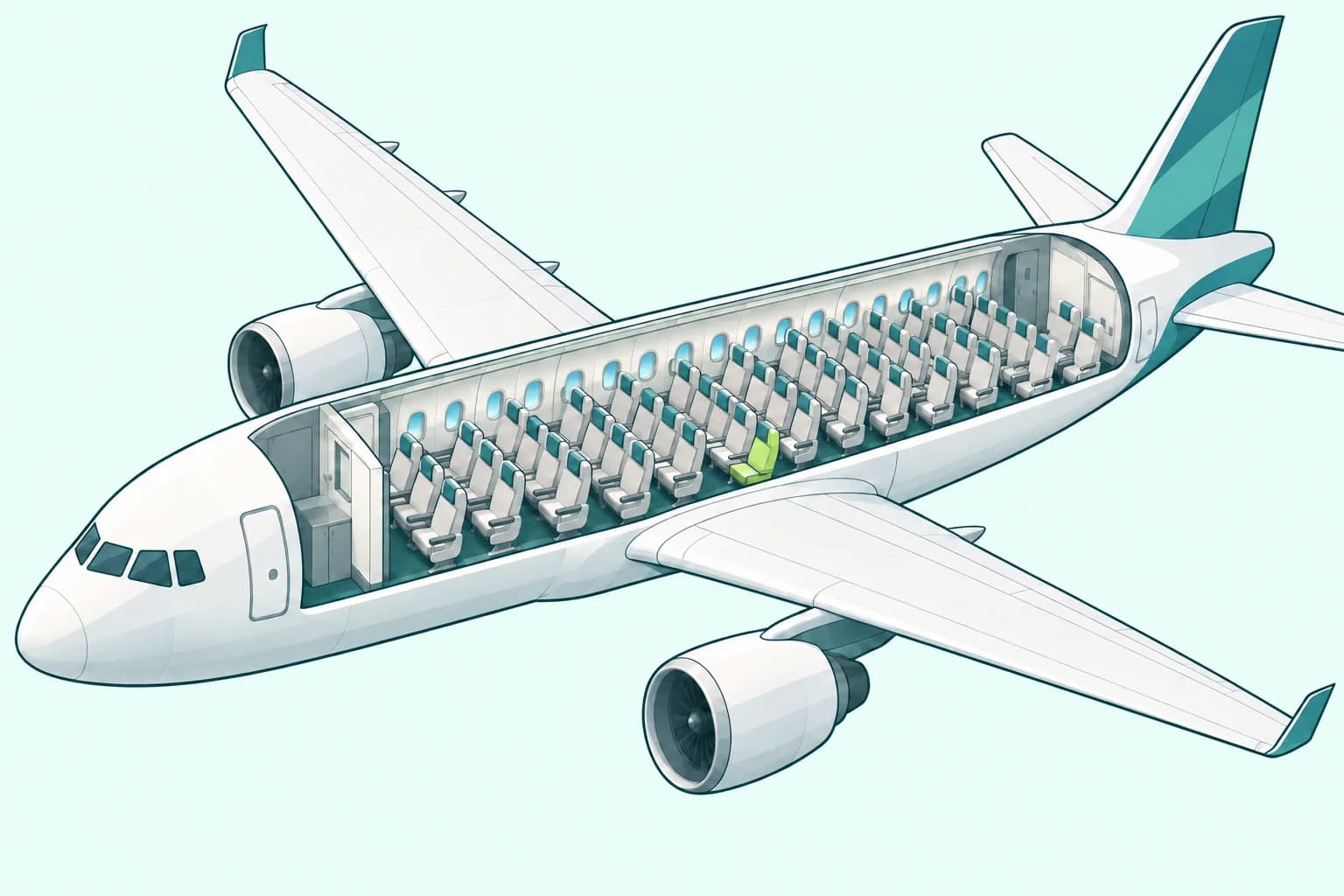
Choose a window seat near the wings.
The illustrated seat finder on this page shows the suggested area and an alternative for this vehicle, plus the other five types of transport you may take next.
Try Dizzout free. Free, drug-free, works once symptoms start, on any headphones.Free to download · works with any headphones
Free to download. Paid subscription for full access.
Why motion sickness happens on a Plane
Motion sickness on a plane happens because your inner ear feels movement while your eyes don't see it, creating a mismatch that leads to nausea. Turbulence makes this worse, especially when movements are sudden and unpredictable.
The safest zone on a Plane
Choose a window seat near the wings. Seats near the wings generally feel less motion than seats farther toward the tail. A window can give you a distant view when visibility allows.
Choose a window seat as close to the wing area as you can.
Avoid: The rear rows, and looking down at a book or screen during rough air.
- Prefer
- Choose a window seat near the wings. Seats near the wings generally feel less motion than seats farther toward the tail. A window can give you a distant view when visibility allows.
- Alternative
- Choose a window seat as close to the wing area as you can.
- Watch for
- The rear rows, and looking down at a book or screen during rough air.
Plane: Choose a window seat near the wings.
Your seat choice
Choose a window seat near the wings.
- Why this spot
- Seats near the wings generally feel less motion than seats farther toward the tail. A window can give you a distant view when visibility allows.
- If it is taken
- Choose a window seat as close to the wing area as you can.
- Watch for
- The rear rows, and looking down at a book or screen during rough air.
Check the airline's seat plan for the wing position. Keep your belt fastened and follow crew instructions.
The seat helps. Plan for if it still hits.
You have a seat plan for your trip on a plane. If symptoms still catch you mid-flight, Dizzout offers drug-free sound therapy through any headphones, with relief in about 90 seconds.
Free to download. Paid subscription for full access.
Best seat or position
Choose a window seat near the wings. Check the airline's seat plan for the wing position. Keep your belt fastened and follow crew instructions.
Get your kit ready before boarding
Use your time at the gate to check your headphone connection. Keep the kit packed for boarding if you plan to try Dizzout later.
Free to download. Paid subscription for full access.
Know someone who dreads this trip?
Send them this guide before they board: seats, settings and what to do if it starts.
If motion sickness starts: what to do
Keep your head still, avoid looking at your phone or reading during turbulence, and try to look outside as much as possible.
Feeling it right now? Get the 60-second protocol →
Already feeling sick?
Open Dizzout in 'I'm feeling sick' mode and listen for 3-5 minutes. Dizzout states relief in about 90 seconds. Drug-free, works on any headphones.
What about motion sickness medication?
Some travelers use over-the-counter options like dimenhydrinate (Dramamine) or meclizine (Bonine); the common trade-off reported on their labels is drowsiness, and they're generally taken before travel rather than after symptoms start. Our plain-English medication guide covers what each one is, side effects, and who should check with a doctor or pharmacist first (it's educational, not medical advice). Prefer to skip pills? Dizzout is a drug-free option that works through any headphones: see how it works.
Frequently asked questions
Why do I get motion sickness on a plane?
Motion sickness on a plane happens because your inner ear feels movement while your eyes don't see it, creating a mismatch that leads to nausea. Turbulence makes this worse, especially when movements are sudden and unpredictable.
What is the best seat to avoid motion sickness on a plane?
Choose a window seat near the wings. Check the airline's seat plan for the wing position. Keep your belt fastened and follow crew instructions.
How do I stop motion sickness once it starts?
Keep your head still, avoid looking at your phone or reading during turbulence, and try to look outside as much as possible. Sound therapy through the Dizzout app is a drug-free option, and Dizzout states relief in about 90 seconds.
Should you sit at the front or back of a plane for motion sickness?
Neither is the best choice: sit over the wings if you can. The front of the plane is relatively smooth, so it beats the back, but it still moves more than the wing section, which is the center of rotation and feels the least motion. If the wing rows are taken, pick the front over the back and take a window seat so you can watch the horizon.
Related guides
- Dizziness on a plane: why it lingers and what helps
Whether it is turbulence or cabin pressure, and what to do in your seat.
- Air sickness: the full pillar guide
The full flying guide: the steadiest seat to book, and what to do mid-flight.
- Turbulence forecast: how to check it before you fly
Where to check a forecast before you fly, the bumpiest routes and the smoothest seat.
- The seat finder: every vehicle's calmest seats