
Monorail motion sickness: why it rocks and where to sit
In short
Middle of the car, face forward, eyes level at the skyline instead of down at the ground.
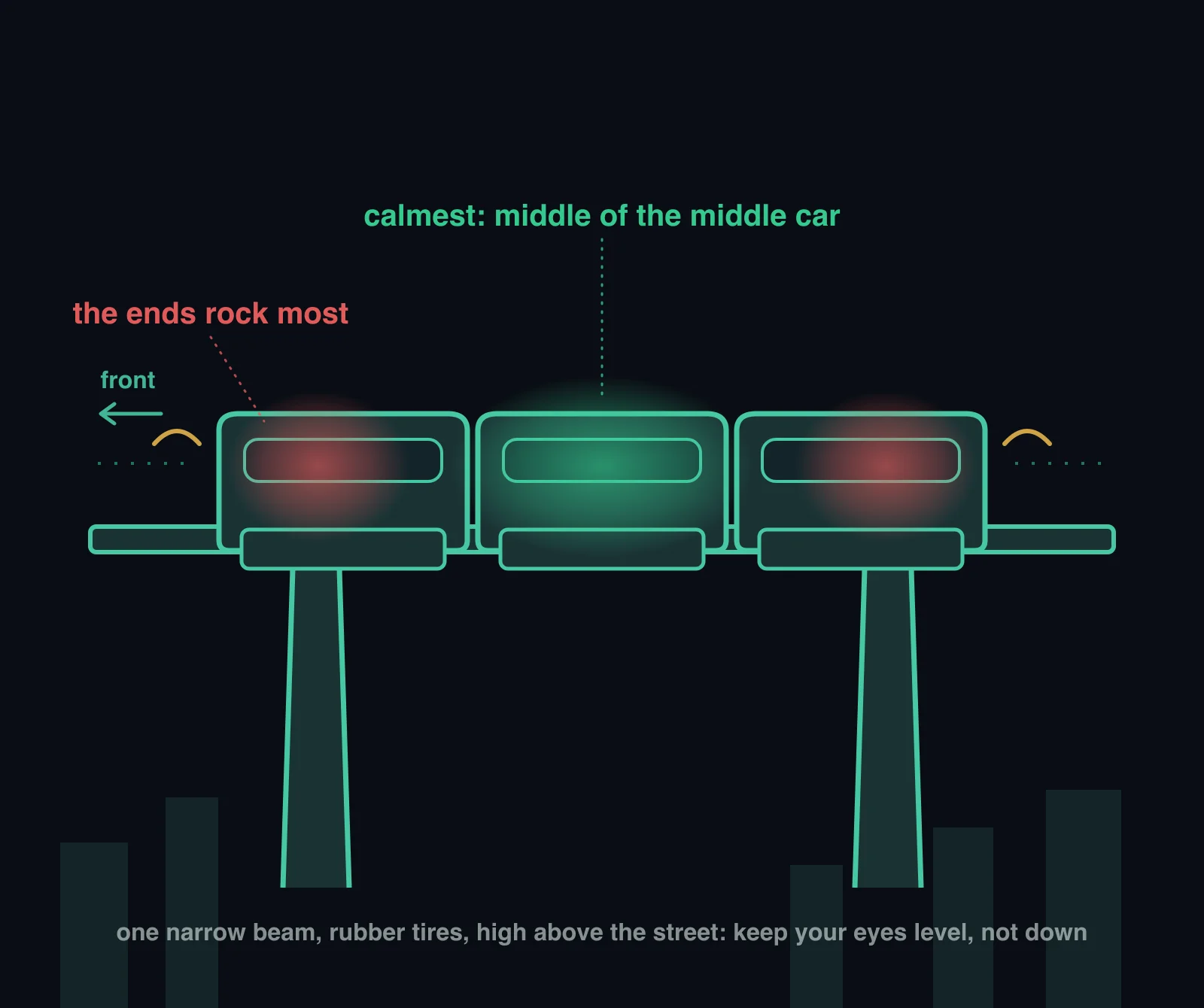
Zones of motion sickness probability
Prone to motion sickness? Dizzout is drug-free sound therapy through any headphones, with relief in about 90 seconds.Starts in your browser · works with any headphones
Get your personalized Dizzout plan. Paid subscription for full access.

On your phone? Scan to start there.
Why motion sickness happens on a monorail
A monorail rides on rubber tires over a single narrow beam, high above the ground. That layout gives it a motion signature of its own: a gentle side-to-side rock instead of rail clatter, a noticeable lean through curves, and a view that points down at streets and rooftops rather than out at a horizon. Some lines also run fully automated, the Las Vegas Monorail among them, so speed changes arrive on a fixed program with no driver to read.
Where a monorail moves least
The middle of a car, seated facing the direction of travel. The center of any rail vehicle moves least, and facing forward lets you watch the beam curve ahead the way you would watch a road.
Standing mid car with a wide stance and a hand on a pole. Keep your eyes level at the skyline: on an elevated track the natural sightline is downward, and looking down is what turns the rock into nausea.
Avoid: Backward-facing seats and the ends of the train, where the rock and the curve lean feel strongest. Filming straight down out of the window is the classic mistake on airport and theme park monorails.
Best place to sit on a monorail
Sit mid car, face forward, and keep your gaze up and out at the skyline rather than down at the ground sliding past. In a standing crowd, plant your feet shoulder width apart, hold the pole, and watch the track ahead through the front windows if you can see them.
🎧 Before you travel: Pre-Conditioning mode
Listen to the Dizzout Pre-Conditioning Sound for about 90 seconds before you start moving, while you still feel fine.
Know someone who dreads this trip?
Send them this guide before they board: seats, settings and what to do if it starts.
Already feeling sick on the monorail
Early signs often come before nausea: yawning, pale skin, extra saliva, a cold sweat, burping and loss of appetite.
Get your eyes off the ground below and onto the longest sightline you can find. Hops between monorail stations are short, so keep your head still, breathe slowly, and if it keeps building, step out at the next station for air rather than riding it through.
Feeling it right now? Get the 60-second protocol →
Already feeling sick?
Open Dizzout in 'I'm feeling sick' mode and listen. Dizzout states relief in about 90 seconds. Drug-free, works on any headphones.
What about motion sickness medication?
Some travelers use over-the-counter options like dimenhydrinate (Dramamine) or meclizine (Bonine); the common trade-off reported on their labels is drowsiness, and they're generally taken before travel rather than after symptoms start. Our plain-English medication guide covers what each one is, side effects, and who should check with a doctor or pharmacist first (it's educational, not medical advice). Prefer to skip pills? Dizzout is a drug-free option that works through any headphones: see how it works.
Frequently asked questions
Why do I get motion sickness on a monorail?
A monorail rides on rubber tires over a single narrow beam, high above the ground. That layout gives it a motion signature of its own: a gentle side-to-side rock instead of rail clatter, a noticeable lean through curves, and a view that points down at streets and rooftops rather than out at a horizon. Some lines also run fully automated, the Las Vegas Monorail among them, so speed changes arrive on a fixed program with no driver to read.
What is the best seat to avoid motion sickness on a monorail?
Sit mid car, face forward, and keep your gaze up and out at the skyline rather than down at the ground sliding past. In a standing crowd, plant your feet shoulder width apart, hold the pole, and watch the track ahead through the front windows if you can see them.
How do I stop motion sickness once it starts?
Get your eyes off the ground below and onto the longest sightline you can find. Hops between monorail stations are short, so keep your head still, breathe slowly, and if it keeps building, step out at the next station for air rather than riding it through. Sound therapy through the Dizzout app is a drug-free option, and Dizzout states relief in about 90 seconds.
Why does the monorail sway more than a normal train?
A monorail balances on one narrow beam instead of spreading its weight across two rails, and it rides on rubber tires that grip the beam from the top and sides. The result is a soft side-to-side rock and a stronger lean through curves, felt most at the ends of the train. The elevated guideway adds to the effect, because your eyes look down at the ground instead of level at a horizon. The rock is a normal part of the design, not a fault, and the middle of the car feels the least of it.
Which part of a monorail is best for motion sickness?
The middle of a middle car, in a forward-facing seat. The ends of the train pick up the most rock, backward-facing seats put your body against the direction of motion, and standing at the doors leaves you side on to every speed change. If you have to stand, hold a pole mid car, widen your stance, and keep your eyes level at the skyline.
Related guides
- Train motion sickness: best seats
Choosing a window seat facing travel, with alternatives when the layout changes.
- Theme park motion sickness, park by park
Park-by-park guides to the rides, queues and transport that set people off.
- Metro & subway motion sickness
Seat options, phone use and stop-start motion on a metro.