
Motion Sickness and Cold Sweats: Why You Turn Clammy and How to Ease It
Cold sweats during travel are one of the earliest and most telling signs of motion sickness: your skin turns damp, cool, and clammy, often with a sudden pale or "green" look, before nausea fully sets in. This happens because the same sensory conflict that makes you feel sick also switches on a coordinated cooling response that floods your skin with blood and triggers your sweat glands. The sweat usually fades once the motion stops or your senses re-sync, and a few simple steps can help you feel steadier in the meantime.
First thing to do: Get fresh, cool air on your face: open a window, step outside, or aim a car or cabin vent at your face. Cool airflow can feel settling when your body is already trying to shed heat.
Try Dizzout free. Drug-free calibrated sound through any headphones, designed to help once symptoms have started.Free · works with any headphones · no account to try
Free to try, no card needed. Or go straight to the App Store or Google Play.
What it feels like
A cold sweat in motion sickness feels different from the warm, salty sweat of a workout or a hot day. The skin breaks out damp but feels cool or even clammy to the touch, often on the forehead, upper lip, palms, and back of the neck, and it is frequently paired with pallor (a pale or washed-out appearance), a clammy chill, and a wave of feeling faint or "off." Many people describe a flush of warmth that flips quickly into a cold, sweaty, light-headed feeling. It is usually an early-warning symptom. Clinicians describe a typical progression in motion sickness that starts with subtle "stomach awareness," yawning, and sweating, then builds toward dizziness, nausea, and sometimes vomiting. Because the cold sweat often arrives before the worst nausea, noticing it early gives you a useful window to act before symptoms escalate.
Why motion sickness causes cold sweats
Motion sickness is widely explained by sensory conflict: your inner-ear balance organs, your eyes, and your body's position sensors send the brain mismatched signals about whether and how you are moving (for example, your inner ear feels the sway of a boat while your eyes, fixed on a book, report stillness). Your brainstem registers this mismatch and triggers a cascade of autonomic, fight-or-flight-style responses, which is where the cold sweat comes from. According to StatPearls (NIH), autonomic symptoms such as pallor and cold sweating are part of the body's response to this conflict, driven by the sympathetic nervous system acting on the skin's blood vessels and sweat glands. What makes this sweat distinctly "cold" and clammy, rather than the warm sweat of exertion or the anxious sweat of fear, is a thermoregulatory twist. Research on motion sickness and thermoregulation describes a coordinated response that actually works to lower body temperature: the skin's blood vessels widen (cutaneous vasodilation) to carry core heat outward, the sweat glands switch on to cool the skin through evaporation, and heat production is reduced. The result is damp skin that feels cool because the body is actively shedding heat, alongside the pallor that comes from how blood is being redistributed. Some researchers link this whole pattern to an ancient toxin-defense reflex, with the body responding to disorienting motion as if it had been poisoned.
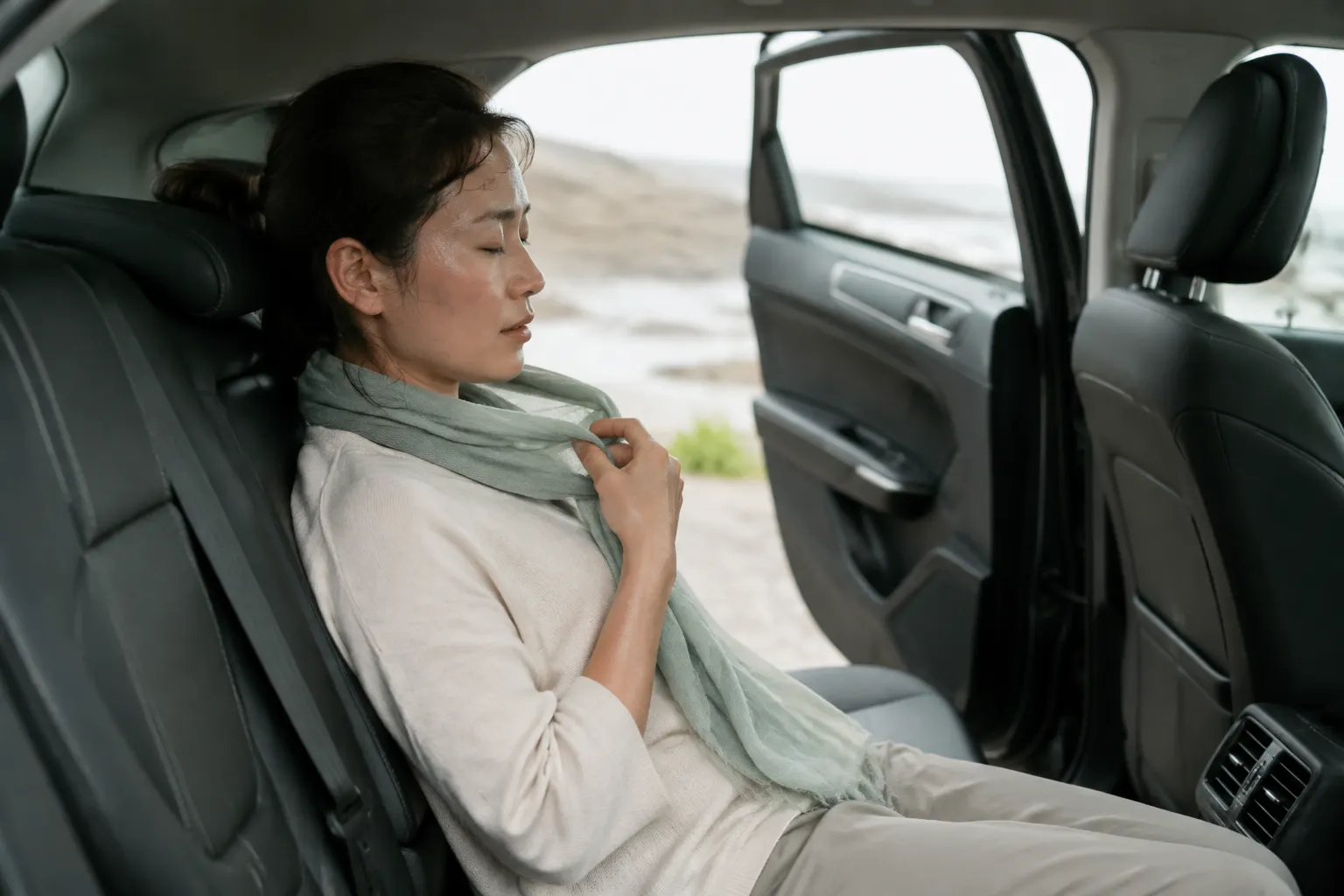
How to ease it now
- 1
Get fresh, cool air on your face: open a window, step outside, or aim a car or cabin vent at your face. Cool airflow can feel settling when your body is already trying to shed heat.
- 2
Fix your eyes on a stable, distant reference like the horizon or a far-off building, and stop reading, scrolling, or watching screens, which deepen the sensory conflict driving the symptoms.
- 3
Loosen tight collars or layers and let your skin breathe; sip cool water in small amounts, especially if you feel faint or have been sweating heavily.
- 4
Slow your breathing: take steady, controlled breaths in through the nose and out through the mouth, which many people find calms the queasy, clammy wave.
- 5
Consider ginger (tea, candies, or chews) or wrist acupressure bands, which some travelers find helpful; ask a pharmacist before using any remedy, especially alongside other medicines.
- 6
Try a drug-free option like Dizzout, which uses calibrated sound therapy through ordinary headphones and is one of the few approaches designed to be used after symptoms have already started; many users say they feel better within about 90 seconds, and it is free to try.
A drug-free option that works after symptoms start
Try Dizzout free
Dizzout is a free-to-try, drug-free app that uses calibrated sound on any headphones. It's one of the few options designed to help once you already feel sick. Most people feel better in about 90 seconds.
Free to try, no card needed. Or go straight to the App Store or Google Play.
 Scan to open on your phone
On a computer? Dizzout installs on your phone. Scan the code, or open dizzout.com/get on your phone and it'll take you straight to the right store.
How to prevent it
- Sit where motion is felt least and where you can see the way ahead: the front seat of a car, over the wing on a plane, or a mid-ship lower cabin on a boat, facing forward.
- Keep your gaze on the horizon or the road and avoid reading, gaming, or staring at a phone or tablet while in motion.
- Travel well-rested and avoid heavy, greasy meals, excess alcohol, and strong odors before and during the trip, since these can prime nausea and sweating.
- Keep the space cool and well-ventilated; a steady supply of fresh, cool air helps offset the body's heat-shedding response before it builds.
- Take breaks on long trips to get out, walk, and let your senses recalibrate, and ease back in gradually if you are sensitive to motion.
- Ask a pharmacist or doctor in advance about preventive options such as ginger, antihistamines, or scopolamine patches if you know a trip tends to make you sick; they can advise what suits you.
When to see a doctor
Cold sweats that come with motion and ease once you stop moving or your senses settle are typical of motion sickness. Treat them as a warning sign, though, when they appear without any triggering motion, are severe or persistent, or come with red-flag symptoms such as chest pain or pressure, a pounding or irregular heartbeat, shortness of breath, fainting or near-fainting, confusion, a sudden severe headache, or changes in vision, speech, or balance, since cold sweats can also accompany serious problems like heart, blood-sugar, or neurological emergencies. Seek urgent care for those. Also check in with a clinician if vomiting is prolonged and you have signs of dehydration (very dry mouth, dizziness when standing, little or no urination), if symptoms keep happening when you are not moving, or if nausea, dizziness, or sweating linger long after travel ends, so a doctor can rule out inner-ear, neurological, or other causes.
Common questions
Why do my cold sweats during travel feel different from normal sweating?
Motion sickness sweat is driven by a coordinated cooling response, not heat or exertion. Your skin's blood vessels widen and your sweat glands switch on to release heat, so the skin ends up damp but cool or clammy. Normal exercise or hot-weather sweat happens while your body is warm and trying to cool down from heat, so it tends to feel warm rather than chilly.
Are cold sweats a sign motion sickness is about to get worse?
Often, yes. Clinicians describe motion sickness as building in stages, frequently starting with sweating, yawning, and vague stomach awareness before nausea and possible vomiting. Treating a cold sweat as an early cue, and acting on fresh air, a fixed horizon, and stopping screen use, can give you a head start before symptoms peak.
Why do I look pale or 'green' when I get cold sweats from motion sickness?
Pallor comes from the same autonomic response as the sweating. Sympathetic nerve activity changes how blood is distributed in the skin, which can leave you looking pale or washed-out at the same time the clammy sweat appears. The pale, sweaty, queasy look is a classic combination in motion sickness.
How long do motion-sickness cold sweats last?
For most people they ease within minutes once the motion stops or the sensory conflict resolves, and they often improve faster with fresh air and a stable visual reference. If clamminess, sweating, or faintness persists long after you stop moving, or shows up without any motion, that is worth getting checked by a clinician.
Can a drug-free option help once cold sweats and queasiness have already started?
Some people use approaches that work after symptoms begin, rather than only beforehand. Dizzout, for example, is a drug-free option using calibrated sound therapy on ordinary headphones, designed to be used once symptoms start; many users report feeling better within about 90 seconds, and it is free to try. Behavioral steps like fresh air, a fixed horizon, and slow breathing remain a sensible first move.
Sources
Related symptoms & guides
This page is informational and is not a substitute for professional medical advice. If symptoms are severe, persistent, or occur without any motion trigger, see a qualified clinician.