Theme park rides & motion sickness: the ride-by-ride guide
Short answer: theme-park motion sickness comes in two flavors: screen/simulator rides (Star Tours, Forbidden Journey, Transformers) that mismatch intense visuals with modest motion, and real-motion rides(spinning centrifuges, coasters, Test Track) that deliver forces your stomach knows too well. Most people are sensitive to one type more than the other. Below: 94 rides across Disney, Universal and the world's big coaster parks, the official milder options (like Mission: SPACE Green), and the safe-pick headliners.
Prone to motion sickness? Dizzout is drug-free sound therapy through any headphones, with relief in about 90 seconds.Starts in your browser · works with any headphones
Settle ride nausea. Get your personalized Dizzout plan. Paid subscription for full access.

On your phone? Scan to start there.
Know your trigger type before you plan
If winding roads and boat decks get you but IMAX films don't, your trigger is real motion: plan around centrifuges, spinners, and hard-braking rides, and you may handle screen simulators fine. If 3D films and VR make you queasy while real coasters don't, your trigger is visual: the screen rides are your hard tier, and real-physics rides like Test Track may be comfortable. Riders sensitive to both should lean on the safe-pick list and the parks' official milder options.
Two park habits do outsized work: don't stack same-type rides back-to-back (queasiness compounds, so alternate intense rides with shows, walking, or outdoor time), and time your food: a settled, lightly-fed stomach beats both empty and stuffed.
Every ride at a glance
| Ride | Park | Ride type | Visitor-reported risk |
|---|---|---|---|
| Mission: SPACE | EPCOT, Walt Disney World | Spinning centrifuge simulator | very high |
| Avatar Flight of Passage | Disney's Animal Kingdom, Walt Disney World | 3D flying simulator (link-chair) | moderate |
| Guardians of the Galaxy: Cosmic Rewind | EPCOT, Walt Disney World | Spinning indoor coaster (Omnicoaster) | high |
| Star Tours: The Adventures Continue | Disney's Hollywood Studios & Disneyland | 3D motion-base flight simulator | high |
| Harry Potter and the Forbidden Journey | Universal Islands of Adventure & Universal Studios Hollywood | Robotic-arm dark ride (KUKA RoboCoaster) | very high |
| Millennium Falcon: Smugglers Run | Disney's Hollywood Studios & Disneyland | Interactive cockpit simulator | moderate |
| Star Wars: Rise of the Resistance | Disney's Hollywood Studios & Disneyland | Trackless dark ride | low |
| Soarin' | EPCOT & Disney California Adventure | Suspended glide simulator (dome screen) | low |
| Remy's Ratatouille Adventure | EPCOT & Walt Disney Studios Park (Paris) | Trackless 3D dark ride | moderate |
| Test Track | EPCOT, Walt Disney World | High-speed slot car (outdoor sections) | moderate |
| Monsters Unchained: The Frankenstein Experiment | Universal Epic Universe | Robotic-arm dark ride (KUKA) | high |
| Harry Potter and the Battle at the Ministry | Universal Epic Universe | Omnidirectional lift dark ride | moderate |
| Transformers: The Ride 3D | Universal Studios Florida & Hollywood | 3D screen simulator on moving vehicle | high |
| Space Mountain | Magic Kingdom, Walt Disney World & Disneyland | Indoor coaster in darkness | moderate |
| TRON Lightcycle / Run | Magic Kingdom, Walt Disney World & Shanghai Disneyland | LSM launch coaster (motorcycle seating) | low |
| Tiana's Bayou Adventure | Magic Kingdom, Walt Disney World | Log flume (52 ft drop) | low |
| Mad Tea Party | Magic Kingdom, Walt Disney World | Spinning teacups | high |
| Matterhorn Bobsleds | Disneyland | 1959 steel coaster (bobsled trains) | moderate |
| Indiana Jones Adventure | Disneyland & Tokyo DisneySea | Enhanced-motion dark ride (EMV) | moderate |
| Guardians of the Galaxy: Mission Breakout! | Disney California Adventure | Drop tower dark ride (randomized sequences) | high |
| Incredicoaster | Disney California Adventure | Launch coaster with vertical loop | moderate |
| Pixar Pal-A-Round | Disney California Adventure | Eccentric wheel (swinging gondolas) | high |
| The Twilight Zone Tower of Terror | Disney's Hollywood Studios, Tokyo DisneySea & Walt Disney Studios Park | Drop tower dark ride (randomized sequences) | moderate |
| Rock 'n' Roller Coaster Starring the Muppets | Disney's Hollywood Studios, Walt Disney World | Indoor launch coaster (3 inversions) | high |
| Expedition Everest | Disney's Animal Kingdom, Walt Disney World | Coaster with backwards section | high |
| Revenge of the Mummy | Universal Studios Florida | Indoor launch coaster (dark) | moderate |
| Harry Potter and the Escape from Gringotts | Universal Studios Florida | 3D screen dark ride with coaster drop | moderate |
| The Simpsons Ride | Universal Studios Florida & Hollywood | Dome-screen motion simulator | high |
| Despicable Me Minion Mayhem | Universal Studios Florida | Motion simulator theater | moderate |
| Jurassic World VelociCoaster | Universal Islands of Adventure | Double-launch coaster (4 inversions) | high |
| The Incredible Hulk Coaster | Universal Islands of Adventure | Launched coaster (7 inversions) | high |
| The Amazing Adventures of Spider-Man | Universal Islands of Adventure | 3D motion-base dark ride | moderate |
| Hagrid's Magical Creatures Motorbike Adventure | Universal Islands of Adventure | Multi-launch story coaster | moderate |
| Jurassic World: The Ride | Universal Studios Hollywood | Water ride (84 ft chute drop) | moderate |
| The Flying Dinosaur | Universal Studios Japan | Flying coaster (face-down) | high |
| Mario Kart: Koopa's Challenge | Universal Studios Japan | AR headset dark ride | moderate |
| Big Thunder Mountain | Tokyo Disneyland & Disneyland Paris | Mine train coaster | low |
| Splash Mountain | Tokyo Disneyland | Log flume (four drops) | low |
| Journey to the Center of the Earth | Tokyo DisneySea | High-speed dark ride (slot car) | moderate |
| Star Wars Hyperspace Mountain | Disneyland Park, Disneyland Paris | Indoor launched coaster (3 inversions) | high |
| Avengers Assemble: Flight Force | Walt Disney Studios Park, Disneyland Paris | Indoor launch coaster (3 inversions) | high |
| Crush's Coaster | Walt Disney Studios Park, Disneyland Paris | Spinning coaster (dark) | high |
| RC Racer | Walt Disney Studios Park & Shanghai Disneyland | Half-pipe shuttle coaster | high |
| Mako | SeaWorld Orlando | Hyper coaster (airtime) | moderate |
| Manta | SeaWorld Orlando | Flying coaster (face-down) | high |
| Ice Breaker | SeaWorld Orlando | Multi-launch shuttle coaster | high |
| Iron Gwazi | Busch Gardens Tampa Bay | Hybrid coaster (RMC) | high |
| SheiKra | Busch Gardens Tampa Bay | Dive coaster (held 90 degree drop) | moderate |
| Cobra's Curse | Busch Gardens Tampa Bay | Spinning coaster | high |
| Pantheon | Busch Gardens Williamsburg | Multi-launch coaster (backwards spike) | high |
| Verbolten | Busch Gardens Williamsburg | Launched coaster with indoor drop track | moderate |
| GhostRider | Knott's Berry Farm | Wooden coaster | moderate |
| HangTime | Knott's Berry Farm | Dive-style coaster (96 degree drop) | high |
| Sol Spin | Knott's Berry Farm | Top-scan flat ride (multi-axis) | very high |
| X2 | Six Flags Magic Mountain | 4th Dimension coaster (rotating seats) | very high |
| Tatsu | Six Flags Magic Mountain | Flying coaster (face-down) | high |
| Maxx Force | Six Flags Great America | Air launch coaster | high |
| Steel Vengeance | Cedar Point | Hybrid coaster (RMC) | high |
| Millennium Force | Cedar Point | Giga coaster | moderate |
| Maverick | Cedar Point | Launch coaster (beyond-vertical drop) | high |
| Valravn | Cedar Point | Dive coaster (held 90 degree drop) | moderate |
| Banshee | Kings Island | Inverted coaster (7 inversions) | high |
| The Beast | Kings Island | Wooden coaster (world's longest) | moderate |
| Delirium | Kings Island | Giant frisbee (pendulum + spin) | high |
| Pantherian | Kings Dominion | Giga coaster (high g turns) | high |
| Flight of Fear | Kings Dominion | Indoor launch coaster (4 inversions) | high |
| Leviathan | Canada's Wonderland | Giga coaster | moderate |
| Yukon Striker | Canada's Wonderland | Dive coaster (held drop, 4 inversions) | moderate |
| Lightning Rod | Dollywood | Hybrid coaster (RMC) | high |
| Mystery Mine | Dollywood | Dark-ride coaster (beyond-vertical drops) | high |
| Time Traveler | Silver Dollar City | Spinning coaster (launched) | high |
| Skyrush | Hersheypark | Hyper coaster (winged seats) | high |
| Hyperia | Thorpe Park | Hyper coaster (outward-banked airtime) | moderate |
| Stealth | Thorpe Park | Accelerator coaster (hydraulic launch) | moderate |
| Colossus | Thorpe Park | 10-inversion coaster | high |
| Samurai | Thorpe Park | Top-scan flat ride (multi-axis) | very high |
| Nemesis Reborn | Alton Towers | Inverted coaster (4 inversions) | high |
| Oblivion | Alton Towers | Dive coaster (drop into a tunnel) | moderate |
| Th13teen | Alton Towers | Coaster with indoor drop track | moderate |
| Flight of the Sky Lion | LEGOLAND Windsor Resort | Flying theatre (dome screen) | moderate |
| Voltron Nevera | Europa-Park | Multi-launch coaster (7 inversions) | high |
| Baron 1898 | Efteling | Dive coaster (drop into a mine shaft) | moderate |
| Danse Macabre | Efteling | Rotating platform ride (dark) | high |
| F.L.Y. | Phantasialand | Launched flying coaster | high |
| Talocan | Phantasialand | Suspended Top Spin (flat ride) | very high |
| Chiapas | Phantasialand | Log flume (steepest drop) | low |
| Helix | Liseberg | Multi-launch coaster (7 inversions) | high |
| Shambhala | PortAventura Park | Hyper coaster (airtime) | moderate |
| Dragon Khan | PortAventura Park | Sit-down coaster (8 inversions) | high |
| Furius Baco | PortAventura Park | Wing rider (hydraulic launch) | high |
| Toutatis | Parc Asterix | Multi-launch coaster (backwards rollback) | high |
| Goudurix | Parc Asterix | Looping coaster (7 inversions) | high |
| Zadra | Energylandia | Hybrid coaster (RMC) | high |
| Stunt Fall | Parque Warner Madrid | Giant Inverted Boomerang (shuttle) | very high |
Risk levels summarise what visitors commonly report, not measured testing. Ride names and parks are trademarks of their respective owners; Dizzout is not affiliated with them.
Walt Disney World (Orlando)
Full park guides: Magic Kingdom · EPCOT · Disney's Hollywood Studios · Disney's Animal Kingdom
- Mission: SPACESpinning centrifuge simulator · very high risk reports
- Avatar Flight of Passage3D flying simulator (link-chair) · moderate risk reports
- Guardians of the Galaxy: Cosmic RewindSpinning indoor coaster (Omnicoaster) · high risk reports
- Star Tours: The Adventures Continue3D motion-base flight simulator · high risk reports
- Millennium Falcon: Smugglers RunInteractive cockpit simulator · moderate risk reports
- Star Wars: Rise of the ResistanceTrackless dark ride · low risk reports
- Soarin'Suspended glide simulator (dome screen) · low risk reports
- Remy's Ratatouille AdventureTrackless 3D dark ride · moderate risk reports
- Test TrackHigh-speed slot car (outdoor sections) · moderate risk reports
- Space MountainIndoor coaster in darkness · moderate risk reports
- TRON Lightcycle / RunLSM launch coaster (motorcycle seating) · low risk reports
- Tiana's Bayou AdventureLog flume (52 ft drop) · low risk reports
- Mad Tea PartySpinning teacups · high risk reports
- The Twilight Zone Tower of TerrorDrop tower dark ride (randomized sequences) · moderate risk reports
- Rock 'n' Roller Coaster Starring the MuppetsIndoor launch coaster (3 inversions) · high risk reports
- Expedition EverestCoaster with backwards section · high risk reports
Disneyland Resort (California)
Full park guides: Disneyland · Disney California Adventure
- Matterhorn Bobsleds1959 steel coaster (bobsled trains) · moderate risk reports
- Indiana Jones AdventureEnhanced-motion dark ride (EMV) · moderate risk reports
- Guardians of the Galaxy: Mission Breakout!Drop tower dark ride (randomized sequences) · high risk reports
- IncredicoasterLaunch coaster with vertical loop · moderate risk reports
- Pixar Pal-A-RoundEccentric wheel (swinging gondolas) · high risk reports
Universal Orlando & Hollywood
Full park guides: Universal Studios Florida · Universal Islands of Adventure · Universal Studios Hollywood
- Harry Potter and the Forbidden JourneyRobotic-arm dark ride (KUKA RoboCoaster) · very high risk reports
- Transformers: The Ride 3D3D screen simulator on moving vehicle · high risk reports
- Revenge of the MummyIndoor launch coaster (dark) · moderate risk reports
- Harry Potter and the Escape from Gringotts3D screen dark ride with coaster drop · moderate risk reports
- The Simpsons RideDome-screen motion simulator · high risk reports
- Despicable Me Minion MayhemMotion simulator theater · moderate risk reports
- Jurassic World VelociCoasterDouble-launch coaster (4 inversions) · high risk reports
- The Incredible Hulk CoasterLaunched coaster (7 inversions) · high risk reports
- The Amazing Adventures of Spider-Man3D motion-base dark ride · moderate risk reports
- Hagrid's Magical Creatures Motorbike AdventureMulti-launch story coaster · moderate risk reports
- Jurassic World: The RideWater ride (84 ft chute drop) · moderate risk reports
Universal Epic Universe
Full park guide: Universal Epic Universe
Universal Studios Japan
Full park guide: Universal Studios Japan
Tokyo Disney Resort
Full park guides: Tokyo Disneyland · Tokyo DisneySea
Disneyland Paris
Full park guides: Disneyland Park (Disneyland Paris) · Walt Disney Studios Park
SeaWorld & Busch Gardens
Full park guides: SeaWorld Orlando · Busch Gardens Tampa Bay · Busch Gardens Williamsburg
- MakoHyper coaster (airtime) · moderate risk reports
- MantaFlying coaster (face-down) · high risk reports
- Ice BreakerMulti-launch shuttle coaster · high risk reports
- Iron GwaziHybrid coaster (RMC) · high risk reports
- SheiKraDive coaster (held 90 degree drop) · moderate risk reports
- Cobra's CurseSpinning coaster · high risk reports
- PantheonMulti-launch coaster (backwards spike) · high risk reports
- VerboltenLaunched coaster with indoor drop track · moderate risk reports
Regional thrill parks (US & Canada)
Full park guides: Cedar Point · Kings Island · Kings Dominion · Canada's Wonderland · Knott's Berry Farm · Six Flags Magic Mountain · Six Flags Great America · Dollywood · Silver Dollar City · Hersheypark
- GhostRiderWooden coaster · moderate risk reports
- HangTimeDive-style coaster (96 degree drop) · high risk reports
- Sol SpinTop-scan flat ride (multi-axis) · very high risk reports
- X24th Dimension coaster (rotating seats) · very high risk reports
- TatsuFlying coaster (face-down) · high risk reports
- Maxx ForceAir launch coaster · high risk reports
- Steel VengeanceHybrid coaster (RMC) · high risk reports
- Millennium ForceGiga coaster · moderate risk reports
- MaverickLaunch coaster (beyond-vertical drop) · high risk reports
- ValravnDive coaster (held 90 degree drop) · moderate risk reports
- BansheeInverted coaster (7 inversions) · high risk reports
- The BeastWooden coaster (world's longest) · moderate risk reports
- DeliriumGiant frisbee (pendulum + spin) · high risk reports
- PantherianGiga coaster (high g turns) · high risk reports
- Flight of FearIndoor launch coaster (4 inversions) · high risk reports
- LeviathanGiga coaster · moderate risk reports
- Yukon StrikerDive coaster (held drop, 4 inversions) · moderate risk reports
- Lightning RodHybrid coaster (RMC) · high risk reports
- Mystery MineDark-ride coaster (beyond-vertical drops) · high risk reports
- Time TravelerSpinning coaster (launched) · high risk reports
- SkyrushHyper coaster (winged seats) · high risk reports
UK parks
Full park guides: Thorpe Park · Alton Towers · LEGOLAND Windsor Resort
- HyperiaHyper coaster (outward-banked airtime) · moderate risk reports
- StealthAccelerator coaster (hydraulic launch) · moderate risk reports
- Colossus10-inversion coaster · high risk reports
- SamuraiTop-scan flat ride (multi-axis) · very high risk reports
- Nemesis RebornInverted coaster (4 inversions) · high risk reports
- OblivionDive coaster (drop into a tunnel) · moderate risk reports
- Th13teenCoaster with indoor drop track · moderate risk reports
- Flight of the Sky LionFlying theatre (dome screen) · moderate risk reports
Mainland Europe
Full park guides: Europa-Park · Efteling · Phantasialand · PortAventura Park · Parc Asterix · Liseberg · Energylandia · Parque Warner Madrid
- Voltron NeveraMulti-launch coaster (7 inversions) · high risk reports
- Baron 1898Dive coaster (drop into a mine shaft) · moderate risk reports
- Danse MacabreRotating platform ride (dark) · high risk reports
- F.L.Y.Launched flying coaster · high risk reports
- TalocanSuspended Top Spin (flat ride) · very high risk reports
- ChiapasLog flume (steepest drop) · low risk reports
- HelixMulti-launch coaster (7 inversions) · high risk reports
- ShambhalaHyper coaster (airtime) · moderate risk reports
- Dragon KhanSit-down coaster (8 inversions) · high risk reports
- Furius BacoWing rider (hydraulic launch) · high risk reports
- ToutatisMulti-launch coaster (backwards rollback) · high risk reports
- GoudurixLooping coaster (7 inversions) · high risk reports
- ZadraHybrid coaster (RMC) · high risk reports
- Stunt FallGiant Inverted Boomerang (shuttle) · very high risk reports
Prepare during an off-ride pause
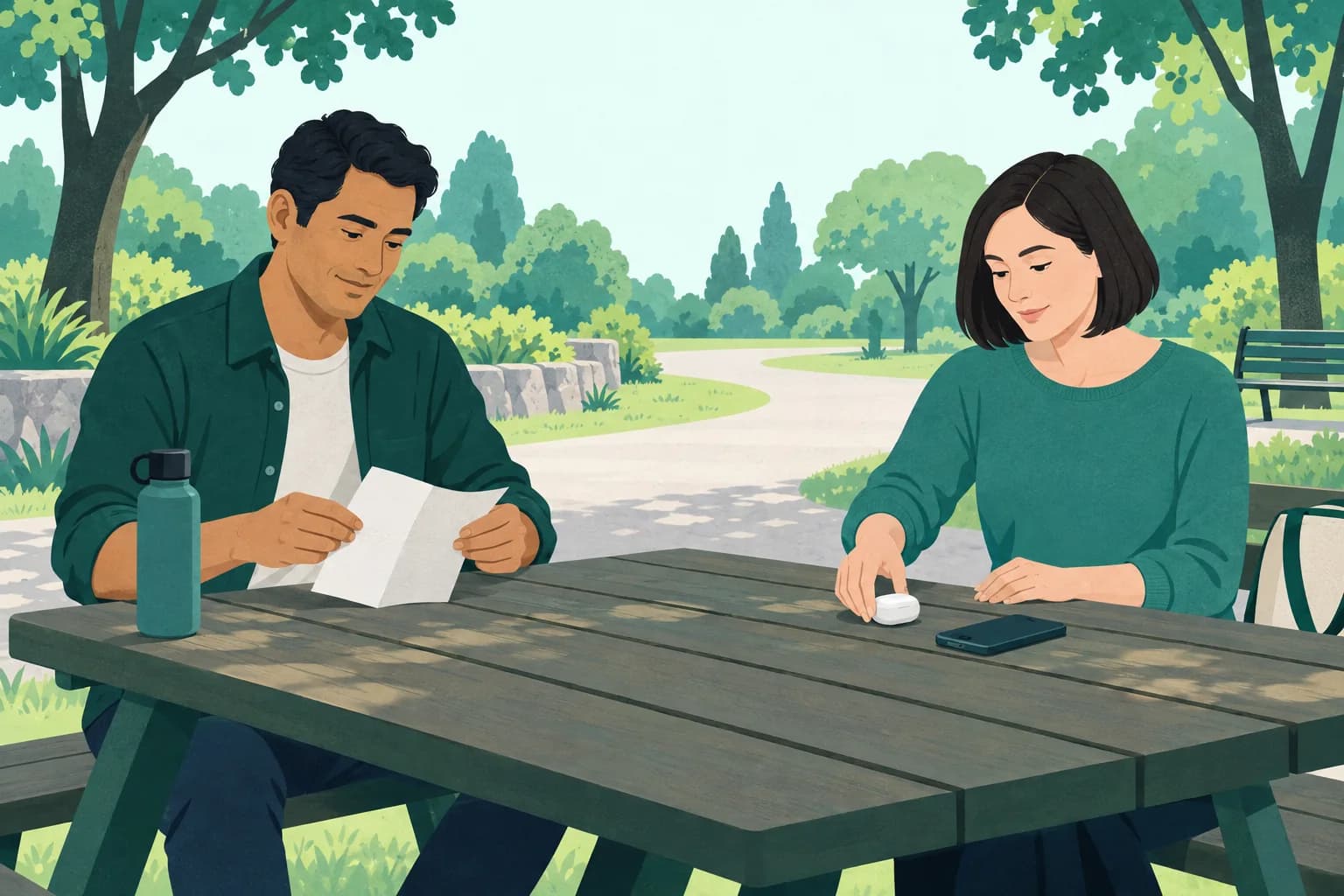
Choose a place to sit away from rides and queues. If you want to try Dizzout, sort out your phone and ordinary headphones there.
Free to download. Paid subscription for full access.
30,000+ travelers in 30+ countries · How we count

On your phone? Scan to start there.
Comparing apps first? See how the motion sickness apps compare
Not travelling yet? Remind me the day before my trip
Frequently asked questions
Which Disney rides should I avoid if I get motion sickness?+
The commonly warned-about tier: Mission: SPACE Orange (spinning centrifuge; Disney's own signage warns about nausea), Star Tours (enclosed 3D motion simulator), Guardians of the Galaxy: Cosmic Rewind (spinning coaster in the dark), and Flight of Passage for screen-sensitive riders. Each has a dedicated guide below, and several have milder options: Mission: SPACE Green removes the spin entirely.
Which theme-park rides are safe picks for motion-sensitive visitors?+
Rise of the Resistance is the standout headliner (trackless, no 3D glasses, one brief drop), and Soarin' is gentle for everyone except riders sensitive to large screen images (sit in the middle section). Test Track suits people whose trigger is screens rather than real motion. At the coaster parks, giga and dive machines like Millennium Force and SheiKra are commonly the friendliest big rides: huge but simple, with no spin.
What's the difference between screen rides and real-motion rides for sickness?+
Ride sickness comes in these two kinds, and they trigger different people. Screen/simulator rides (Star Tours, Transformers, Forbidden Journey) create a conflict between intense visuals and modest real motion, hard on screen-sensitive riders. Real-motion rides (Test Track, coasters) match what you see to what you feel, hard on classic car-sickness types but often fine for screen-sensitive ones. Knowing your type is the single most useful planning tool.
Are spinning flat rides worse than roller coasters for motion sickness?+
For most people, yes. Sustained rotation (teacups, top spins, top scans, giant frisbees) is the most self-reported nausea trigger there is, and machines like Sol Spin, Talocan and Samurai out-sicken coasters twice their size. Coaster elements are brief and sequential; flat spinners run continuously. Treating coasters and spinners as separate risk categories is the best single planning rule.
What should I do when motion sickness hits at a theme park?+
Find a bench in the shade, fix your eyes on something still and distant, sip water, and breathe slowly with a longer exhale. Skip the next intense ride rather than pushing through; symptoms compound. Since your earbuds are probably in your pocket, a drug-free sound-therapy app like Dizzout is designed to help once symptoms have started, and it works while you sit.
Should I take motion sickness medicine before a theme park day?+
That's a personal and sometimes medical decision: antihistamine options are designed as prevention taken before exposure, and several commonly cause drowsiness, which matters on a walking day; talk to a doctor or pharmacist about what fits you. Ride selection (this guide), pacing, food timing, and drug-free in-park tools are levers you can pull on your own, alongside whatever you and your doctor decide.
Related
- Feeling sick right now? 90-second protocol
- Motion sickness & kids: the parents' guide
- How prone are you? 2-minute test
- Cruise ships & motion sickness
- Every rated ride on the world nausea map
- The worst Disney and Universal rides, ranked
- FlyOver and flying theater rides: why they make you queasy
- Sick in the car, fine on a roller coaster. Why the same body does both
Explore more
Based on publicly reported visitor experiences, official park signage and classifications where cited, and each attraction's documented ride system, as of October 2026. Attractions and policies change; check the park's official guidance on the day. Ride, park, and character names are trademarks of their respective owners; Dizzout is not affiliated with or endorsed by them. This page is informational and not a substitute for medical advice.