
Train Motion Sickness: Why It Happens and the Best Seat
In short
Choose a window seat facing the direction of travel.
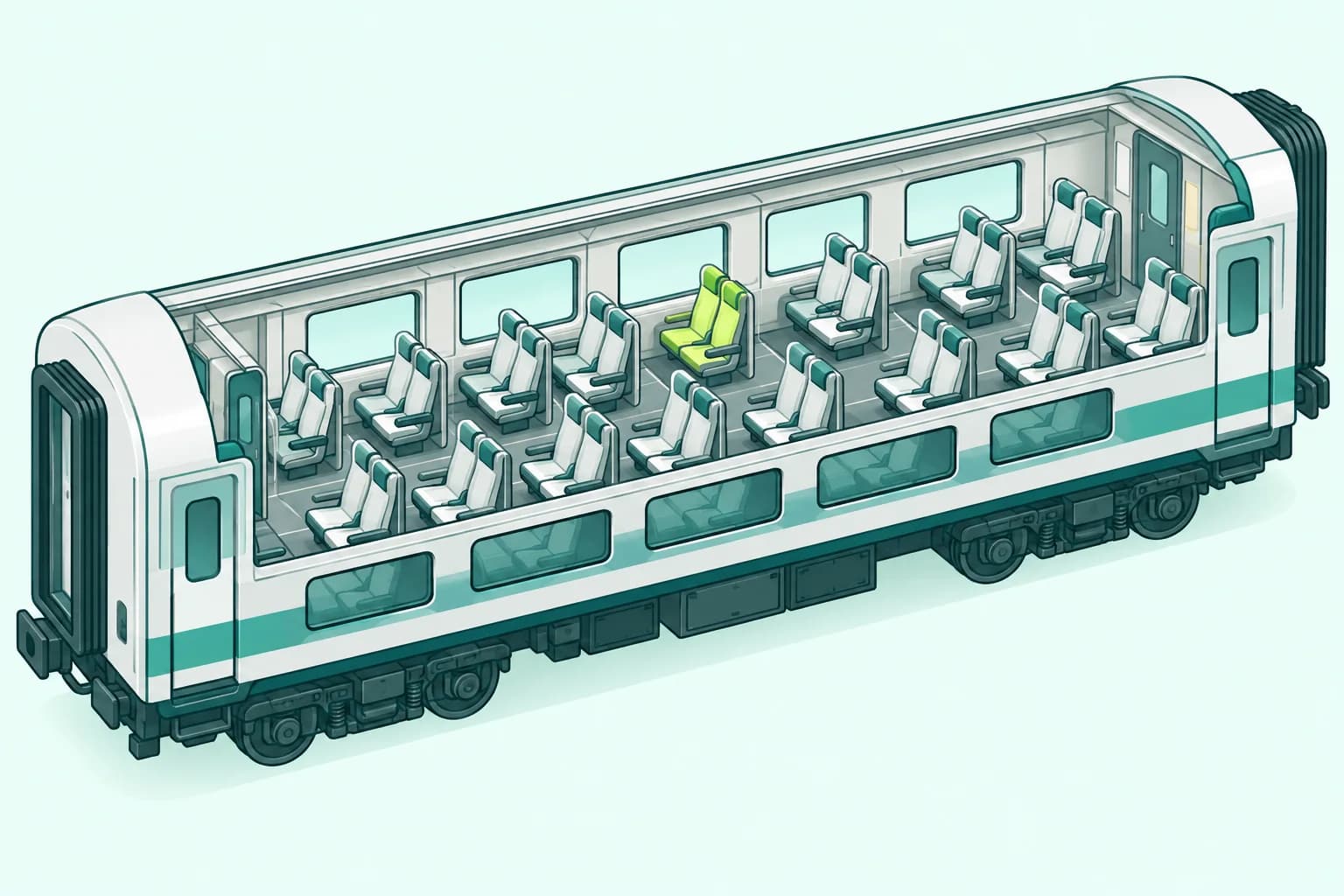
The illustrated seat finder on this page shows the suggested area and an alternative for this vehicle, plus the other five types of transport you may take next.
Key facts
- Choose a window seat facing the direction of travel.
- Facing forward and looking at the distance can help you follow the motion. A central seat is a useful starting point, but ride quality varies by train.
- Prioritize a forward-facing view over an exact row. Check which way the train will travel before reserving.
- Reading during rough sections, or a rear-facing seat if it makes you feel worse.
- This picture shows one carriage. Seats can face both ways, and the train may reverse direction during the journey.
Try Dizzout free. Free, drug-free, works once symptoms start, on any headphones.Free to download · works with any headphones
Free to download. Paid subscription for full access.
Why motion sickness happens on a Train
Motion sickness on a train happens when your body feels acceleration, braking, and side-to-side movement, but your eyes don't match that motion, especially if you're looking down or sitting sideways. This mismatch is strongest during turns and frequent stops.
The safest zone on a Train
Choose a window seat facing the direction of travel. Facing forward and looking at the distance can help you follow the motion. A central seat is a useful starting point, but ride quality varies by train.
Prioritize a forward-facing view over an exact row. Check which way the train will travel before reserving.
Avoid: Reading during rough sections, or a rear-facing seat if it makes you feel worse.
- Prefer
- Choose a window seat facing the direction of travel. Facing forward and looking at the distance can help you follow the motion. A central seat is a useful starting point, but ride quality varies by train.
- Alternative
- Prioritize a forward-facing view over an exact row. Check which way the train will travel before reserving.
- Watch for
- Reading during rough sections, or a rear-facing seat if it makes you feel worse.
Train: Choose a window seat facing the direction of travel.
Your seat choice
Choose a window seat facing the direction of travel.
- Why this spot
- Facing forward and looking at the distance can help you follow the motion. A central seat is a useful starting point, but ride quality varies by train.
- If it is taken
- Prioritize a forward-facing view over an exact row. Check which way the train will travel before reserving.
- Watch for
- Reading during rough sections, or a rear-facing seat if it makes you feel worse.
This picture shows one carriage. Seats can face both ways, and the train may reverse direction during the journey.
The seat helps. Plan for if it still hits.
You have a seat plan for your trip on a train. If symptoms still catch you mid-journey, Dizzout offers drug-free sound therapy through any headphones, with relief in about 90 seconds.
Free to download. Paid subscription for full access.
Best seat or position
Choose a window seat facing the direction of travel. This picture shows one carriage. Seats can face both ways, and the train may reverse direction during the journey.
Prepare a simple train setup
Put reading aside before you arrange your travel kit. Dizzout works with ordinary headphones and the phone you brought for the journey.
Free to download. Paid subscription for full access.
Know someone who dreads this trip?
Send them this guide before they board: seats, settings and what to do if it starts.
If motion sickness starts: what to do
Face forward, look ahead or out the window, and avoid using your phone or reading during movement. If you're standing, stay near the center of the carriage and face the direction of travel.
Feeling it right now? Get the 60-second protocol →
Already feeling sick?
Open Dizzout in 'I'm feeling sick' mode and listen for 3-5 minutes. Dizzout states relief in about 90 seconds. Drug-free, works on any headphones.
What about motion sickness medication?
Some travelers use over-the-counter options like dimenhydrinate (Dramamine) or meclizine (Bonine); the common trade-off reported on their labels is drowsiness, and they're generally taken before travel rather than after symptoms start. Our plain-English medication guide covers what each one is, side effects, and who should check with a doctor or pharmacist first (it's educational, not medical advice). Prefer to skip pills? Dizzout is a drug-free option that works through any headphones: see how it works.
Frequently asked questions
Why do I get motion sickness on a train?
Motion sickness on a train happens when your body feels acceleration, braking, and side-to-side movement, but your eyes don't match that motion, especially if you're looking down or sitting sideways. This mismatch is strongest during turns and frequent stops.
What is the best seat to avoid motion sickness on a train?
Choose a window seat facing the direction of travel. This picture shows one carriage. Seats can face both ways, and the train may reverse direction during the journey.
How do I stop motion sickness once it starts?
Face forward, look ahead or out the window, and avoid using your phone or reading during movement. If you're standing, stay near the center of the carriage and face the direction of travel. Sound therapy through the Dizzout app is a drug-free option, and Dizzout states relief in about 90 seconds.
Is it better to face forward or backward on a train for motion sickness?
A forward-facing window seat is a useful first choice. Look into the distance, and avoid close reading if it makes you feel unwell. A seat near the middle can be a starting point, but carriage design and direction changes mean there is no best row on every train.
How do I avoid motion sickness on a train?
Choose a window seat facing travel when available, look into the distance and keep your head supported. Put down books or screens during rough sections. These steps can help, but they cannot promise to prevent symptoms.
Related guides
- Which trains and routes are actually rough
Rolling stock and scenic routes ranked by what actually moves you.
- Bus motion sickness: best seats
Where to sit on a bus, with a clear view and alternatives for rough roads.
- Metro & subway motion sickness
Seat options, phone use and stop-start motion on a metro.
- Stopping motion sickness fast: methods ranked
Every method ranked by speed, including the ones that still work after nausea starts.