
Metro & Subway Motion Sickness: Why It Happens and the Best Spot
In short
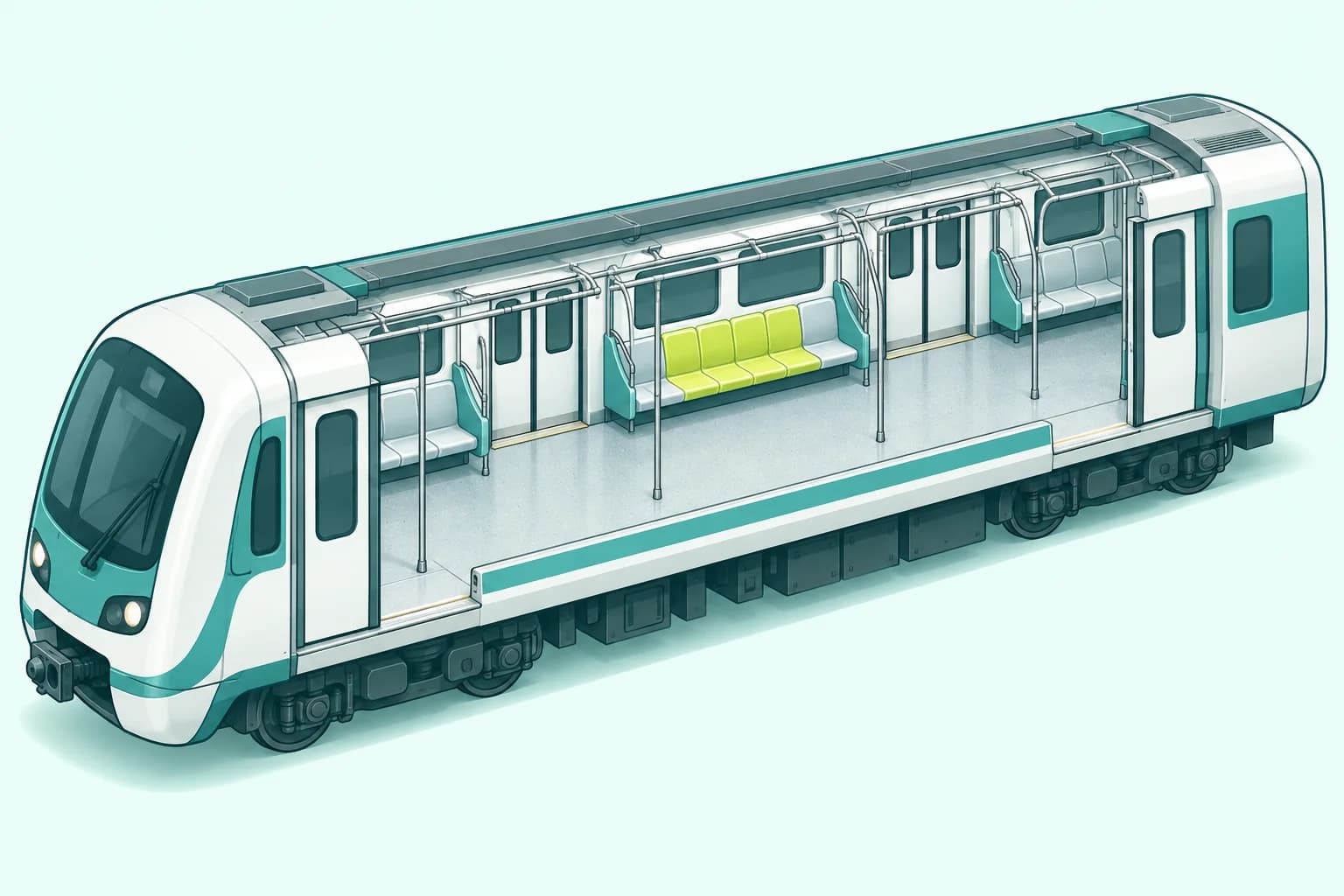
Try an available seat near the middle of the carriage.
The illustrated seat finder on this page shows the suggested area and an alternative for this vehicle, plus the other five types of transport you may take next.
Key facts
- Try an available seat near the middle of the carriage.
- Sitting with your head supported can help during starts and stops. Layouts and ride quality vary, so use this as a starting point.
- Take another suitable seat. If you must stand, hold a rail and keep your footing secure.
- Looking down at a phone during braking or standing unsupported by the doors.
- Many metros use side-facing benches. Choose a seat that feels comfortable, respect priority seating and keep doorways clear.
Try Dizzout free. Free, drug-free, works once symptoms start, on any headphones.Free to download · works with any headphones
Free to download. Paid subscription for full access.
Why motion sickness happens on a Metro
Motion sickness in the metro can arise during repeated acceleration, braking and turns, with little outside view underground. Looking down at a screen can add a mismatch between what you see and the motion you feel.
The safest zone on a Metro
Try an available seat near the middle of the carriage. Sitting with your head supported can help during starts and stops. Layouts and ride quality vary, so use this as a starting point.
Take another suitable seat. If you must stand, hold a rail and keep your footing secure.
Avoid: Looking down at a phone during braking or standing unsupported by the doors.
- Prefer
- Try an available seat near the middle of the carriage. Sitting with your head supported can help during starts and stops. Layouts and ride quality vary, so use this as a starting point.
- Alternative
- Take another suitable seat. If you must stand, hold a rail and keep your footing secure.
- Watch for
- Looking down at a phone during braking or standing unsupported by the doors.
Metro: Try an available seat near the middle of the carriage.
Your seat choice
Try an available seat near the middle of the carriage.
- Why this spot
- Sitting with your head supported can help during starts and stops. Layouts and ride quality vary, so use this as a starting point.
- If it is taken
- Take another suitable seat. If you must stand, hold a rail and keep your footing secure.
- Watch for
- Looking down at a phone during braking or standing unsupported by the doors.
Many metros use side-facing benches. Choose a seat that feels comfortable, respect priority seating and keep doorways clear.
The seat helps. Plan for if it still hits.
You have a seat plan for your trip on a metro. If symptoms still catch you mid-journey, Dizzout offers drug-free sound therapy through any headphones, with relief in about 90 seconds.
Free to download. Paid subscription for full access.
Best seat or position
Try an available seat near the middle of the carriage. Many metros use side-facing benches. Choose a seat that feels comfortable, respect priority seating and keep doorways clear.
Prepare while you are seated
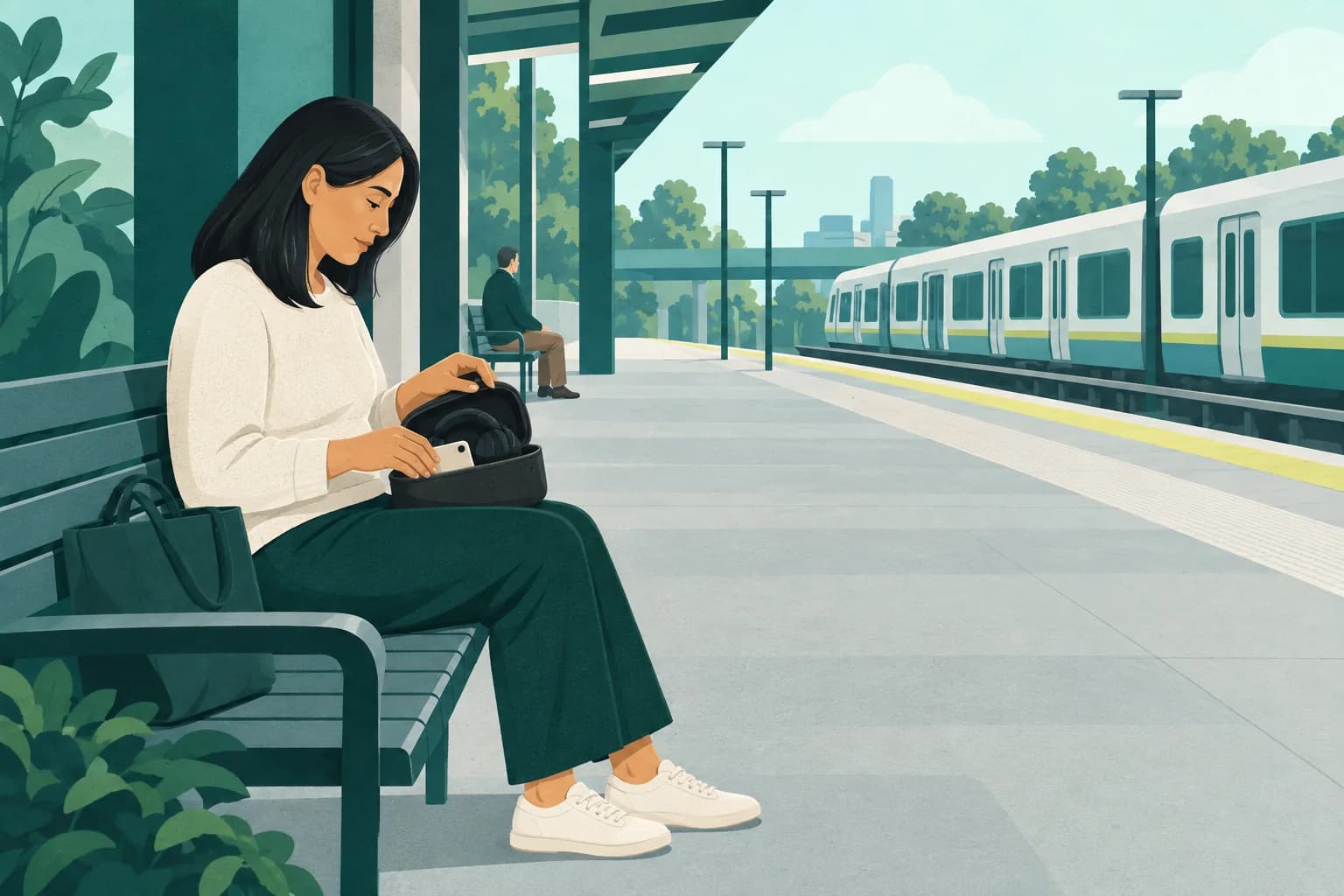
Prepare your kit while seated away from the platform edge. Keep your phone and headphones packed during boarding before trying Dizzout in your seat.
Free to download. Paid subscription for full access.
Know someone who dreads this trip?
Send them this guide before they board: seats, settings and what to do if it starts.
If motion sickness starts: what to do
Put down your phone, keep your head supported if seated and take slow, regular breaths. If standing, hold a rail securely. Leave the train at a safe stop if you need a break.
Feeling it right now? Get the 60-second protocol →
Already feeling sick?
Open Dizzout in 'I'm feeling sick' mode and listen for 3-5 minutes. Dizzout states relief in about 90 seconds. Drug-free, works on any headphones.
What about motion sickness medication?
Some travelers use over-the-counter options like dimenhydrinate (Dramamine) or meclizine (Bonine); the common trade-off reported on their labels is drowsiness, and they're generally taken before travel rather than after symptoms start. Our plain-English medication guide covers what each one is, side effects, and who should check with a doctor or pharmacist first (it's educational, not medical advice). Prefer to skip pills? Dizzout is a drug-free option that works through any headphones: see how it works.
Frequently asked questions
Why do I get motion sickness on a metro?
Motion sickness in the metro can arise during repeated acceleration, braking and turns, with little outside view underground. Looking down at a screen can add a mismatch between what you see and the motion you feel.
What is the best seat to avoid motion sickness on a metro?
Try an available seat near the middle of the carriage. Many metros use side-facing benches. Choose a seat that feels comfortable, respect priority seating and keep doorways clear.
How do I stop motion sickness once it starts?
Put down your phone, keep your head supported if seated and take slow, regular breaths. If standing, hold a rail securely. Leave the train at a safe stop if you need a break. Sound therapy through the Dizzout app is a drug-free option, and Dizzout states relief in about 90 seconds.
Related guides
- Train motion sickness guide
Choosing a window seat facing travel, with alternatives when the layout changes.
- Bus motion sickness guide
Where to sit on a bus, with a clear view and alternatives for rough roads.
- How to stop motion sickness: every method ranked
Every method ranked by speed, including the ones that still work after nausea starts.
- Working on your commute without nausea
Where to sit when the carriage is packed, and how to work on the move without paying for it.