
Bus Motion Sickness: Why It Happens and the Best Seat
In short
Choose a forward-facing seat near the front, behind the driver.
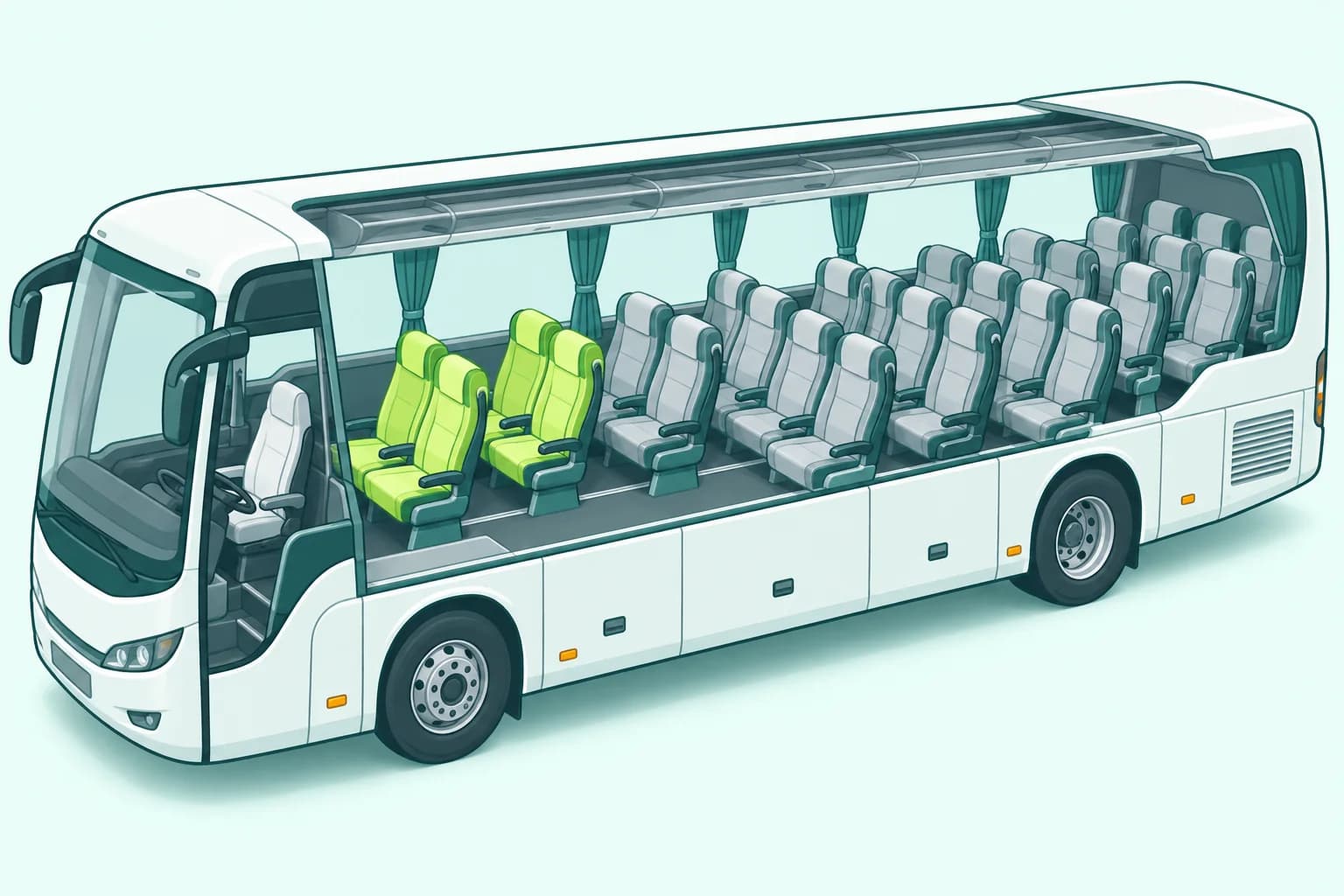
The illustrated seat finder on this page shows the suggested area and an alternative for this vehicle, plus the other five types of transport you may take next.
Key facts
- Choose a forward-facing seat near the front, behind the driver.
- A view through the front window helps you anticipate the road. The rear overhang can make bumps feel stronger.
- Try a forward-facing seat between the front and rear wheels, with the clearest view ahead.
- The rear overhang or a seat directly above a wheel arch if bumps bother you.
- Bus layouts vary. Use passenger seats, keep aisles clear and wear a seat belt where provided.
Try Dizzout free. Free, drug-free, works once symptoms start, on any headphones.Free to download · works with any headphones
Free to download. Paid subscription for full access.
Why motion sickness happens on a Bus
Motion sickness on a bus happens because of constant acceleration, braking, and side-to-side sway, especially on turns and uneven roads. Your body feels these movements, but if your eyes don't match them, particularly when you're sitting in the back or looking down, it creates nausea.
The safest zone on a Bus
Choose a forward-facing seat near the front, behind the driver. A view through the front window helps you anticipate the road. The rear overhang can make bumps feel stronger.
Try a forward-facing seat between the front and rear wheels, with the clearest view ahead.
Avoid: The rear overhang or a seat directly above a wheel arch if bumps bother you.
- Prefer
- Choose a forward-facing seat near the front, behind the driver. A view through the front window helps you anticipate the road. The rear overhang can make bumps feel stronger.
- Alternative
- Try a forward-facing seat between the front and rear wheels, with the clearest view ahead.
- Watch for
- The rear overhang or a seat directly above a wheel arch if bumps bother you.
Bus: Choose a forward-facing seat near the front, behind the driver.
Your seat choice
Choose a forward-facing seat near the front, behind the driver.
- Why this spot
- A view through the front window helps you anticipate the road. The rear overhang can make bumps feel stronger.
- If it is taken
- Try a forward-facing seat between the front and rear wheels, with the clearest view ahead.
- Watch for
- The rear overhang or a seat directly above a wheel arch if bumps bother you.
Bus layouts vary. Use passenger seats, keep aisles clear and wear a seat belt where provided.
The seat helps. Plan for if it still hits.
You have a seat plan for your trip on a bus. If symptoms still catch you mid-journey, Dizzout offers drug-free sound therapy through any headphones, with relief in about 90 seconds.
Free to download. Paid subscription for full access.
Best seat or position
Choose a forward-facing seat near the front, behind the driver. Bus layouts vary. Use passenger seats, keep aisles clear and wear a seat belt where provided.
Get your travel kit ready
Wait until you are seated and your bag is stowed. Then get your phone and headphones ready if you want to try Dizzout.
Free to download. Paid subscription for full access.
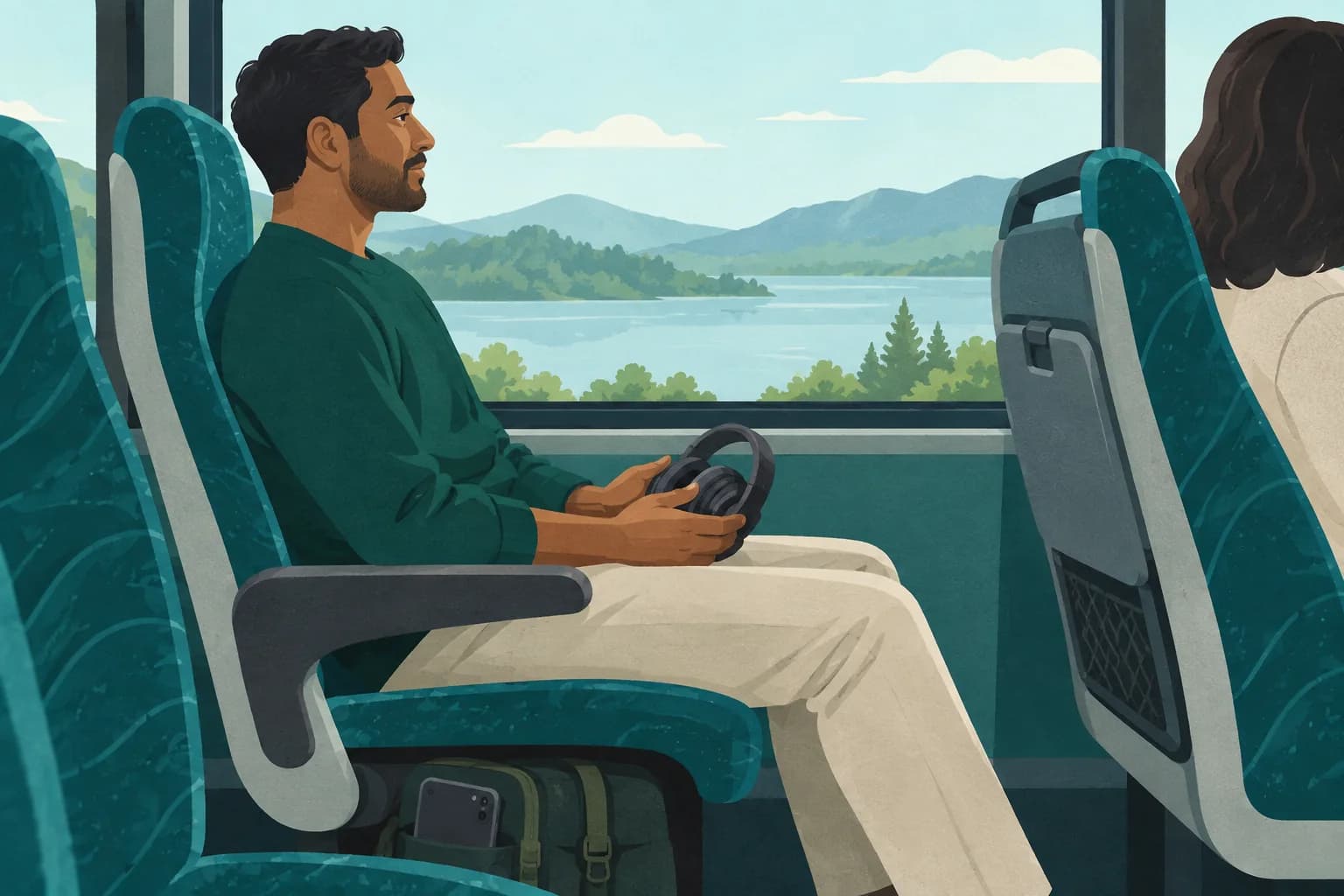
Know someone who dreads this trip?
Send them this guide before they board: seats, settings and what to do if it starts.
If motion sickness starts: what to do
Face forward, look ahead or out the window, and avoid using your phone or reading during the ride. Keeping your head stable and choosing a seat where you can anticipate movement helps significantly.
Feeling it right now? Get the 60-second protocol →
Already feeling sick?
Open Dizzout in 'I'm feeling sick' mode and listen for 3-5 minutes. Dizzout states relief in about 90 seconds. Drug-free, works on any headphones.
What about motion sickness medication?
Some travelers use over-the-counter options like dimenhydrinate (Dramamine) or meclizine (Bonine); the common trade-off reported on their labels is drowsiness, and they're generally taken before travel rather than after symptoms start. Our plain-English medication guide covers what each one is, side effects, and who should check with a doctor or pharmacist first (it's educational, not medical advice). Prefer to skip pills? Dizzout is a drug-free option that works through any headphones: see how it works.
Frequently asked questions
Why do I get motion sickness on a bus?
Motion sickness on a bus happens because of constant acceleration, braking, and side-to-side sway, especially on turns and uneven roads. Your body feels these movements, but if your eyes don't match them, particularly when you're sitting in the back or looking down, it creates nausea.
What is the best seat to avoid motion sickness on a bus?
Choose a forward-facing seat near the front, behind the driver. Bus layouts vary. Use passenger seats, keep aisles clear and wear a seat belt where provided.
How do I stop motion sickness once it starts?
Face forward, look ahead or out the window, and avoid using your phone or reading during the ride. Keeping your head stable and choosing a seat where you can anticipate movement helps significantly. Sound therapy through the Dizzout app is a drug-free option, and Dizzout states relief in about 90 seconds.
Where is the best place to sit on a bus for motion sickness?
Try a forward-facing passenger seat near the front, behind the driver, with a view of the road ahead. If those rows are full, try a seat between the front and rear wheels. Avoid sitting directly over a wheel arch if bumps bother you. Layouts and suspension vary, so an exact row is not a promise of a smoother ride.
Which part of the bus is best for motion sickness?
The front passenger rows are a useful first choice because they may offer a view through the windshield. A seat between the axles is another option. The rear overhang can make bumps feel stronger. Stay seated with a belt where provided and follow the operator's instructions.
Related guides
- Why the back seat is worse
Why the back seat is worse than the front, and the seat to switch to.
- Train motion sickness: best seats
Choosing a window seat facing travel, with alternatives when the layout changes.
- Car sickness pillar guide
The full car guide: why the back seat is worst, and what to do once it starts.
- How to stop motion sickness fast
Every method ranked by speed, including the ones that still work after nausea starts.