
Roller Coaster Motion Sickness: Why It Happens and How to Recover
In short
Use Dizzout before the ride, choose the middle row, avoid the back, look ahead, and recover before riding again.
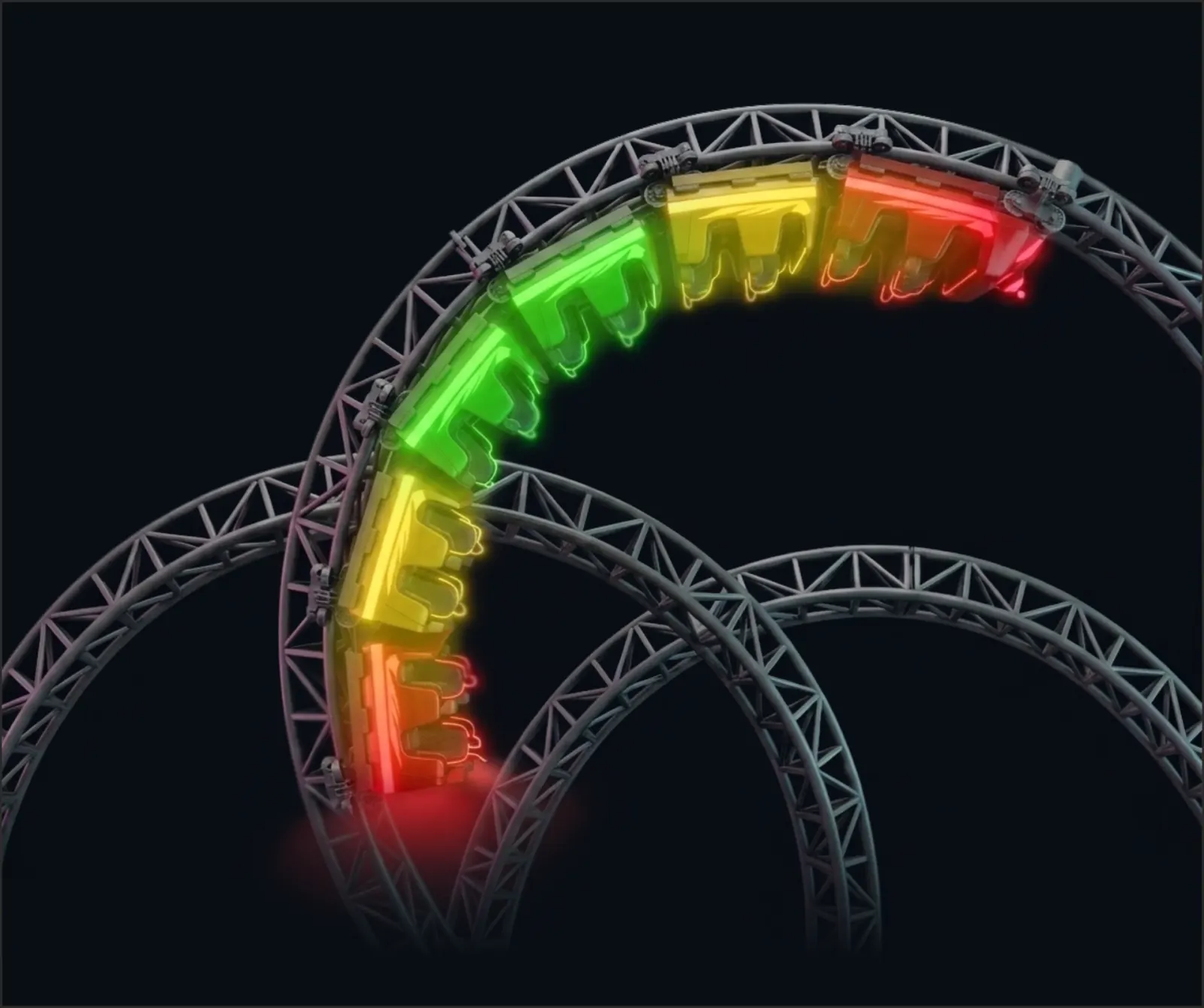
Zones of motion sickness probability
Try Dizzout free. Free, drug-free, works once symptoms start, on any headphones.Free to download · works with any headphones
Free to download. Paid subscription for full access.
Why motion sickness happens on a Roller Coaster
Motion sickness on a roller coaster happens because your inner ear feels sudden acceleration, drops, turns, vibration, and changes in direction, while your brain may not have enough time to predict the movement. This mismatch becomes stronger on intense rides with sharp turns, spinning, loops, backwards sections, sudden launches, or screen-based effects.
The safest zone on a Roller Coaster
The most stable position on a roller coaster is usually the middle section of the train, because the motion often feels less extreme than at the very front or the very back.
The front row can help some people because it gives a clearer view of the track, but it can also feel more visually intense, so the safest default choice is the middle section.
Avoid: The back rows should be avoided if you are sensitive to motion sickness, because drops, turns, and airtime can feel stronger there.
Best seat or position
The best choice is to sit in a middle row, face forward, and look ahead along the track when possible. Keep your head stable against the headrest and avoid turning around, looking down, or closing your eyes for the whole ride if it makes you feel more disoriented.
🎧 Before you travel: Pre-Conditioning mode
Listen to the Dizzout Pre-Conditioning Sound for about 90 seconds before you start moving, while you still feel fine.
Know someone who dreads this trip?
Send them this guide before they board: seats, settings and what to do if it starts.
If motion sickness starts: what to do
During the ride, keep your head stable, face forward, and breathe slowly until the ride ends. After the ride, do not rush to the next attraction. Sit somewhere calm, get cool air, sip water, and let your body reset.
Feeling it right now? Get the 60-second protocol →
Already feeling sick?
Open Dizzout in 'I'm feeling sick' mode and listen for 3-5 minutes. Dizzout states relief in about 90 seconds. Drug-free, works on any headphones.
What about motion sickness medication?
Some travelers use over-the-counter options like dimenhydrinate (Dramamine) or meclizine (Bonine); the common trade-off reported on their labels is drowsiness, and they're generally taken before travel rather than after symptoms start. Our plain-English medication guide covers what each one is, side effects, and who should check with a doctor or pharmacist first (it's educational, not medical advice). Prefer to skip pills? Dizzout is a drug-free option that works through any headphones: see how it works.
Frequently asked questions
Why do I get motion sickness on a roller coaster?
Motion sickness on a roller coaster happens because your inner ear feels sudden acceleration, drops, turns, vibration, and changes in direction, while your brain may not have enough time to predict the movement. This mismatch becomes stronger on intense rides with sharp turns, spinning, loops, backwards sections, sudden launches, or screen-based effects.
What is the best seat to avoid motion sickness on a roller coaster?
The best choice is to sit in a middle row, face forward, and look ahead along the track when possible. Keep your head stable against the headrest and avoid turning around, looking down, or closing your eyes for the whole ride if it makes you feel more disoriented.
How do I stop motion sickness once it starts?
During the ride, keep your head stable, face forward, and breathe slowly until the ride ends. After the ride, do not rush to the next attraction. Sit somewhere calm, get cool air, sip water, and let your body reset. Sound therapy through the Dizzout app is a drug-free option, and Dizzout states relief in about 90 seconds.
Why do roller coasters make me sick now when they did not before?
Usually because you ride less often than you used to. Tolerance to motion builds with repeated exposure and fades without it, so someone who rode every summer as a teenager and now rides once every few years is starting from a lower base. Age alone is rarely the reason: susceptibility to motion sickness usually peaks in childhood and falls through adulthood. A history of migraine or an inner-ear problem makes motion sickness more likely, so if either is new for you, rides can feel different. Ease back in with gentler rides and rest between them. If you also feel dizzy or sick when you are not moving, see a clinician.
Related guides
- Every symptom, explained
Every symptom listed, from nausea and cold sweats to headache and fatigue.
- What is motion sickness?
The sensory mismatch behind all of it, and who gets it most.
- How susceptible are you? (2-min test)
A short questionnaire that scores how prone you are, compared with other people.
- Sick in the car, fine on a roller coaster. Why the same body does both
Two reasons: you chose the ride, and a short sharp drop is the wrong shape of motion to set off nausea.