Seasickness: Why It Happens and the Best Cabin Location
In short
Choose midship on a lower passenger deck.
Try Dizzout free. Free, drug-free, works once symptoms start, on any headphones.Free to download · works with any headphones
Free to download. Paid subscription for full access.
Why motion sickness happens on a Ship
Motion sickness on a ship happens because of continuous movement in multiple directions at once, including up and down from waves and side-to-side rolling. Your inner ear constantly feels this motion, but if your eyes don't have a stable reference, your brain struggles to process it, which leads to nausea. The effect is stronger in rough seas and when you are in areas where the ship's movement is amplified.
The safest zone on a Ship
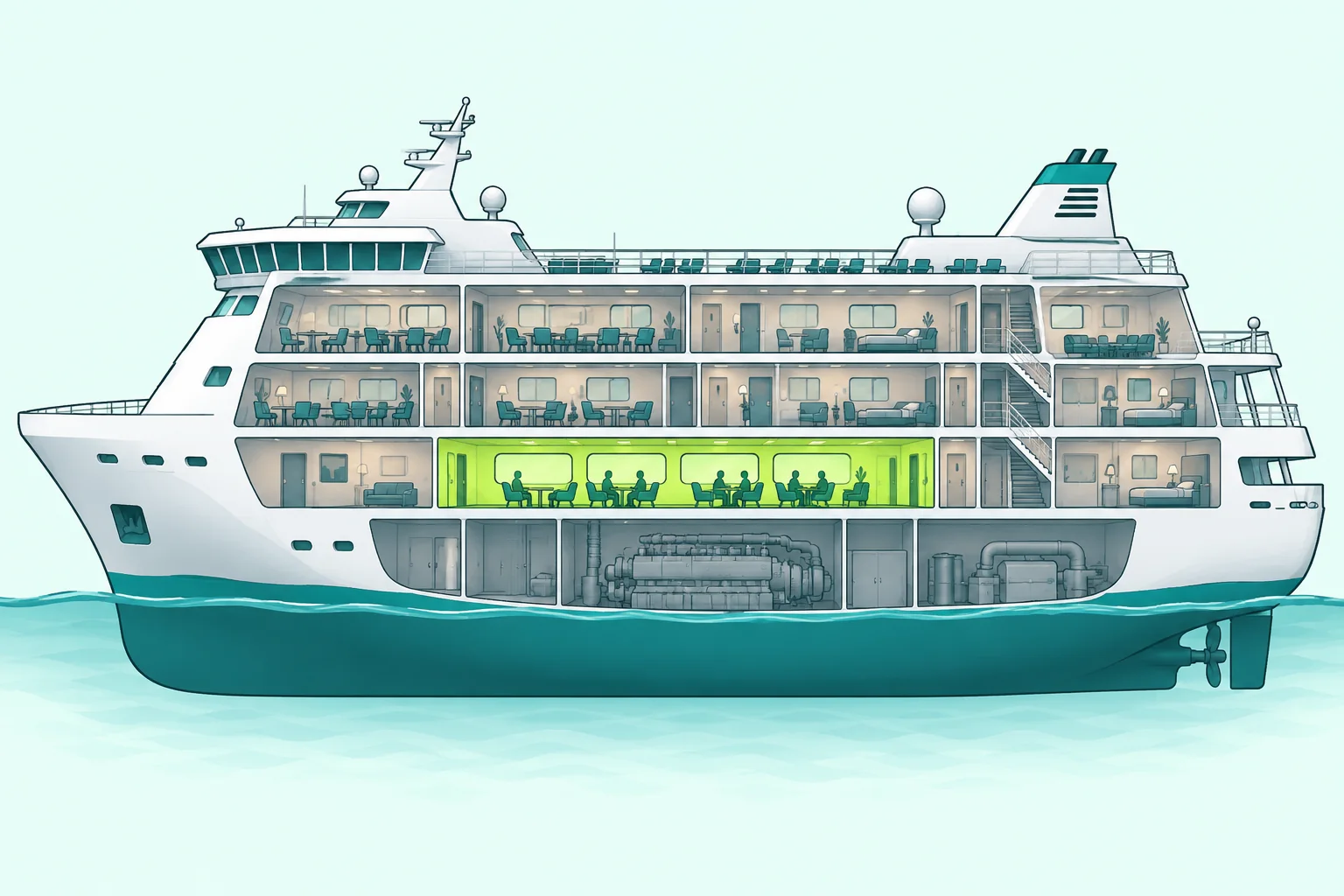
Choose midship on a lower passenger deck. The middle of the ship usually has less pitching than the bow. A lower deck can also reduce the motion you feel.
Use an accessible midship passenger area with a horizon view when conditions and crew instructions allow.
Avoid: The bow and high decks when the sea is rough.
- Prefer
- Choose midship on a lower passenger deck. The middle of the ship usually has less pitching than the bow. A lower deck can also reduce the motion you feel.
- Alternative
- Use an accessible midship passenger area with a horizon view when conditions and crew instructions allow.
- Watch for
- The bow and high decks when the sea is rough.
Boat & cruise: Choose midship on a lower passenger deck.
Your seat choice
Choose midship on a lower passenger deck.
- Why this spot
- The middle of the ship usually has less pitching than the bow. A lower deck can also reduce the motion you feel.
- If it is taken
- Use an accessible midship passenger area with a horizon view when conditions and crew instructions allow.
- Watch for
- The bow and high decks when the sea is rough.
Use designated passenger areas only. Lower deck does not mean below the waterline or inside restricted spaces.
The seat helps. Plan for if it still hits.
You have a seat plan for your trip on a boat. If symptoms still catch you mid-crossing, Dizzout offers drug-free sound therapy through any headphones, with relief in about 90 seconds.
Free to download. Paid subscription for full access.
Best seat or position
Choose midship on a lower passenger deck. Use designated passenger areas only. Lower deck does not mean below the waterline or inside restricted spaces.
Get the kit ready from a fixed seat
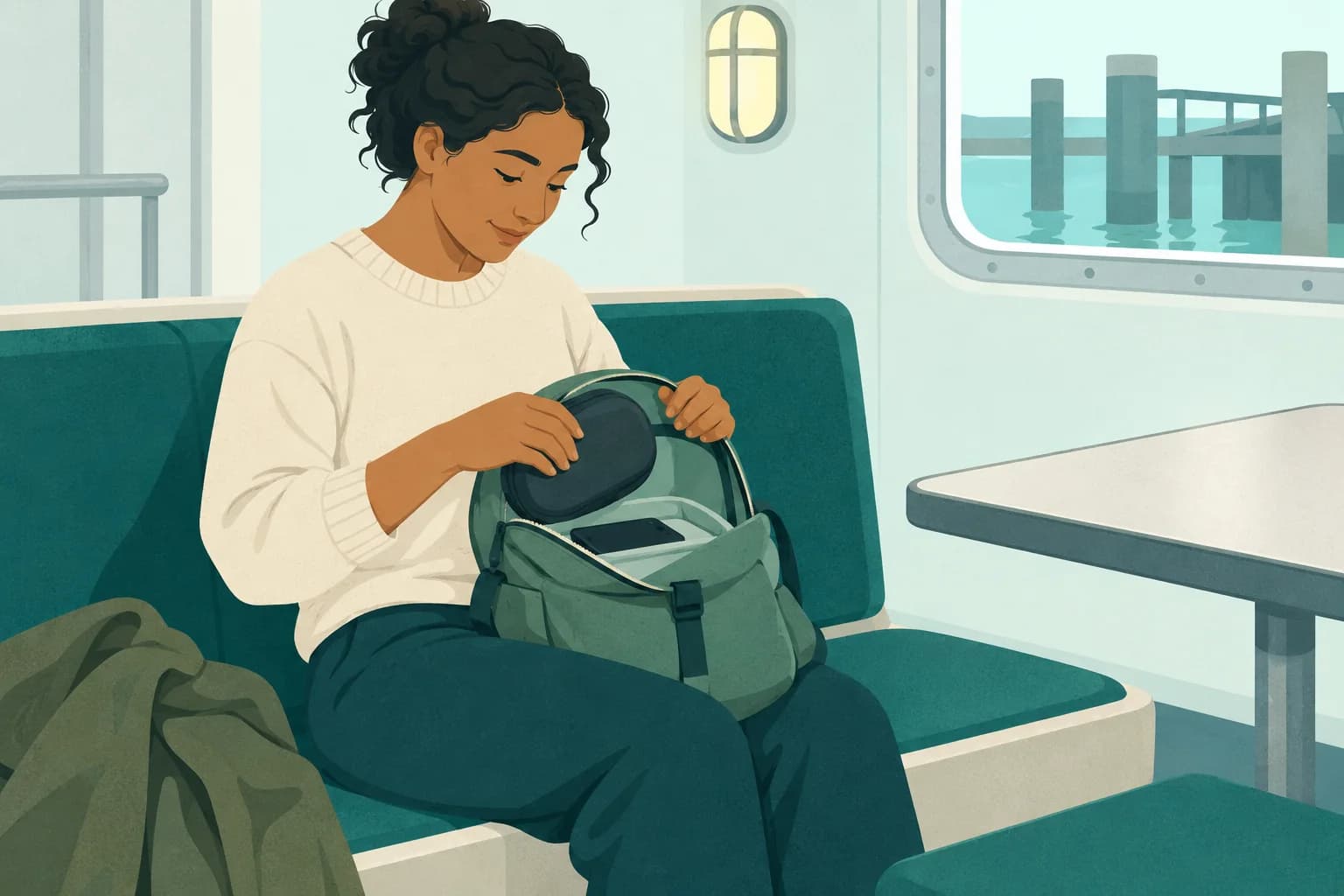
Prepare Dizzout and your headphones while seated in a sheltered part of the ship. Keep the phone and case together before moving around the vessel.
Free to download. Paid subscription for full access.
Know someone who dreads this trip?
Send them this guide before they board: seats, settings and what to do if it starts.
If motion sickness starts: what to do
If motion sickness starts, moving to the right location on the ship can help quickly. The best place to go is a lowest deck in the middle of the ship, such as an interior lounge or central corridor, where movement is minimized. Being outside on an open deck in the middle of the ship and looking at the horizon can also help your brain realign with the motion. It is best to avoid the front observation areas, upper decks, and the back of the ship during this time, as these locations amplify movement.
Feeling it right now? Get the 60-second protocol →
Already feeling sick?
Open Dizzout in 'I'm feeling sick' mode and listen for 3-5 minutes. Dizzout states relief in about 90 seconds. Drug-free, works on any headphones.
What about motion sickness medication?
Some travelers use over-the-counter options like dimenhydrinate (Dramamine) or meclizine (Bonine); the common trade-off reported on their labels is drowsiness, and they're generally taken before travel rather than after symptoms start. Our plain-English medication guide covers what each one is, side effects, and who should check with a doctor or pharmacist first (it's educational, not medical advice). Prefer to skip pills? Dizzout is a drug-free option that works through any headphones: see how it works.
Frequently asked questions
Why do I get motion sickness on a ship?
Motion sickness on a ship happens because of continuous movement in multiple directions at once, including up and down from waves and side-to-side rolling. Your inner ear constantly feels this motion, but if your eyes don't have a stable reference, your brain struggles to process it, which leads to nausea. The effect is stronger in rough seas and when you are in areas where the ship's movement is amplified.
What is the best seat to avoid motion sickness on a ship?
Choose midship on a lower passenger deck. Use designated passenger areas only. Lower deck does not mean below the waterline or inside restricted spaces.
How do I stop motion sickness once it starts?
If motion sickness starts, moving to the right location on the ship can help quickly. The best place to go is a lowest deck in the middle of the ship, such as an interior lounge or central corridor, where movement is minimized. Being outside on an open deck in the middle of the ship and looking at the horizon can also help your brain realign with the motion. It is best to avoid the front observation areas, upper decks, and the back of the ship during this time, as these locations amplify movement. Sound therapy through the Dizzout app is a drug-free option, and Dizzout states relief in about 90 seconds.
Where on a cruise ship is best for motion sickness?
Midship, on a low deck, as close to the ship's centerline as you can get. That is the point the ship pivots around, so both the up and down pitch and the side to side roll are smallest there. It holds for cabins and for daytime spots alike: a midship lounge on a lower deck beats a forward observation deck every time. If you are still choosing a cabin, our cruise cabin picker, linked below, applies this to your exact ship and shows which cabins move least.
Does a bigger cruise ship mean less motion sickness?
Generally yes. A larger, heavier hull responds less to the same sea, and modern big ships add active stabilizers that damp the roll further. Size does not make you immune in a real storm, but between two itineraries, the bigger, newer ship in the calmer season is the safer bet, and where you sleep on it still matters more than the extra meters.
Related guides
- Seasickness: the full pillar guide
The full sea guide: the steadiest cabin and deck, and when it settles by itself.
- Cruise tips by ship
Ship by ship, sorted by how much motion passengers report.
- Cruise sickness overview
Every cruise remedy compared, and what to do if you are already sick on board.