
The short answer
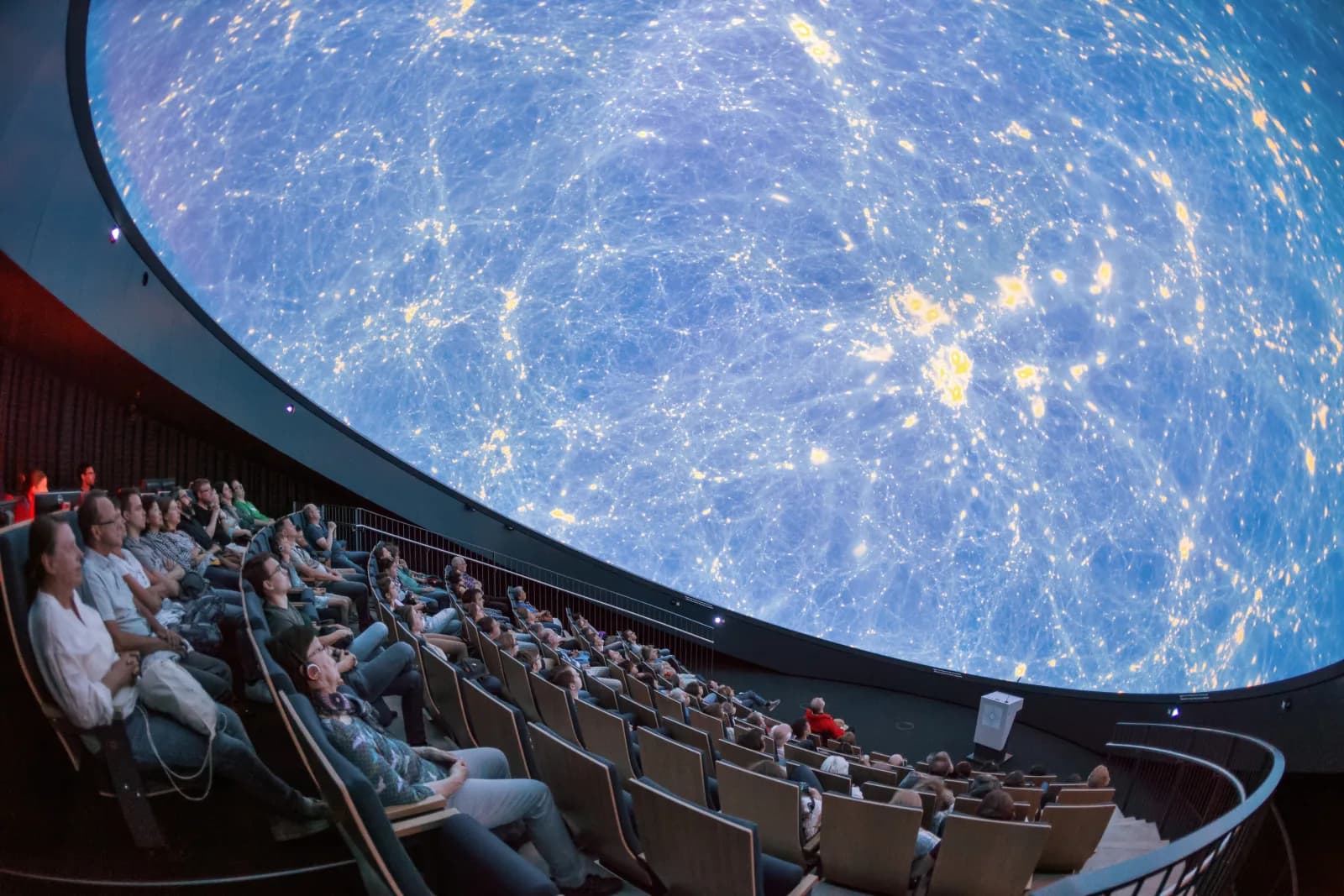
Flying theater rides like FlyOver and Soarin' can make you queasy because they stack two triggers at once: a seat that tilts and swoops, and a dome screen that fills your entire field of view with aerial footage. Your inner ear feels small movements while your eyes report huge ones, and that mismatch is exactly what sets off motion sickness. The physical motion is gentle, far gentler than a coaster, so most riders walk out fine. If you are motion sensitive, seat choice and a few in-ride habits make the difference, and queasiness that does start usually settles soon after the film ends.
You have tickets for FlyOver in Las Vegas, Vancouver, Chicago or Reykjavik, or Soarin' is on the family's Disney list, and someone in the group is the queasy one. The ride looks serene in every photo, and yet the search history says "flyover motion sickness" at midnight. Fair question. A flying theater is built from the exact ingredients that set sensitive stomachs off.
The honest answer: yes, it can get you, and no, that does not mean you should skip it. Here is what the ride actually does to your senses, who tends to feel it, and how to ride comfortably anyway.
Prone to motion sickness? A pocketable backup for ride days: drug-free sound therapy, about 90 seconds on any headphones.Starts in your browser · works with any headphones
Settle ride nausea. Get your personalized Dizzout plan. Paid subscription for full access.

On your phone? Scan to start there.
What a flying theater actually does to you
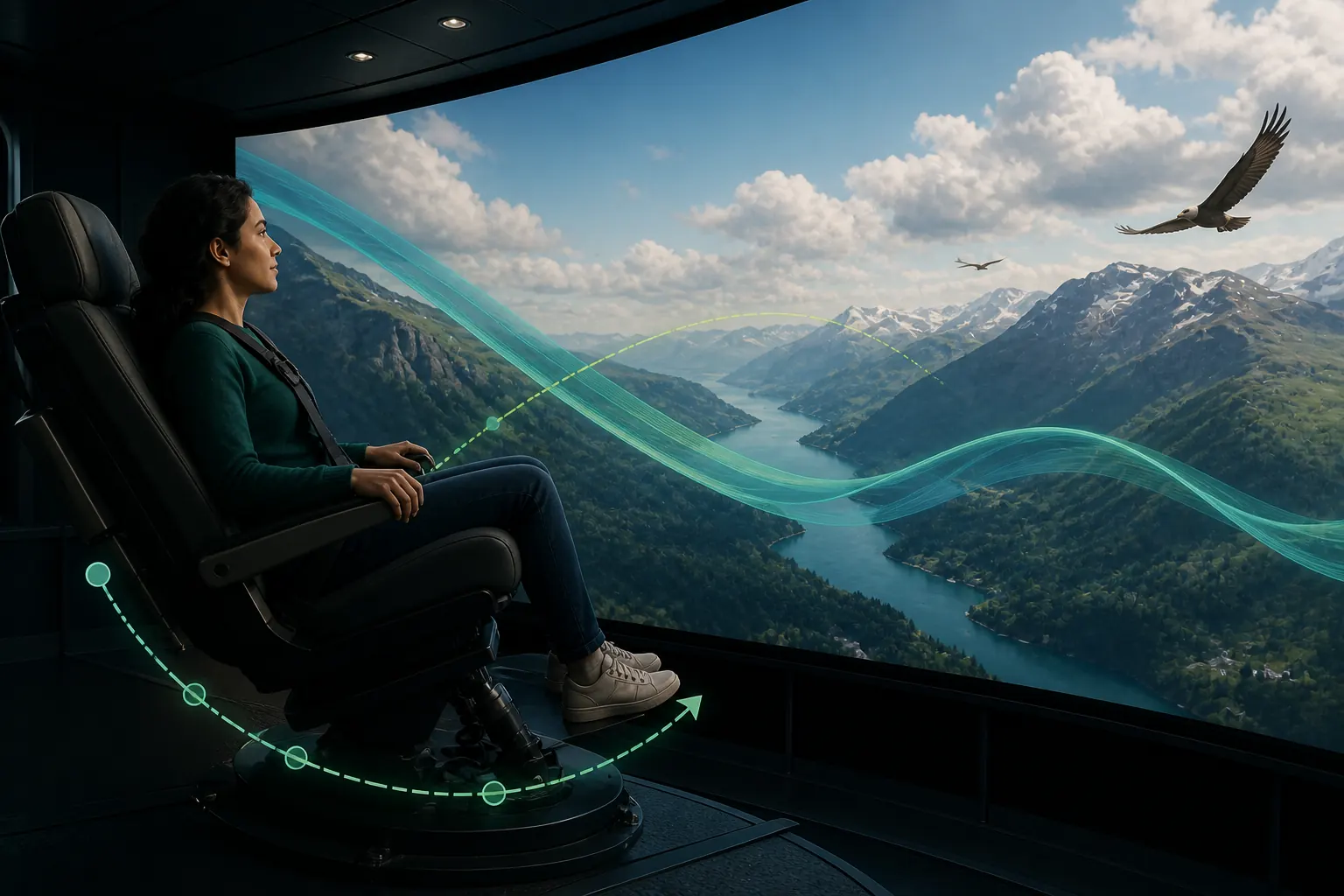
A flying theater is a ride disguised as a cinema. You sit in a row of suspended seats, the floor drops away, your feet dangle, and the seats swing forward in front of a huge curved dome screen. The seats then tilt, roll and glide in sync with aerial footage while the theater adds wind, mist and scent to sell the illusion. FlyOver runs this format in Vancouver, Las Vegas, Chicago and Reykjavik. Disney's Soarin' uses the same recipe with a gentler seat.
The part that matters for your stomach: the seat moves a little, and the screen moves a lot. The Las Vegas theaters put you in front of a spherical screen about 52 feet across, so the film is not something you watch. It wraps around you, above you and below you, and your brain reads it as real flight.
Motion base plus dome screen: the double trigger
Motion sickness comes from a conflict between your senses. On a boat, your inner ear feels waves your eyes cannot see. In a flying theater the conflict is layered. Your eyes report a dive over a canyon at flight speed. Your inner ear reports a polite tilt of a few degrees. The two stories almost match, which in practice can be worse than not matching at all: your brain keeps trying to reconcile them for the whole film.
The dome adds a second problem at its edges. Seats that face the screen at an angle see a horizon that bends and tilts, and a horizon that will not sit level is a classic queasiness trigger. This is the same visually driven motion sickness some people get from IMAX films or screens and VR, no real motion required.
How FlyOver compares to Soarin'
They are close cousins. Both hang you in front of a dome and let aerial footage do the emotional work. The difference is the seat. Soarin' rises and tilts gently, a slow suspended glide, and nearly all of its intensity comes from the film. FlyOver's seats ride a motion base that pitches and banks with the footage, and the wind and mist effects arrive right on cue, so riders commonly describe more physical sensation than on Soarin'.
The practical read: if Soarin' left you completely fine, FlyOver is very likely manageable, just a notch livelier. If Soarin' made you queasy, the dome was the culprit, and FlyOver's dome will do the same thing. In that case the advice below about seats and gaze matters more than which brand you pick.
Who should think twice, and who is fine
Flying theater sensitivity does not track perfectly with car sickness or seasickness. The people who feel these rides are usually the ones sensitive to big moving images:
- IMAX and 3D film reactors. If wraparound cinema alone has made you queasy, a dome plus a moving seat will too.
- VR and first-person game feelers. Same mechanism, bigger screen. If headsets get you in minutes, plan your seat and your exits.
- Kids who get carsick. CDC travel health guidance notes children between 2 and 12 are especially susceptible to motion sickness, and a dome fills a child's field of view just as completely as an adult's.
- Anyone already run down. Heat, an empty stomach, a hangover or a long queue in a warm lobby all lower the threshold before the film even starts.
Who is usually fine: people whose motion sickness needs real, sustained motion. There are no drops, no g-forces and no spinning here, and the ride is short. Plenty of riders who refuse coasters love flying theaters. If you want a better read on your own risk before the trip, the two-minute motion sickness test maps which triggers actually apply to you.
If you are pregnant, nausea thresholds are often lower than usual, so read the next two sections closely and talk to your doctor about what makes sense for you.
Row and seat choice inside the theater
Seat position changes the geometry of the dome, and the geometry is most of the problem. Three rules cover every flying theater:
- Center of the row beats the ends. Center seats face the dome straight on. End seats view it at an angle, which bends the filmed horizon, the queasier view by far.
- Middle level beats the extremes. Where a theater loads several levels, the middle one keeps the horizon near your natural eye line. On Soarin' this is the middle section, often called B1, and asking a cast member for it is normal.
- Just ask. FlyOver loads in rows, and attendants hear this request all the time. A center seat costs nothing but a polite sentence and maybe one extra cycle of waiting.
During the ride: where to look and when to close your eyes
Do
- Sit centered and face the dome straight on
- Follow the filmed horizon, the way you would on a boat
- Close your eyes through the swooping descents
- Breathe slowly and let the wind effects cool you
Don't
- Track objects rushing past the edge of the dome
- Stare at the rim of the screen where the horizon bends
- White-knuckle it until nausea peaks before acting
- Ride again immediately to prove a point
Practical strategies, not measured effects. Which ones help is personal.
Your best in-ride tool is your gaze. Rest it on the filmed horizon and let the scenery flow past, exactly the habit that helps on a boat deck. The moment a segment swoops hard, close your eyes. This works better on a flying theater than almost anywhere else, because the screen carries nearly all the intensity: shut it out and your body is left with a gentle tilt it can easily live with. Reopen on a calm, level stretch. Nobody is watching you, and the film is long enough that missing ten seconds costs nothing.
If you walk out woozy
The good news about flying theaters is the exposure is short. Most riders who feel it walk out with mild wooziness that fades in minutes on stable ground. Help it along: find a fixed point to look at, get to cool air or an air-conditioned corner, sip water, and sit for a few minutes before deciding anything about the rest of the day.
Two backups are worth knowing about. Tablets first: the labels for dimenhydrinate and meclizine say to take them 30 minutes to an hour before motion begins, so that decision belongs before you enter the theater, not after, and it is one to check with your pharmacist or doctor. For the walk out itself, sound therapy through headphones is one option designed to help calm the response in about 90 seconds. It is drug-free, causes no drowsiness, and works with eyes closed on a lobby bench, which makes it a practical fit between attractions.
The rest of your day at the attraction
One flying theater rarely ruins a day. Stacking triggers does. If the dome got to you even slightly, put a stable-ground gap after it: a meal, a walk, a show, anything that lets your senses re-agree before the next simulator or spinner. Eat light rather than empty beforehand, and keep water going in the heat.
Planning the whole visit around a sensitive stomach is its own skill. The ride-by-ride verdicts rank what is risky and what is safe at the big parks, and the park survival guides sequence a full day so the queasy one in the group actually enjoys it. One caution belongs here: dizziness that spins, lingers for hours, or arrives with hearing changes or a severe headache is not ride queasiness, and it deserves a doctor rather than a seat strategy.
A backup for the walk out
Stop the nausea
The film ends in minutes, the queasiness sometimes lingers into the next queue. Dizzout plays precisely calibrated audio through any headphones, one option for calming the response in about 90 seconds. Drug-free, no drowsiness, ready before the next attraction.
Get your personalized Dizzout plan. Paid subscription for full access.
30,000+ travelers in 30+ countries · How we count

On your phone? Scan to start there.
Comparing apps first? See how the motion sickness apps compare
Not travelling yet? Remind me the day before my trip
Frequently asked questions
Does FlyOver cause motion sickness?
It can, though most riders are fine. FlyOver pairs a moving seat with a dome screen that fills your field of view, and that combination can set off the same sensory mismatch as a car or boat in people sensitive to it. The physical motion is gentle compared with a coaster. If big moving images bother you, IMAX films, VR or first-person games, take it seriously: ask for a center seat and be ready to close your eyes during the swoops.
Is FlyOver worse than Soarin for motion sickness?
They share the same core trigger, a dome full of swooping aerial footage. FlyOver adds more seat movement: the feet-dangling seats pitch and bank with the film, plus wind and mist effects, so some riders who were fine on Soarin' notice FlyOver more. If Soarin' made you queasy, the screen was the likely cause, and FlyOver's screen will do the same. Seat choice and where you rest your gaze matter more than which brand you pick.
Which row is best on a flying theater ride?
Aim for the middle of the theater and the center of your row, so you face the dome straight on. Seats at the ends of a row view the screen at an angle, which bends the filmed horizon and makes queasiness more likely. On Soarin' that means asking for the middle section, often called B1. On FlyOver, ask the attendant for a central seat when loading allows it.
Can you close your eyes on FlyOver if you feel sick?
Yes, and it works better here than on most rides. Nearly all of the intensity comes from the screen, so closing your eyes removes the bigger half of the sensory conflict while your body feels only gentle tilts. Close them through the swooping segments, breathe slowly, and reopen on a calm, level stretch of the film.
How long does queasiness last after a flying theater?
For most people it fades within minutes once they are back on solid, stationary ground, and a short break with cool air, water and a fixed gaze speeds that up. The ride itself is short, so the exposure is small compared with a boat or a long drive. Dizziness that spins, lasts for hours, or comes with hearing changes or a severe headache is a doctor question rather than a ride question.
Someone you know gets motion sick?
Send them this guide. It might be the trip it saves.
Your next question, probably
How does Soarin' compare, seat by seat?
The middle-section trick
Not your question? Which rides at your park are riskiest?Planning a full park day?Feeling it right now?
About this article
- FlyOver Las Vegas: What is a flight ride? (official attraction page)
- CDC Yellow Book: Motion Sickness
- MedlinePlus: Motion Sickness
- MedlinePlus drug information: Dimenhydrinate
This article is informational and not a substitute for medical advice. FlyOver, Soarin' and other ride, park and company names are trademarks of their respective owners; Dizzout is not affiliated with or endorsed by them.

.jpg)