How to stop motion sickness, fast
Quick answer
If motion sickness starts, put screens and books away, look toward a distant fixed point, and keep your head supported. Get fresh air when possible, breathe slowly and take a break from the journey if you can. These steps may help; no method promises immediate relief.
Medicines generally work best when planned before travel. If you already feel sick, ask a pharmacist or clinician what may still be suitable and how to use it.
General information, not personal medical advice. If symptoms are severe, persist after travel or make it difficult to keep fluids down, seek clinical advice.
How do you stop motion sickness fast?
- 1. Look toward a distant fixed point
Try the horizon or the road ahead. If a view is not available, closing your eyes may be more comfortable than looking down.
- 2. Put the phone or book away
Pause reading, scrolling and video. Keep your head supported and as still as is comfortable.
- 3. Use a suitable seat when you can
Change seats only when safe and permitted. Keep seat belts and child restraints in use and follow crew instructions.
- 4. Get comfortable and take a break if possible
Fresh air, slow breathing and a break from the journey may help. Sip water if you can tolerate it.
These practical measures come from CDC, NHS and Mayo Clinic guidance. How much they help varies from person to person.
Dizzout offers sound therapy through headphones. Its stated relief in about 90 seconds is a product claim, and individual experiences vary.
Free to download. Paid subscription for full access.
Key facts
- Putting screens away and looking toward a distant fixed point are practical first steps.
- Medicines often work best before travel; timing, side effects and suitability vary.
- Seat choice must respect child restraints, seat belts and crew instructions.
- Dizzout has not published an independent clinical outcome study for the app.
Options compared: use and limits
This is a practical comparison, not a ranking of medical effectiveness. The options have different evidence, uses and precautions.
| Option | When to consider it | Important limit |
|---|---|---|
| Horizon focus | When a view is available | A practical first step, not a promise that nausea will stop immediately. |
| Screen and reading break | As symptoms begin | Avoid returning to the screen while it is making you feel worse. |
| Seat choice | Before travel, or when a safe change is possible | Vehicle layouts, restraints and crew instructions take priority. |
| Fresh air and slow breathing | For comfort during a journey | May help you feel more comfortable; persistent symptoms still need attention. |
| Ginger or wristbands | Some people try these alongside practical measures | Response and evidence vary. Ask about supplements, interactions and suitability. |
| Motion sickness medicine | Usually planned before travel; ask for advice if symptoms have started | Timing, age limits and side effects vary by product. Some cause drowsiness. |
| Sound therapy (Dizzout) | Designed for use after symptoms start as well as before travel | Relief in about 90 seconds is a Dizzout product claim, not an independently validated clinical result. |
Choose a seat for your journey
The illustrated seat finder includes alternatives and safety notes. For VR or gaming symptoms, stop the session and review comfort settings before trying again.
Preventing it before you travel
- Choose a suitable seat and plan breaks when the journey allows them.
- Eat lightly, stay hydrated and avoid alcohol around travel.
- Ask about medicine before you leave. Follow the specific product label and professional advice.
- Plan screen-free activities and keep a record of the situations that trigger symptoms.
Nine approaches, with their limits
1. Look toward the horizon
A distant fixed point may be more comfortable than nearby moving objects. If there is no useful view, closing your eyes is another option in CDC guidance.
2. Stop reading or watching a screen
Reading and scrolling can worsen the mismatch between a still view and a moving body. Take a break from the screen instead of pushing through increasing nausea.
3. Choose a suitable seat
A better view or a less bumpy part of the vehicle may help. The right choice depends on the layout. Children must remain in the appropriate seat and restraint, regardless of adult seat advice.
4. Sound therapy (Dizzout)
Dizzout plays precisely calibrated audio through standard headphones and is designed for use after symptoms start. Dizzout states relief in about 90 seconds. This is Dizzout's approved product claim. It is not presented as an independently validated clinical result, and individual responses vary. Dizzout has not published an independent clinical outcome study for the app. Read the evidence limits before comparing it with other options.
Prepare your phone and headphones
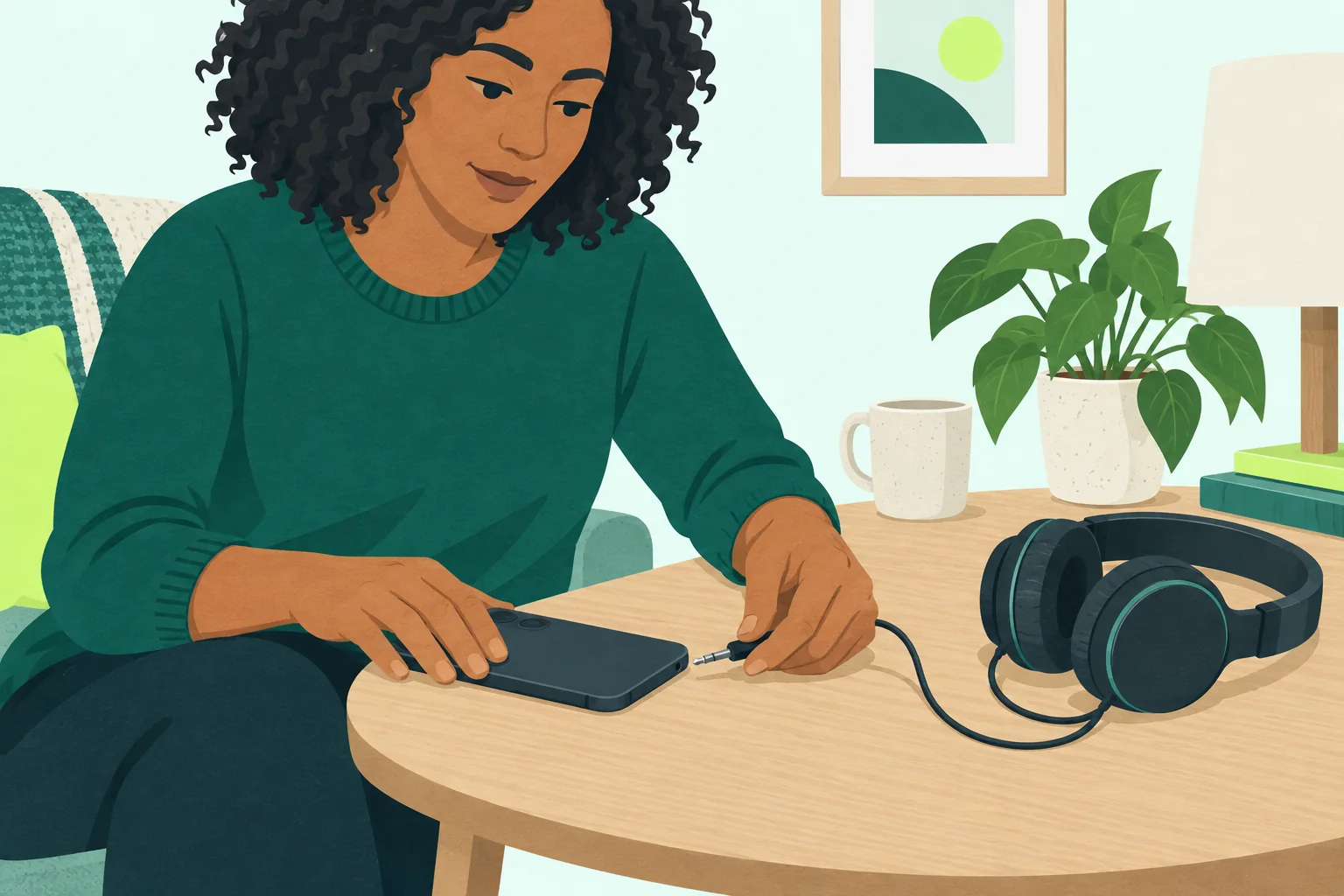
Set up Dizzout where you can sit still. Connect ordinary wired headphones, using an adapter if needed, or pair your usual Bluetooth headphones.
Free to download. Paid subscription for full access.
5. Ginger
Public health guidance lists ginger among options some people try. It is not a reliable promise of relief. Ask a pharmacist or clinician about supplements, particularly during pregnancy, for children or when taking other medicines.
6. Acupressure wristbands
These bands apply pressure at the wrist. The NHS notes that they do not work for everyone. A drug-free label does not mean an option is appropriate for every person or has no possible drawbacks.
7. Medicine, with advice on timing
Medicines may be used for prevention and for symptoms, depending on the product and circumstances. Mayo Clinic advises taking some antihistamines before travel and notes that drowsiness can occur. Follow the label and ask a pharmacist or clinician what is suitable; do not assume that taking more will help.
Scopolamine patches need advance planning and have important precautions, including a risk of overheating noted by Mayo Clinic. Ask your prescriber about their use. See our medicine guide for label-based information. Children and pregnancy require individual advice.
8. Motion sickness glasses
Some glasses have no lenses, only rings part filled with liquid that moves with the vehicle as a visual reference. A plausible design does not establish benefit: see what the one placebo-controlled trial of motion sickness glasses found. Avoid any accessory that obstructs your view or makes an activity unsafe.
9. Gradual adaptation
Some people become more comfortable with repeated travel. That does not mean pushing through severe nausea. Discuss persistent sensitivity with a clinician and see our guide to gradual adaptation for context.
Is there a cure for motion sickness?
No method guarantees permanent protection. Sensitivity and responses vary. If symptoms continue after the motion stops or occur without a journey, seek advice rather than assuming that another travel remedy is the answer. Our land sickness guide explains one pattern people report after travel.
Sources and review
Reviewed September 26, 2026. Dizzout publishes this page and is included as a product option. The sources provide general guidance and do not endorse the app. Other brands belong to their respective owners; this page does not imply affiliation or endorsement.
Frequently asked questions
How do I stop motion sickness fast?
Start by putting screens and books away, looking toward a distant fixed point, and keeping your head supported. Use fresh air and slow breathing, and take a break from motion if possible. These steps may help, but there is no reliable promise of immediate relief.
What's the fastest way to stop motion sickness once it starts?
Begin with practical steps you can take safely: stop reading, look toward the horizon or close your eyes if that is more comfortable, and get fresh air. Medicines often work best before travel. If symptoms have started, a pharmacist or clinician can advise on suitable options.
Why do I get motion sickness?
Motion sickness can occur when the movement your eyes see differs from what your inner ear senses. This sensory conflict can lead to nausea, dizziness, sweating or vomiting. Symptoms that are persistent, severe or unrelated to motion need clinical assessment.
What's the best seat to avoid motion sickness?
Adults may prefer the front passenger seat in a car, a window near the wings on a plane, or midship on a lower passenger deck at sea. On a train, prioritize a forward-facing window view rather than an exact row. Children must use the correct seat and restraint; comfort advice never overrides safety.
Does ginger actually work for motion sickness?
CDC, NHS and Mayo Clinic list ginger among options some people try, but that is not a guarantee of benefit. Ask a pharmacist or clinician before using supplements if you take other medicines, are pregnant or are choosing something for a child.
Is sound therapy better than Dramamine?
Dizzout has not published an independent clinical comparison showing that it is better than motion sickness medicine. Medicines and apps have different evidence and precautions. Dizzout's stated relief time is a product claim; ask a pharmacist or clinician about medicine suitability and timing.
Can I stop motion sickness during pregnancy without medication?
Talk to your obstetrician, midwife or clinician first. They can help you plan travel, food and fluids and assess persistent vomiting. Putting screens away, using a comfortable seat and taking breaks may be useful practical measures. Check any medicine, supplement or other remedy with them; this page does not establish safety during pregnancy.
How do I prevent motion sickness before a trip?
Plan a seat with a useful view, avoid reading during movement, eat lightly and avoid alcohol around travel. If medicine might be appropriate, ask about it before the trip so you can follow the product's timing and precautions. Practical measures can still be useful if symptoms begin.
Do motion sickness apps actually work?
Apps use different approaches, including visual motion cues, breathing guidance and audio. Evidence and availability differ by product. Dizzout has not published an independent clinical outcome study for its app. Check the evidence, permissions and current price rather than assuming all apps work or are free.
Do motion sickness glasses work?
Some glasses display a moving liquid horizon in the frame. That product description does not establish that they will help you. Review the evidence and instructions, and do not use an accessory that obstructs your view or distracts you while driving.
Can children use motion sickness remedies?
Ask a pediatrician or pharmacist about the child's age, symptoms and any proposed medicine or supplement. Keep children in age-appropriate seats and restraints. Screen breaks, fresh air when possible and screen-free distractions are practical options; an adult front-seat recommendation must not be applied to a child.
What works best for motion sickness?
It depends on the trigger, the person and when you act. Start with a useful view, a break from screens and a suitable seat. Plan medicine with a pharmacist or clinician if appropriate. No single option, including an app, is best for everyone or supported equally for every situation.
Is there a cure for motion sickness?
No method guarantees permanent protection from motion sickness. Some people adapt to repeated exposure, while others remain sensitive. Practical measures and appropriate medicines can help manage journeys. Persistent symptoms after motion stops should be discussed with a clinician.
Step-by-step how-to guides
- How to stop being car sick
- How to prevent car sickness on long drives
- How to stop feeling sick in the back seat
- How to not get seasick
- How to not get sick on a boat
- How to prevent motion sickness on a plane
- How to stop VR sickness
- How to get rid of motion sickness fast
By symptom and situation
In the car
On a plane
On a bus
On a ferry
Real questions, answered
- “I feel sick in the car”
- “I always get car sick”
- “Why am I so sensitive to motion?”
- “I get motion sick so easily”
- “Help, I'm seasick right now”
- “I'm going to be sick in the car”
- “Why do I get dizzy in the car?”
- “I can't read in the car”
- What is an M hull boat, and does it stop seasickness?
- Can sound make you nauseous?
- Why do I get car sick in certain cars but not others?
- If I get car sick, will I get sick on a plane?
Related guides
- How to stop motion sickness in a car
- How to stop seasickness on a ship
- How to stop air sickness on a plane
- How to stop VR sickness / cybersickness
- Motion sickness on a train
- Motion sickness on a bus
- Roller-coaster motion sickness
- The science behind sound therapy for motion sickness
Medically informational. Not a substitute for a doctor's advice. If symptoms persist after motion stops, come with hearing loss or severe headaches, or appear without obvious motion, see a doctor, those can point to a vestibular condition that needs clinical evaluation.
Watch: stop motion sickness fast
Watch this as its own page. More short clips on our videos page.