
Dizziness in the Car: What It Means and What to Do
Feeling dizzy or lightheaded in a moving car is usually the opening act of motion sickness, the stage before nausea arrives. Your inner ear is registering motion your eyes aren't confirming, and the brain's first response is often a woozy, unstable feeling rather than a sick stomach. Caught at this stage, it's much easier to stop.
Try Dizzout free. Drug-free calibrated sound through any headphones, designed to help once symptoms have started.Free · works with any headphones · no account to try
Free to try, no card needed. Or go straight to the App Store or Google Play.
Why this happens in the car
Dizziness tends to lead the symptom chain in cars because the vestibular system reacts before the stomach does. Winding roads, repeated acceleration and braking, and looking down at a screen produce exactly the rotational and linear signals that the inner ear flags first. If you act while you're merely dizzy, before sweating and nausea join in, recovery is fast.
What to do right now
- 1
Lift your gaze to the horizon and keep your head as still as possible against the headrest.
- 2
Stop reading or scrolling immediately: that's usually what tipped the balance.
- 3
Get fresh air moving across your face.
- 4
Play a Dizzout session through any headphones to give your balance system a steady reference; most users level out in about 90 seconds.
- 5
If you're the driver and feel dizzy, pull over safely: don't push through it behind the wheel.
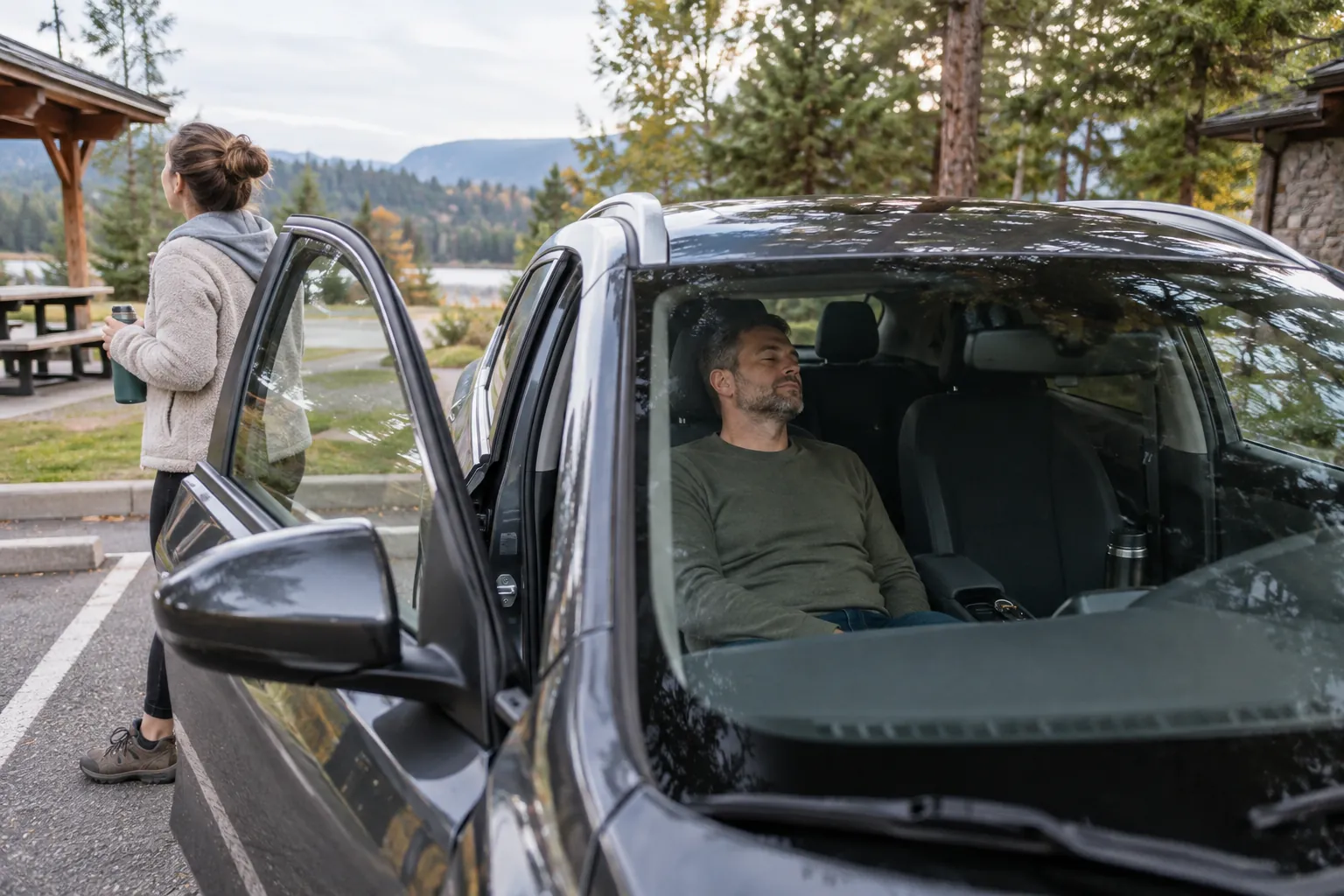
Already feeling it?
Open Dizzout, plug in any headphones, tap play. Drug-free, no drowsiness. Most users feel relief in about 90 seconds.
Before you need it: find out how prone you are
Take the free 2-minute testTwo minutes, no sign-up, and it ends with a drug-free plan to prepare.
Stop the nausea now
Free to try, no card needed. Or go straight to the App Store or Google Play.
 Scan to open on your phone
On a computer? Dizzout installs on your phone. Scan the code, or open dizzout.com/get on your phone and it'll take you straight to the right store.
Preventing it next time
- Sit where you can see the road ahead, ideally up front.
- Keep your head supported on curvy roads instead of letting it sway.
- Stay hydrated: mild dehydration makes dizziness noticeably worse.
- Pre-condition with Dizzout for about 90 seconds before setting off if you know you're prone.
When to see a doctor
Car-triggered dizziness that resolves after the ride is typical motion sickness. Dizziness that spins (true vertigo), strikes when you're not moving, lasts hours after travel, or pairs with hearing loss or severe headaches deserves a medical evaluation: conditions like BPPV and vestibular migraine mimic motion sickness but need different treatment.
Common questions
Is dizziness in the car the same thing as motion sickness?
It's usually the first stage of it. The sensory mismatch that causes motion sickness often shows up as lightheadedness before nausea. But dizziness can also come from dehydration, low blood sugar, or inner-ear conditions. If it happens outside of travel too, get it checked.
Why do I get dizzy reading in the car?
Your eyes lock onto a stationary page while your inner ear feels every movement of the car, the strongest possible version of the sensory mismatch. Looking up and out at the road usually clears it within minutes; sound therapy speeds that up.
Can the driver get dizzy from motion sickness?
It's rare but possible, especially on mountain switchbacks. Drivers normally stay symptom-free because they anticipate every movement. If dizziness hits while driving, treat it seriously: pull over, get air, and don't continue until it passes.
Related guides
Medically informational; not a substitute for a doctor's advice. Persistent or unusual symptoms deserve a clinical evaluation.