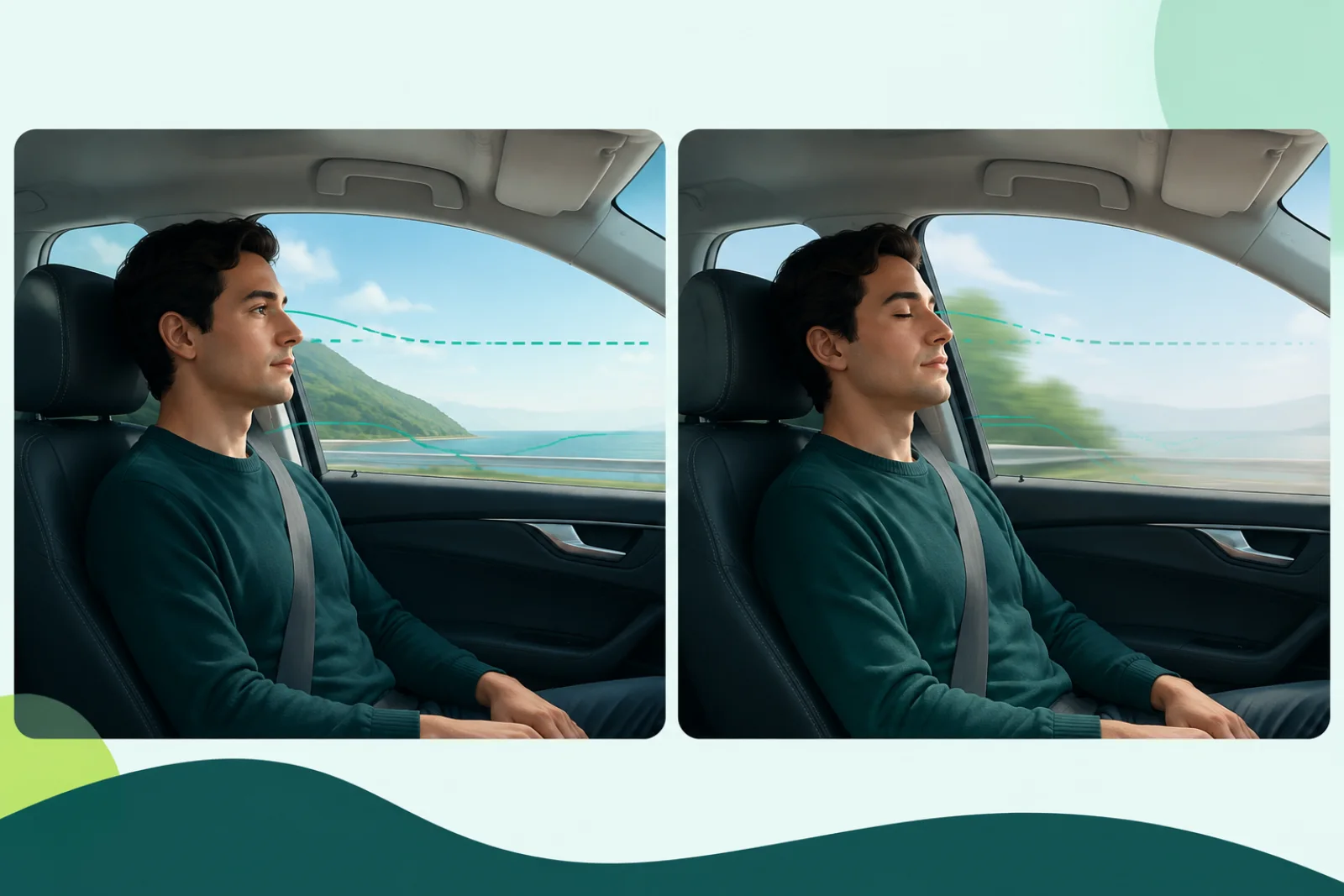

The short answer
Motion sickness is triggered by movement and settles once the movement stops: queasiness, cold sweat, yawning, dizziness without spinning. Vertigo is the sensation that you or the room is spinning, it can start while you sit perfectly still, and it can come with hearing changes or severe imbalance. Motion sickness tools help the first one. The second one needs a doctor, because the treatment depends on the cause.
People mix up motion sickness and vertigo all the time. Both make the world feel wrong, but they're not the same thing. Knowing the difference actually helps you handle it better instead of guessing.
Motion sickness comes from movement. Car rides, boats, planes, VR. Your eyes and inner ear send conflicting signals to the brain. Eyes might say everything's steady while the ear feels every bump. Brain panics and nausea kicks in. It usually stops when the motion does.
Vertigo feels different. It's that spinning or tilting sensation even when you're sitting still. The room seems to move or you feel off balance for no clear reason. Inner ear problems, like BPPV or infections, often cause it. Migraines, head injuries, or even some meds can trigger it too. It's not always tied to actual travel. Our vertigo vs motion sickness: telling them apart page has the short version, with what to avoid and when to see a doctor.
I've seen friends confuse the two on trips. One guy thought his cruise dizziness was just sea sickness until it kept going days after getting home. Turned out to be a vertigo episode.
Prone to motion sickness? For the motion-triggered kind. Drug-free, about 90 seconds, any headphones.Starts in your browser · works with any headphones
Get your personalized Dizzout plan. Paid subscription for full access.

On your phone? Scan to start there.
Quick ways to tell them apart
Motion sickness (Left of the diagram)
- Starts with real or on-screen motion
- Cold sweat, yawning, clamminess
- Fades minutes to hours after the motion ends
- First move: horizon, air, slow breathing
Both (Middle of the diagram)
- Dizziness
- Nausea
- Feeling off balance
- The vestibular system is involved
Vertigo (Right of the diagram)
- Can start at rest or on a head-position change
- The room, or you, visibly spinning
- Episodes on their own schedule
- First move: a medical evaluation
The distinctions described in this article. Symptoms can overlap in one person.

- Motion sickness, triggered by actual movement; nausea, cold sweat, yawning; gets better when motion stops
- Vertigo, spinning feeling at rest; can include hearing changes or severe imbalance; lasts longer sometimes
| Motion sickness | Vertigo | |
|---|---|---|
| What brings it on | Real or on-screen motion: vehicles, boats, screens, VR | Often nothing. Episodes can start at rest or with head-position changes |
| What it feels like | Queasiness, clamminess, nausea; dizziness without spinning | The room (or you) visibly spinning or tilting |
| When it stops | Fades minutes to hours after the motion ends | Episodes on their own schedule; can recur without travel |
| First move | Horizon, fresh air, slow breathing, drug-free tools | Medical evaluation. Treatment depends on the cause |
| When to see a doctor | If dizziness lasts days after travel, happens without obvious movement, or comes with hearing loss, severe headache or weakness | Always, because the treatment depends on the cause |
Both can overlap though. Bad motion sickness can leave you dizzy afterward, and if you're still woozy hours after a flight, our dizziness-after-flying guide covers that readaptation window. Vertigo, meanwhile, makes travel feel ten times worse.
What helps each one
For motion sickness, the usual rules apply. Front seat, horizon focus, ginger, fresh air. Dizzout is built for this one. Put on any headphones and press play: Dizzout states relief in about 90 seconds, with no pills and no drowsiness. For a full overview of options, see our complete guide.
Vertigo needs a different approach. Epley maneuvers for certain types, doctor visits, sometimes meds. Motion sickness tools won't fix true vertigo, but they can help if travel makes it flare up.
One buddy dealt with both after a rough flight. The app calmed his motion part while he worked on the vertigo with his doctor.
When to get it checked
They feel similar but come from different places. Figuring out which one you're dealing with saves a lot of frustration. If symptoms stick around or feel off, get it checked. Don't just assume it's "normal travel sickness." Motion sickness is annoying but manageable. Tools like Dizzout make it way easier to live with while you sort out anything else going on.
For the motion-triggered half
Stop the nausea
Dizzout is built for the sensory-conflict kind of dizziness, the kind movement starts. It is not a treatment for vertigo conditions like BPPV. Drug-free, any headphones, about 90 seconds.
Get your personalized Dizzout plan. Paid subscription for full access.
30,000+ travelers in 30+ countries · How we count

On your phone? Scan to start there.
Comparing apps first? See how the motion sickness apps compare
Frequently asked questions
Is vertigo the same as motion sickness?
No. Both can bring dizziness and nausea, which is why people mix them up, but they come from different places. Motion sickness is triggered by movement and usually settles once the movement stops. Vertigo is the sensation that you or the room is spinning, and it can start while you sit perfectly still. Vertigo needs a doctor, because the treatment depends on the cause.
Can motion sickness cause vertigo?
Not directly. Motion sickness brings dizziness without spinning, and it usually settles once the motion stops. Severe motion sickness can still leave you feeling dizzy for hours or days afterward, a state sometimes called mal de debarquement. If dizziness persists more than a few days after a trip, it's worth seeing a doctor to rule out a vestibular issue.
Does Dizzout work for vertigo?
Dizzout is designed for motion sickness, the sensory-conflict kind triggered by movement. It can help when travel aggravates vertigo, but it isn't a treatment for true vertigo conditions like BPPV. See a doctor for those.
What is BPPV?
Benign paroxysmal positional vertigo: tiny calcium crystals in the inner ear get dislodged and cause brief, intense spinning when you change head position. The Epley maneuver, performed by a doctor or physical therapist, fixes most cases quickly.
When should I see a doctor?
If dizziness happens without obvious movement, lasts days after travel, comes with hearing loss, severe headache, or weakness, see a doctor. Those are signs it's more than ordinary motion sickness.
What is the difference between motion sickness and vertigo?
Motion sickness is triggered by movement and settles once the movement stops: queasiness, cold sweat, yawning, dizziness without spinning. Vertigo is the sensation that you or the room is spinning. It can start while you sit perfectly still, and it can come with hearing changes or severe imbalance. Motion sickness tools help the first. Vertigo is a reason to see a doctor, because its causes are ones a motion sickness remedy will not reach.
Someone you know gets motion sick?
Send them this guide. It might be the trip it saves.
Your next question, probably
Still rocking days after the trip?
Land sickness, explained
Not your question? Worried it isn't ordinary?Woozy hours after a flight?Feeling it right now?
About this article
This article is informational and not a substitute for medical advice. Vertigo has many causes and the right treatment depends on which one you have, so persistent or severe symptoms belong with a doctor.