The short answer
Fastest way to stop it once it starts: look at a distant, stable point (the horizon or the road ahead), stop looking at any screen, and move to the steadiest seat available, front passenger, over the wing, or midship. Sound therapy through headphones gives relief in about 90 seconds, drug-free. Medication like Dramamine or Bonine only helps if taken 30 to 60 minutes before symptoms begin.
Motion sickness hits like a sneak attack. One minute you're fine, cruising along or staring at the horizon on a boat. Next thing you know your stomach's doing cartwheels, sweat's breaking out cold on your neck, and you're praying the ride ends soon. It's not rare either. Up to a third of people deal with it in some form, and for some it's downright miserable on anything that moves.
This guide pulls together everything real people and doctors know about it in 2026. Causes, why certain folks get slammed harder, every prevention trick that actually holds up, treatments from grandma's ginger tea to the latest options, and special cases like pregnancy, kids, VR, and that weird post-trip rocking feeling. By the end you'll know exactly why your body betrays you and what actually works to fight back.
For the full breakdown of every method ranked by speed, see how to stop motion sickness.
Try Dizzout free. Drug-free, works after symptoms start, about 90 seconds on any headphones.Free · works with any headphones · no account to try
Free to try, no card needed. Or go straight to the App Store or Google Play.
What is motion sickness and why does it happen?
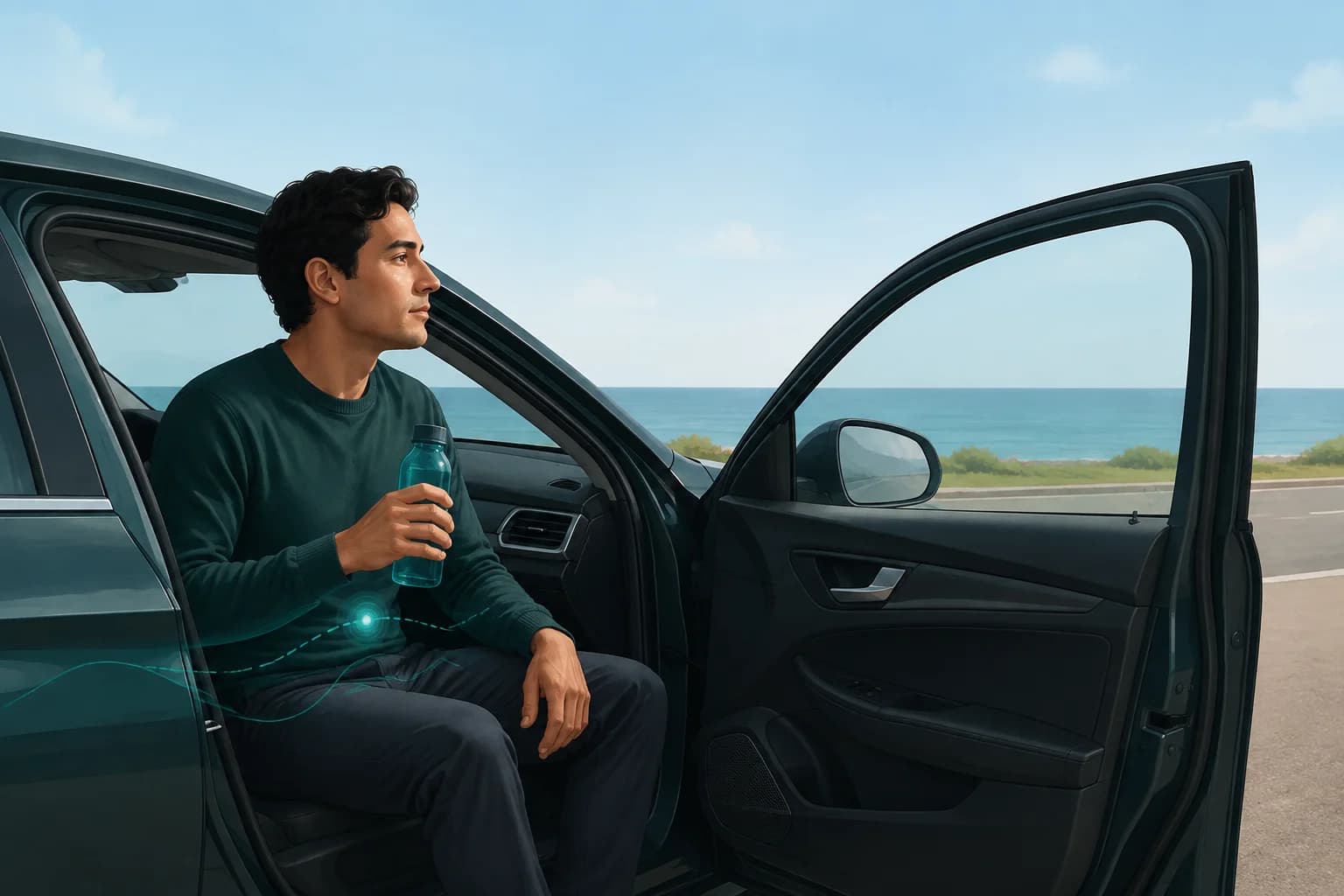
Your brain gets lied to. That's the core of it. The inner ear has fluid and tiny crystals that track every tilt, speed change, and bump. Your eyes are supposed to back that up. Muscles and joints chime in too. But when you're in a car reading your phone or on a boat where the deck rocks but the horizon looks steady? The signals clash. Eyes say "still," inner ear screams "moving," brain panics and figures poison or danger, then triggers nausea as a defense.
Cleveland Clinic and the 2026 CDC Yellow Book call it sensory conflict or neural mismatch. It's the same reason some folks feel sick on simulators or in VR. The mismatch doesn't have to be huge. Even smooth flights can do it if turbulence kicks in or you're in the back row.
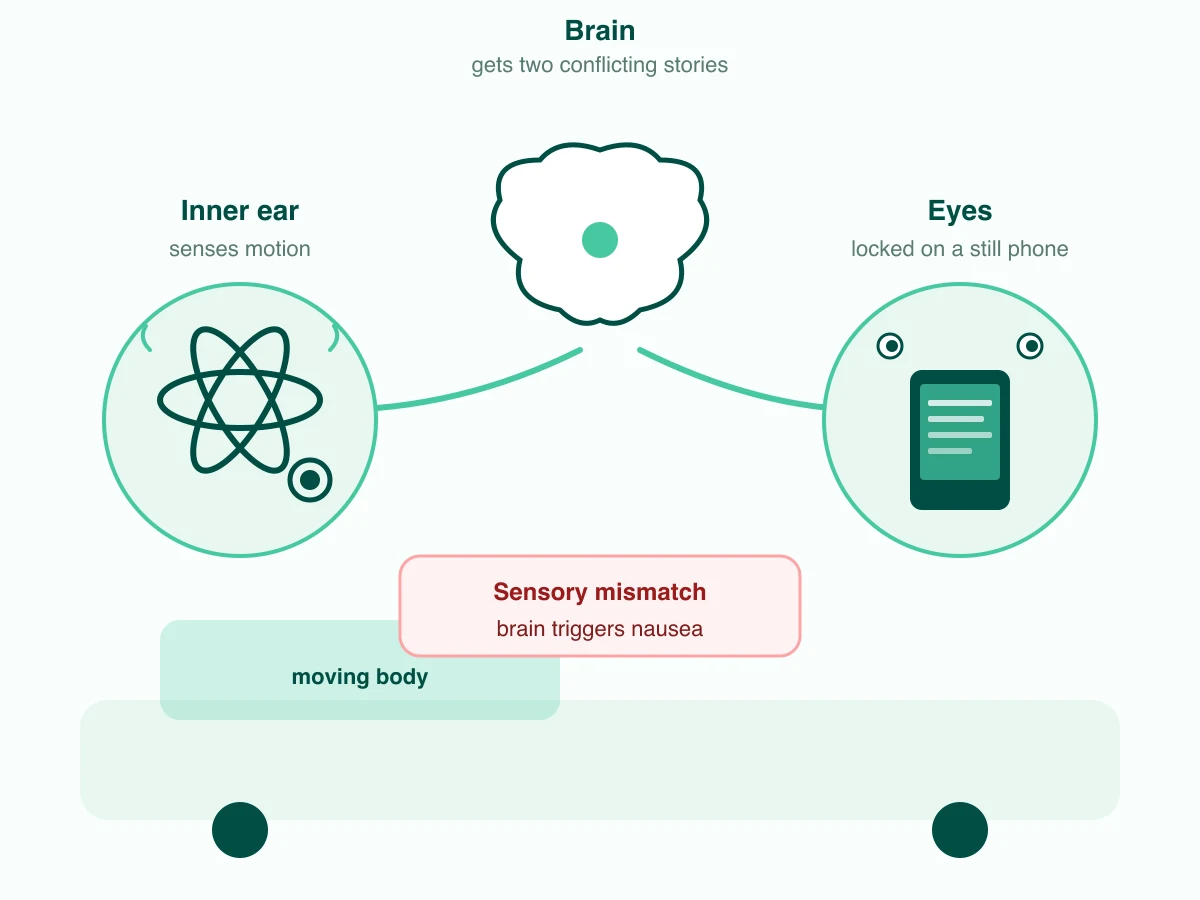
The sensory-conflict account described by Cleveland Clinic and the CDC Yellow Book.
Early signs sneak up. Stomach awareness first, then warmth, yawning, cold sweat, pale face, dizziness. Full nausea and vomiting come later if you don't catch it. Symptoms usually fade once the motion stops, but not always. Some people feel off for hours or days after.
Stomach
A vague unsettled feeling, well before full nausea.
Warmth
Feeling flushed, then cold sweat on the neck and forehead.
Yawning
An early sign that is almost always dismissed.
Pale skin
Blood redirecting as the body prepares.
Dizziness
The vestibular mismatch becoming overwhelming.
The symptom sequence described in this guide. Order and speed vary between people.
Who gets hit hardest? Risk factors and demographics
About 1 in 3
people are highly susceptible to motion sickness
Given strong enough motion, almost anyone with a working inner ear can be made sick.
MedlinePlus Genetics (U.S. National Library of Medicine, NIH), 2018.
Not everyone suffers equally. Kids between 2 and 12 are prime targets because their balance systems are still developing. Infants and toddlers often dodge it completely. Women deal with it more than men, likely tied to hormones and inner ear sensitivity. Pregnancy ramps it up big time, especially in the first trimester when morning sickness already has you on edge.
Genetics play a role too. If your parents got green on every road trip, odds are you will. Migraine sufferers, people with inner ear issues, and those with anxiety get it worse. Post-COVID adds a new layer: the virus can affect the inner ear and vestibular system, leaving some folks newly sensitive to motion even on short drives.
Age matters on the other end too. Older adults sometimes adapt better but can have lingering dizziness if balance is already compromised. Some of us are just wired for it, and life events can flip the switch.
Motion sickness in real-world situations
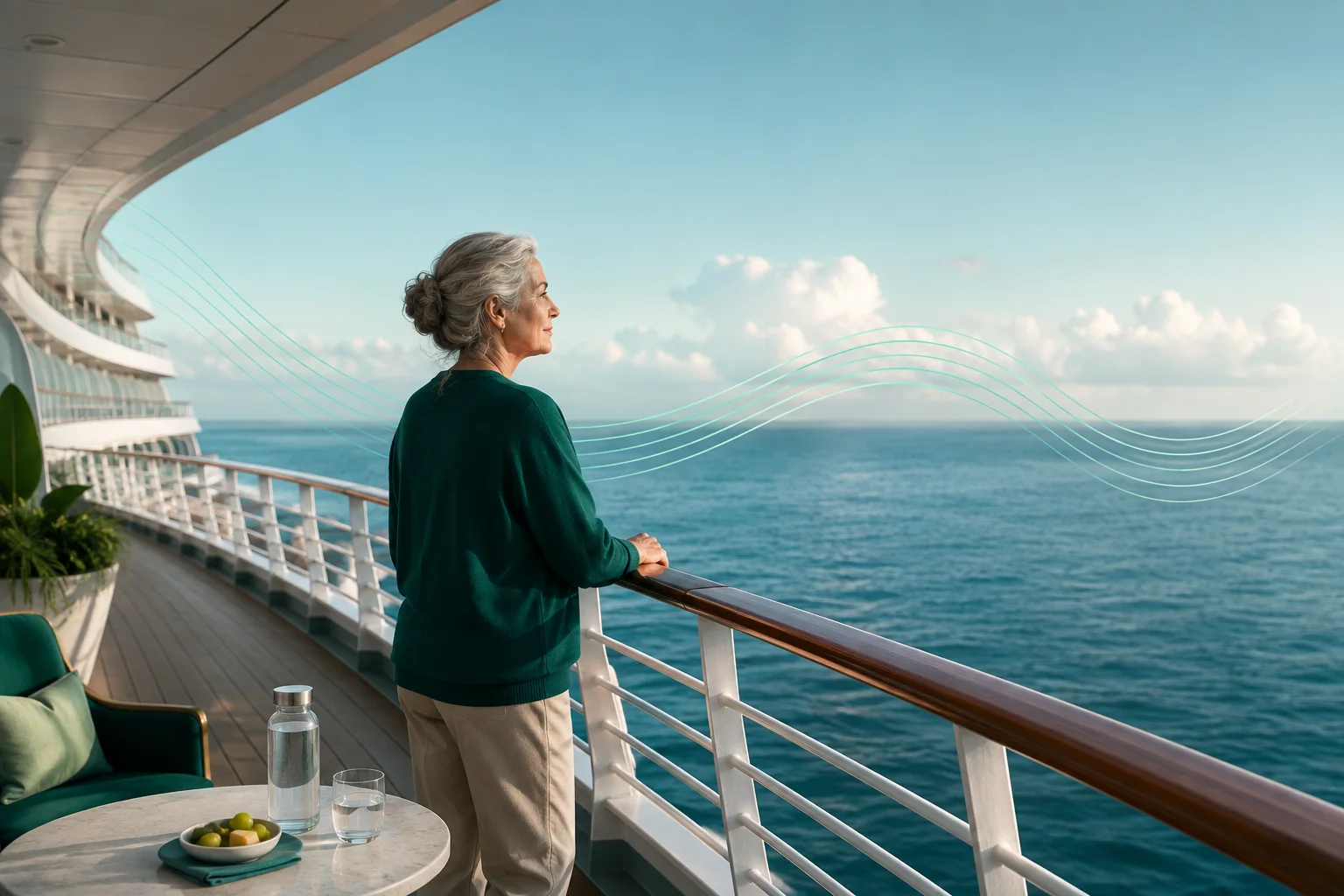
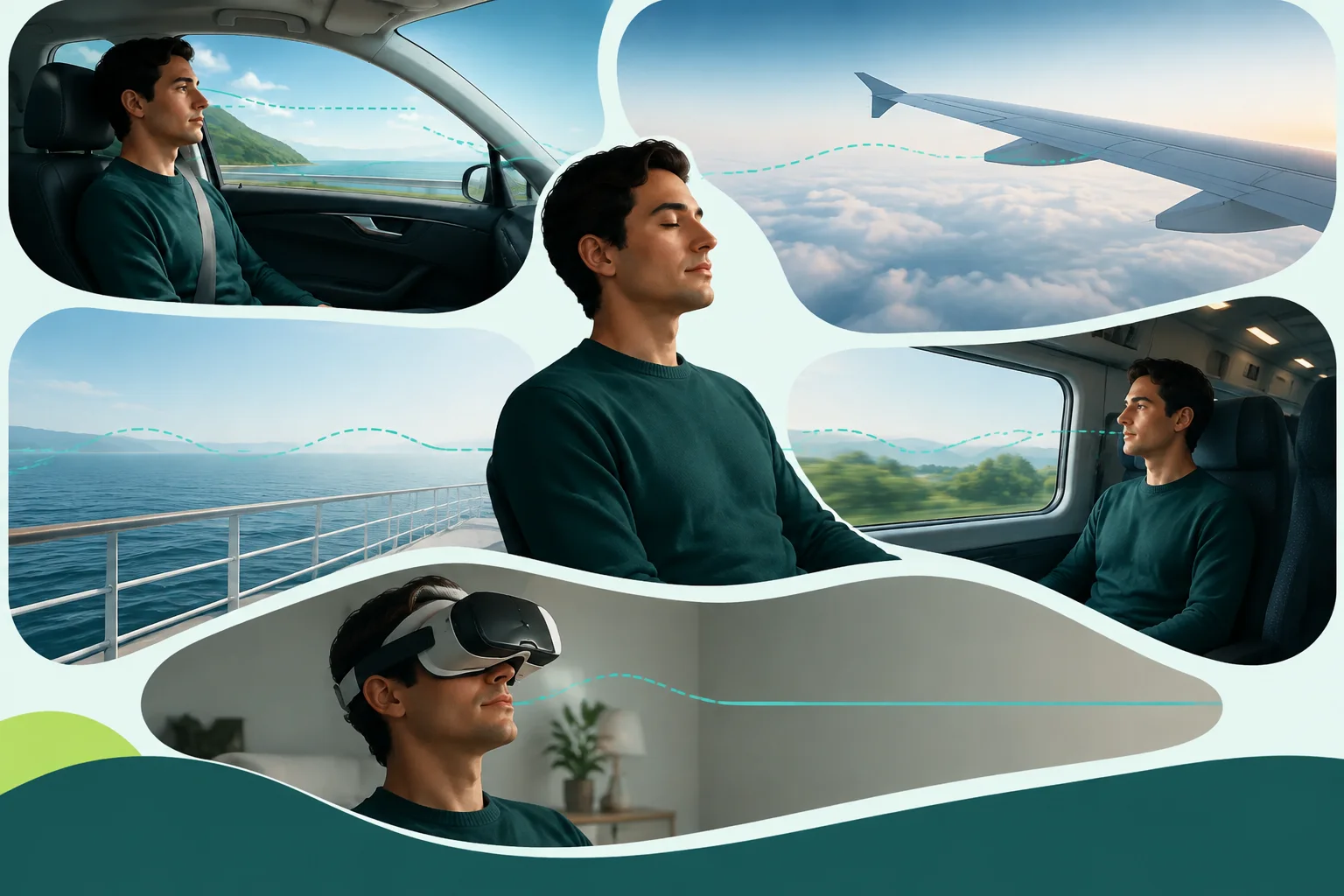
Cars are the everyday villain. Back seat, screens, winding roads. Sit up front, stare at the road ahead, crack a window. Trains and buses follow similar rules. Boats and cruises are brutal for many because the motion is constant and unpredictable. Lower mid-ship cabins feel steadier. Airplanes hit during turbulence or if you're in the tail section.
VR and simulators are exploding as a trigger. Eyes see wild movement, body sits perfectly still. Low frame rates, artificial walking with controllers, or jerky head tracking make it worse. Theme parks, roller coasters, even some video games can do the same, and Minecraft is a common flat-screen example despite how gentle it looks. Each situation has its quirks, but the fix usually circles back to reducing that sensory mismatch.
- CarFront seat, eyes on the road ahead
- BoatMidship and low, horizon in view
- PlaneOver the wing, not the tail
- TrainForward-facing, never rear-facing
- BusFront, near the driver
- VRComfort settings on, short sessions
- GamesBlur off, head bob off, FOV up
- Theme parksLook far, not at the car in front
Seating advice follows the same pivot-point logic in every vehicle.
Prevention hacks that actually work
Planning beats reacting every time. Focus on the horizon or a distant fixed point. Avoid reading or screens. Sit where motion is least, front car seat or over the wing on a plane. Fresh air helps some people more than others. Light bland snacks before travel, not heavy meals. Stay hydrated but skip caffeine and alcohol.
Ticks are saved in this browser only, for this session.
Habituation is the long game. Short repeated exposures build tolerance over time. Not immediate, but it sticks. Ginger shows up in study after study. Tea, chews, or capsules 30 to 60 minutes before can cut nausea for many. Acupressure wristbands on the P6 point are cheap and harmless, though evidence is mixed. Some swear by them on cruises. Controlled breathing, music, or even closing eyes can dial things down. The trial evidence behind each of these is laid out remedy by remedy in the remedy rankings.
Treatment options: natural, over-the-counter, and beyond
When prevention isn't enough, options range from gentle to stronger. Ginger and peppermint still help here. Vitamin B6 gets recommended for pregnancy nausea too.
Over-the-counter antihistamines like dimenhydrinate (Dramamine) or meclizine work for many but can make you drowsy. Scopolamine patches last longer but have side effects to watch. Newer non-drowsy options have emerged by 2026 as well.
For zero chemicals, sound therapy steps in. Dizzout plays precisely calibrated audio through any headphones, and Dizzout states relief in about 90 seconds. No pills, no fog, just regular earbuds or over-ear ones. It fits cruises, road trips, VR sessions, or any situation where medication is not the option you want.
Press play
Headphones in, wired or Bluetooth. Nothing else to set up.
Sit with it
Eyes open or closed. You do not have to find a horizon.
It ends
About 90 seconds later the session finishes on its own.
One session runs about 90 seconds. Drug-free, through any headphones.
The option that works after symptoms start
Stop the nausea
Pills need 30 to 60 minutes of warning. Horizon-staring needs a horizon. Dizzout needs headphones and about 90 seconds, and it is drug-free, so there is nothing to sleep off.
Free to try, no card needed. Or go straight to the App Store or Google Play.
 Scan to open on your phone
On a computer? Dizzout installs on your phone. Scan the code, or open dizzout.com/get on your phone and it'll take you straight to the right store.
Special cases: pregnancy, kids, post-COVID, and lingering effects
Pregnancy complicates everything. Many meds are off the table early on, so front seat, ginger, fresh air, and drug-free audio tools become the things people ask about. Always talk to your doctor first: what is right for one pregnancy is not automatically right for another.
Kids need kid-sized approaches. Front or middle seating, no screens, audiobooks, light snacks. Some parents use child-friendly acupressure bands. Medicine for children is age-dependent enough that it belongs in a conversation with a pediatrician or pharmacist rather than a label-only decision.
Post-COVID vestibular issues hit harder for some. The virus can leave the inner ear inflamed, turning mild trips into big problems. Vestibular rehab exercises help long term, and drug-free options like sound therapy are what people reach for in the moment while the system heals.
Then there's mal de debarquement syndrome, that rocking or bobbing feeling after a cruise or long trip that lingers for weeks or months. It's rarer but frustrating. Treatments focus on vestibular therapy and sometimes medication, but it often fades on its own. We have a whole cluster on it at land sickness.
Myths busted and when to see a doctor
Myth
Just tough it out and you will adapt.Fact: Pushing through does not resolve the mismatch. Acting on the first warning sign is what shortens the episode.
Myth
Ginger does not work.Fact: Half true. It helps many people and not everyone, and it appears to act on the stomach rather than on the inner ear.
Myth
Wristbands are pure placebo.Fact: The trial evidence is genuinely mixed: two laboratory studies point in opposite directions. Cheap and harmless enough to test on yourself.
Myth
It is all in your head.Fact: It is not. It is an involuntary autonomic response to conflicting sensory input, which is why willpower does nothing.
Each fact restates a point made elsewhere in this guide or in the remedy rankings.
Building your personal plan
Dizzout targets the exact mismatch your brain is fighting. One tap on any device, regular headphones, about 90 seconds of sound therapy. It works across cars, boats, planes, VR and post-COVID sensitivity. No drowsiness means you stay sharp whether driving or just trying to enjoy the trip.
Stack it with the basics. Ginger before, good seat, horizon focus, and the app as backup. Test on short rides first so you know your routine before the big trip.

Wrapping up: you don't have to suffer anymore
Motion sickness isn't a character flaw. It's your brain doing its job a little too well in a world full of cars, boats, planes, and headsets. The good news is the toolkit keeps growing. Combine smart prevention, the remedies that hold up, and tools like Dizzout, and most trips become enjoyable again.
Bookmark this guide and share it. If you're dealing with it right now, try the horizon trick or fire up the app. Small steps add up fast. Safe travels: the world is big, and you deserve to see it without feeling awful the whole way.
Frequently asked questions
How long does motion sickness last?
Symptoms usually stop when the motion does, but they can linger for hours, and in rare cases like mal de debarquement syndrome, for weeks after a long sea voyage. Most people recover within 30 minutes of leaving the vehicle.
Is motion sickness the same as vertigo?
Similar but distinct. Both involve the vestibular system, but motion sickness is triggered by sensory conflict during movement, while vertigo is a spinning sensation that can occur without any movement at all, often due to an inner ear disorder.
Can you outgrow motion sickness?
Many children do: the vestibular system matures and symptoms ease by the early teens. Adults can also adapt through habituation (repeated short exposures), though some people remain sensitive throughout their lives.
Does motion sickness affect pets?
Yes. Dogs in particular can get car sick due to the same sensory mismatch. Short trips to build tolerance, keeping them facing forward, and limiting food before travel are the same approaches that help humans, minus the ginger tea.
Someone you know gets motion sick?
Send them this guide. It might be the trip it saves.
Your next question, probably
Feeling it right now?
The 60-second protocol
If that is not your question:
About this article
- MedlinePlus Genetics (NIH). Motion sickness: how common it is.
- Cleveland Clinic. Motion sickness: symptoms, causes, treatment.
- CDC Yellow Book 2026, motion sickness chapter.
- NHS UK. Motion sickness overview.
This article is informational and not a substitute for medical advice. Brand names are trademarks of their respective owners; Dizzout is not affiliated with or endorsed by them.