The short answer
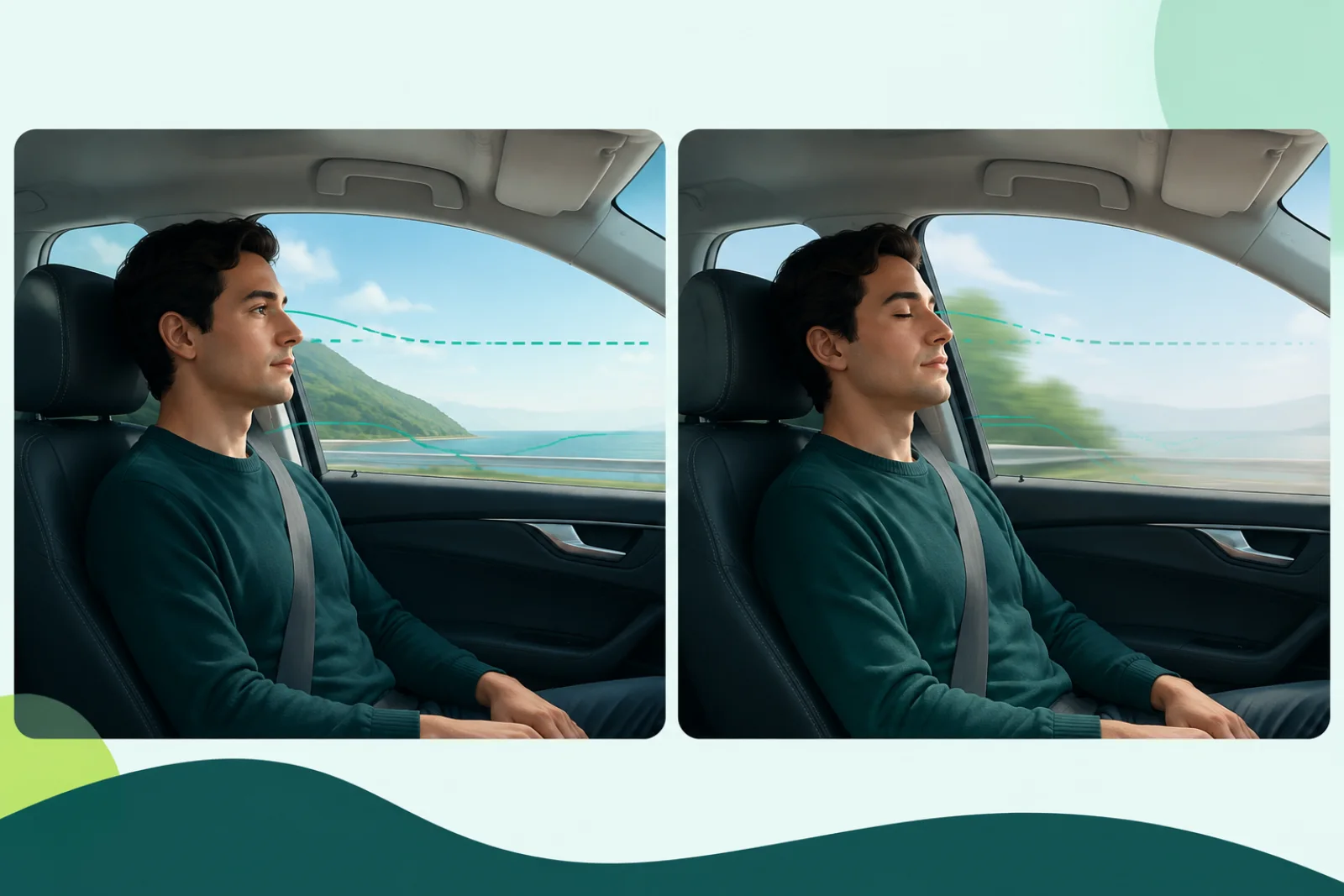
COVID-19 can affect the inner ear and vestibular system, which lowers your brain's tolerance for the mismatch between what your inner ear feels and what your eyes see. The result is motion sickness that is new, or worse than it used to be, on journeys that never used to be a problem. For many people it improves as the body recovers, but the timeline varies and long COVID can make it linger.
A lot of people noticed something strange after recovering from COVID. Trips that used to be completely fine suddenly left them feeling nauseous and dizzy. Cars, boats, even short flights started triggering motion sickness like never before, in people who had never dealt with it in their lives.
Try Dizzout free. Drug-free, no added fatigue, about 90 seconds on any headphones.Free · works with any headphones · no account to try
Free to try, no card needed. Or go straight to the App Store or Google Play.
Why COVID Affects Motion Sickness
Doctors are still piecing together the full picture, but the evidence points to the virus affecting the inner ear and vestibular system directly. COVID-19 has been shown to cause inflammation in neural pathways, including those involved in balance and spatial orientation. The result: a more sensitive vestibular system that reacts more strongly to the sensory mismatch that causes motion sickness.
In plain terms, the gap between what your inner ear feels and what your eyes see during movement was always there (here's the underlying science). Post-COVID, your brain's tolerance for that gap decreases. What used to be a manageable mismatch now triggers full nausea. Some people who were never car-sick before now feel it on every winding road.
Myth
If you never had motion sickness before, COVID cannot have caused it.Fact: COVID-19 can affect the inner ear and vestibular system, and many people with no prior history develop motion sickness after infection.
Myth
The old tricks should still work just as well.Fact: The standard advice still applies, but the underlying vestibular sensitivity is higher, so measures that used to be enough now only partially help.
Myth
It will sort itself out if you push through and ignore it.Fact: Recovery timelines vary, and the vestibular system responds better to active management than to ignoring symptoms.
Each fact restates a point made elsewhere in this article.
Why Old Tricks Fall Short Now
The standard advice still applies, sit in the front seat, keep eyes on the horizon, get fresh air, eat light. But for many post-COVID travelers, these measures that used to be enough now only partially help. The underlying vestibular sensitivity is higher, so you're fighting a harder baseline.
Ginger helps some people at the margins. Antihistamine medications (Dramamine, Bonine) can work but carry side effects, drowsiness and brain fog that are the last things you want when you're already dealing with post-COVID fatigue.
What Works Better for Post-COVID Motion Sickness
This is where Dizzout stands out for post-COVID travelers specifically. The app plays precisely calibrated audio through regular headphones. Dizzout states relief in about 90 seconds, without any medication, drowsiness, or added fatigue on an already taxed system.
Press play
Headphones in, wired or Bluetooth. Nothing else to set up.
Sit with it
Eyes open or closed. You do not have to look at a horizon.
It ends
About 90 seconds later the session finishes on its own.
One session runs about 90 seconds. Drug-free, through any headphones.
I spoke to a friend who got COVID in late 2025. She used to love road trips but afterwards even grocery runs left her queasy. After trying the audio sessions she said it gave her confidence to travel again, instead of spending the whole ride anxious about whether she'd make it.
No pills on an already taxed system
Stop the nausea
Dizzout is drug-free, so there is nothing to add to post-COVID fatigue and nothing to check against other medication. Any headphones, about 90 seconds.
Free to try, no card needed. Or go straight to the App Store or Google Play.
 Scan to open on your phone
On a computer? Dizzout installs on your phone. Scan the code, or open dizzout.com/get on your phone and it'll take you straight to the right store.
How Long Does Post-COVID Motion Sickness Last?
First weeks
Some people see full vestibular recovery within weeks of the infection clearing.
Months
Others notice sensitivity that lingers, particularly with long COVID.
If it lingers
Active management beats waiting it out. The vestibular system responds to it.
Worth a doctor
Hearing changes, severe headaches, or dizziness with no motion at all.
Recovery patterns as described in this article. Individual timelines vary widely.
Everyone's recovery is different. Some people see full vestibular recovery within weeks. Others notice sensitivity that lingers for months, particularly those dealing with long COVID. If you're in that group, don't just push through it and hope it resolves, the vestibular system responds better to active management than to ignoring symptoms.
Motion sickness after COVID doesn't have to sideline you. With the right tools and small adjustments to how you travel, most people can get back to enjoying the journeys they used to take for granted.
Frequently asked questions
Can COVID cause motion sickness for the first time?
Yes. COVID-19 can affect the inner ear and vestibular system, increasing sensitivity to the sensory mismatch that causes motion sickness. Many people with no prior history of motion sickness develop it after infection.
Will post-COVID motion sickness go away on its own?
For many people, yes, vestibular sensitivity improves as the body recovers. But recovery timelines vary significantly. Those with long COVID symptoms may experience lasting vestibular issues that benefit from active management.
Is Dizzout safe to use during long COVID recovery?
Yes. Dizzout uses audio at normal listening levels with no medication, chemicals, or stimulation of any kind. It's as safe as listening to music, with no interaction risk with other treatments or medications.
Why does COVID affect the inner ear?
COVID-19 causes systemic inflammation that can affect neural pathways throughout the body, including those in the vestibular system. The inner ear's hair cells and the neural connections between the ear and brain can be temporarily or persistently affected.
Someone you know gets motion sick?
Send them this guide. It might be the trip it saves.
Your next question, probably
Feeling it right now?
The 60-second protocol
If that is not your question:
About this article
This article is informational and not a substitute for medical advice. If dizziness persists after the motion stops, comes with hearing changes or severe headaches, or appears without any movement at all, see a doctor.