The short answer
The 2026 tournament is spread across 16 host cities in three countries, so following a team means far more flying and long-distance driving than a single-country World Cup. Sit over the wing on the plane, take the front seat in the car, face forward on the shuttle bus, keep your eyes on something far away rather than on your phone, and travel on a light stomach rather than a full one.
The 2026 World Cup (June 11 to July 19) is the biggest one ever: 48 teams, three host countries, and 16 cities spread across an entire continent, from Boston in the east to Vancouver on the Pacific to Guadalajara in central Mexico. If you're following your team, that means a lot of miles: long-haul flights, multi-hour drives between host cities, and packed buses to the stadium.
It also means a lot of opportunities to feel carsick, airsick or just plain queasy on the way to kickoff. Nobody wants to arrive at the biggest match of their life green in the face. Here's how to keep your stomach in the game.
Get your personalized Dizzout plan. Drug-free, no grogginess before kickoff, about 90 seconds on any headphones.Starts in your browser · works with any headphones
Paid subscription for full access.

On your phone? Scan to start there.
Why this World Cup is a motion-sickness minefield
Past tournaments were in one country: you'd base yourself in a city and take short hops. 2026 is different. The group stage alone has matches scattered from the U.S. West Coast to eastern Canada to Mexico. Chasing a team through the knockouts can mean a cross-country flight one week and a six-hour drive the next. Every one of those journeys is a classic trigger: your inner ear feels the motion while your eyes are locked on a phone, a seat-back, or the team group chat.
- PlaneOver the wing, eyes far ahead in rough air
- CarFront seat, break every couple of hours
- Shuttle busFace forward, phone down, air if you can
The same pivot-point logic applies in every vehicle.
On the plane between host cities
For the full breakdown, see our guide to motion sickness on a plane.
On the road and the team bus
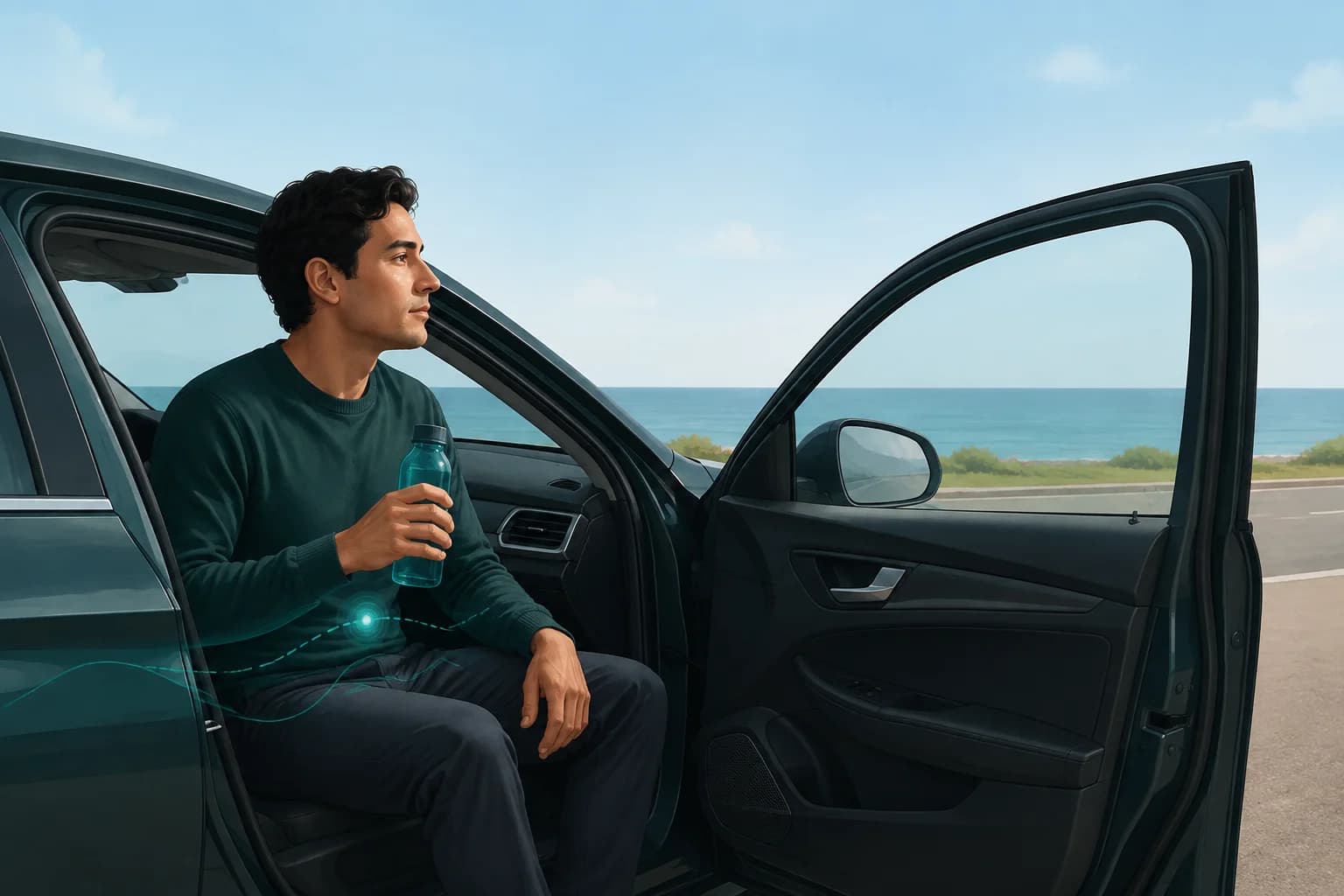
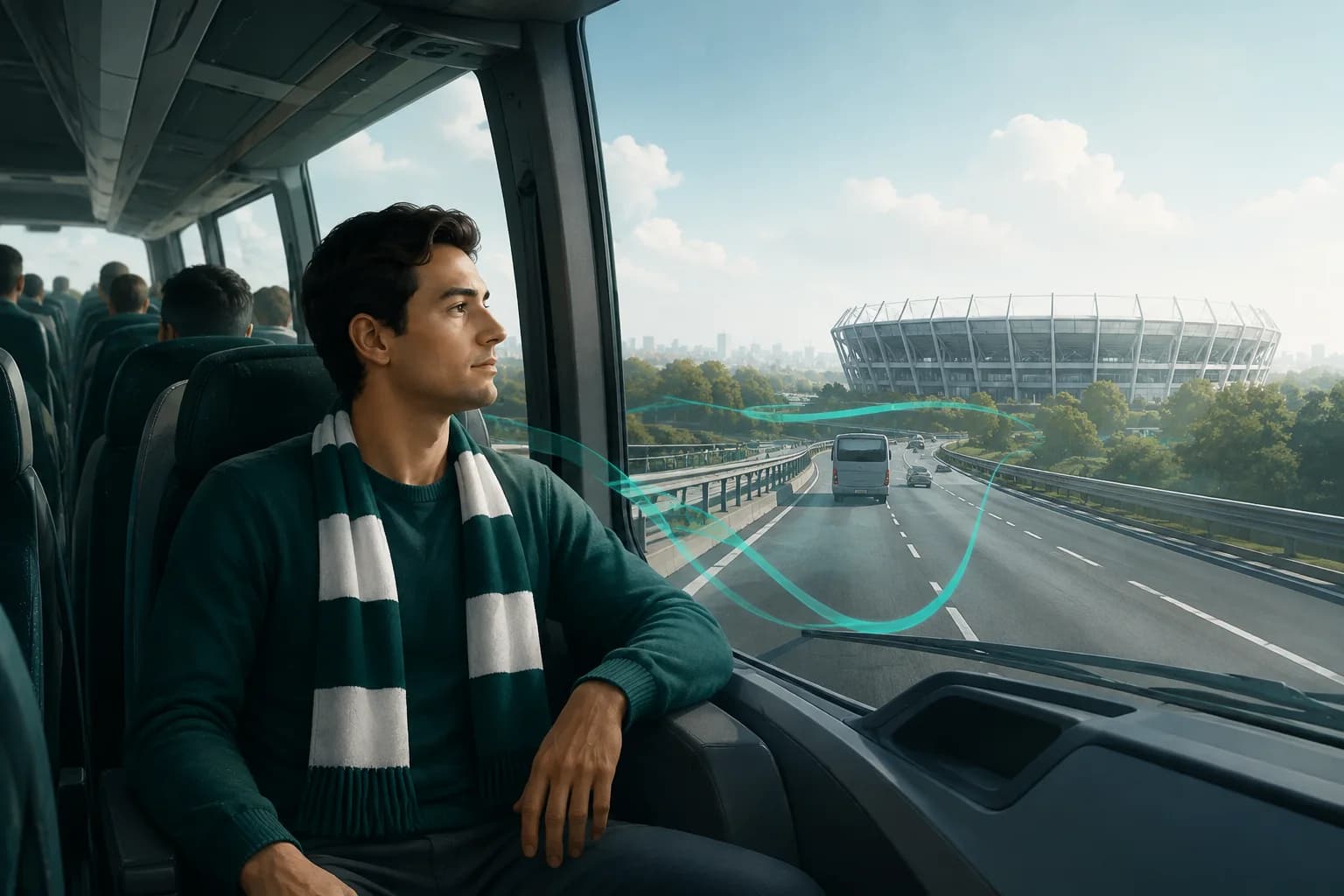
Long drives between cities, and the stop-start shuttle buses on matchday, are where a lot of fans get caught out, usually because they're staring at a phone the whole way. Face forward, fix your eyes on the horizon, and give your phone a rest on the windy stretches. Crack a window, take a break every couple of hours, and don't set off on a stomach full of stadium food. Our car sickness guide and road-trip nausea tips go deeper.

The 90-second reset that fits in a matchday bag
Here's the part that actually saves the trip for a lot of travelers: Dizzout. It's a free-to-download, drug-free app that plays precisely calibrated audio through any headphones. For the cause itself, read about the inner-ear mismatch behind motion sickness. It works on the plane, in the car, on the bus, eyes open or closed, and it's one of the few options designed to help once you *already* feel sick, not just as prevention. A session runs about 90 seconds, with no pills and no grogginess before the whistle.
Arrive ready to sing
Stop the nausea
Antihistamines mean arriving at the stadium half asleep. Dizzout is drug-free, works on the plane, in the car and on the shuttle, and takes about 90 seconds on any headphones.
Get your personalized Dizzout plan. Paid subscription for full access.
30,000+ travelers in 30+ countries · How we count

On your phone? Scan to start there.
Comparing apps first? See how the motion sickness apps compare
Pack list for queasy-free travel
Ticks are saved in this browser only, for this session.
The football is once-in-a-lifetime. The getting-there doesn't have to be miserable. Sort the travel out and you'll roll into every stadium ready to sing, not to find the nearest bin.
Frequently asked questions
Will I get motion sick traveling between World Cup cities?
You might. The 2026 tournament is spread across 16 host cities in three countries, from Boston to Vancouver to Guadalajara, so fans are doing far more flying and long-distance driving than at a single-country World Cup. Long flights, multi-hour drives and crowded buses are all classic motion-sickness triggers. The good news is the fixes are simple, and most work without medication.
What's the best way to avoid car sickness on long drives between matches?
Sit up front if you can, keep your eyes on the road and the horizon (not your phone), crack a window for fresh air, and take a short break every couple of hours. Skip heavy, greasy food before you set off. If you still feel it coming on, a drug-free sound-therapy app like Dizzout is one option that's designed to help once symptoms start.
Can I use Dizzout on the flight to a match?
Yes. It plays calibrated sound through any headphones, including noise-canceling ones, so you can use it on the plane, even during turbulence when looking at the horizon stops working. It's drug-free, so there's no grogginess when you land and head straight to the stadium.
How do I stop feeling sick on a long bus to the stadium?
Buses are tough: you're often facing sideways, reading your phone, in stop-start traffic. Face forward, look out the window at something far away, avoid scrolling, and get air if you can. Ginger chews and steady, slow breathing help too. For on-the-spot relief, sound therapy works with your eyes open or closed.
Someone you know gets motion sick?
Send them this guide. It might be the trip it saves.
Your next question, probably
Which seat, on which vehicle?
Seat by seat, every vehicle
If that is not your question:
About this article
This article is independent editorial content with general travel tips and is not affiliated with, endorsed by, or sponsored by FIFA or the FIFA World Cup. FIFA and FIFA World Cup are trademarks of their respective owners. It is informational and not a substitute for medical advice.