
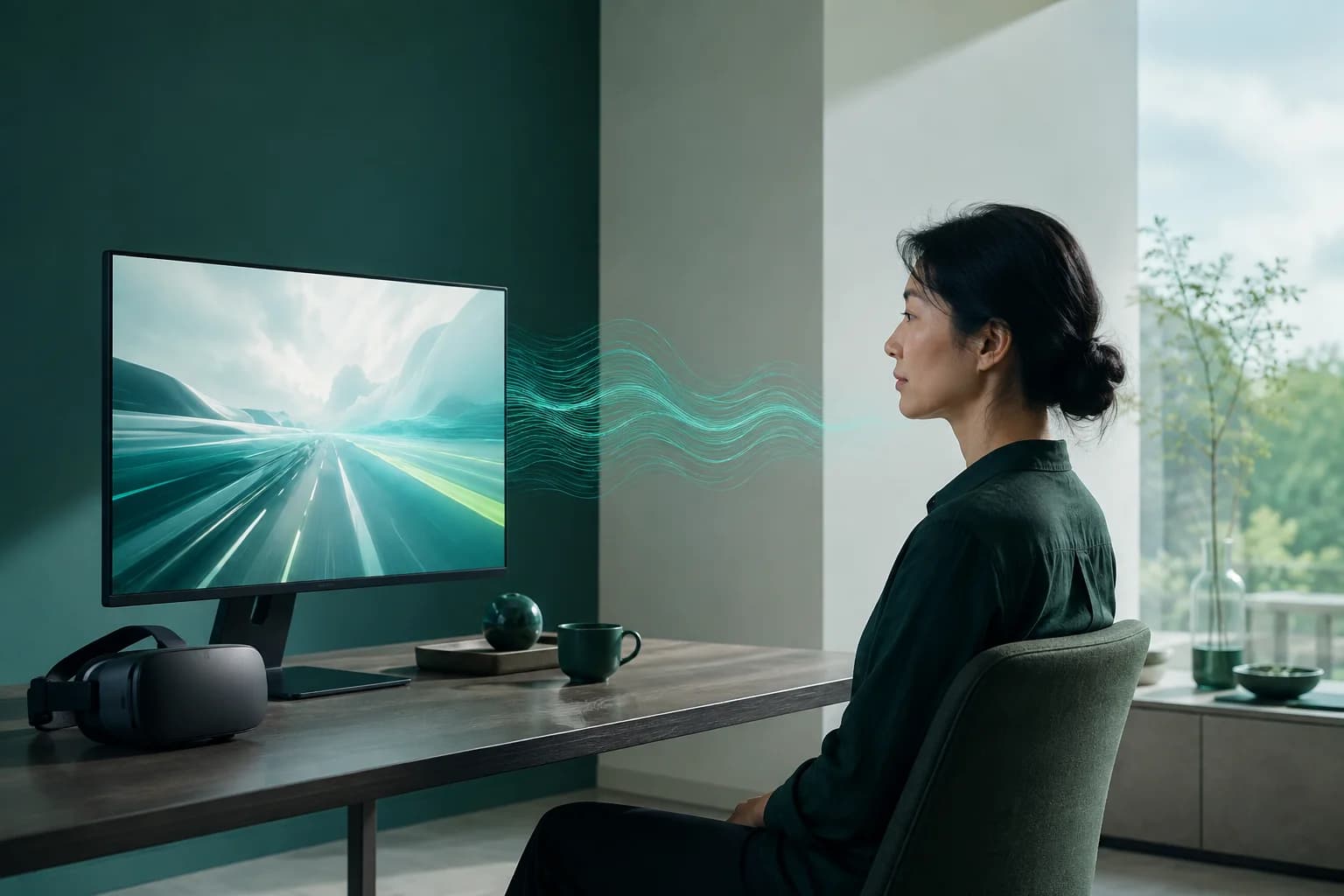
The short answer
You can get motion sick without moving. The sensory conflict behind it runs in reverse indoors: your eyes see intense motion in a VR headset, a first-person game or fast-scrolling video, while your inner ear correctly reports that you are sitting still. The brain gets the same two irreconcilable stories it gets in a car, and answers the same way. A hot, stuffy room lowers the threshold further.
Most people think of motion sickness as a travel problem, something that happens in cars, on boats, or on turbulent flights. So it catches them off guard when it strikes while they're sitting completely still on the couch: a wave of nausea after ten minutes in a VR headset, a queasy stomach from scrolling video in bed, or a foggy, off-balance feeling after a long stint at a screen in a warm room.
It's real, it's increasingly common, and it has a name. Here's why you can feel motion sick without moving an inch, and what actually helps.
Get your personalized Dizzout plan. Drug-free, works with your eyes closed, about 90 seconds on any headphones.Starts in your browser · works with any headphones
Paid subscription for full access.

On your phone? Scan to start there.
The mismatch, in reverse
Motion sickness comes from a conflict between your senses. In a car, your inner ear feels the movement while your eyes, locked on a phone, say you're still. Indoors, the exact same conflict runs the other way: your eyes see intense motion on a screen or in a VR headset, while your inner ear correctly reports that your body isn't going anywhere. Your brain still gets two irreconcilable stories, and it still responds the way it always does, with nausea, cold sweat, and dizziness. This is what researchers call cybersickness.
The mechanism described in this article, drawn with the indoor case labelled.
The everyday indoor triggers
Once you know the pattern, the culprits are easy to spot. They all flood your eyes with movement your body doesn't feel:
- VR and immersive gaming, the biggest offender, because the motion fills your entire field of view. (It also fades as you build "VR legs", more on how long VR sickness lasts.)
- Fast first-person video, racing games, shaky action footage, and helmet-cam clips.
- Endless scrolling, fast-flicking short-form video keeps your eyes tracking motion your body never makes.
- Big screens and motion-heavy films, IMAX and 3D can do it with no real motion at all.
- Reading or working while a screen moves, on a treadmill, or in a virtual tour or video call that pans and zooms.
- VRMotion fills the whole field of view
- First-person gamesRacing, shooters, helmet-cam
- ScrollingShort-form video, flicked fast
- Big screensIMAX and 3D, no real motion needed
The trigger list in this article. Which ones hit you is personal.
Why the room itself matters
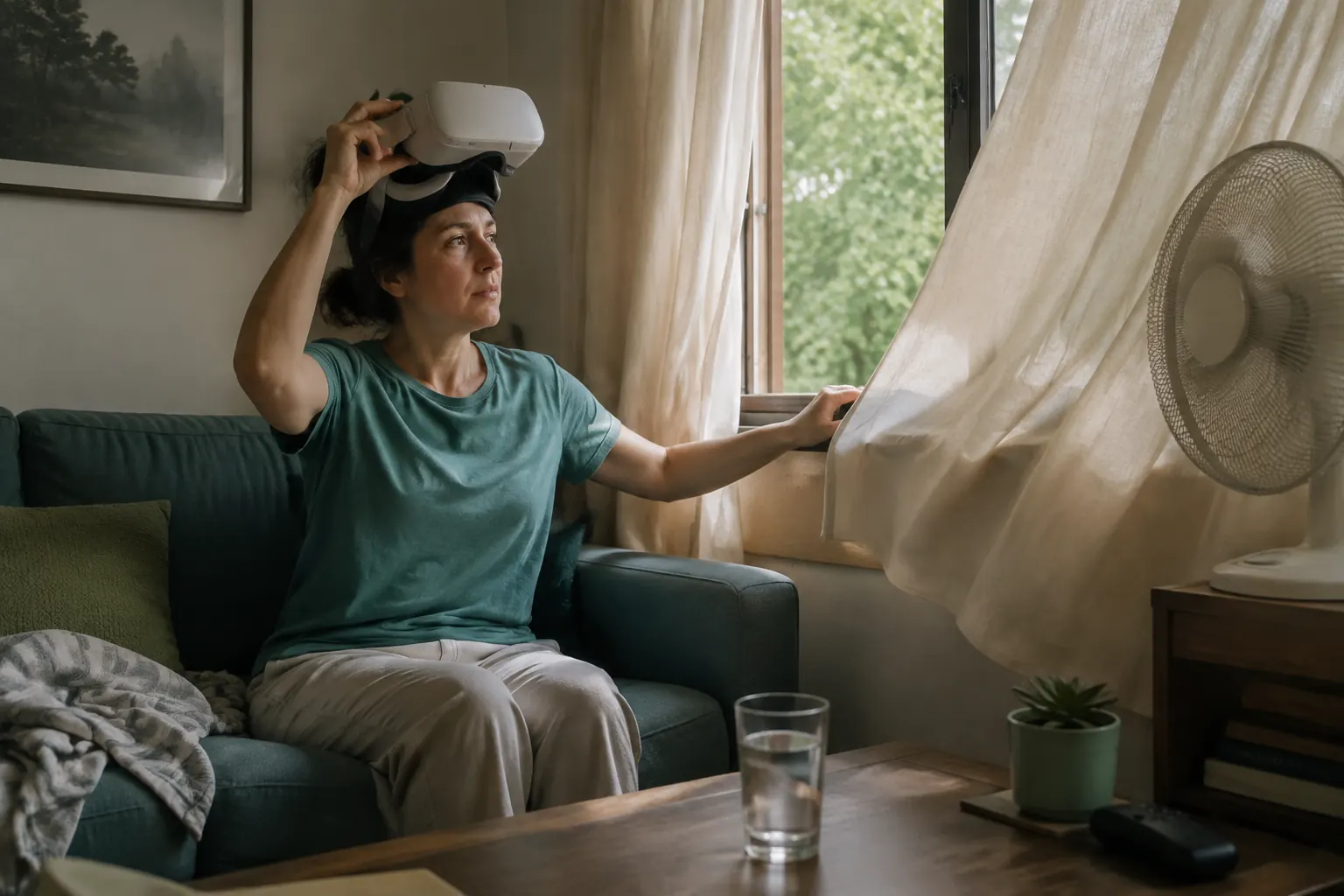
Here's the part people miss: your environment sets how easily that mismatch tips into full nausea. Heat, poor ventilation, and stale, stuffy air all lower your threshold, the same reason a warm, closed car feels so much worse than one with a window down. A stuffy gaming room or a hot bedroom can turn a mild bit of screen queasiness into the real thing.
Keeping indoor spaces cool and well-ventilated genuinely helps you stay resilient. It's the logic behind indoor air-quality technology like Module21, which enriches and oxygenates indoor air, the kind of fresh, oxygen-rich environment that raises your comfort threshold before a screen ever gets a chance to push it. Fresh air won't fix the sensory conflict on its own, but it makes you harder to knock off balance.
What actually helps indoors
Do
- Turn on VR comfort settings: vignetting, teleport movement, snap turning
- Reduce motion blur, field-of-view shake and head-bob in games
- Crack a window, run fresh air, keep the room cool
- Take short, frequent sessions instead of one long one
- Look away at something stationary and real for a minute
Don't
- Push through one long session to "get used to it"
- Play in a hot, closed, unventilated room
- Keep scrolling short-form video once it starts
- Wait until nausea peaks before acting
Practical strategies, not measured effects. Which ones help is personal.
- Use comfort settings. In VR, turn on vignetting, teleport movement and snap turning; in games, reduce motion blur, field-of-view shake and head-bob. For a worked flat-screen example, the Minecraft motion sickness settings start with view bobbing off and the field of view up.
- Keep the space cool and ventilated. Crack a window or run fresh air, it raises your threshold.
- Take breaks and build up. Short, frequent sessions train tolerance far better than pushing through one long one.
- Look away when it builds. Fix your eyes on something stationary and real for a minute to let your senses re-agree.
- Have drug-free relief ready. If it's already set in, sound therapy through headphones is one option designed to help calm the response in about 90 seconds, and it works with your eyes closed, when staring at the room isn't enough.
Works when looking away doesn't
Stop the nausea
Indoors there is no horizon to find, and closing your eyes only removes half the conflict. Dizzout plays precisely calibrated audio through any headphones instead. Drug-free, no drowsiness, about 90 seconds.
Get your personalized Dizzout plan. Paid subscription for full access.
30,000+ travelers in 30+ countries · How we count

On your phone? Scan to start there.
Comparing apps first? See how the motion sickness apps compare
The bottom line
Motion sickness isn't only a travel thing anymore. As more of life moves onto screens and into headsets, more people are meeting it at home, and the fix is a combination of smarter settings, a cooler and fresher room, gradual tolerance, and on-demand relief when it hits. If you feel dizzy or nauseated with no screen and no motion at all, or it comes with hearing changes, severe headaches, or vertigo that lingers, that's worth a doctor's visit rather than a comfort setting.
Frequently asked questions
Can you get motion sick without moving?
Yes. Motion sickness comes from a mismatch between your senses, and that mismatch can run in reverse: when your eyes see motion, in a VR headset, a first-person video game, or fast-scrolling video, while your body sits perfectly still, your brain gets the same conflicting signals it does in a car. The result is the same nausea, dizziness and cold sweat, even though you never left the couch.
Why do I feel sick playing VR or watching first-person video?
This is often called cybersickness or 'sim sickness.' Your eyes report intense movement, but your inner ear insists you're stationary. The larger and faster the on-screen motion, the bigger the conflict, which is why fast first-person games, VR, and shaky handheld footage are the worst offenders. Comfort settings and breaks help, and it usually eases as you build tolerance.
Does a stuffy room make indoor motion sickness worse?
It can. Heat, poor ventilation and stale, stuffy air all lower the body's threshold for nausea, the same reason a warm, closed car feels worse than one with a window cracked. Keeping the room cool and the air fresh won't fix the sensory mismatch on its own, but it makes you more resilient to it.
How do I stop feeling sick from screens or VR?
Turn on comfort options in VR (vignetting, teleport movement, snap turning), take regular breaks, keep the room cool and ventilated, and look away at something stationary when it builds. For fast, drug-free relief once symptoms start, a sound-therapy app like Dizzout is one option designed to help calm the response in about 90 seconds, and it works with your eyes open or closed.
Someone you know gets motion sick?
Send them this guide. It might be the trip it saves.
Your next question, probably
Is it your screen or your headset?
Flat-screen vs VR sickness
If that is not your question:
About this article
This article is informational and not a substitute for medical advice. Product and company names are trademarks of their respective owners; Dizzout is not affiliated with or endorsed by them.