
Motion sickness seat finder
Pick your ride. See where to sit, why it can help and what to choose if that spot is taken.
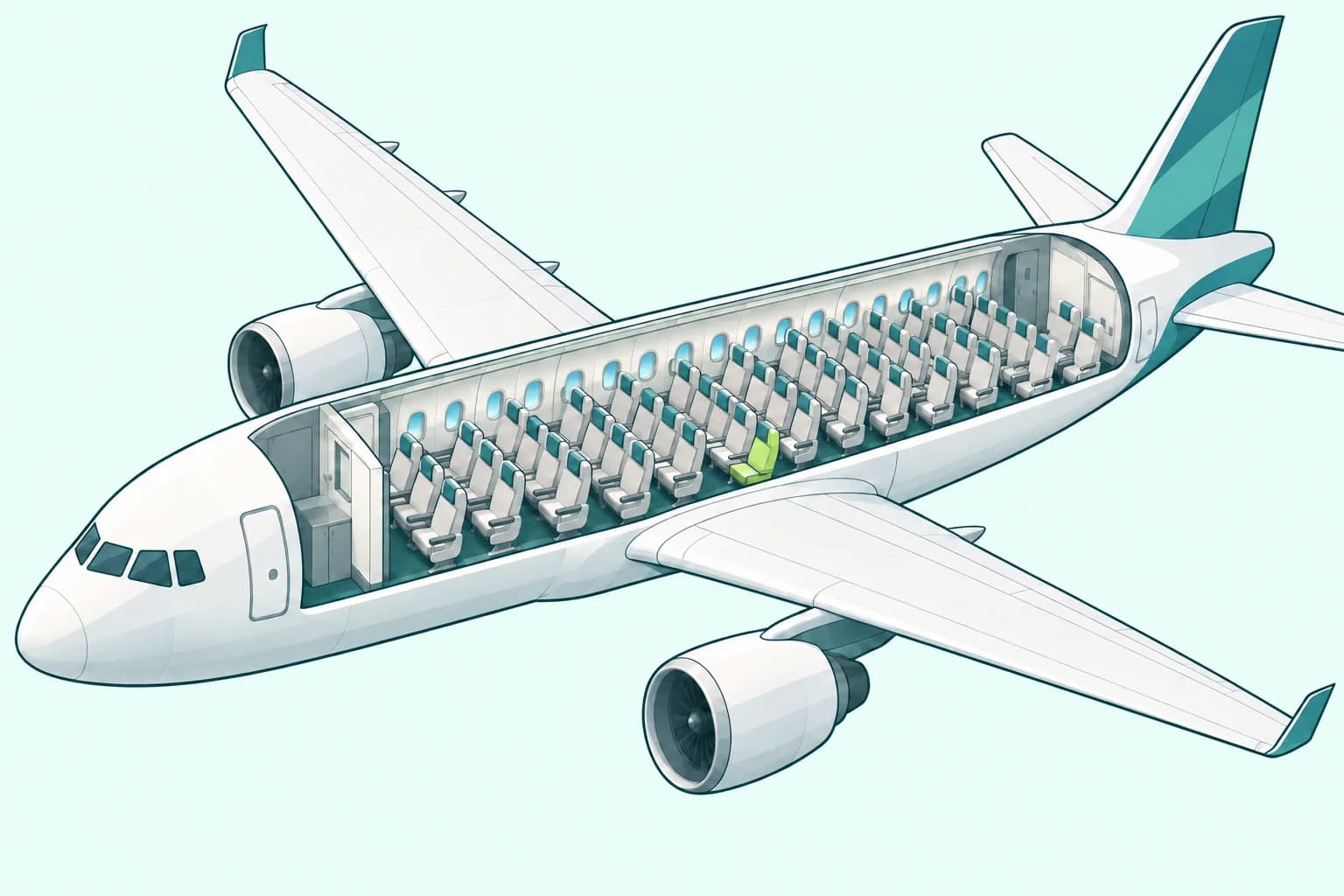
Plane: Choose a window seat near the wings.
Your seat choice
Choose a window seat near the wings.
- Why this spot
- Seats near the wings generally feel less motion than seats farther toward the tail. A window can give you a distant view when visibility allows.
- If it is taken
- Choose a window seat as close to the wing area as you can.
- Watch for
- The rear rows, and looking down at a book or screen during rough air.
Check the airline's seat plan for the wing position. Keep your belt fastened and follow crew instructions.
The seat helps. Plan for if it still hits.
You have a seat plan for your trip on a plane. If symptoms still catch you mid-flight, Dizzout offers drug-free sound therapy through any headphones, with relief in about 90 seconds.
Free to try, no card needed. Or go straight to the App Store or Google Play.
How to use the illustrations
The front is on the left. Lime highlights the suggested passenger area. These are conceptual illustrations, so check your operator's seating plan for the actual rows, doors and direction of travel. The caption and text give the same advice as the picture.
Look for a useful distant view and a seat away from the strongest motion. On a plane, that means near the wings, not simply the front of the cabin. At sea, start midship on a lower passenger deck. On land, a clear view and the direction you face can matter more than an exact row number.
All six seat recommendations
Plane
Choose a window seat near the wings.
Seats near the wings generally feel less motion than seats farther toward the tail. A window can give you a distant view when visibility allows.
If it is taken: Choose a window seat as close to the wing area as you can.
Check the airline's seat plan for the wing position. Keep your belt fastened and follow crew instructions.
Best place to sit on a plane: the full guide →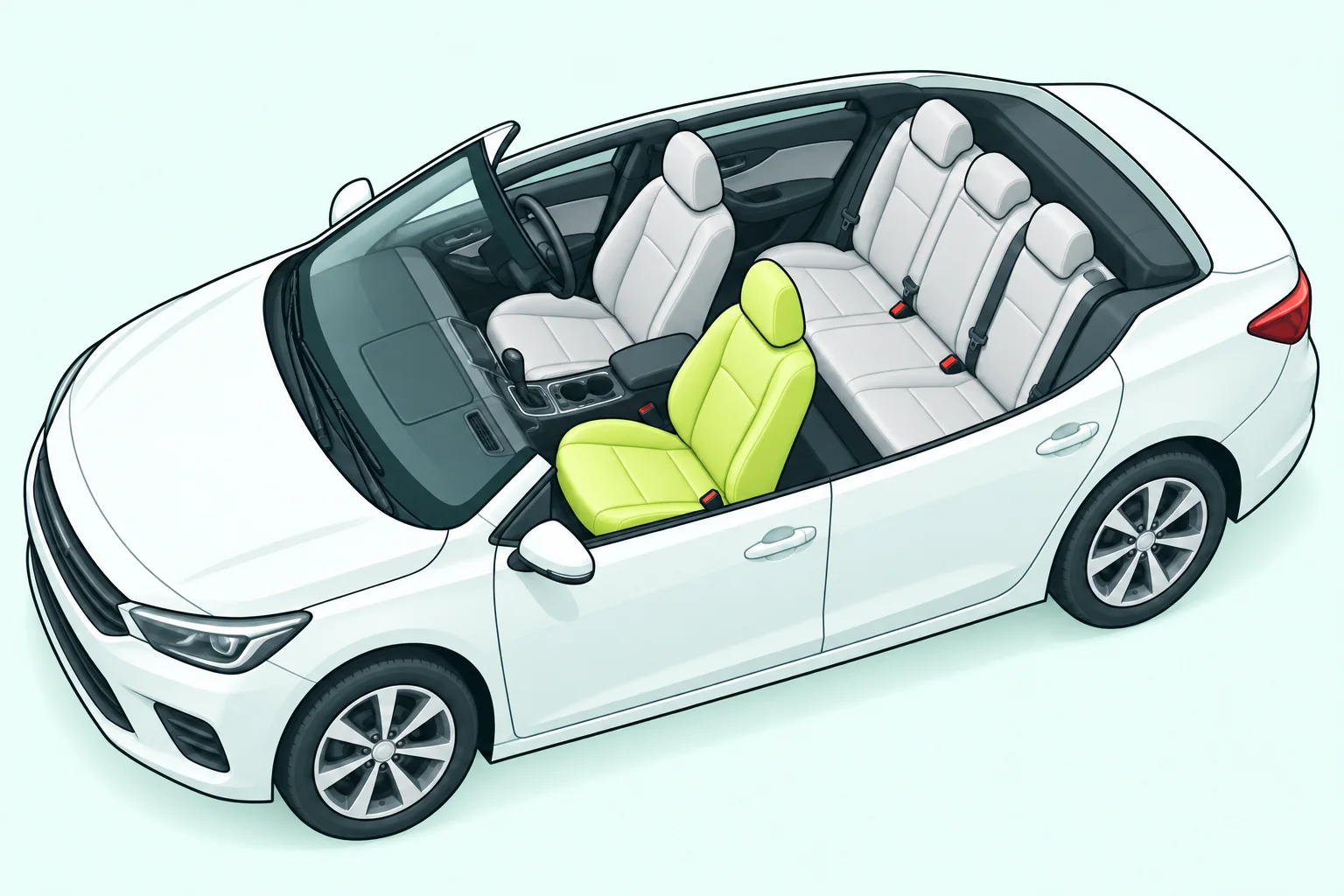
Car
For adults, choose the front passenger seat and look ahead.
A clear view of the road helps you anticipate turns and braking. You can usually see farther ahead from the front passenger seat.
If it is taken: Use a properly restrained rear seat with a clear forward view. The rear middle may offer that view if it has a suitable belt and restraint.
Children under 13 belong in the back seat. Follow local rules and the child restraint and vehicle instructions; comfort advice never overrides them.
Full car motion-sickness guide →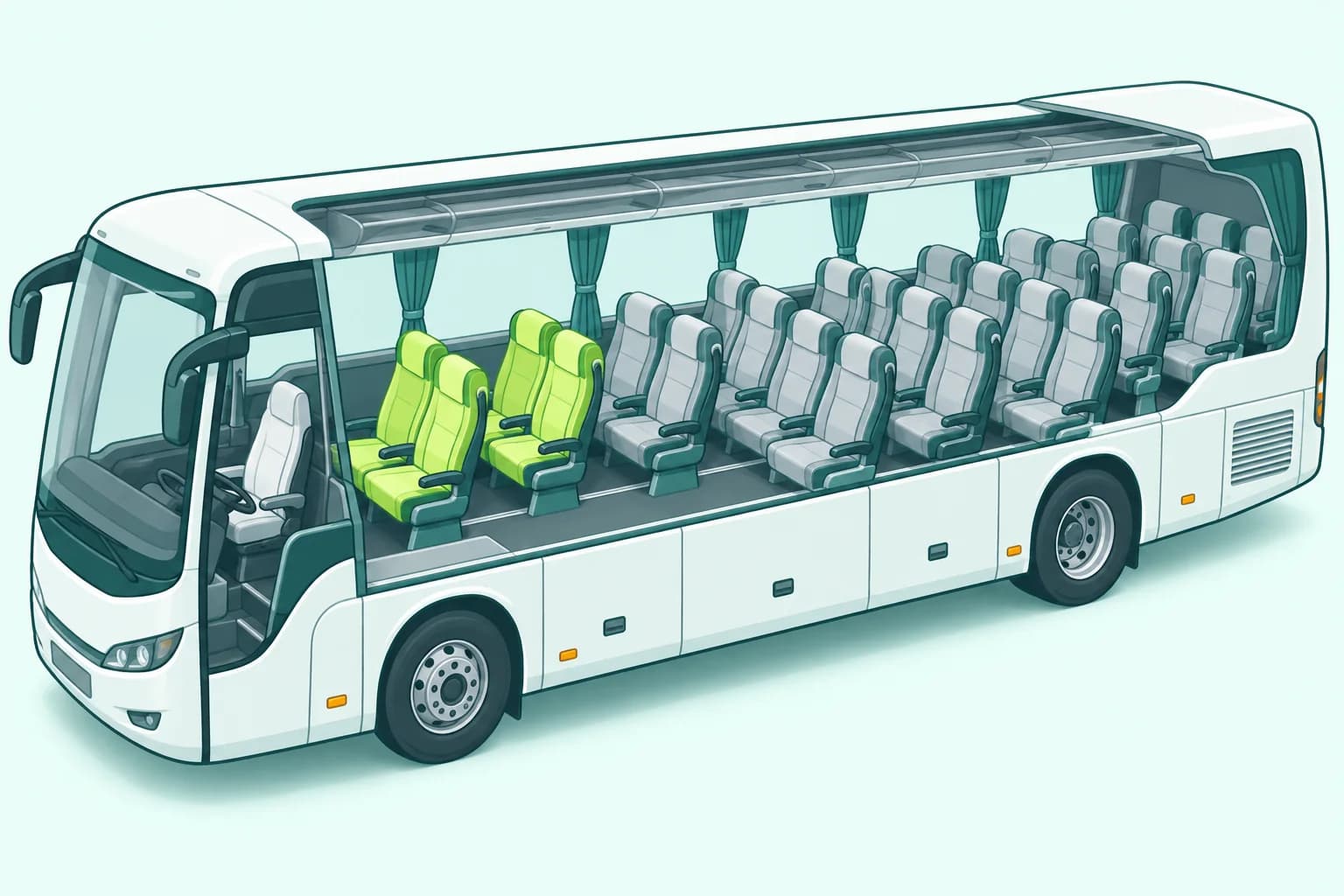
Bus
Choose a forward-facing seat near the front, behind the driver.
A view through the front window helps you anticipate the road. The rear overhang can make bumps feel stronger.
If it is taken: Try a forward-facing seat between the front and rear wheels, with the clearest view ahead.
Bus layouts vary. Use passenger seats, keep aisles clear and wear a seat belt where provided.
Full bus motion-sickness guide →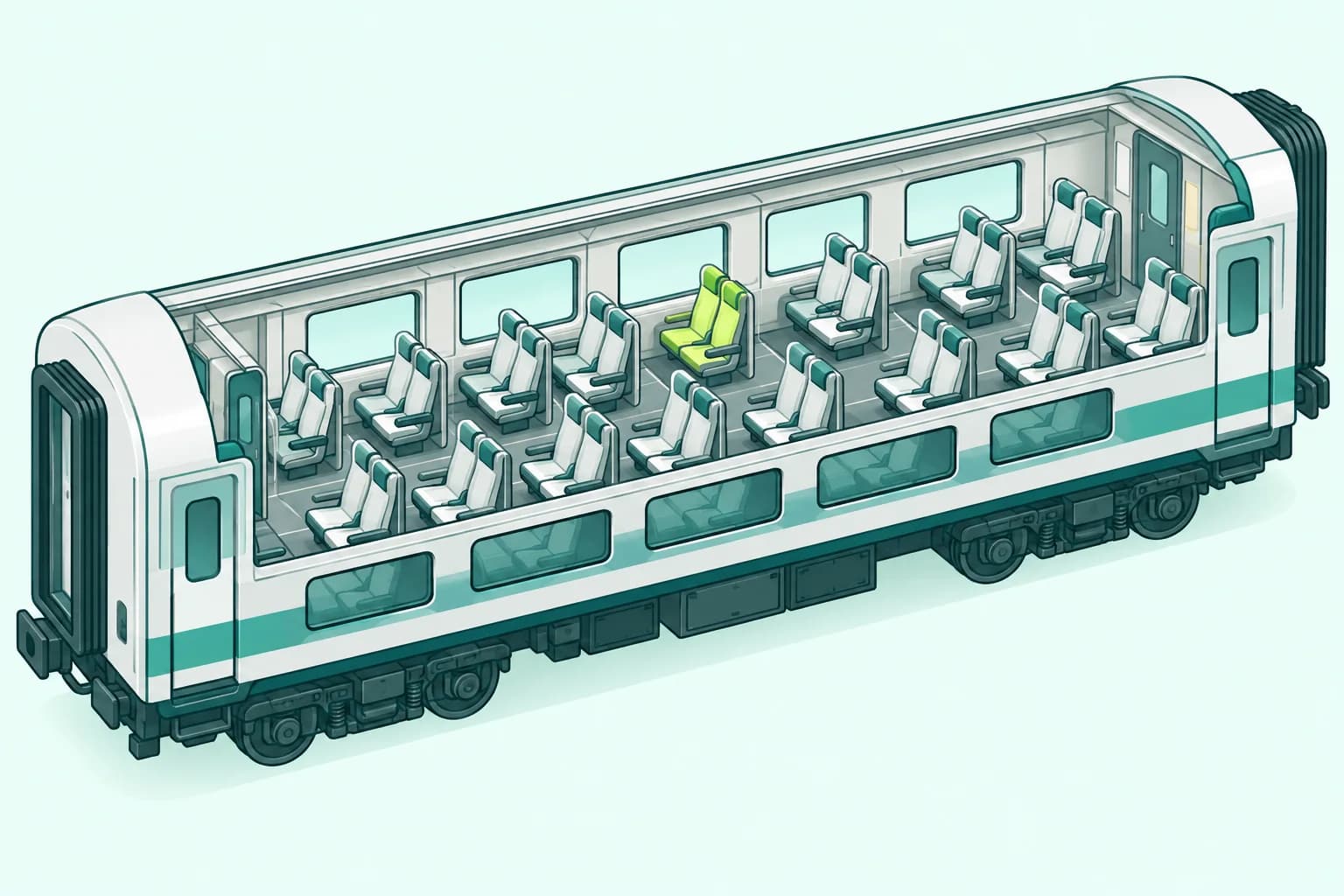
Train
Choose a window seat facing the direction of travel.
Facing forward and looking at the distance can help you follow the motion. A central seat is a useful starting point, but ride quality varies by train.
If it is taken: Prioritize a forward-facing view over an exact row. Check which way the train will travel before reserving.
This picture shows one carriage. Seats can face both ways, and the train may reverse direction during the journey.
Full train motion-sickness guide →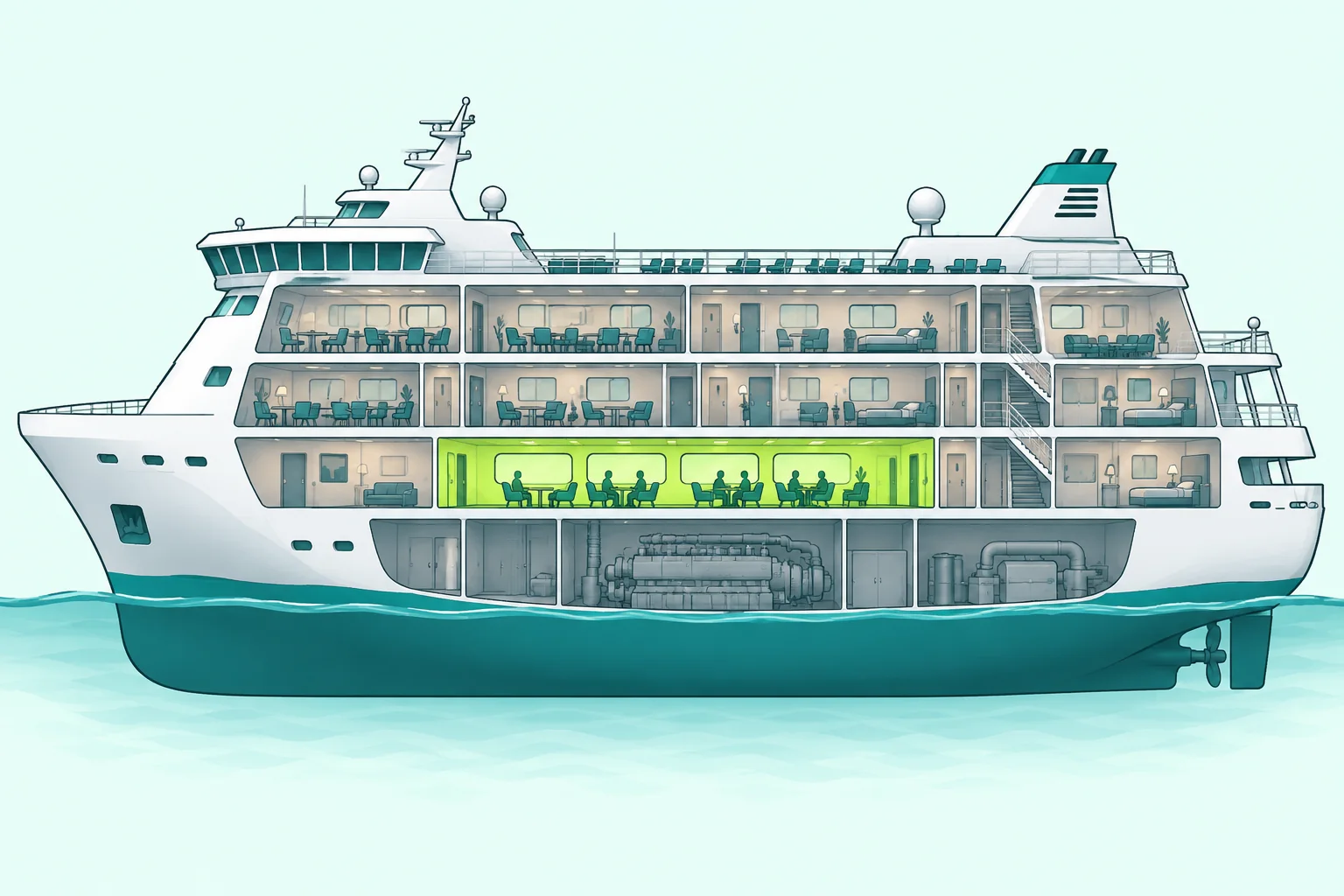
Boat & cruise
Choose midship on a lower passenger deck.
The middle of the ship usually has less pitching than the bow. A lower deck can also reduce the motion you feel.
If it is taken: Use an accessible midship passenger area with a horizon view when conditions and crew instructions allow.
Use designated passenger areas only. Lower deck does not mean below the waterline or inside restricted spaces.
Full boat & cruise motion-sickness guide →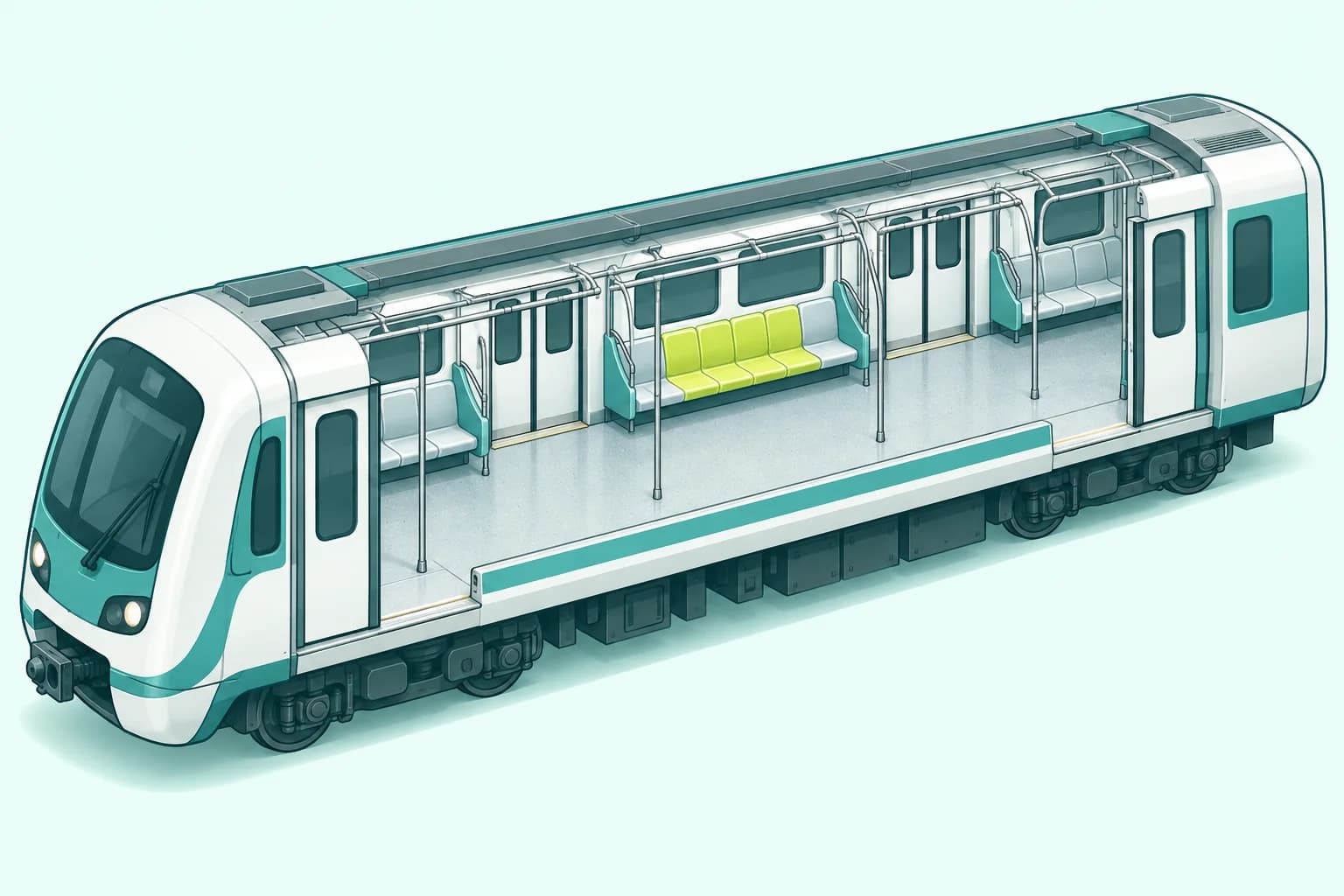
Metro
Try an available seat near the middle of the carriage.
Sitting with your head supported can help during starts and stops. Layouts and ride quality vary, so use this as a starting point.
If it is taken: Take another suitable seat. If you must stand, hold a rail and keep your footing secure.
Many metros use side-facing benches. Choose a seat that feels comfortable, respect priority seating and keep doorways clear.
Full metro motion-sickness guide →Common questions
Why can seat choice affect motion sickness?
Different parts of a vehicle move differently, and some seats give you a clearer view of the journey. Near the wings on a plane and midship on a boat are useful starting points. In a car, bus or train, seeing the road or a distant view can help you anticipate motion.
Does the recommended seat prevent motion sickness?
No seat can promise that. Seat choice is one way to reduce a trigger, alongside looking into the distance, avoiding close reading and keeping your head supported. Weather, driving, vehicle layout and your sensitivity still matter.
What if the suggested seat is unavailable?
Use the alternative in the finder. Prioritize an allowed passenger seat, a useful view and any required restraint. Accessible seating, child safety, crew instructions and your ticket restrictions come first.
What the guidance is based on
General motion-sickness guidance supports a horizon view, avoiding close reading and choosing areas with less movement. Exact rows, bus suspension and metro layouts vary; the illustrations do not rank individual operators or replace their safety instructions.
Prepare for the rest of the journey
Try Dizzout free
Dizzout offers drug-free sound therapy through any standard headphones, with relief in about 90 seconds. Free to download, with a paid subscription for full access.
Free to try, no card needed. Or go straight to the App Store or Google Play.
 Scan to open on your phone
On a computer? Dizzout installs on your phone. Scan the code, or open dizzout.com/get on your phone and it'll take you straight to the right store.
Embed the seat finder on your site
Add the free finder to a travel site. Readers can switch vehicles, see the suggested area and scroll for the full result.
<iframe src="https://dizzout.com/embed/best-seat-for-motion-sickness" width="100%" height="1100" style="border:1px solid #e5e7eb;border-radius:12px;max-width:720px" title="Motion sickness seat finder, Dizzout" loading="lazy"></iframe>
Related
General comfort information. Individual sensitivity varies. Seek medical advice for persistent or unexplained symptoms.