The short answer
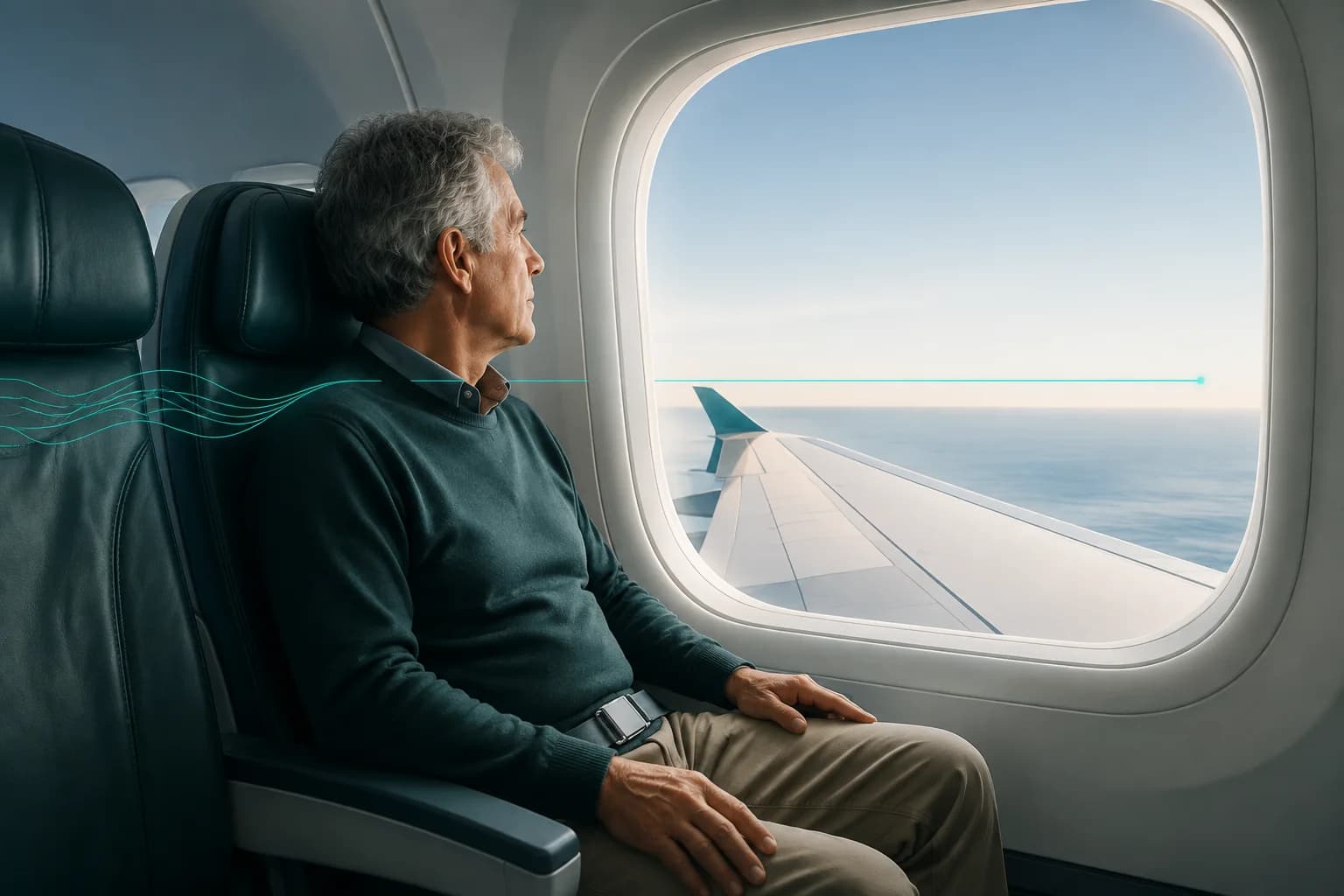
Sit over the wing. It is the pivot point of the aircraft, so vertical motion is least pronounced there, and a window seat gives you a horizon to fix your gaze on. But the window does not help everyone: if watching the ground tilt during banks makes you worse, half-shade it and look at something steady inside the cabin instead. Which rows count as over the wing changes with the aircraft, and our free seat finder rates the front, wing and rear zones on a plane and draws the seat map, with the car, bus, train, metro and ship covered the same way.
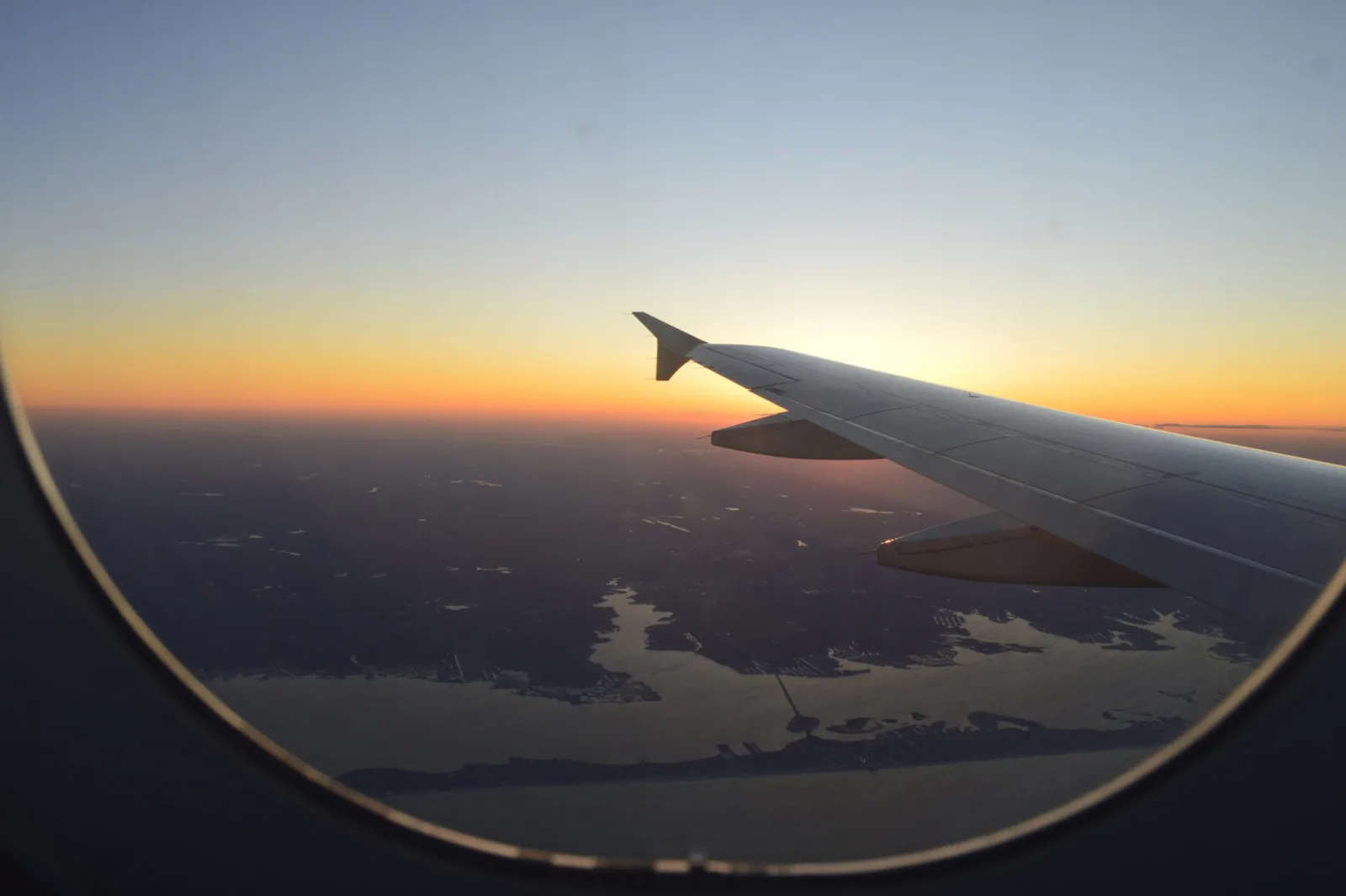
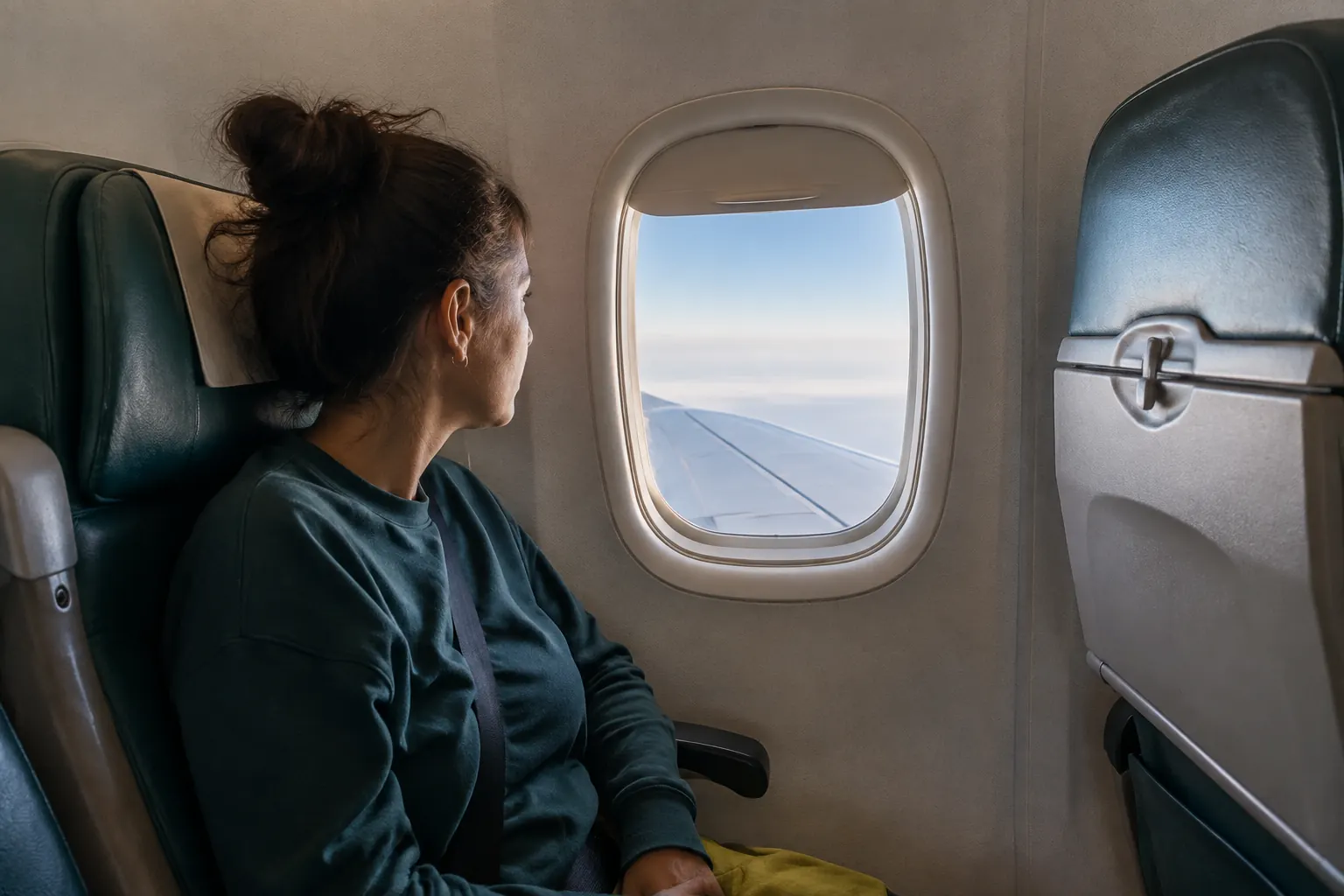
Window seats look amazing in photos. You get the clouds, the ocean views, that perfect takeoff shot. But for anyone who gets motion sickness? They can be a mixed bag.
Some people swear by them because you can stare straight out at the horizon or distant clouds. That fixed visual reference helps your brain sync up with what your inner ear feels during turbulence. Others say the opposite. If the plane banks or hits rough air, that big window just shows the ground tilting in ways that make your stomach drop faster.
I've been on both sides. One flight over the Alps the window made everything worse. Another smooth transatlantic where locking eyes on the wing tip actually calmed me down. It really depends on the person and the flight.
Try Dizzout free. Works through turbulence, eyes open or closed, on any headphones.Free · works with any headphones · no account to try
Free to try, no card needed. Or go straight to the App Store or Google Play.
What makes planes different
Turbulence is unpredictable. You can't just pull over like in a car. The motion is up-down, side-side, sometimes all at once. Plus cabin pressure, dry air, and recycled smells can team up with the movement to hit you harder. Many people feel fine on takeoff but get slammed during descent when things get bumpier.
- Prefer
- Over the wing. It is the aircraft's pivot point, so vertical motion is smallest here.
- Alternative
- Forward of the wing. Steadier than the tail, without the wing's full advantage.
- Watch for
- The very back. Motion is amplified furthest from the pivot point.
Smart window seat strategies
Do
- Look far ahead, at the horizon or distant cloud
- Half-shade the window during rough patches
- Hydrate, and skip the coffee and alcohol
- Keep ginger chews or mints within reach
- Sit upright with your feet flat on the floor
Don't
- Stare at the wing while it is moving a lot
- Watch the horizon flip through a full bank
- Read or scroll through the bumpy stretch
- Wait until nausea peaks before acting
Practical strategies, not measured effects. Which ones help is personal.
And here's the part that actually changes the game for a lot of flyers: Dizzout. Pop in your headphones (noise-canceling ones are perfect on planes), open the app, hit play. The sound therapy plays straight through your regular earbuds, and Dizzout states relief in about 90 seconds. For the cause itself, read about the inner ear mismatch. No pills, no zombie feeling when you land, and it works even during turbulence.
One friend used to dread window seats on family trips. Now she books them on purpose because she can enjoy the view without white-knuckling through every bump.
Works when the window doesn't
In turbulence, at night, or with the shade down, there is no horizon to look at. Dizzout plays precisely calibrated audio through any headphones instead. Drug-free, no drowsiness, about 90 seconds.
Before you need it: find out how prone you are
Take the free 2-minute testTwo minutes, no sign-up, and it ends with a drug-free plan to prepare.
Stop the nausea
Free to try, no card needed. Or go straight to the App Store or Google Play.
 Scan to open on your phone
On a computer? Dizzout installs on your phone. Scan the code, or open dizzout.com/get on your phone and it'll take you straight to the right store.
Bonus tips for the whole flight
Choose seats over the wing if possible. That's usually the steadiest spot. Avoid the very back where motion gets amplified. If you feel it coming on early, close your eyes for a bit or focus on a fixed point inside the cabin. For more cross-travel options, see our complete guide to motion sickness.
Window seats can be your friend or your enemy depending on how you use them. Combine the visual tricks with a few solid habits and the right tool like Dizzout and you might actually start looking forward to that aisle of clouds instead of dreading it.
Safe skies. The views are worth it when your stomach isn't fighting you the whole way.
- PlaneOver the wing, window optional
- CarFront seat, eyes on the road
- BoatMidships and low, horizon in view
- TrainForward-facing, never rear-facing
- BusFront, near the driver
- ScreenPut it down when the road turns
Seating advice follows the same pivot-point logic in every vehicle.
Frequently asked questions
Where is the best seat on a plane for motion sickness?
Over the wing, it's the pivot point of the aircraft, so vertical motion is least pronounced there. Window seats also let you fix your gaze on the horizon. Avoid the very back of the plane where turbulence amplifies.
Does the window seat always help with airsickness?
No. For some people, watching the horizon tilt during banks and rough air makes things worse. Try it, if you find it triggering, pull the shade halfway and look at something steady inside the cabin instead.
Can I use Dizzout during turbulence?
Yes. The sound therapy plays through any headphones, including noise-canceling ones, and doesn't require you to do anything except listen. It's especially useful during turbulence when other tricks (gazing out the window) stop working.
Why does descent feel worse than the rest of the flight?
Descent is when the plane changes altitude rapidly, often with adjustments and minor turbulence. Combined with pressure shifts in your inner ear, that's why the last 30 minutes of a flight often feels the worst for sensitive flyers.
Is a window or aisle seat better for motion sickness?
A window seat, ideally over the wing. The wing area is the pivot point of the aircraft, so it moves least, and the window gives you a horizon to fix your eyes on. The exception is when watching the ground tilt during turns makes you feel worse. Then half-close the shade and look at something steady inside the cabin.
Someone you know gets motion sick?
Send them this guide. It might be the trip it saves.
Your next question, probably
Which seat, exactly?
Seat by seat, every vehicle
If that is not your question:
About this article
This article is informational and not a substitute for medical advice. Airline and product names are trademarks of their respective owners; Dizzout is not affiliated with or endorsed by them.