The short answer
Children roughly 2 to 12 are the most affected age group, because the balance system in the inner ear is still maturing and the back seat gives them no view of the road ahead. What helps is seating them where they can see out the front, swapping tablets for audiobooks or music, keeping snacks light, cracking a window, and stopping often. Anything beyond that, medicine included, belongs in a conversation with your pediatrician.
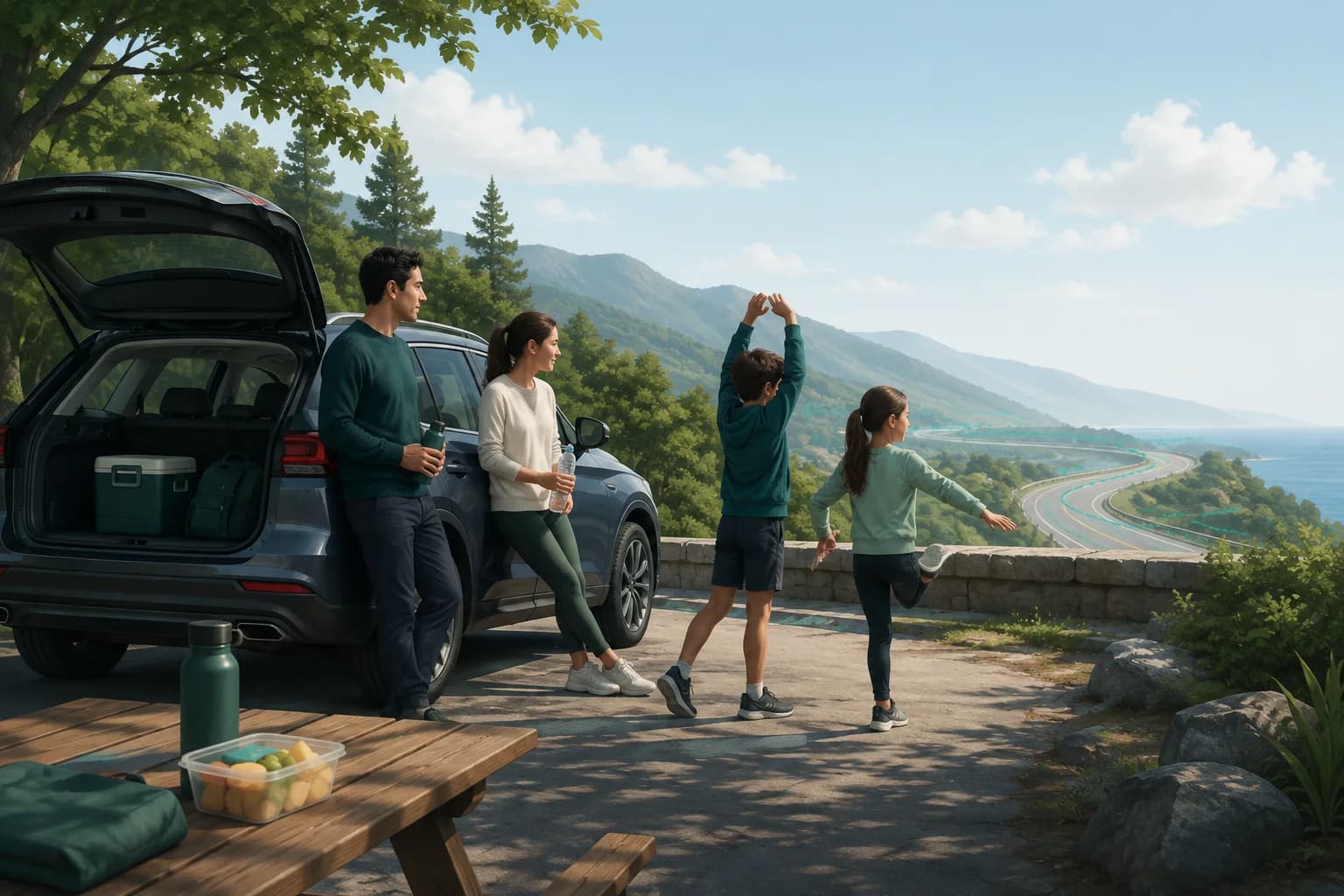
Kids and motion sickness is a rough combo. You plan a fun family road trip and suddenly your little one is crying, looking pale, and asking to stop every ten minutes. It hits hard, because their inner ear and eyes are still learning how to work together.
Why kids get it worse than adults
Children between ages 2 and 12 are in the peak window for motion sickness. Their vestibular systems, the balance and movement sensors in the inner ear, are still maturing. The connection between what their eyes see and what their inner ear feels is less calibrated than in adults, so the mismatch that triggers nausea hits harder and faster.
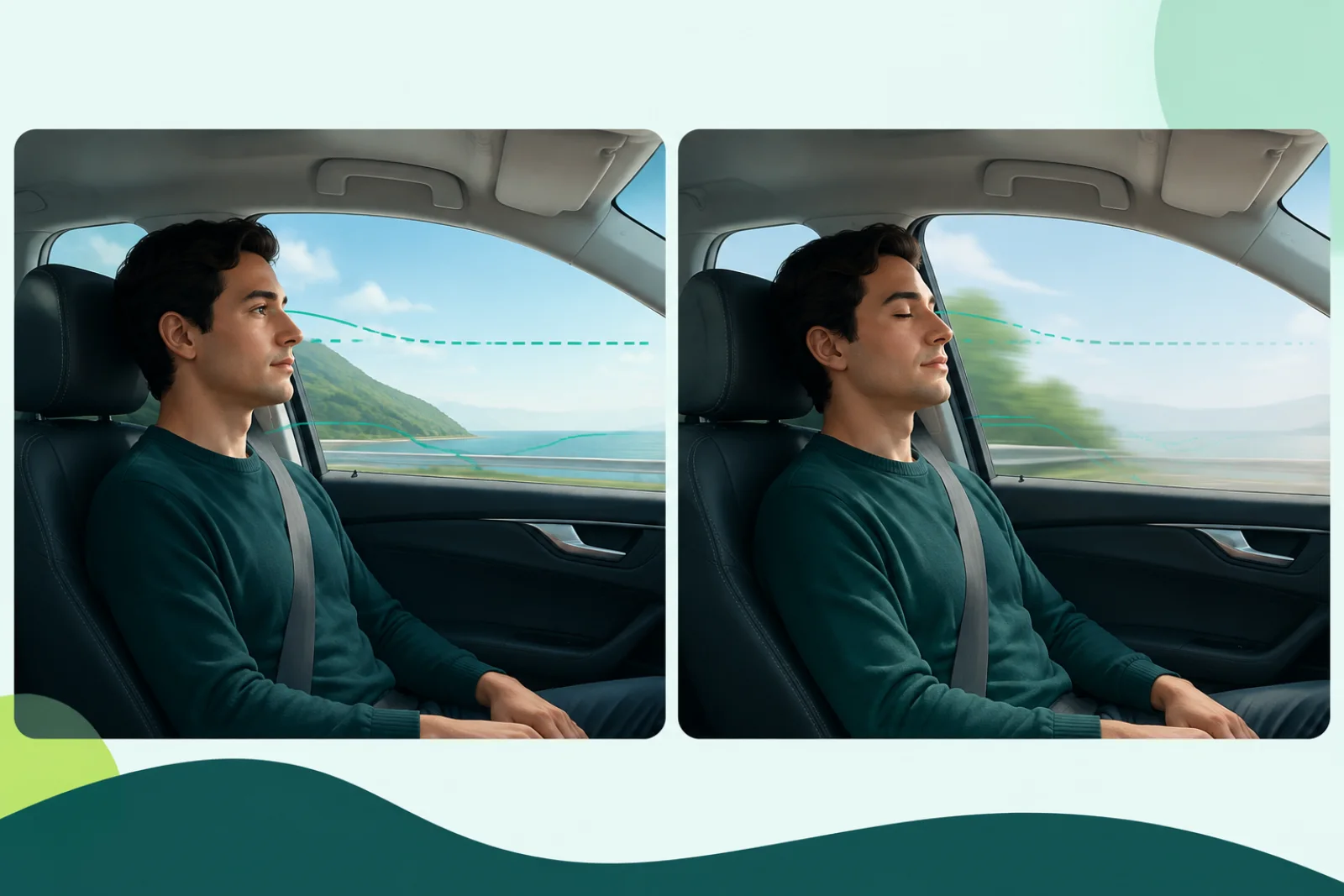
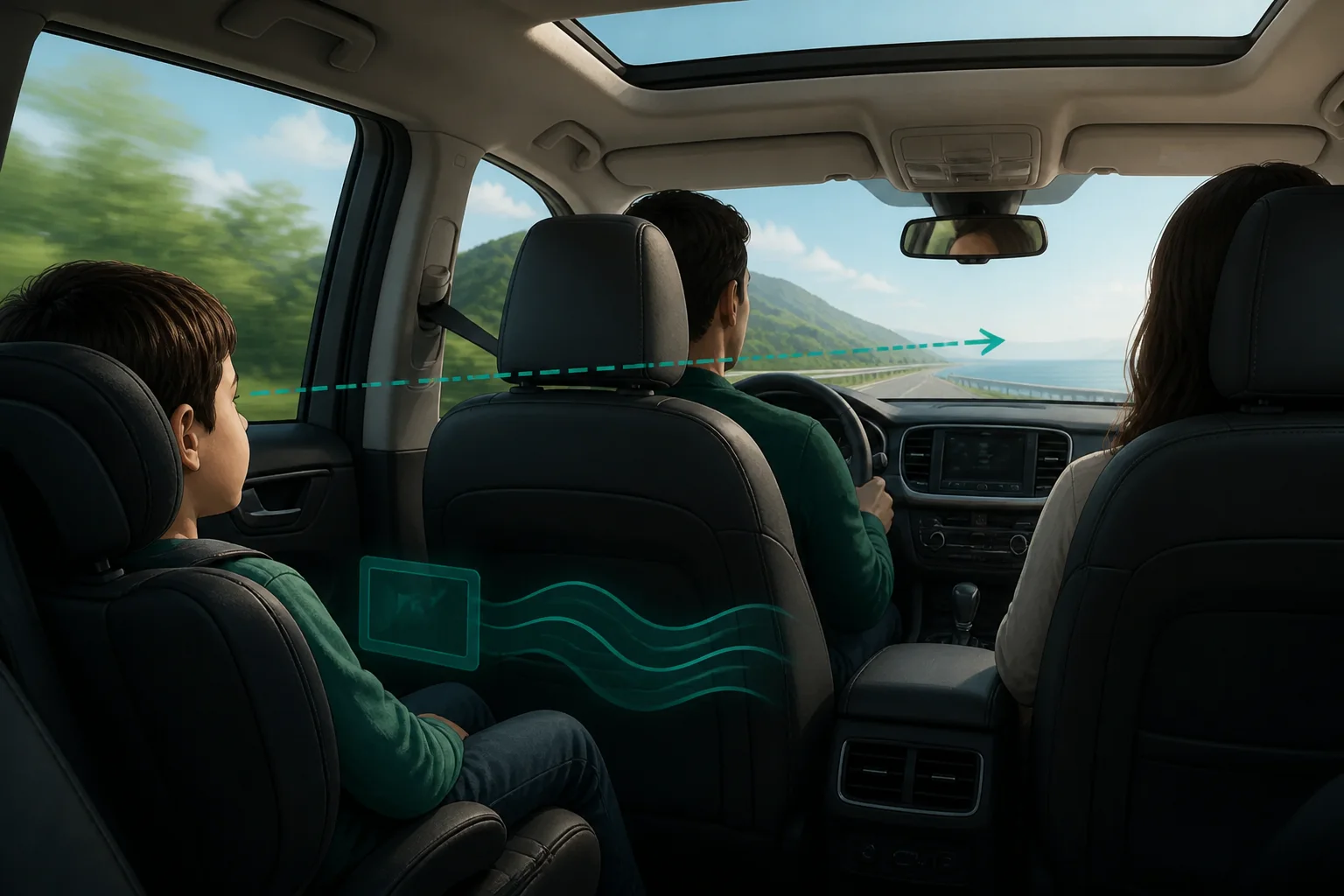
The back seat makes it worse. Kids can't see the road ahead the way adults in the front can, so they have no visual anchor to predict the car's movement. Tablets and toys pull their eyes down while the car moves, creating an intense conflict between a stationary image and a moving body. That mismatch is exactly what kicks off the nausea.
What actually helps
Ticks are saved in this browser only, for this session.
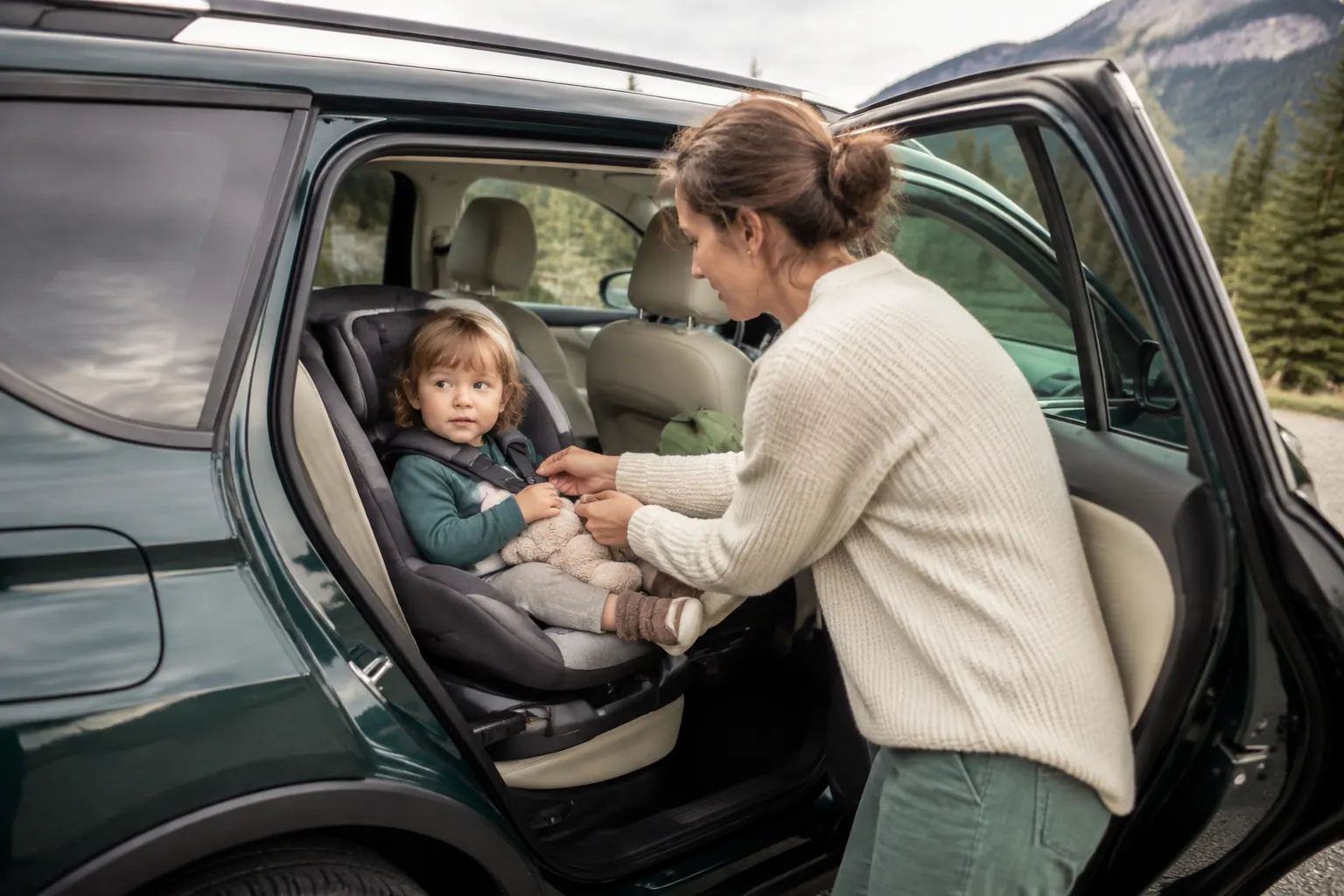
The screen problem
Distraction is a double-edged sword. Handing a kid a tablet seems like the perfect solution for a long drive, until it makes everything worse. Screens lock their eyes onto a static image while their body feels every turn and bump. That's the worst possible combination for a motion-sick child.
Switch to audio. Audiobooks, podcasts for kids, or simply singing along together keep them engaged without the visual conflict. Music is especially good: it gives them something to focus on mentally while their eyes stay free to look out the window.
Helps
- Audiobooks, kids' podcasts, singing along
- A booster that lifts their eyeline to the window
- Horizon-spotting games: count the red cars
- A cracked window and a cool cabin
- Stopping before they say they feel sick, not after
Backfires
- A tablet propped on the seat back
- Reading a book on a winding road
- Detailed colouring or handheld games
- A big meal right before setting off
- Driving through the whole trip without a break
Practical strategies, not measured effects. Which ones help is personal to each child.
The drug-free tools parents ask about
Alongside acupressure bands, the other thing parents ask about is sound-therapy apps such as Dizzout: regular headphones or kid-sized ones, one tap, an audio session of about 90 seconds. There is no medicine in it and nothing to swallow. It is a drug-free wellness option, it is not a medical device, and it is not a substitute for a pediatrician's advice. If you are considering it for a child, raise it at the same appointment where you would raise anything else.
Every child is different
Some kids grow out of motion sickness fast, especially once their vestibular system matures around age 12. Others need more support on longer rides. Test short trips first to figure out what works for yours, and build up to longer drives gradually. Don't cancel family adventures, just prepare for them. For more road-trip-specific tips, see our car sickness hacks guide.
Frequently asked questions
At what age do kids get motion sickness most?
Motion sickness peaks between ages 2 and 12. Children under 2 rarely get it because their vestibular system isn't sensitive enough yet. After 12, most kids' systems mature and symptoms reduce significantly.
Why does the back seat make motion sickness worse for kids?
The back seat removes the visual reference of the road ahead. Without being able to see the car's path, the brain can't predict movements, and the mismatch between what the inner ear feels and what the eyes see intensifies.
What is Dizzout, and can children use it?
Dizzout plays audio through headphones at normal listening levels. There is no medication, no chemical and no physical intervention involved. It is a drug-free wellness option rather than a medical device, and it is not a substitute for a pediatrician's advice. Talk to your pediatrician about what fits your child, and use child-appropriate headphones at a comfortable volume.
Will my child grow out of motion sickness?
Most children do. The vestibular system continues developing through childhood, and many kids see significant improvement by their early teens. Some adults continue to experience it, particularly those with a genetic predisposition.
How can I help a toddler with car sickness?
Seat them where they can see out of the front window, as far as their car seat allows. Keep the car cool with a window cracked, swap tablets and picture books for music or audiobooks, keep snacks light and plain, and stop often. Leaving when they are rested helps too. Talk to your child's doctor before giving a toddler any motion sickness medicine, because several are restricted for young children on their own labels.
Someone you know gets motion sick?
Send them this guide. It might be the trip it saves.
Your next question, probably
What do the medicine labels say by age?
Label age notes, and what to ask a pediatrician
If that is not your question:
About this article
This article is informational and is not medical advice. Decisions about medicines, supplements or any product for a child belong with your pediatrician or pharmacist, who knows your child's age, weight and health history.