The short answer
Book a midship cabin on a lower deck, with a window or balcony if the budget allows: that single decision does more than anything else on this list. Then eat light, stay hydrated, skip the alcohol and coffee, get on deck where you can see the horizon, and keep moving rather than lying still in a closed cabin. Adaptation usually arrives within one to three days, though rough weather can reset it.
Cruise ships look like floating hotels, until the waves hit and suddenly half the deck is green. Sea sickness sneaks up fast. One minute you're excited for the buffet, the next you're gripping the railing wondering why you ever left land.
The good news? You don't have to suffer through it. Here are the hacks that actually help most people.
Try Dizzout free. Drug-free, use it as often as you need, about 90 seconds on any headphones.Free · works with any headphones · no account to try
Stop seasickness on your cruise. Free to try, no card needed. Or go straight to the App Store or Google Play.
Pick the right cabin
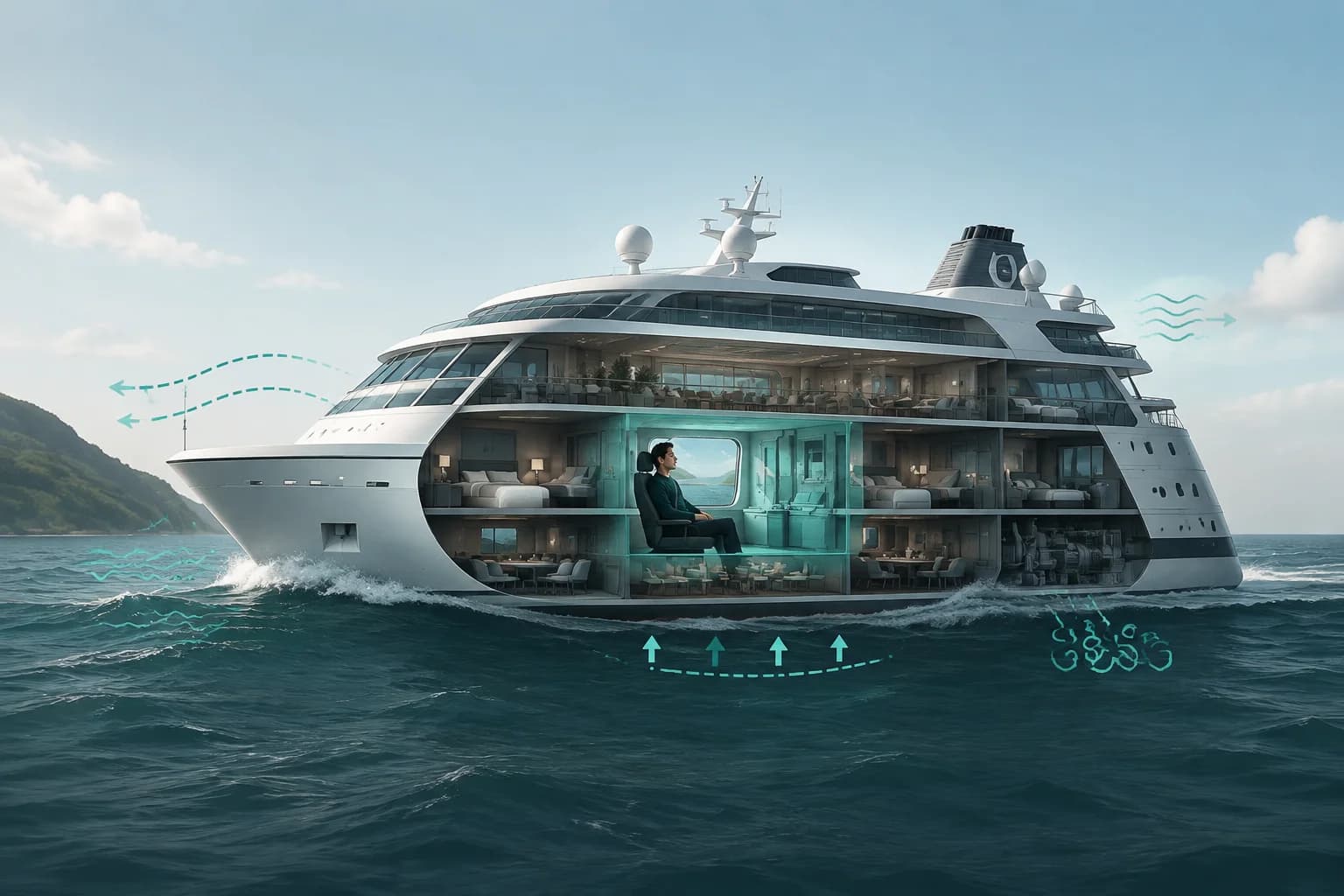
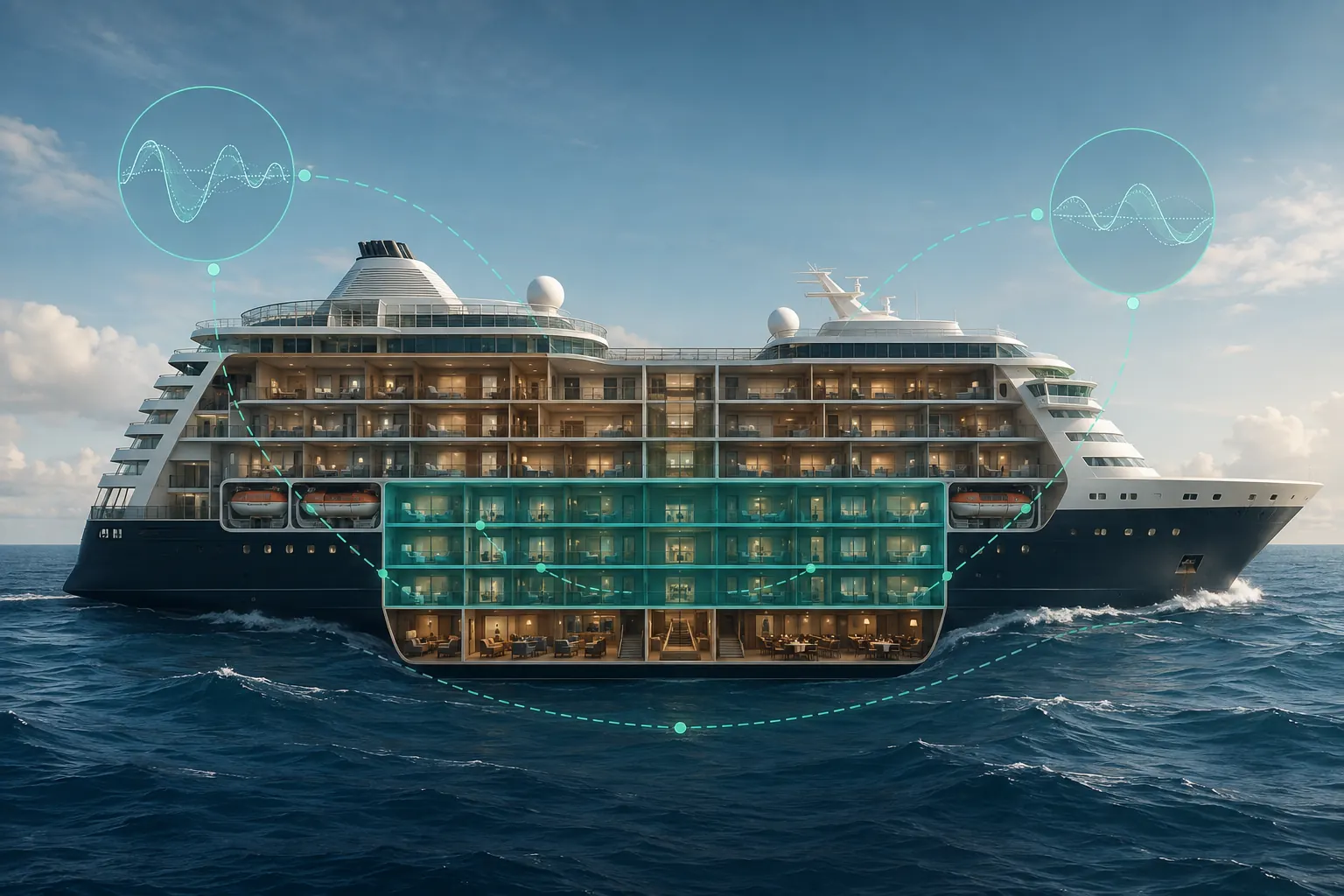
This is the single most impactful decision you'll make before you even board. Mid-ship and lower decks feel significantly steadier than the top floors or the bow. The physics are simple: the further you are from the ship's center of gravity, the more you feel every roll and pitch.
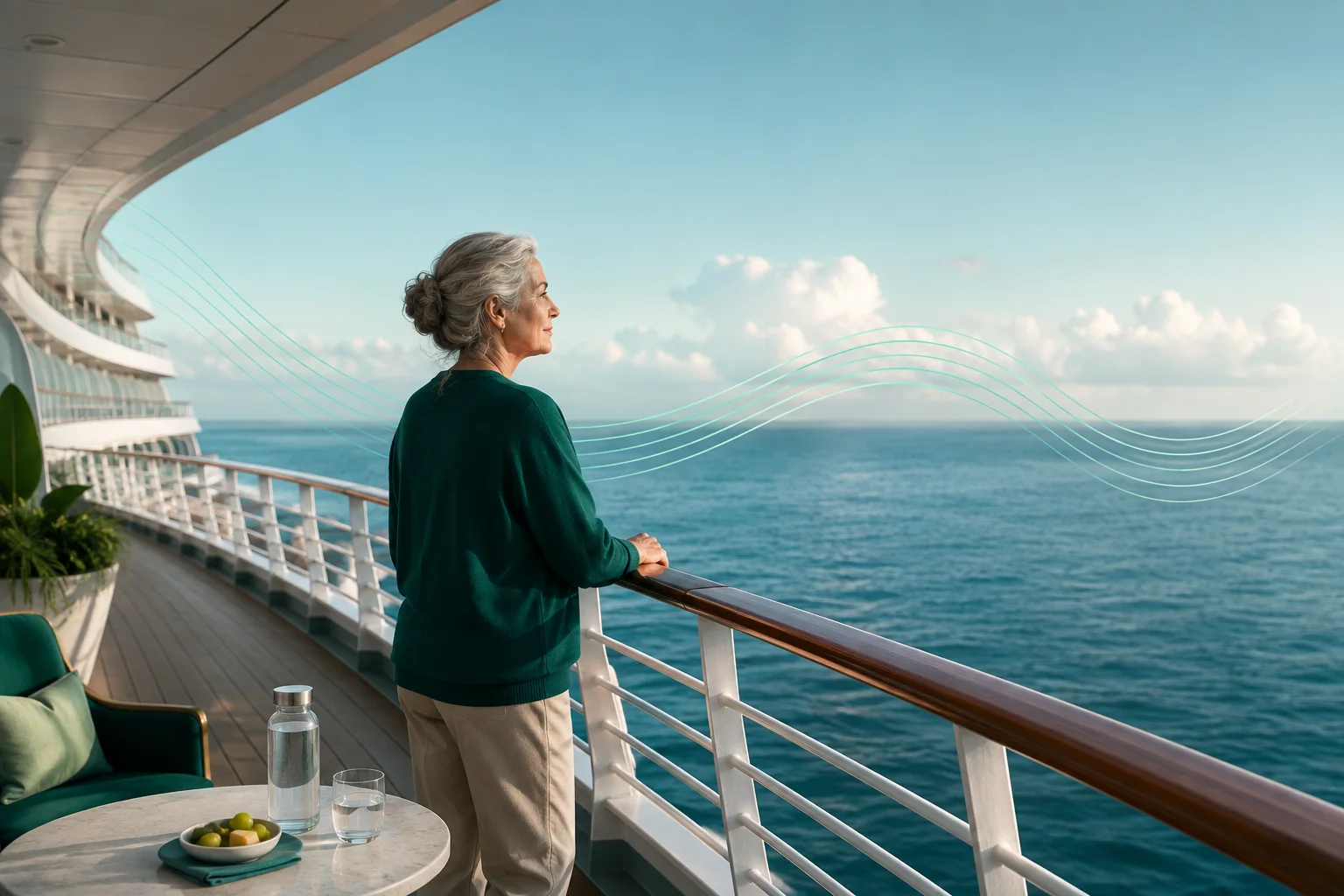
If your budget allows, go for a cabin with a large window or a balcony. Being able to look out at the horizon gives your eyes a real-world reference point, which directly reduces the sensory conflict that causes nausea.
- Prefer
- Midship, low. Closest to the ship's centre of gravity, so roll and pitch are smallest.
- Alternative
- Midship, higher deck. Still centred, but you feel more of the roll.
- Watch for
- Bow or stern, high up. Furthest from the pivot, so every movement is amplified.
Eat smart before and during
Light meals are your friend. Nothing heavy or greasy: a full stomach amplifies nausea when it hits. Ginger in any form (candies, tea, supplements) works for a surprising number of people and has legitimate research behind it. Start it the day before if you can.
Skip the alcohol and coffee if you're sensitive. Both dehydrate you and can lower your threshold for symptoms. Hydration matters more than most people think on a cruise.
Ticks are saved in this browser only, for this session.
Stay on deck when possible
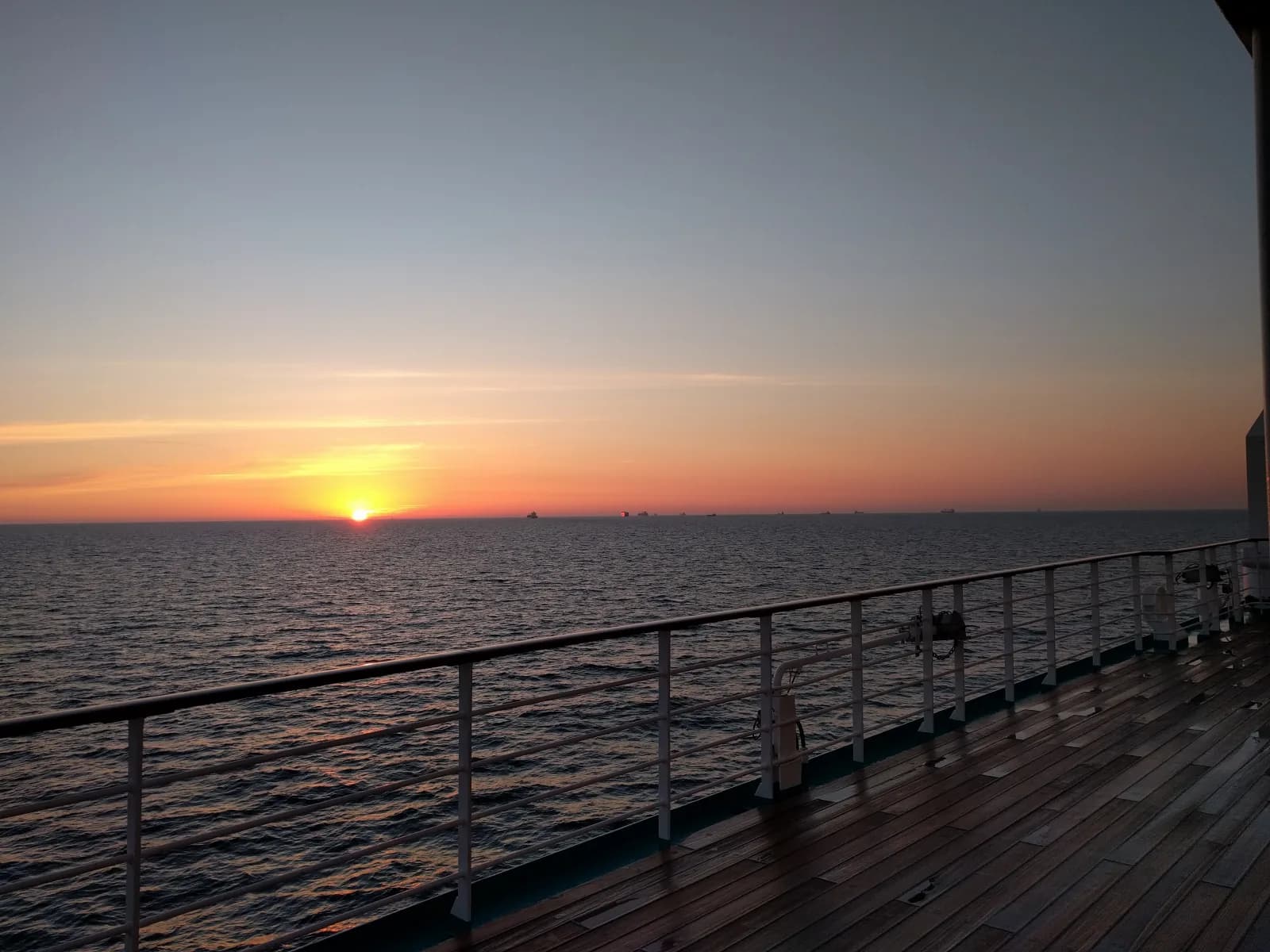
Fresh air and a fixed visual anchor do wonders. When you can see the actual horizon, your eyes and inner ear start sending matching signals again, which is the whole key. Avoid reading or staring at your phone below deck for long stretches. That's the fastest way to accelerate symptoms.
Movement helps too. Walk around the ship, join activities, keep your body engaged. Staying completely still in a closed cabin is often the worst thing you can do. That said, lying down flat sometimes does calm the inner ear: it reduces the head movement that the vestibular system has to process.
When prevention isn't enough
Some people still need extra help even after doing everything right. That's where Dizzout comes in. Pop in your headphones and hit play. Dizzout states relief in about 90 seconds. No drowsiness, no medication, works right through regular earbuds.
I know a couple who tried everything on their first cruise. Dramamine knocked them out cold, wristbands felt like wishful thinking. One session with the right audio and they actually enjoyed the rest of the trip, instead of hiding in the cabin waiting for the ship to dock.
Below deck, at night, with no horizon
The horizon trick needs a horizon, and a cabin at 2am does not have one. Dizzout plays precisely calibrated audio through any headphones instead. Drug-free, no drowsiness, about 90 seconds.
Booking or booked? The cabin decides a lot
Find the steadiest cabinFree and takes about a minute.
Stop the nausea
Free to try, no card needed. Or go straight to the App Store or Google Play.
 Scan to open on your phone
On a computer? Dizzout installs on your phone. Scan the code, or open dizzout.com/get on your phone and it'll take you straight to the right store.
Stack the hacks
Not every hack works for every person, bodies are different. But stacking a few of these together makes a huge difference. The right cabin plus smart eating plus Dizzout on standby covers most situations. Don't let sea sickness steal your vacation. If you want to know whether the water itself is rough where you're headed, we have that sea by sea at motion sickness by sea.
Frequently asked questions
Which deck is best to avoid sea sickness on a cruise?
Mid-ship cabins on lower decks feel the least movement. Avoid the bow (front) and upper decks if you're prone to sea sickness: they amplify every roll and pitch.
Does ginger actually work for sea sickness?
Yes, with caveats. Ginger has moderate evidence for mild to moderate motion sickness. It works better as prevention (taken before symptoms start) than as a fix once nausea has set in.
How long does sea sickness last on a cruise?
Many people adapt within 1 to 3 days as the brain calibrates to the ship's movement. But rough weather can reset that adaptation at any point in the trip.
Can I use Dizzout on a cruise?
Yes. Dizzout plays audio at normal listening levels through any headphones. No medication, no drowsiness. You can use it as often as you need throughout the trip.
Someone you know gets motion sick?
Send them this guide. It might be the trip it saves.
Your next question, probably
Where on the ship should you be?
Which cabins move least, and what to do if you already booked one
If that is not your question:
About this article
This article is informational and not a substitute for medical advice. If dizziness persists for days after you step ashore, or comes with hearing changes or severe headaches, see a doctor. Brand names are trademarks of their respective owners.