How to Not Get Sick on a Small Boat
Small boats hit harder than big ships: the chop is quicker and the deck pitches more sharply, so motion sickness can come on fast. The plan is the same in spirit as for any vessel but tuned for a smaller craft: stay where you can see the water, keep your eyes on the horizon, and prepare before you cast off. Here's how to stay comfortable on the water.
Prone to motion sickness? Drug-free calibrated sound through any headphones, designed to help once symptoms have started.Starts in your browser · works with any headphones
Get your personalized Dizzout plan. Paid subscription for full access.

On your phone? Scan to start there.
Step by step
- 1
Stay topside with eyes on the horizon
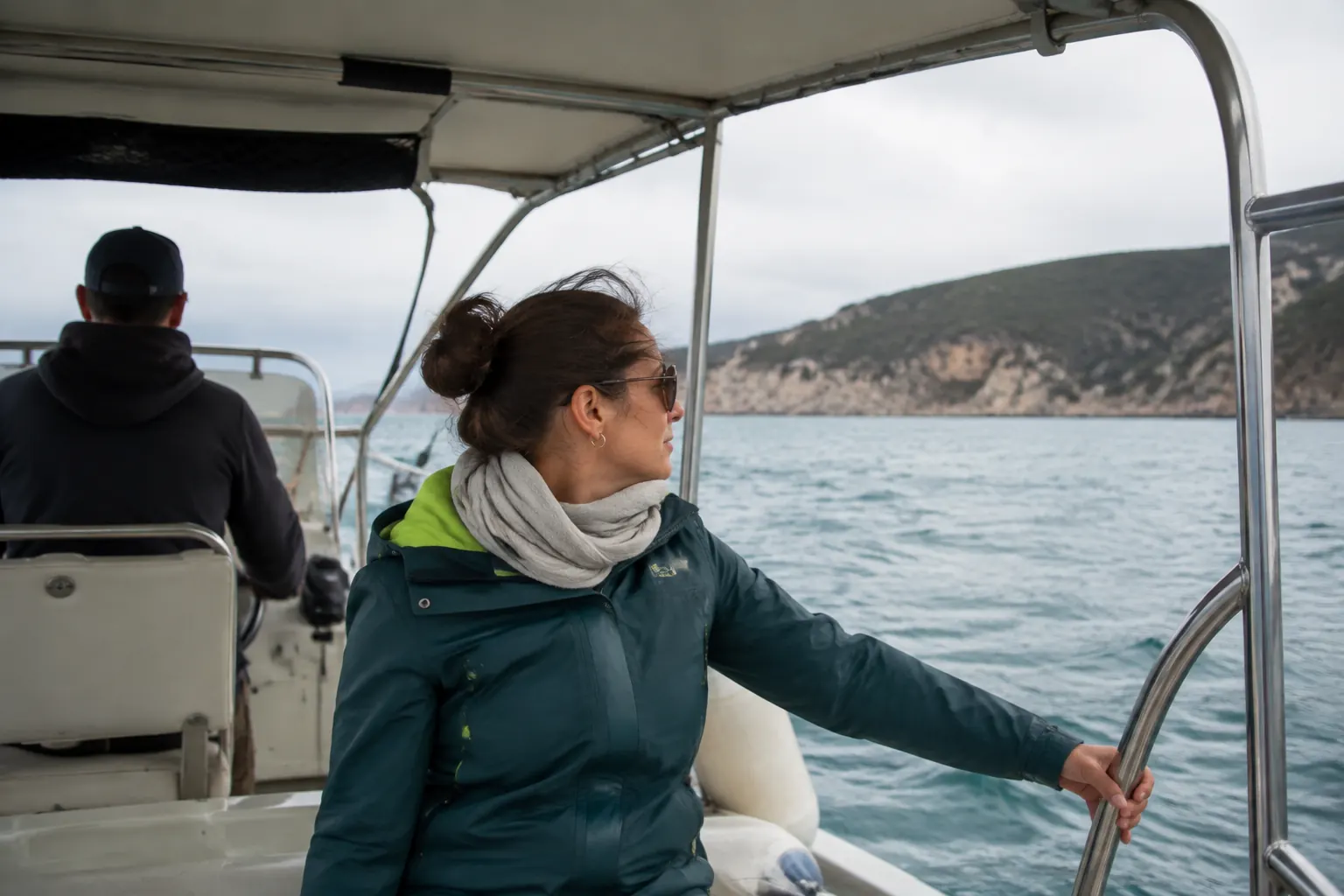
Get out where you can see the water and the horizon line. On a small boat there's nowhere truly enclosed to hide, so use that: a clear view of the horizon settles the motion conflict quickly.
- 2
Sit low and toward the center
The middle of the boat near the waterline moves least. Avoid the bow, which slams up and down in chop, and don't perch high where the pitch is exaggerated.
- 3
Take the helm or a job
If you can steer, do it: drivers rarely get sick because they anticipate the boat's movement. If not, give yourself a task and keep your eyes on the water rather than fixating on your stomach.
- 4
Prepare and hydrate before departure
Eat something light and plain, sip water, skip the alcohol, and listen to Dizzout's Pre-Conditioning Mode for about 90 seconds before you leave the dock.
- 5
Act immediately if it starts
On a small boat symptoms build fast, so respond at the first queasy wave: face the horizon, breathe slowly, and play Dizzout through any headphones. Dizzout states relief in about 90 seconds.
Why this works
A small boat's quick, sharp motion is felt strongly by your inner ear, and below or facing backward your eyes can't keep up. Staying topside with the horizon in view, sitting low and central, and taking the helm all align what your eyes see with what your body feels. Preparing in advance and reacting instantly stop the fast-building reflex small boats are notorious for, while drug-free sound therapy is there if symptoms start anyway.
Common mistakes to avoid
- Sitting in the bow, which pounds hardest in choppy water.
- Facing backward or watching the wake instead of the horizon ahead.
- Going below or staring at a fish finder or phone for long stretches.
- Heading out hungover or after drinking: alcohol sharply worsens it.
Already on the ship and feeling sick?
Stop Seasickness Now
Open Dizzout, plug in headphones, tap play. Relief in about 90 seconds.
Get your personalized Dizzout plan. Paid subscription for full access.
30,000+ travelers in 30+ countries · How we count

On your phone? Scan to start there.
Comparing apps first? See how the motion sickness apps compare
Frequently asked questions
Why do small boats make me sicker than big cruise ships?
Small boats react instantly to every wave, so the motion is faster and sharper, and there's no large stable structure to dampen it. Big ships ride over swells slowly and smoothly, which your body tolerates far better.
Does steering the boat stop seasickness?
It often helps a lot. When you steer you anticipate the boat's movements, so your eyes, hands, and inner ear agree, the same reason drivers rarely get car sick. If you can take the helm, do.
What should I eat before going out on a boat?
Something light, plain, and starchy, like toast, crackers, or a banana, and plenty of water. Avoid greasy, heavy meals and alcohol, both of which unsettle the stomach and make seasickness more likely.