
How to Prevent Motion Sickness on a Plane
Air sickness is mostly about turbulence: your inner ear feels the bumps and drops while your eyes, fixed inside a still-looking cabin, see no movement at all. You can cut the odds dramatically by choosing the right seat, keeping a window on the horizon, and preparing before takeoff. Here's how to fly comfortably even if you're prone to it.
Prone to motion sickness? Drug-free calibrated sound through any headphones, designed to help once symptoms have started.Starts in your browser · works with any headphones
Get your personalized Dizzout plan. Paid subscription for full access.

On your phone? Scan to start there.
Step by step
- 1
Book a seat over the wing
The wing is the aircraft's center of lift and balance, so it moves the least. A window seat over the wing is the single best place to sit if you're worried about motion sickness.
- 2
Use the window and the horizon
On a clear day, look out at the horizon or the ground: a real, distant reference settles the conflict. If it's cloudy, keep the shade up anyway so your eyes have an outside cue.
- 3
Prepare before boarding
Eat a light, plain meal, hydrate, and listen to Dizzout's Pre-Conditioning Mode for about 90 seconds before you board, while you're still on the ground.
- 4
Keep cool air flowing
Open the overhead air vent and aim it at your face. The steady stream of cool air is a simple, reliable way to keep nausea from building during bumps.
- 5
Recline slightly and rest your head
Lean back, support your head against the headrest, and keep it still during turbulence. Avoid reading or looking down at your lap when the ride gets rough.
- 6
Have sound therapy ready for turbulence
If a rough patch starts to get to you, fix your eyes out the window, breathe slowly, and play Dizzout through any headphones: Dizzout states relief in about 90 seconds, even mid-flight.
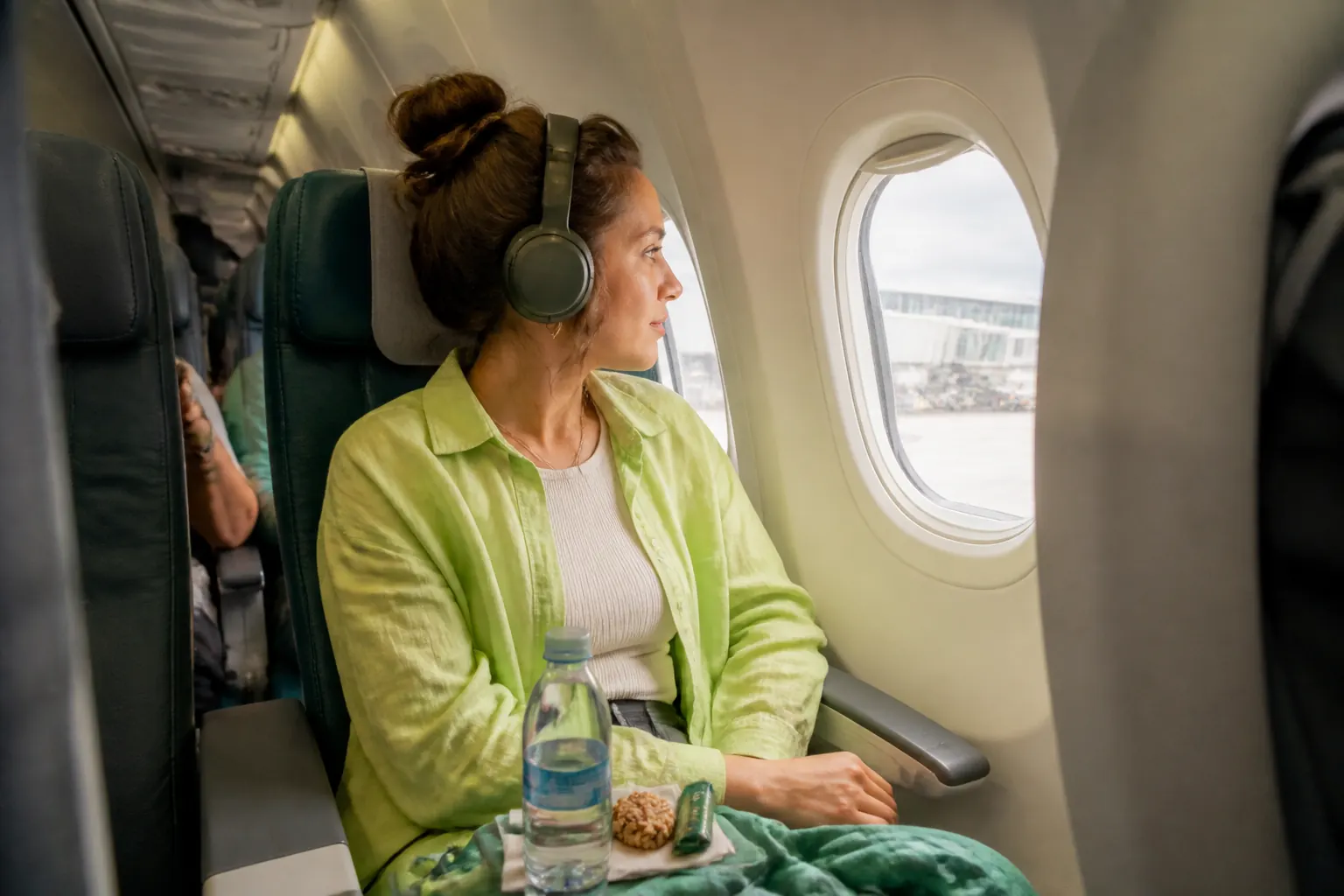
Why this works
In the air the trigger is turbulence your body feels but your eyes can't see inside the cabin. A wing seat minimizes the motion, the window restores a visual reference, and cool air plus a still head keep the reflex in check. Preparing on the ground means you board in the best shape you can, and sound therapy is on hand the moment turbulence threatens to tip you over.
Common mistakes to avoid
- Choosing a seat at the very back of the plane, where motion is most exaggerated.
- Reading, working on a laptop, or watching the seat-back screen during turbulence.
- Closing the window shade so you lose your only outside reference.
- Flying dehydrated or after a heavy, greasy meal.
Mid-flight nausea?
Stop Air Sickness Now
Plug in your headphones and open Dizzout. Works on any flight.
Get your personalized Dizzout plan. Paid subscription for full access.
30,000+ travelers in 30+ countries · How we count

On your phone? Scan to start there.
Comparing apps first? See how the motion sickness apps compare
Frequently asked questions
Where is the best seat on a plane to avoid motion sickness?
A window seat over the wing. It's the aircraft's center of balance, so it experiences the least motion, and the window gives you a horizon to look at, both of which reduce air sickness.
Why do I only feel sick on a plane during turbulence?
Smooth cruising produces almost no perceptible motion, so there's nothing for your inner ear and eyes to disagree about. Turbulence creates sudden movement your body feels but your eyes, fixed on a still cabin, can't see, and that conflict triggers nausea.
Can I prevent air sickness without medication?
Yes. Seat choice, the window, cool air, hydration, and keeping your head still prevent most cases drug-free. If symptoms break through, sound therapy through headphones is a drug-free option with no drowsiness, and Dizzout states relief in about 90 seconds.
What should I eat before a flight to avoid air sickness?
A light, plain meal one to two hours before you board, such as toast, rice, crackers, a banana or a simple sandwich. Avoid greasy, spicy and heavy food, fizzy drinks and alcohol, and do not fly on an empty stomach. Keep a small dry snack and a bottle of water with you and sip through the flight.
What medicine is used for air sickness?
The common over-the-counter options are antihistamines: dimenhydrinate (Dramamine Original) and meclizine (Dramamine Less Drowsy, Bonine), taken before the flight as the label directs. Both can cause drowsiness. Scopolamine patches need a prescription in the US and many other countries and go on several hours before travel. Ask a pharmacist or doctor which suits you, especially for a child, during pregnancy or alongside other medicines.
How do I prevent air sickness in children?
Children between about 2 and 12 are the most prone to motion sickness. Book a window seat over the wing, give them a view out of the window, keep tablets and books for the smoother stretches, offer light snacks and water, and point the air vent at their face. Talk to your child's doctor before giving any motion sickness medicine, because many are not meant for young children.
Does closing your eyes help air sickness?
It often does when you cannot see outside. With your eyes closed, the cabin stops telling your eyes that you are still while your inner ear feels the bumps, so the conflict eases. If you have a window, looking at the horizon is the other good option. Recline, rest your head against the headrest to keep it still and keep cool air on your face.