
Nausea in the Car: Why It Hits and How to Settle It
Nausea in the car is the most common form of motion sickness, and it almost always comes from one mismatch: your inner ear feels every turn and brake, but your eyes, on a phone, a book, or the seat back, see something still. Your brain reads the disagreement as a poisoning signal and answers with nausea. The fix is to close that gap fast: look far ahead, get cool air moving, and give your balance system a steady reference.
Try Dizzout free. Drug-free calibrated sound through any headphones, designed to help once symptoms have started.Free · works with any headphones · no account to try
Free to try, no card needed. Or go straight to the App Store or Google Play.
Why this happens in the car
Cars amplify the mismatch more than almost any other vehicle because passengers ride with their eyes down. Stop-and-go traffic, winding roads, and rear seats with no forward view all sharpen the conflict, which is why the same person who feels fine driving can feel terrible as a passenger. Drivers rarely get nauseous: they anticipate every movement, so their senses already agree.
What to do right now
- 1
Put the phone or book down and lock your eyes on the horizon or the road far ahead.
- 2
Open a window or aim a vent at your face: cool, moving air takes the edge off quickly.
- 3
Breathe slowly: in for four counts, out for six, a few times.
- 4
Put on any headphones and play a Dizzout session; most users feel the wave ease in about 90 seconds.
- 5
If it keeps building, ask the driver to pull over and stand in fresh air for a few minutes.
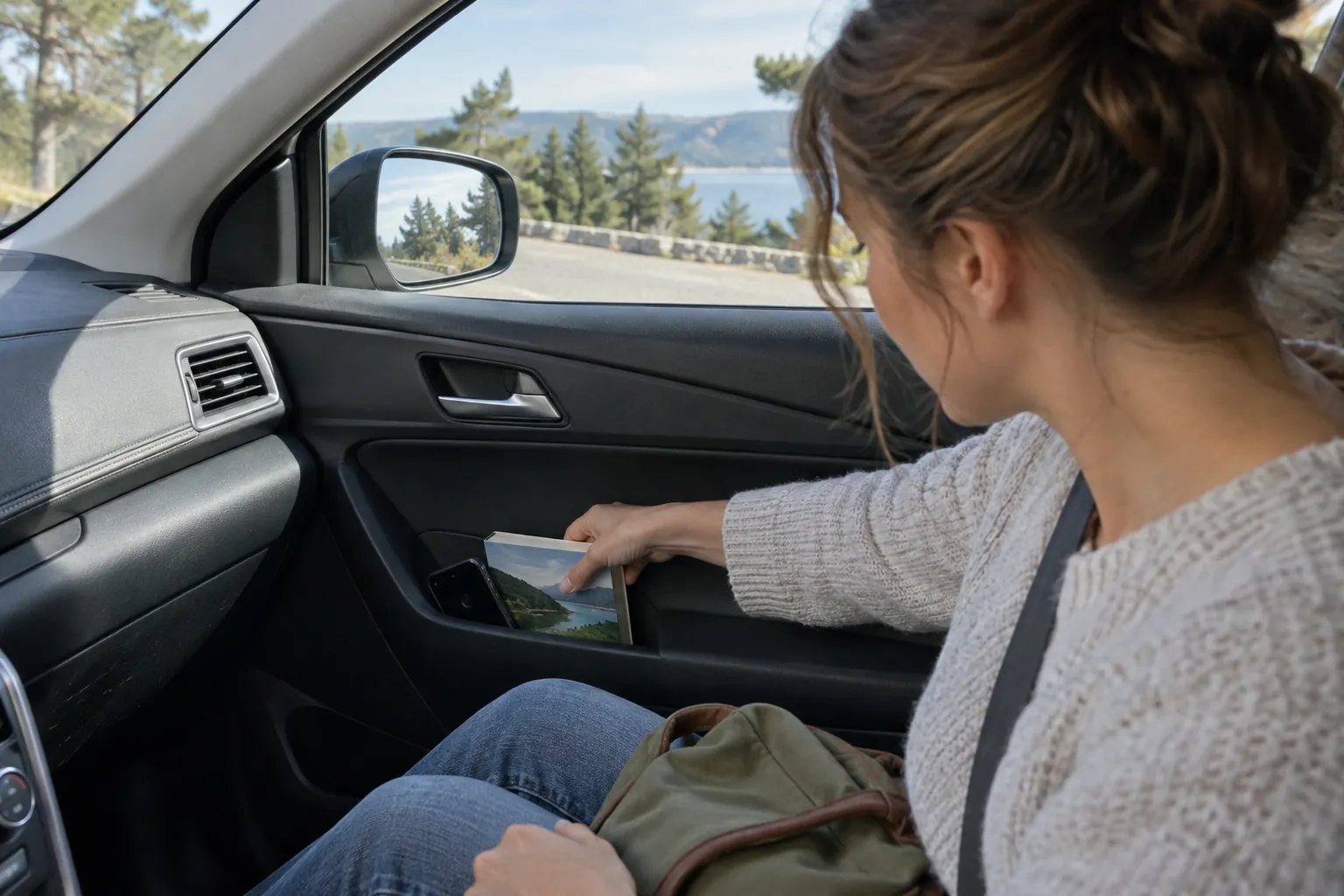
Already feeling it?
Open Dizzout, plug in any headphones, tap play. Drug-free, no drowsiness. Most users feel relief in about 90 seconds.
Before you need it: find out how prone you are
Take the free 2-minute testTwo minutes, no sign-up, and it ends with a drug-free plan to prepare.
Stop the nausea now
Free to try, no card needed. Or go straight to the App Store or Google Play.
 Scan to open on your phone
On a computer? Dizzout installs on your phone. Scan the code, or open dizzout.com/get on your phone and it'll take you straight to the right store.
Preventing it next time
- Claim the front passenger seat: it moves least and has the best forward view.
- Eat light before the drive; skip greasy food and don't travel on a completely empty stomach.
- Use Dizzout's Pre-Conditioning Mode for about 90 seconds before the car moves.
- On long drives, stop every 1-2 hours for air and a short walk.
When to see a doctor
Car nausea that fades shortly after the ride is ordinary motion sickness. See a doctor if nausea persists for days after travel, appears without any motion, or comes with hearing changes, severe headache, or vertigo spells: those point to a vestibular condition that needs clinical care, not a motion-sickness fix.
Common questions
Why do I get nauseous in the car but my friends don't?
Motion-sickness sensitivity varies hugely between people: vestibular sensitivity, genetics, hormones, and habits like reading in the car all play a role. Women and children 2-12 are statistically more susceptible, and sensitivity also changes over a lifetime.
What gets rid of car nausea the fastest once it starts?
Look far ahead at a stable point, get cool air on your face, and use calibrated sound therapy through headphones: together these calm most episodes in about 90 seconds. Pills can't act that fast: they need 30 to 60 minutes to absorb, so they only work as prevention.
Does sitting in the front seat really help with nausea?
Yes. The front passenger seat experiences less motion than the rear bench and gives you an unobstructed forward view, so your eyes confirm what your inner ear feels. It's the single best seat change you can make.
What causes nausea in a car if it's not motion sickness?
Motion sickness is the most common cause, but not the only one. An empty stomach, greasy food beforehand, dehydration, anxiety, a hot or stuffy cabin, certain medications and early pregnancy can all trigger car nausea with no motion mismatch involved. If nausea shows up with no travel, keeps recurring, or comes with severe pain or fever, see a doctor rather than assuming it's motion sickness.
Related guides
Medically informational; not a substitute for a doctor's advice. Persistent or unusual symptoms deserve a clinical evaluation.