How to Stop Being Car Sick
Car sickness happens when your inner ear feels the car moving but your eyes, fixed on a phone, a book, or the seat in front, don't agree. Close that gap and the nausea fades. The fastest fixes are to look far ahead at the horizon, get air moving across your face, and sit where the motion is gentlest. Here is the step-by-step routine that works for most people.
Prone to motion sickness? Drug-free calibrated sound through any headphones, designed to help once symptoms have started.Starts in your browser · works with any headphones
Get your personalized Dizzout plan. Paid subscription for full access.

On your phone? Scan to start there.
Step by step
- 1
Face forward and watch the road
Sit upright and lock your eyes on the horizon or a distant fixed point through the windshield. This lets your eyes confirm the motion your inner ear is already feeling, which is the single biggest thing you can do.
- 2
Put the phone and book away
Reading or scrolling forces your eyes onto a still object while your body moves, the exact mismatch that triggers nausea. If you must look down, do it in short glances and look up between them.
- 3
Move to the front and get airflow
The front passenger seat moves less than the back and gives you a clear forward view. Crack a window or aim a vent at your face; cool, moving air noticeably reduces the queasy feeling.
- 4
Pre-condition before symptoms start
If you know you're prone to it, listen to Dizzout's Pre-Conditioning Mode for about 90 seconds before the car starts moving, while you still feel fine.
- 5
Catch the first warning signs
Cold sweat, yawning, a heavy stomach, or going quiet are early signals. Act the moment you notice them: it is far easier to stop car sickness early than to claw it back once you're fully nauseous.
- 6
Rescue yourself if it has already started
Ask the driver to slow down or pull over, step into fresh air if you can, and use sound therapy through any headphones. Dizzout states relief in about 90 seconds.
Why this works
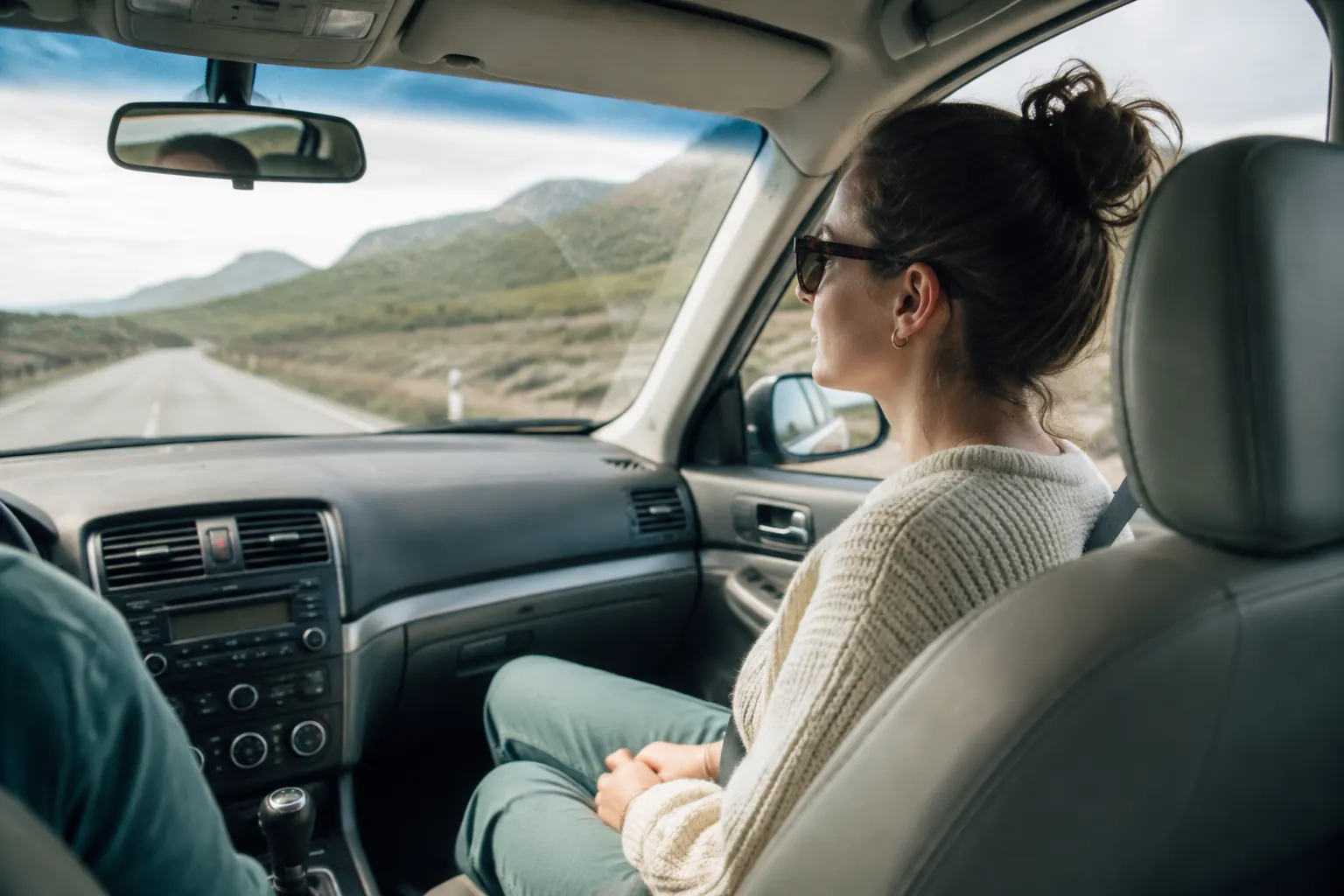
Every one of these steps works by shrinking the sensory mismatch between your eyes and your inner ear. Looking at the horizon, dropping the phone, and sitting up front all give your eyes the same story your balance system is telling. Airflow and an early response keep the nausea reflex from building momentum, and drug-free sound therapy is there if symptoms start anyway.
Common mistakes to avoid
- Reading or watching video to 'distract yourself': it makes car sickness worse, not better.
- Waiting until you feel awful before acting; the reflex is much harder to reverse once it peaks.
- Eating a heavy, greasy meal right before the drive, or traveling completely empty: both unsettle the stomach.
- Cranking the heat in a stuffy cabin; warmth and stale air amplify nausea.
Pull over for 90 seconds
Stop Car Sickness Now
Plug in any headphones, tap play, feel better before you keep driving.
Get your personalized Dizzout plan. Paid subscription for full access.
30,000+ travelers in 30+ countries · How we count

On your phone? Scan to start there.
Comparing apps first? See how the motion sickness apps compare
Frequently asked questions
Why do I get car sick as a passenger but not when I drive?
Drivers anticipate every turn and brake, so their eyes, hands, and inner ear all agree on the motion. As a passenger you have no control or preview, so the movement arrives as a surprise your eyes can't confirm, which is what triggers nausea.
What is the best seat in the car to avoid getting sick?
The front passenger seat. It moves the least, gives you a clear view of the road ahead, and gets the most airflow. In the back, the middle seat with a view through the windshield is the next best option.
How fast can I stop car sickness once it starts?
Catch it at the first warning signs: look forward, get fresh air, and use sound therapy. Dizzout states relief in about 90 seconds. Once you've actually been sick, recovery takes longer, which is why early action matters.
Can you read in the car without getting sick?
Most people who get car sick cannot read for long, because the page holds still while your inner ear feels every turn and brake. If you have to read, sit in the front, hold the page up near eye level so the road stays at the edge of your view, look out of the windshield every few minutes and stop at the first hint of queasiness. Audiobooks and podcasts give you the story without the trigger.
Why do I get car sickness from using my phone?
Your eyes lock onto a screen that holds still while your inner ear feels the car turn, brake and bounce. That mismatch is the core trigger of motion sickness, and looking down at small text makes it stronger. Put the phone away, or hold it up at eye level and look out at the road every few lines. iPhone and Android phones have built-in motion cue dots designed for using a phone in a moving vehicle.