Motion Sickness and Excessive Yawning: Why You Yawn and How to Settle It
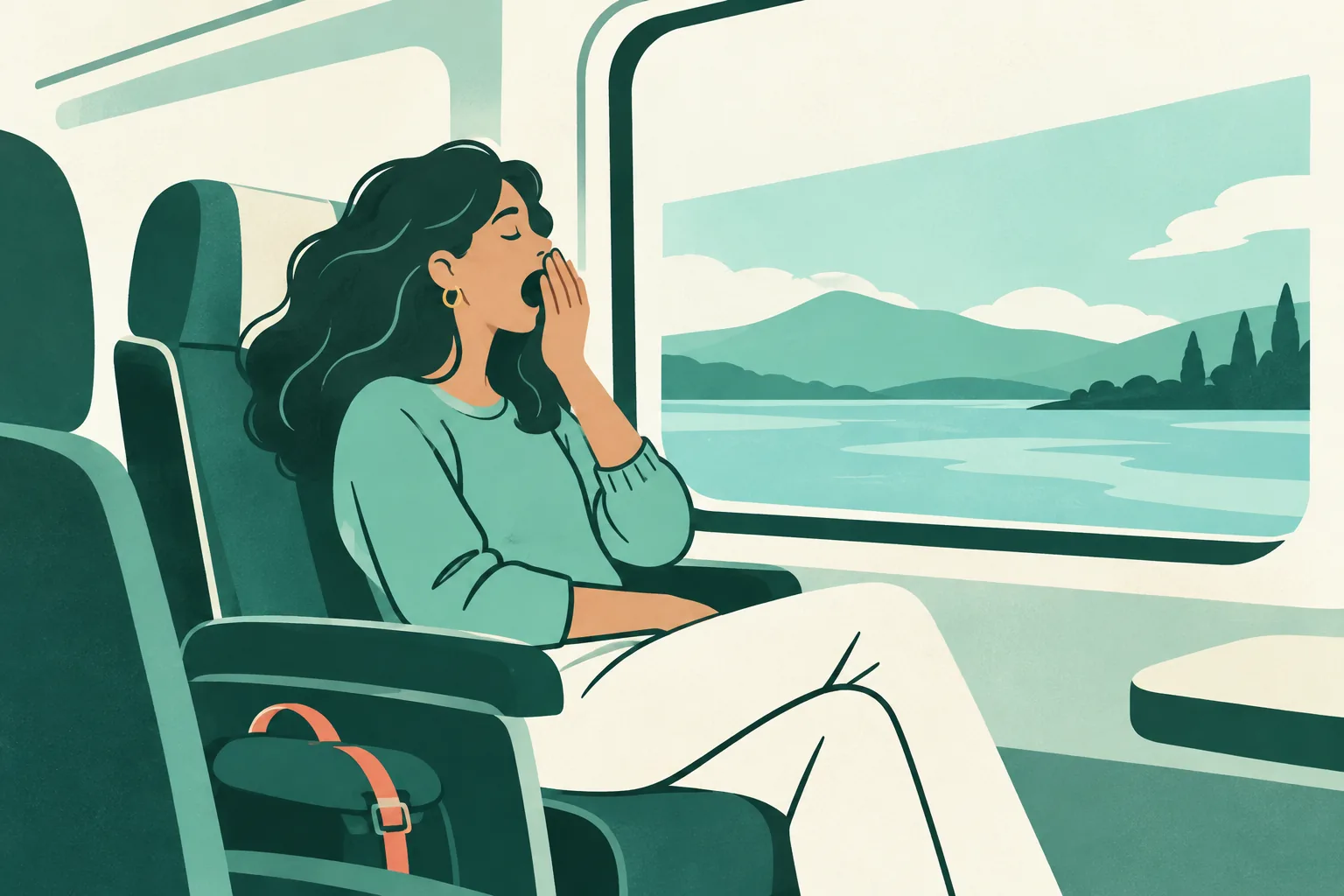
If you start yawning over and over in a moving car, boat, or plane, even when you're not tired, that repeated yawning is often one of the earliest signs of motion sickness, not boredom or lack of sleep. Researchers describe yawning as a behavioral marker that appears before nausea, and sometimes instead of it. Catching it early gives you a head start to act before things escalate.
First thing to do: Treat repeated yawning as an early warning and act on it now, before nausea has a chance to build.
Try Dizzout free. Drug-free calibrated sound through any headphones, designed to help once symptoms have started.Free · works with any headphones · no account to try
Free to try, no card needed. Or go straight to the App Store or Google Play.
What it feels like
Motion-sickness yawning is repeated, involuntary yawning that comes on during or shortly after travel, frequently paired with a heavy, drowsy, "I just want to close my eyes" feeling. It can show up well before the more obvious symptoms like nausea or cold sweats, and in some people it's one of the main things they notice, with little or no stomach upset at all. This pattern overlaps with what specialists call the sopite syndrome: a cluster of motion-related drowsiness, yawning, low mood, and fatigue that can occur before other motion-sickness symptoms, in their absence, or linger long after the queasiness has passed. So if you've ever wondered why a long drive leaves you yawning and sluggish rather than nauseated, this is likely what's happening.
Why motion sickness causes yawning
Motion sickness starts with sensory conflict: your inner-ear balance organs, your eyes, and your body's position sense send the brain mismatched signals about how you're moving. For example, your inner ear feels the sway of a car while your eyes, fixed on a phone or book, report that nothing is moving. The brain registers this discrepancy and triggers a wider response, which is why a balance problem produces symptoms far beyond dizziness. Part of that response runs through the autonomic nervous system, the automatic controller of things like heart rate, salivation, and alertness. Yawning is one of its early outputs, and it tends to travel with the drowsiness and fatigue of the sopite syndrome, which is why it can be an early warning flag rather than a sign you're simply tired. Repeated yawning often shows up alongside other prodromal (pre-sickness) cues such as increased salivation, pallor, drowsiness, and the first hint of cold sweat, giving you a chance to respond before full-blown nausea sets in.
How to ease it now
- 1
Treat repeated yawning as an early warning and act on it now, before nausea has a chance to build.
- 2
Look out toward the horizon or a stable, distant point in the direction of travel, and put away phones, books, and screens so your eyes and inner ear agree on what's happening.
- 3
Get cool, fresh air: crack a window or aim a vent at your face; stuffy, warm air tends to make the drowsy, yawning feeling worse.
- 4
Try slow, steady breathing through the nose to help calm the autonomic response that drives early symptoms.
- 5
Consider ginger, which many travelers use as a drug-free option for motion-sickness queasiness; ask a pharmacist if you're unsure whether it's right for you.
- 6
If you want another drug-free option you can use after symptoms start, calibrated sound therapy through ordinary headphones, the approach the Dizzout app uses, is something many users find helps; it won't add to the drowsiness the way some medications can.
A drug-free option that works after symptoms start
Try Dizzout free
Dizzout is a free-to-try, drug-free app that uses calibrated sound on any headphones. It's one of the few options designed to help once you already feel sick. Most people feel better in about 90 seconds.
Free to try, no card needed. Or go straight to the App Store or Google Play.
 Scan to open on your phone
On a computer? Dizzout installs on your phone. Scan the code, or open dizzout.com/get on your phone and it'll take you straight to the right store.
How to prevent it
- Sit where motion feels mildest and you have a clear forward view: front seat of a car, over the wing on a plane, or mid-ship on a boat.
- Avoid reading or staring at a phone or screen while moving; if you need to look down, take frequent breaks to refocus on the road or horizon.
- Get good rest and air before you travel: fatigue and stuffy, overheated cabins both make early drowsiness and yawning more likely.
- Build up tolerance gradually with repeated, manageable exposure to the kind of travel that affects you; habituation is one of the most effective long-term strategies.
- Eat lightly beforehand, stay hydrated, and go easy on alcohol, which can worsen how you feel in motion.
- If you and a clinician decide on medication, be aware that some anti-motion-sickness drugs, especially older antihistamines, can themselves cause drowsiness: discuss options with a pharmacist or doctor so the treatment doesn't add to the sleepiness.
When to see a doctor
Occasional yawning and drowsiness tied to travel that settle once you stop moving are typical of motion sickness and usually not concerning. See a doctor, though, if excessive yawning or daytime sleepiness happens often without any motion to explain it, is severe or worsening, or comes with red-flag neurological signs: a severe or sudden headache, confusion, fainting, weakness, or changes in vision, speech, or balance. Persistent or unexplained excessive yawning can occasionally be linked to other medical conditions, so a clinician should evaluate it. Also seek care for symptoms that don't ease after travel ends, or for vomiting severe or prolonged enough to risk dehydration. This information is educational and not a substitute for personalized medical advice.
Common questions
Why do I yawn so much when I'm carsick?
Repeated yawning during travel is a recognized early sign of motion sickness, driven by your nervous system's automatic response to sensory conflict between your inner ear and your eyes. It often appears before nausea and overlaps with motion-related drowsiness known as the sopite syndrome, so it's usually a warning flag rather than ordinary tiredness.
Is yawning a sign of motion sickness even if I don't feel nauseous?
Yes. Yawning and drowsiness can occur before other motion-sickness symptoms or entirely without nausea. This drowsy, yawning presentation is sometimes the main way motion sickness shows up for a person, which is why it can be easy to mistake for boredom or lack of sleep.
How can I stop the yawning and drowsiness when traveling?
Use early yawning as your cue to act: look at the horizon, put screens away, get cool fresh air, and breathe slowly. Sitting where motion is mildest and resting beforehand help too. Drug-free options like ginger or calibrated sound therapy are things many people find useful and won't add to the sleepiness the way some medications can.
Is excessive yawning ever something more serious than motion sickness?
Usually not when it's clearly tied to being in a vehicle and eases once you stop. But frequent or severe yawning that happens without any motion, or that comes with a severe headache, confusion, fainting, or changes in vision, speech, or balance, should be checked by a doctor, as it can occasionally signal other conditions.
Sources
Related symptoms & guides
This page is informational and is not a substitute for professional medical advice. If symptoms are severe, persistent, or occur without any motion trigger, see a qualified clinician.