
How to Prevent Car Sickness on Long Drives
Long drives stack the odds against you: hours of motion, winding or stop-and-go stretches, snacks, and the temptation to bury yourself in a phone or book. Preventing car sickness over a long trip is about pacing: regular breaks, steady airflow, smart eating, and a forward view the whole way. Here's how to make it the whole drive without the nausea.
Prone to motion sickness? Drug-free calibrated sound through any headphones, designed to help once symptoms have started.Starts in your browser · works with any headphones
Get your personalized Dizzout plan. Paid subscription for full access.

On your phone? Scan to start there.
Step by step
- 1
Plan regular breaks
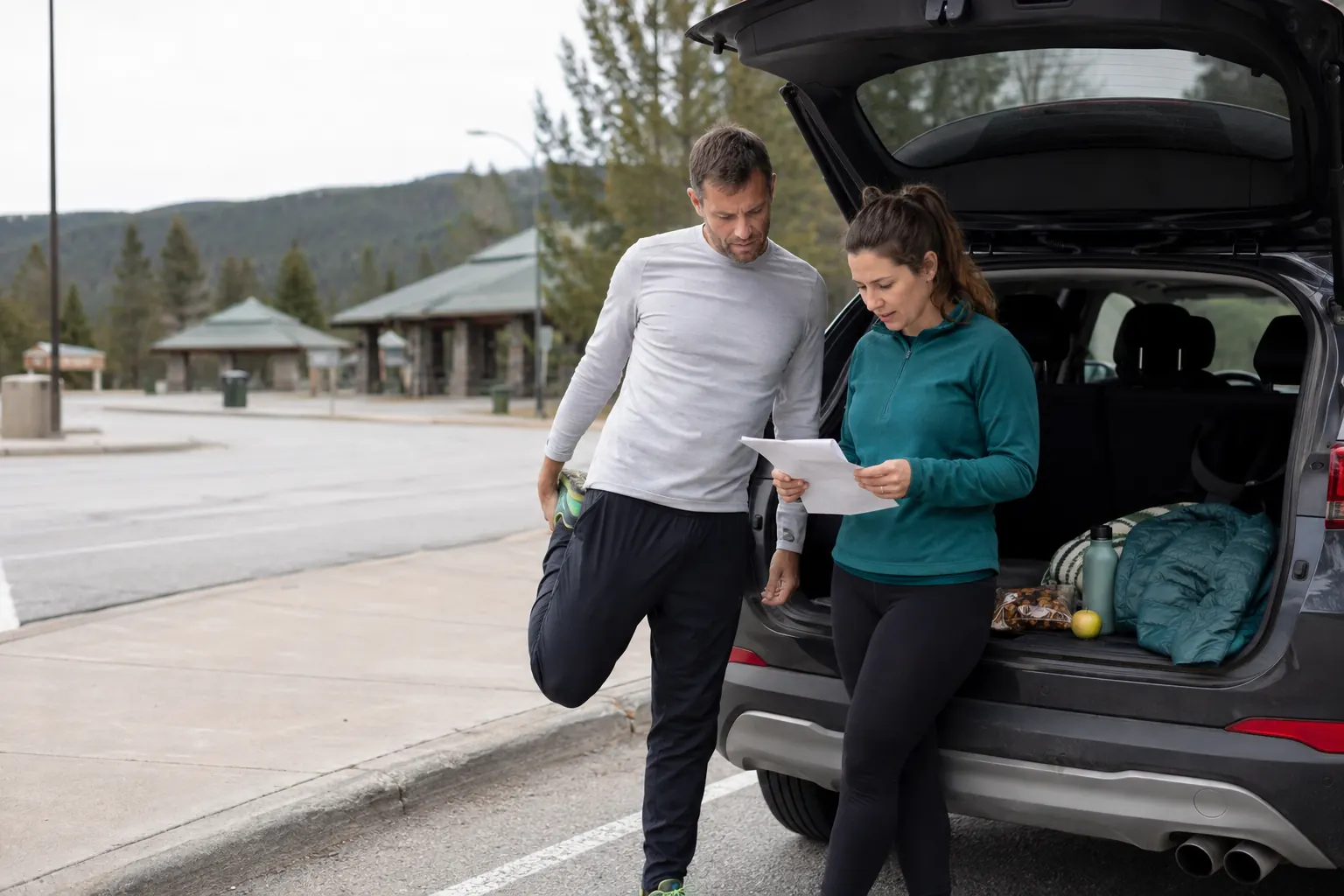
Stop every 1 to 2 hours to step out, walk, and get fresh air. Short resets stop the low-grade queasiness from accumulating over a long drive into full nausea.
- 2
Keep a forward view the entire trip
Sit up front or where you can see the road ahead, and keep your eyes on the distance. Resist the urge to read, scroll, or watch video to pass the time: it's the fastest way to get sick on a long drive.
- 3
Eat light and often, and hydrate
Favor small, plain snacks over big greasy meals or fasting, and sip water steadily. An overfull or empty stomach both worsen nausea over hours on the road.
- 4
Manage air and temperature
Keep cool air circulating and the cabin from getting stuffy. Aim a vent at your face on long, warm stretches: heat and stale air build queasiness over time.
- 5
Pre-condition and brace for the tough stretches
Listen to Dizzout's Pre-Conditioning Mode for about 90 seconds before you set off, and again before known winding or mountain sections. If symptoms creep in, use sound therapy at the next break for relief in about 90 seconds.
Why this works
Over a long drive the eye-versus-inner-ear mismatch has hours to build, and winding or stop-and-go roads intensify it. Breaks discharge that buildup before it peaks; a steady forward view keeps your eyes confirming the motion; and light eating, hydration, and airflow keep your body in a state that resists nausea. Pre-conditioning before the hard sections and using sound therapy at breaks keep the reflex from ever taking over.
Common mistakes to avoid
- Driving straight through for hours with no breaks to save time.
- Letting passengers (especially kids) read or watch screens the whole way.
- Loading up on fast food or energy drinks at stops.
- Sealing the cabin up warm and stuffy on a long highway stretch.
Pull over for 90 seconds
Stop Car Sickness Now
Plug in any headphones, tap play, feel better before you keep driving.
Get your personalized Dizzout plan. Paid subscription for full access.
30,000+ travelers in 30+ countries · How we count

On your phone? Scan to start there.
Comparing apps first? See how the motion sickness apps compare
Frequently asked questions
How often should I take breaks to avoid car sickness on a road trip?
Roughly every 1 to 2 hours. Stepping out for fresh air and a short walk clears the accumulating queasiness before it becomes full nausea, and it's especially worth it before or after winding, mountainous, or stop-and-go sections.
Why do I get more car sick on long drives than short ones?
Because the visual-vestibular mismatch has hours to compound, and long trips usually include more varied roads, snacking, and screen time. The longer you're exposed without a reset, the more the nausea reflex builds.
What helps kids on long road trips without medication?
Frequent breaks, a raised sightline so they can see out the front, no tablets or books while moving, plain snacks, airflow, and watching for early signs like going quiet. Sound therapy through headphones gives a quick drug-free reset at stops.
What road trip games do not cause car sickness?
Games played with your eyes up and out of the window: I spy, the license plate game, spotting colors or makes of car, 20 questions, word association and singing along. Audiobooks and podcasts work too. Skip anything that pulls your eyes down inside the car, such as card games, puzzle books, handheld consoles and tablets.