
How to Stop VR Sickness (Cybersickness)
VR sickness is motion sickness in reverse: your eyes see movement inside the headset while your body sits perfectly still. Most of it comes from smooth, thumbstick locomotion and a wide field of view. You can cut it dramatically with the right comfort settings, shorter sessions while you adapt, and a quick rescue when symptoms start. Here's the routine.
Prone to motion sickness? Drug-free calibrated sound through any headphones, designed to help once symptoms have started.Starts in your browser · works with any headphones
Get your personalized Dizzout plan. Paid subscription for full access.

On your phone? Scan to start there.
Step by step
- 1
Turn on comfort settings first
In the headset and in each game, enable comfort options: teleport movement instead of smooth locomotion, snap turning instead of smooth turning, and a vignette (tunnel vision) that narrows your view during movement. These target the exact triggers.
- 2
Play seated and start short
Begin with seated, slow-paced experiences and keep early sessions to 10 to 20 minutes. Your brain builds 'VR legs' over one to two weeks of regular short sessions. Pushing through long sessions too early backfires.
- 3
Keep the room cool and the headset sharp
Point a fan at yourself; real airflow reduces the conflict. Make sure the IPD and focus are set correctly: a blurry or misaligned image causes nausea on its own, separate from the motion.
- 4
Pre-condition before you put it on
Listen to Dizzout's Pre-Conditioning Mode for about 90 seconds before a session, while you still feel fine.
- 5
Stop and reset at the first sign
The moment you feel warm, dizzy, or sweaty, take the headset off and sit still: don't push through, because VR sickness escalates fast. Put on any headphones and play Dizzout; Dizzout states relief in about 90 seconds, then resume when ready.
Why this works
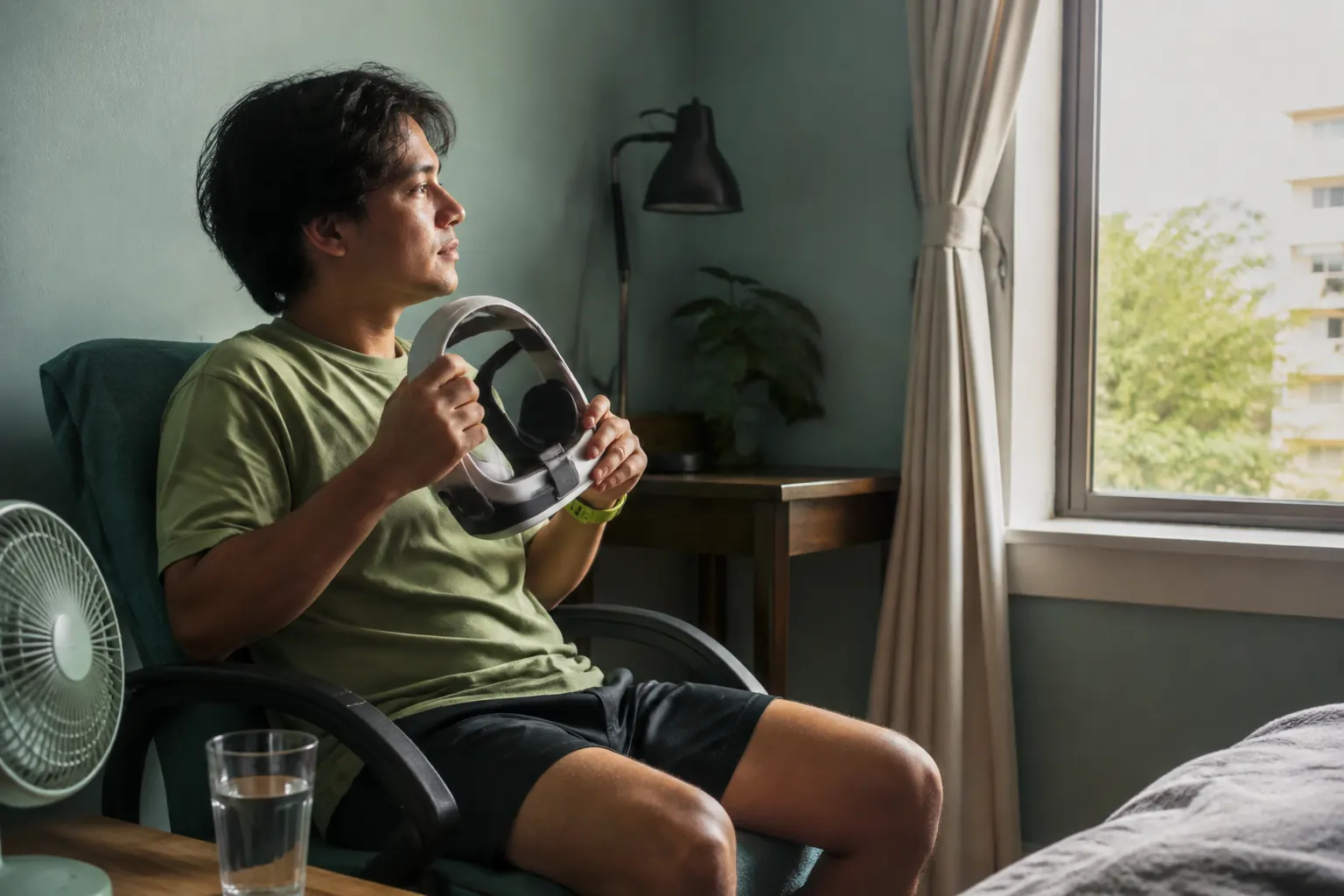
In VR the mismatch is flipped: your eyes report motion your body never feels. Comfort settings (teleport, snap turn, vignette) remove the most provocative visual motion; seated, short sessions let your brain adapt gradually; and a cool room and a sharp image cut the extra triggers. Stopping early prevents the fast escalation VR is known for, and drug-free sound therapy is there if symptoms linger after the headset comes off.
Common mistakes to avoid
- Starting with intense smooth-locomotion games like first-person shooters or racing sims.
- Pushing through nausea to 'tough it out': VR sickness ramps up quickly once it begins.
- Ignoring a blurry image or wrong IPD setting.
- Marathon first sessions instead of short, frequent ones.
Take off the headset for a minute
Stop VR Sickness Now
Plug in headphones and tap play. Relief in about 90 seconds.
Get your personalized Dizzout plan. Paid subscription for full access.
30,000+ travelers in 30+ countries · How we count

On your phone? Scan to start there.
Comparing apps first? See how the motion sickness apps compare
Frequently asked questions
Why does VR make me feel sick when nothing is actually moving?
Because your eyes see motion inside the headset while your inner ear correctly reports that you're sitting still. That conflict is the same trigger as ordinary motion sickness, just reversed: eyes say 'moving', body says 'still'.
Does VR sickness go away with practice?
Yes, you build up a tolerance. Most people develop 'VR legs' within one to two weeks of regular, short sessions as the brain learns to expect the visual motion. Comfort settings and seated play speed up the adaptation.
Which comfort setting helps VR sickness the most?
Switching from smooth locomotion to teleport movement usually helps the most, followed by a movement vignette and snap turning. Together they remove the visual motion your body can't feel, which is the core trigger.
How do you avoid motion sickness in VR before it starts?
Stack the prevention moves before you put the headset on: switch locomotion to teleport, turn on the vignette, use snap turning, sit down, point a fan at your face, and plan short sessions with a hard stop at the first hint of warmth or sweat. Prevention beats recovery in VR because symptoms build fast once they start, and stopping early is what protects tomorrow's session too.
How long does VR sickness last?
Usually from a few minutes to an hour or two after you take the headset off. An intense session can leave some people queasy or off balance for longer. If it regularly lasts for hours, shorten your sessions and switch on the comfort settings, and see a doctor if it does not improve.
Which VR games cause less motion sickness?
Games where you stay put or the world stays still: seated experiences, rhythm and puzzle games, and games built around teleport movement. Check the comfort rating on the store listing; on Meta Quest, titles rated Comfortable are the gentlest. Fast smooth-locomotion games, flight and racing sims and roller coaster rides cause the most motion sickness.