
Dizziness on a Plane: Turbulence, Pressure, and What Helps
In-flight dizziness has two main sources, and it's worth knowing which one you're feeling. Motion-driven dizziness arrives with turbulence: the inner ear sensing movement the eyes can't see. Pressure-driven dizziness clusters around climb and descent, when the changing cabin altitude works on your middle ear. Both are usually harmless and both respond to simple in-seat tactics.
Try Dizzout free. Drug-free calibrated sound through any headphones, designed to help once symptoms have started.Free · works with any headphones · no account to try
Free to try, no card needed. Or go straight to the App Store or Google Play.
Why this happens on a plane
Cabin pressure typically shifts between sea level and the equivalent of about 6,000-8,000 feet, and your inner ear, the same organ that runs your balance, has to equalize across that change. If your ears are slow to equalize (congestion makes this worse), brief wooziness on descent is common. Turbulence dizziness, by contrast, behaves exactly like car or boat dizziness: a sensory mismatch, treatable the same way.
What to do right now
- 1
Look out the window to give your eyes a true reference point during bumps.
- 2
Swallow, yawn, or gently pop your ears on climb and descent to help pressure equalize.
- 3
Keep your head still against the headrest and slow your breathing.
- 4
Run a Dizzout session through headphones for motion-type dizziness; most users steady out in about 90 seconds.
- 5
Stay seated until it passes: walking the aisle while dizzy invites stumbles.
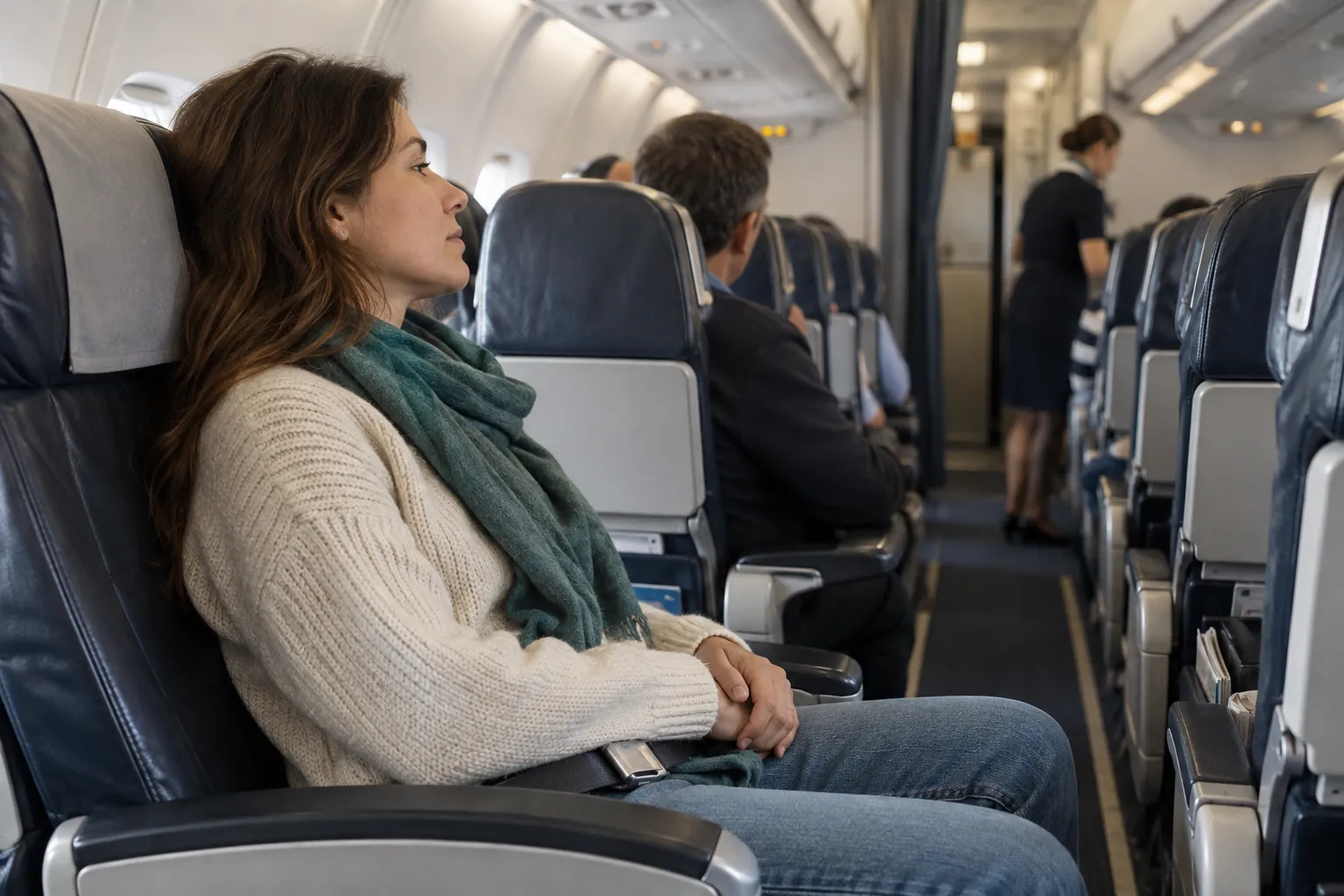
Already feeling it?
Open Dizzout, plug in any headphones, tap play. Drug-free, no drowsiness. Most users feel relief in about 90 seconds.
Before you need it: find out how prone you are
Take the free 2-minute testTwo minutes, no sign-up, and it ends with a drug-free plan to prepare.
Stop the nausea now
Free to try, no card needed. Or go straight to the App Store or Google Play.
 Scan to open on your phone
On a computer? Dizzout installs on your phone. Scan the code, or open dizzout.com/get on your phone and it'll take you straight to the right store.
Preventing it next time
- Avoid flying with heavy congestion when you can, or talk to a pharmacist about decongestion before descent.
- Hydrate well; dry cabin air plus dehydration is a reliable dizziness recipe.
- Pick a window seat over the wings and use the view during rough air.
- Pre-condition with Dizzout for about 90 seconds before takeoff if motion is your trigger.
When to see a doctor
Mild, brief dizziness in flight is common. Seek medical advice for spinning vertigo set off by descent, dizziness with ear pain or muffled hearing that persists after landing, or repeated fainting-type lightheadedness in flight: those can involve ear barotrauma or circulation issues rather than simple motion sickness.
Common questions
Why do I feel dizzy when the plane descends?
Descent compresses the cabin air, and your middle ear has to equalize against the rising pressure. Until it does, the pressure differential can read as fullness, muffled hearing, and brief wooziness. A swallow or yawn usually opens the eustachian tubes. Congestion slows the process and amplifies it.
Is plane dizziness the same as airsickness?
Turbulence-triggered dizziness is. It's the early stage of the same sensory mismatch and responds to the same fixes. Pressure-related dizziness during climb and descent is a different mechanism centered on the middle ear, which is why it tracks altitude changes rather than bumps.
Can I fly if I'm prone to dizziness?
Almost always yes, with preparation: hydrate, manage congestion, choose a wing-row window seat, and have a drug-free relief tool ready. If you have a diagnosed vestibular condition like Ménière's, ask your doctor for flight-specific guidance first.
Related guides
Medically informational; not a substitute for a doctor's advice. Persistent or unusual symptoms deserve a clinical evaluation.