Nausea on a Plane: Getting Through Turbulence Comfortably
Plane nausea is almost entirely a turbulence story. In smooth cruise, a modern jet produces less perceptible motion than a car ride. But when the aircraft starts bumping, your inner ear feels drops and jolts your eyes can't see in a sealed cabin. Add recycled air, anxiety, and an empty or over-full stomach, and the queasiness compounds. The good news: the in-seat fixes work well.
Try Dizzout free. Drug-free calibrated sound through any headphones, designed to help once symptoms have started.Free · works with any headphones · no account to try
Free to try, no card needed. Or go straight to the App Store or Google Play.
Why this happens on a plane
The cabin hides the horizon, so during turbulence your eyes insist you're sitting still in a room while your vestibular system reports falling and lurching. Seat position matters more than people think: the rear of the aircraft swings noticeably more than the section over the wings, which sits near the plane's center of lift.
What to do right now
- 1
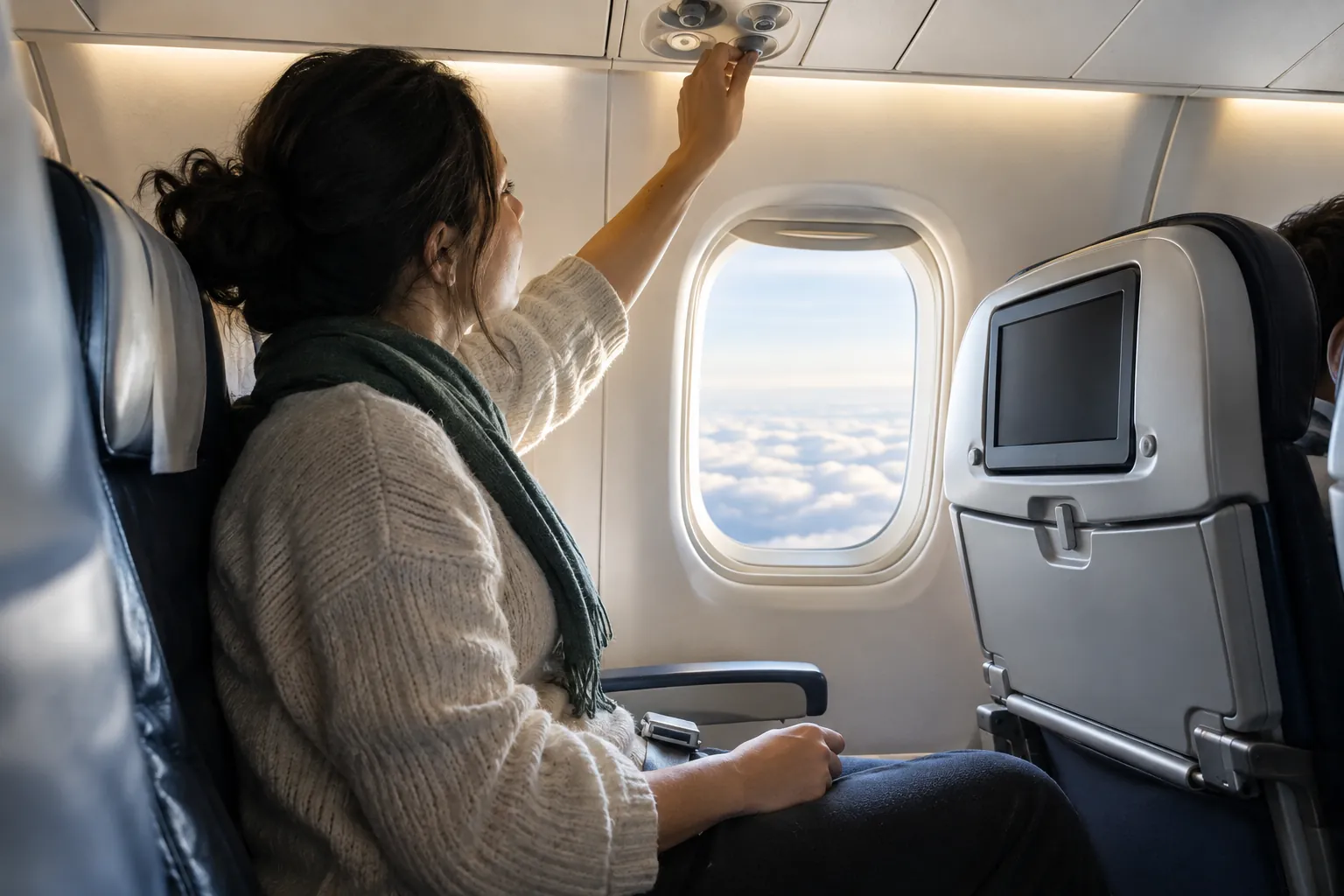
Open the window shade and look out: even cloud layers give your eyes a real motion reference.
- 2
Aim the overhead vent at your face and breathe slowly, in four counts, out six.
- 3
Recline slightly and press your head against the headrest to minimize independent head movement.
- 4
Play a Dizzout session through your headphones: it works mid-flight, and most users feel the wave settle in about 90 seconds.
- 5
Skip the in-flight reading or seat-back screen until the air smooths out.
Already feeling it?
Open Dizzout, plug in any headphones, tap play. Drug-free, no drowsiness. Most users feel relief in about 90 seconds.
Before you need it: find out how prone you are
Take the free 2-minute testTwo minutes, no sign-up, and it ends with a drug-free plan to prepare.
Stop the nausea now
Free to try, no card needed. Or go straight to the App Store or Google Play.
 Scan to open on your phone
On a computer? Dizzout installs on your phone. Scan the code, or open dizzout.com/get on your phone and it'll take you straight to the right store.
Preventing it next time
- Book a window seat over the wings, the calmest spot on the aircraft.
- Eat light before boarding; avoid alcohol and excess coffee in the air.
- Use Dizzout's Pre-Conditioning Mode for about 90 seconds before takeoff.
- Choose larger aircraft when you can: wide-bodies ride turbulence more smoothly than regional jets.
When to see a doctor
Flight nausea that ends with the flight is routine. Recurring dizziness or nausea for days after flying, ear pain with hearing changes after descent, or spinning vertigo triggered by landing warrant a doctor's visit: pressure changes can occasionally unmask inner-ear issues that aren't ordinary airsickness.
Common questions
Why do I only get nauseous during turbulence?
Smooth cruising produces almost no motion your body can detect, so there's no sensory conflict. Turbulence creates sudden vertical movements your inner ear feels intensely while your eyes see a still cabin: the conflict appears exactly when the bumps do, and fades when they stop.
What's the best thing to do when plane nausea hits mid-flight?
Look out the window for a real-world reference, point the air vent at your face, keep your head still against the seat, and run calibrated sound therapy through headphones. Together these settle most episodes in about 90 seconds, much faster than any pill could act.
Do anti-nausea pills work if I take them after boarding?
Usually not in time. Antihistamines like Dramamine need 30 to 60 minutes to absorb, so taking them when turbulence starts means relief arrives after the rough patch. They're prevention tools. For in-the-moment relief, the view, airflow, and sound therapy act immediately.
Related guides
Medically informational; not a substitute for a doctor's advice. Persistent or unusual symptoms deserve a clinical evaluation.