The short answer
Two separate things are going on, and neither one means you imagined the car. First, you chose the coaster. You watched it from the queue and you ride facing forward, so your brain knows what is coming, while in a car the motion just happens to you. Second, the motion is the wrong shape. Nausea builds from slow, repeated swaying over many minutes, and a coaster is a couple of minutes of sharp forces your eyes confirm the whole way down. For a lot of people the drive to the park is the harder half of the day.
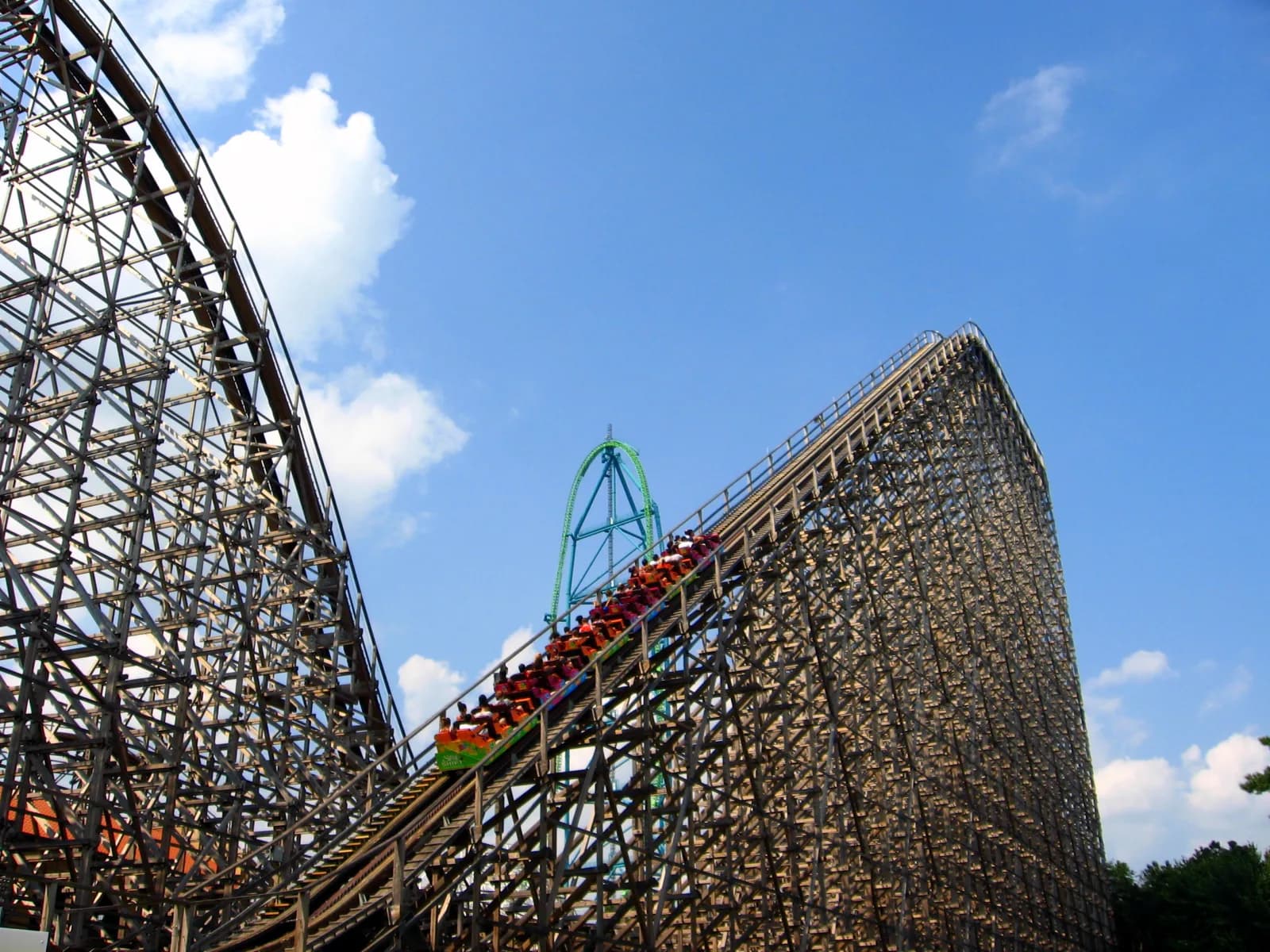
The same person who needs the car pulled over twice on a two hour drive will queue for an hour, ride the tallest coaster in the park, and walk off it laughing.
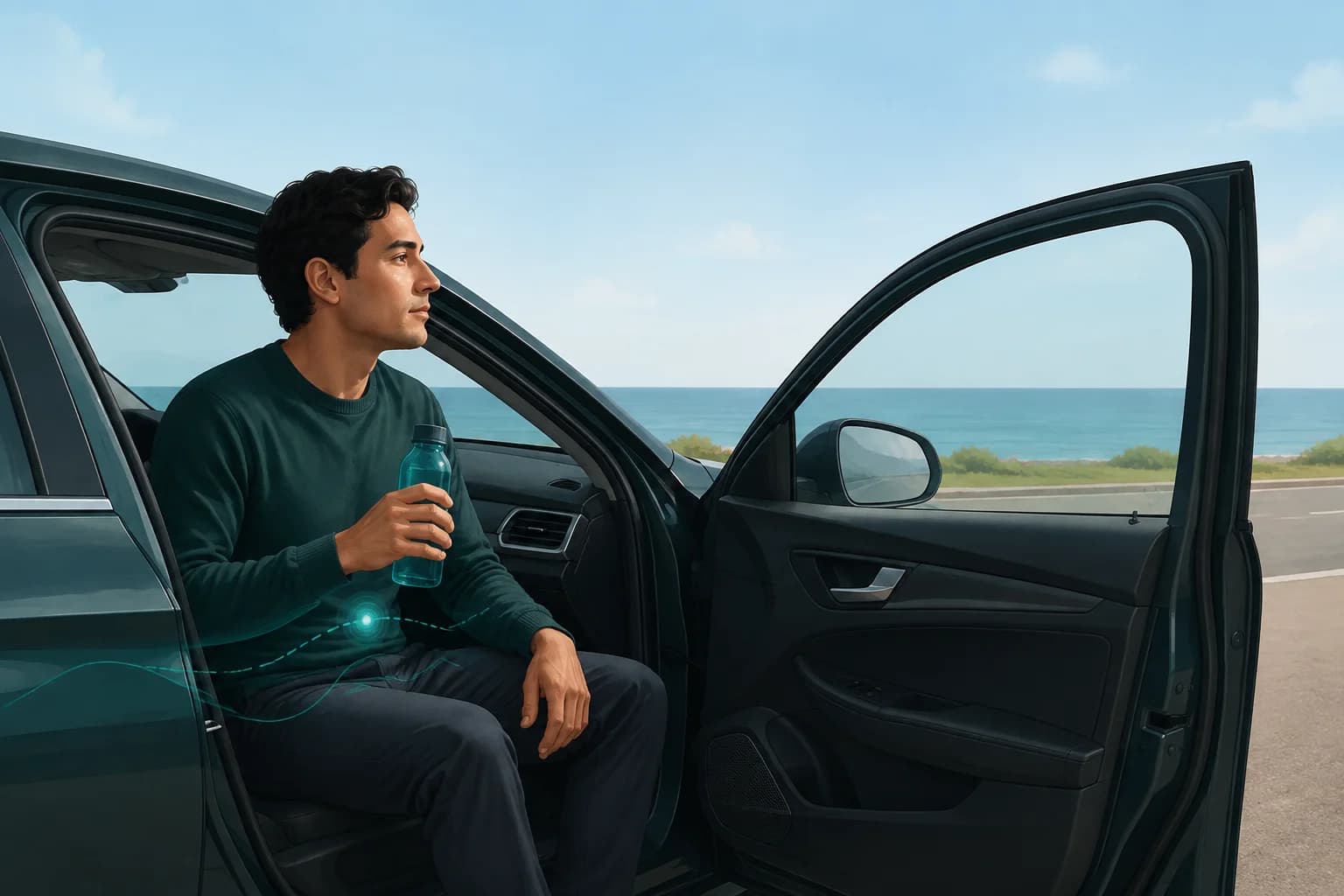
Parents meet this first, usually as a child who cannot survive the trip to the park but sails through everything inside it. This is not toughness. Your balance system is meeting two different kinds of motion, and only one of them is good at making people sick.
Car sick in the back seat? Drug-free, works with any headphones, about 90 seconds. Built for the drive, not the ride.Starts in your browser · works with any headphones
Stop car sickness. Get your personalized Dizzout plan. Paid subscription for full access.

On your phone? Scan to start there.
The question people actually ask
Typed into a search box it comes out as: why do I get car sick but not roller coaster sick. Underneath sits a suspicion that the arithmetic is wrong. If movement makes you ill, the most extreme movement available should make you the most ill of all.
It does not, because motion sickness is not a response to force. What makes people sick is disagreement: your eyes, your inner ear and your body describe the movement differently. The CDC's travel medicine guidance frames it as a conflict between the sensory signals arriving and the pattern the brain expected. A big force every sense agrees on is easier to survive than a small one nothing agrees on.
Reason one: you chose the ride, so your brain predicted it
Something protects drivers that does not protect passengers, and it is not the seat. In one study, 22 pairs of volunteers got the same nauseating rotation. One of each pair controlled the rotation and their own head movements, the other took the identical motion passively. The pairs were matched for head movement, vision, activity and predictability, so those could not explain the gap, and the people with control still reported significantly fewer symptoms (Rolnick and Lubow, Ergonomics, 1991). The driver version of this has its own piece: why drivers do not get car sick.
You do not steer a coaster. You do get most of the other ingredients, and a back seat gives you none.
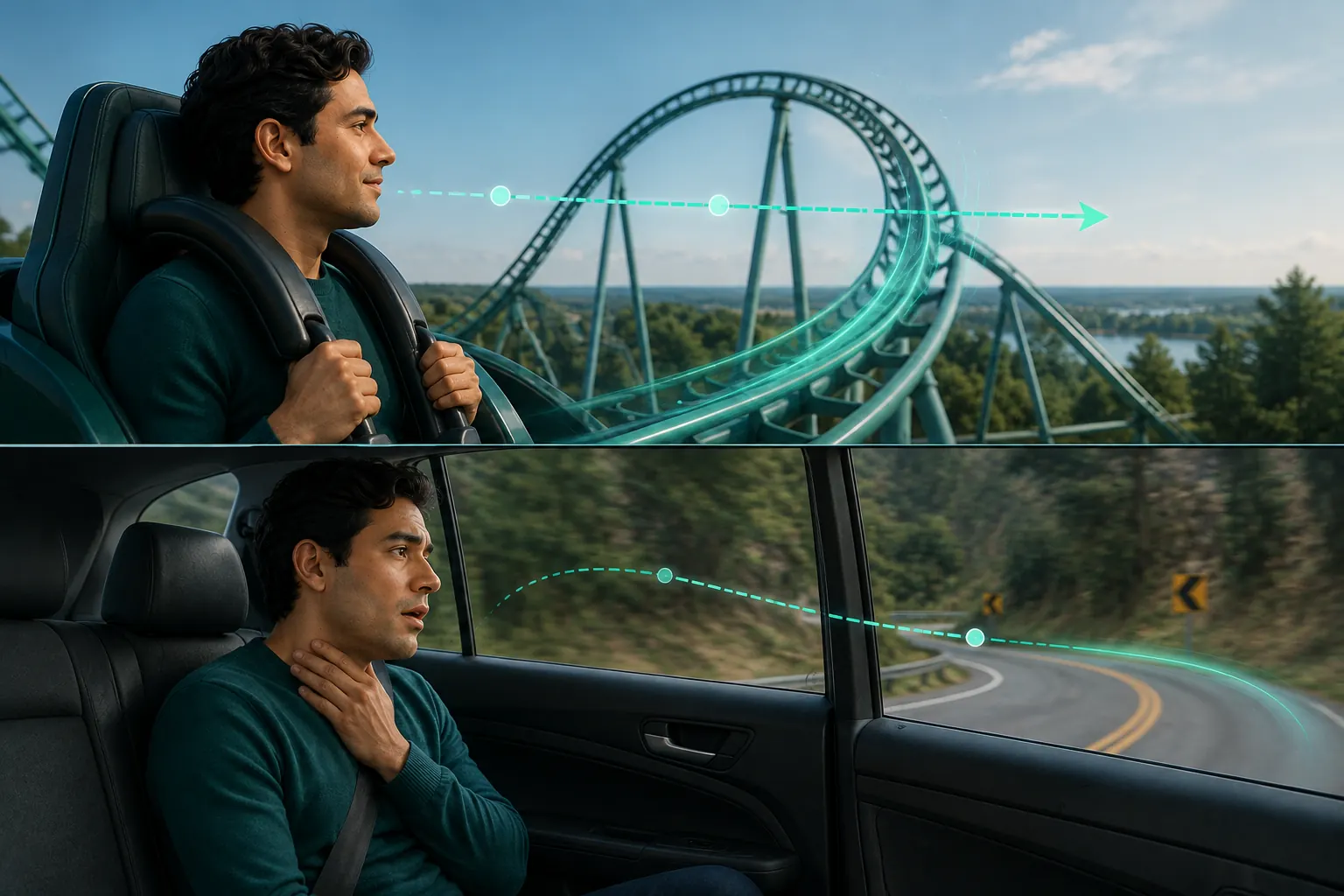
- You saw it first. You watched the train take that exact drop from the queue before you sat down.
- Your eyes are on the path. When researchers varied what passengers could see on a 30 minute drive, a forward view of the road reduced sickness, and blindfolded was no worse than no forward view at all (Griffin and Newman, 2004). On a coaster you face forward by design.
- The picture matches the feeling. You see the drop and you feel the drop, together. In the back seat the curve arrives while your eyes are on a phone.
- You wanted it. Braced and excited is a different starting state from bored and surprised.
Reason two: the motion is the wrong shape
This is the larger half of the answer, and the strange half: the motion that makes humans sick is slow.
In one experiment, twelve volunteers picked for high susceptibility were slid smoothly back and forth at three different rates, a week apart. The rate that made every one of the twelve nauseated was the middle one, one full back and forth every five seconds. At the slower rate 8 of 12 got there, at the faster rate 7 of 12, and both took longer: around 18 and 20 minutes against 11 (Golding, Mueller and Gresty, Aviation, Space and Environmental Medicine, 2001). Twelve unusually susceptible people is a small study, so take it as the shape of the effect, not a number for you.
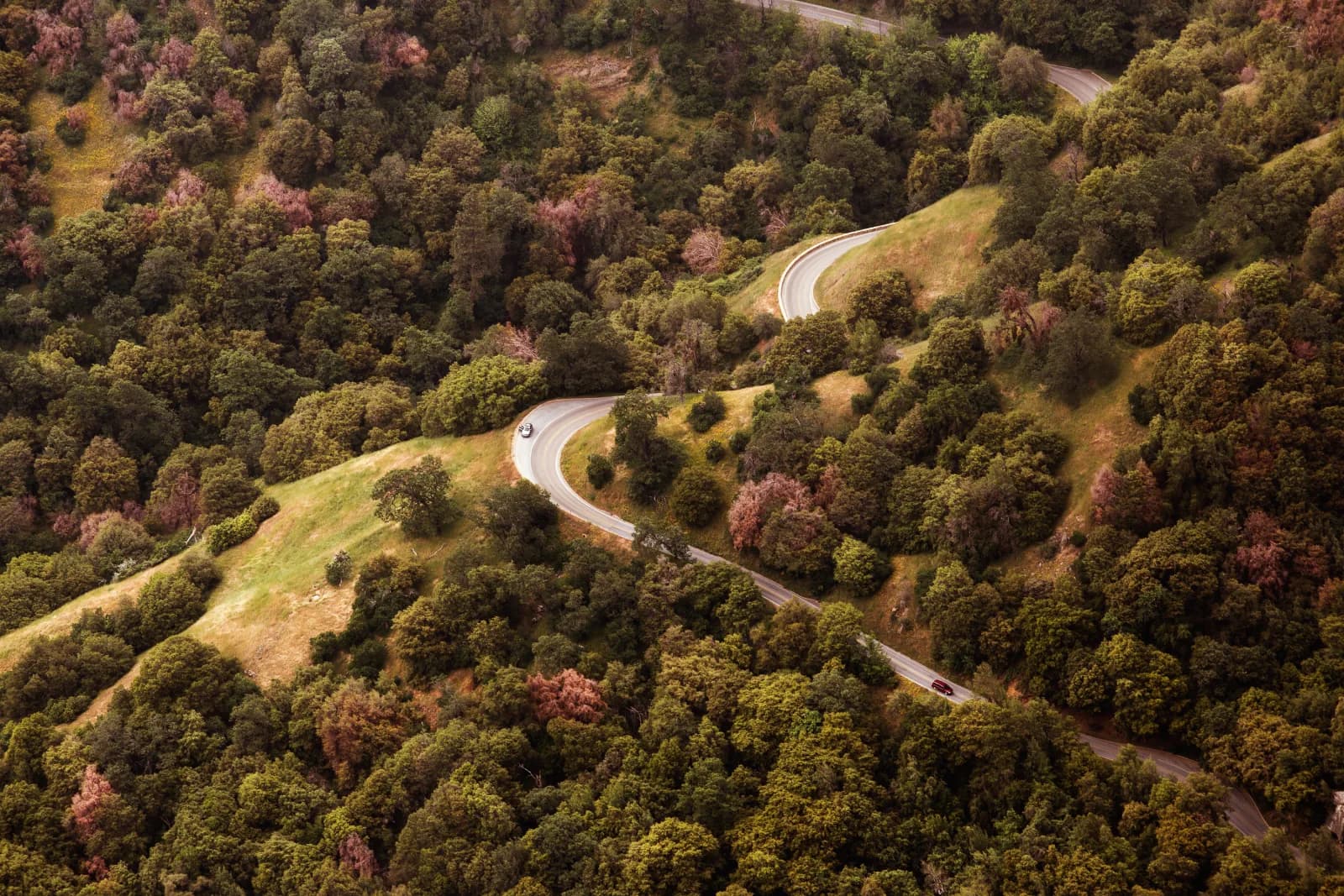
That is roughly the rhythm of a car on a winding road, or a ship in a swell. It is nothing like a coaster.
Slow repeated sway against a short violent drop
A coaster spends almost no time in that range. The forces are huge and they change in fractions of a second, then the brake run arrives and it is over. Your balance system gets a short, loud, unambiguous burst that your eyes confirm all the way down.
A car does the opposite. The forces are small, they repeat, and they continue for as long as the road does. Twenty minutes is enough for a lot of susceptible people.
| What matters | Car journey | Coaster ride |
|---|---|---|
| How long it lasts | 20 minutes to several hours | Typically one to three minutes |
| The pattern | Slow lean and sway, repeated | Sharp forces, each one brief |
| What your eyes do | Phone, book, seat back | Locked on the track ahead |
| Do you know what is next | No, the road decides | Yes, you watched it from the queue |
| Sense agreement | Eyes and inner ear disagree | Eyes and inner ear agree |
The queue, the phone and the walk between rides
Which is why people who are fine on every ride can still finish the day feeling ill. The rides are the safest part of a park day.
- The drive there. An hour of precisely the motion that gets you, usually first thing, often in stop-start traffic.
- The queue. A long stand with a phone in your hand. Avoiding reading and visual scanning is one of the countermeasures the CDC lists as reducing sickness across different kinds of transport, and a queue is where most people do the opposite.
- Screens between rides. Map apps, photo booths and long pre-ride videos put motion in your eyes that your body is not producing.
- The drive home. Dark, late, after a whole day of stimulation. Being sleep deprived makes motion sickness worse, the CDC notes, and an early start plus a full park day gets most people close enough. It is the leg families forget to plan for, and the harder one.
The rides that do get people: spinning, simulators, dark rides
If a park ride is going to catch you, it is usually not the tall one with the loop.
- Spinning rides. They rotate you steadily, and turning your head while you spin gives the inner ear signals your eyes cannot match. Avoiding head movements is another of the CDC's listed countermeasures, which is hard advice to follow on a teacup.
- Swinging ship and pendulum rides. Slow, repeated, back and forth. That is the sway rhythm, sold as a ride.
- Simulators and screen-based rides. Your eyes watch a canyon rush past while your body sits in a seat that barely moves. The car problem in reverse.
- Long dark rides. Track motion with no horizon and no view of what is coming removes both things that protect you on a coaster.
Which specific rides are worth planning around is the ride guide's job, ride by ride. If a coaster itself has caught you before, that has its own page: motion sickness on a roller coaster.
What this tells you about your own trigger
Forget the question of whether you are a person who gets motion sick. You have one specific trigger and you now know its shape: slow repeated motion, over a long stretch, with your eyes busy on something other than where you are going. That is a car, a coach, a ferry and a back seat. It is not a drop tower.
That also tells you what to change. Anything that shortens the exposure or hands your eyes the road back is aimed at the actual problem. The two minute motion sickness test gives you a risk band instead of a guess, and the car guide covers the seat, the window and the phone rules.
Planning a park day when cars are the problem
Plan the drive, not the rides. Everything below aims at the two legs that make people sick.
- Take the front seat if you are old enough for it. Worth being precise here: in the car study above, seat position on its own did not change sickness. The forward view did, and the front seat is the easiest place to get one.
- Keep the eyes on the road. A phone cancels the forward view. Music, conversation and the horizon do not.
- Cool air, window cracked. Costs nothing to try, though it is not one of the measures with trial evidence behind it.
- Break the long legs up. Two shorter drives with a stop between them beat one unbroken hour.
- Plan the ride home before you leave. Drug-free options such as sound therapy through the headphones already in the bag can be used with the eyes shut, which a front seat cannot. If it has already started, the 60-second protocol is the page to open in the moment.
Do
- Give the sensitive passenger the best forward view in the car
- Break a long drive into shorter legs with a stop
- Keep air moving and the cabin cool
- Pack a backup for the drive home, the harder leg
Don't
- Hand out a phone or a book for the journey
- Assume the rides are the risk and the drive is fine
- Save the longest drive for the end of a long day
- Wait until nausea peaks before doing anything
Practical strategies, not measured effects. Which ones matter depends on the person.
The bottom line
Big brief forces that every sense agrees on are survivable. Small repeated ones that your eyes and inner ear describe differently are what make people sick, and a car is very good at producing them. If dizziness turns up with no motion at all, or with hearing changes or vertigo that hangs around, that belongs with a doctor rather than a seating plan.
For the drive, not the ride
Stop the nausea
The coaster is not what ruins the day. The hour in the back seat on either side of it is. Dizzout plays precisely calibrated audio through any headphones, one option designed to help calm the response in about 90 seconds. Drug-free and no drowsiness, so nobody sleeps through the park. Free to download on iOS and Android, subscription for full access.
Get your personalized Dizzout plan. Paid subscription for full access.
30,000+ travelers in 30+ countries · How we count

On your phone? Scan to start there.
Comparing apps first? See how the motion sickness apps compare
Not travelling yet? Remind me the day before my trip
Frequently asked questions
Why do I get car sick but not sick on roller coasters?
Because motion sickness is triggered by the shape of the motion, not its size. Sickness builds from slow, repeated swaying over many minutes, which is what a car on a winding road produces, while a coaster is a couple of minutes of sharp forces your eyes confirm the whole way. You also see a coaster coming: you watched it from the queue and you ride facing forward, whereas in a back seat the motion arrives unannounced while you look at a phone.
Why does my child get car sick but love rides?
It is a common pattern and it is not put on. Susceptibility to motion sickness peaks between roughly ages 7 and 12 and then declines through adulthood, according to the CDC's travel medicine guidance, and what that susceptibility responds to is the long, slow, repetitive motion of a car journey. A ride is short, chosen, and watched from the queue first, so it lacks nearly everything that makes a drive difficult.
Which theme park rides cause motion sickness?
Usually not the big coasters. The frequent offenders are spinning rides, where turning your head while rotating sends the inner ear signals your eyes cannot match, swinging ship and pendulum rides that repeat a slow back and forth sway, and screen based simulators where the eyes see motion the body is not making. Long dark rides can also catch people, because there is no horizon and no view of what comes next.
Does liking roller coasters mean you will not get seasick?
No, and it may point the other way. A ship in a swell produces slow, repeated motion that continues for hours, which is the pattern most likely to cause sickness, and it is closer to a car journey than to a coaster. Enjoying coasters tells you that brief, sharp, visually confirmed forces do not bother you, which says little about how you will handle a long crossing.
Why do spinning rides make me sicker than coasters?
A coaster is over in a couple of minutes and everything you feel is matched by what you see ahead of you. A spinning ride keeps rotating steadily, and any head movement during that rotation produces inner ear signals that do not line up with the visual scene. The mismatch has time to build, which is what nausea needs.
Someone you know gets motion sick?
Send them this guide. It might be the trip it saves.
Your next question, probably
What is your own risk band?
Two minutes, a real answer
Not your question? Which rides are worth skipping?Planning a park day?Want something for the drive home?
About this article
- CDC Yellow Book: Motion Sickness (sensory mismatch, age peak, habituation)
- Golding JF, Mueller AG, Gresty MA. Aviat Space Environ Med, 2001;72(3):188-92 (a maximum in nauseogenic potential across three rates of horizontal translational oscillation)
- Rolnick A, Lubow RE. Why is the driver rarely motion sick? The role of controllability in motion sickness. Ergonomics, 1991;34(7):867-79
- Griffin MJ, Newman MM. Visual field effects on motion sickness in cars. Aviat Space Environ Med, 2004;75(9):739-48
This article is informational and not a substitute for medical advice. Talk to your doctor or pharmacist before taking any medication for motion sickness, and see a doctor about dizziness that arrives without motion or does not settle. Park, ride and brand names are trademarks of their respective owners; Dizzout is not affiliated with or endorsed by them.