
The short answer
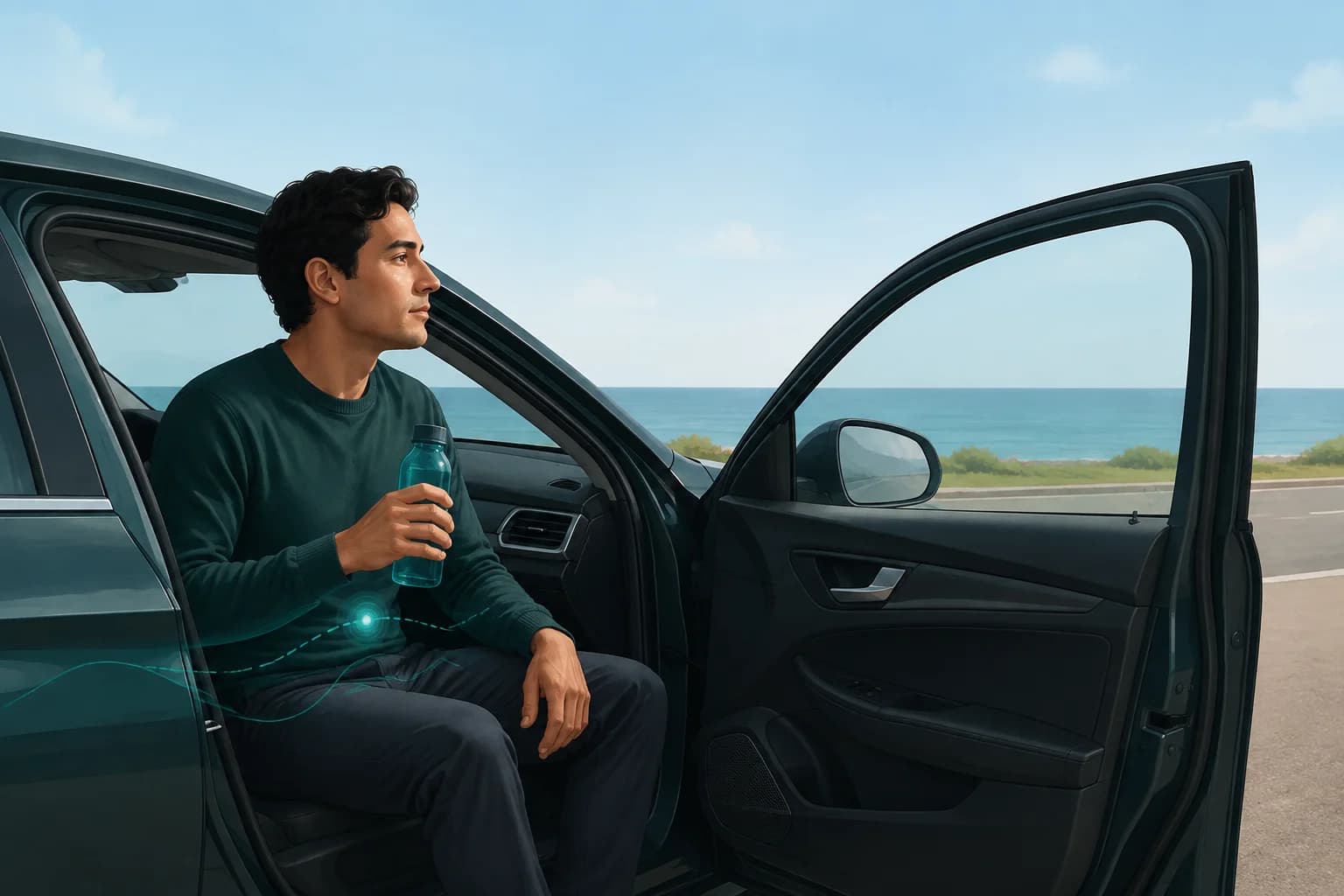
Drivers almost never get car sick because their brain is the one producing the motion. Every steering, braking and throttle input comes with a preview: the brain knows what the car is about to do before the inner ear feels it, so the two signals agree. A passenger gets no preview. Their inner ear registers each turn a beat after it starts, their eyes are often somewhere else entirely, and that disagreement between the senses is what triggers nausea. In a classic paired experiment, people who controlled a nauseating motion reported fewer symptoms than partners who passively rode through the exact same motion.
It's one of the oldest observations about car sickness: the person holding the wheel feels fine, and the person one seat over feels awful. Swap them at the next gas station and the queasiness usually swaps too. Same car, same road.
That isn't a coincidence, and it isn't toughness. It comes down to one thing the driver has and the passenger doesn't: a brain that knows what the car will do next. Here's how the gap works, and how much of the driver's advantage a passenger can steal.
Get your personalized Dizzout plan. Drug-free relief for the seat without a steering wheel. About 90 seconds, any headphones.Starts in your browser · works with any headphones
Stop car sickness. Paid subscription for full access.

On your phone? Scan to start there.
The pattern everyone notices
Ask anyone who gets car sick and you'll hear a version of the same sentence: "I'm fine when I drive." People who turn green in the back seat happily drive mountain passes. Parents who feel every roundabout as a passenger do the school run without a thought. Even people who are queasy on boats and planes often report that the driver's seat is their one safe place in a moving vehicle.
The reverse case exists, but it's rare, and the exceptions section below covers it. The rest of this article is about the common case: why the wheel protects, and the passenger seat doesn't.
Prediction beats reaction: what the driver's brain knows early
Motion sickness starts with a mismatch between the senses: the inner ear reports one story about how you're moving, the eyes report another, and the brain treats the conflict as a problem worth making you miserable over.
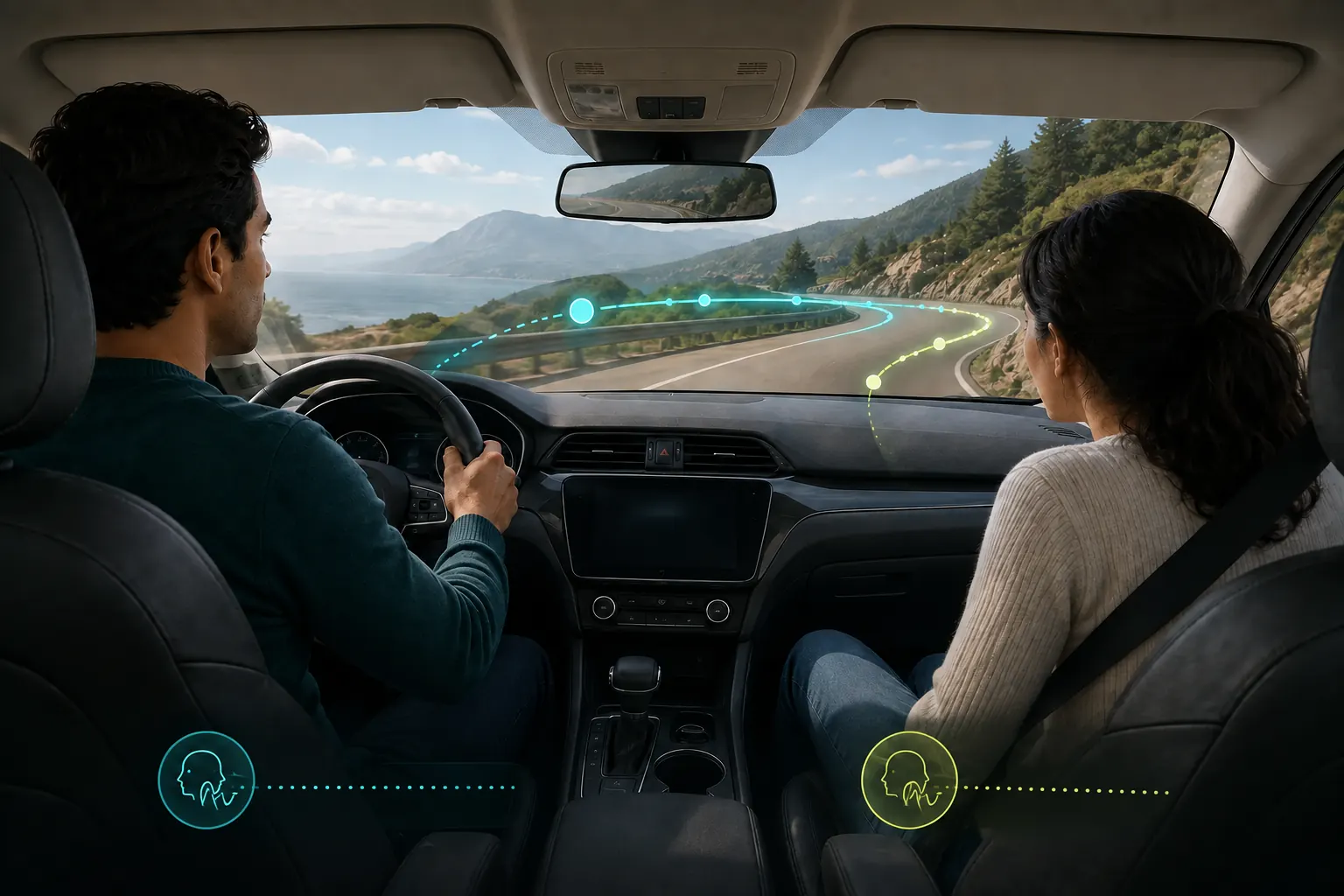
The driver largely escapes that conflict, because the driver's brain doesn't just receive the motion. It orders it. When you turn the wheel, your brain issued that command, so it already expects the sideways pull before the inner ear reports it. Expected motion and felt motion line up, and there's nothing to disagree about.
Control itself matters too, not just prediction. In a 1991 experiment, researchers seated pairs of people in a rotating device. One person controlled the rotation; the other passively received the identical motion. The people in control reported fewer motion sickness symptoms than their partners, even though both bodies went through the same movement. The paper's title asks this article's exact question: why is the driver rarely motion sick?
Why the passenger's inner ear is always a beat behind
The passenger runs the same ride in reverse. No preview: the first news of every turn arrives when the inner ear feels it, already underway. Eyes often somewhere useless: on a phone, a book, or the seat back, all of which report "not moving" while the body corners. And no control, so there's no motor command for the brain to check the motion against.
You can see the gap in body language. Watch a driver through a curve: their head tilts into the turn, smoothly, ahead of the force. A passenger's head does the opposite, lolling outward as the curve pushes it around. The driver rides the motion. The passenger is moved by it. Over a winding half hour, that difference adds up to two very different stomachs.
The exceptions: drivers who do get sick
The driver's edge is real, but it isn't armor. A few situations narrow it:
- Driving simulators. The screen shows motion the body never feels, so the usual conflict returns through the other door. Experienced drivers can feel fine on a real road and terrible in a simulator rig.
- High susceptibility and migraine. Some people simply sit far up the susceptibility curve, and the CDC notes that a history of migraine can go hand in hand with worse motion sickness. On a bad day, the wheel helps less. Curious where you sit? The two-minute test gives you an honest read.
- Fatigue, illness, or a relentless road. An exhausted or unwell driver predicts less sharply, and hours of tight switchbacks can eventually outrun anyone's preview.
Borrowing the driver's advantages from the passenger seat
You can't borrow the wheel, but you can copy most of what the driver's body is doing. Every item below recreates one piece of the driver's setup: eyes on the road, a head that leads the motion instead of trailing it, and a brain that sees turns coming.
Do
- Take the front seat when you can, with your eyes up
- Watch the road ahead and "drive along" mentally
- Lean your head into curves the way the driver does
- Keep cool air moving across your face
- Act at the first hint, not at the peak
Don't
- Read or scroll while the car is cornering
- Sit sideways or chat facing the back seat
- Ride in a hot, closed car
- Wait until you're already miserable to look up
Practical strategies, not measured effects. Which ones help most is personal.
- Sit where the driver looks. The front seat gives you the same view of the road the driver uses, and it's the seat the CDC's travel guidance recommends for car sickness. Eyes up, on the road, not the dashboard.
- Predict on purpose. Read the road like you're the one driving: that bend tightens, that brake light means we slow. You're rebuilding the preview the wheel gives the driver for free.
- Move like the driver. Keep your head steady against the headrest and lean gently into curves instead of letting them throw you outward.
- Kill the competing story. The phone in your lap is the strongest "we are not moving" signal in the car. Put it away on winding stretches.
- Get air. A cool vent or open window on your face helps raise your threshold before anything goes wrong.
For the seats you can't escape
Stop the nausea
You can't always take the wheel: the carpool, the taxi, the back row on the coast road. Dizzout plays precisely calibrated audio through any headphones, one drug-free option designed to help calm the response in about 90 seconds, with your eyes free to stay on the road.
Get your personalized Dizzout plan. Paid subscription for full access.
30,000+ travelers in 30+ countries · How we count

On your phone? Scan to start there.
Comparing apps first? See how the motion sickness apps compare
Not travelling yet? Remind me the day before my trip
Calling the turns: how a driver can help their passenger
If you're the driver, you hold most of the levers. The kindest thing you can do is hand your passenger some of your preview. Say what's coming: "long right ahead", "braking for this light". It sounds silly and it helps, because it gives their brain the advance notice yours already has.
The rest is smoothness. Ease onto the brakes early instead of late and hard. Take one steady line through a bend rather than sawing at the wheel. Keep the cabin cool and the air fresh. And stop before someone feels bad, not after: a five minute break on solid ground resets a passenger far faster than toughing it out ever does.
When you are stuck being the passenger anyway
Sometimes you do everything right and the road wins anyway. When the wave starts building, act early: eyes to the horizon or the farthest point of road you can see, cool air on your face, slow breaths, and the 60-second protocol if it has already set in. The full toolkit, from habits to relief, lives in the how to stop motion sickness guide.
And keep the pattern itself in perspective. Feeling awful in the passenger seat while staying fine at the wheel is normal wiring: everyone's brain runs the same conflict check, yours just trips at a lower threshold. If dizziness or nausea shows up with no vehicle at all, or lingers long after the ride ends, that's a question for a doctor rather than a seating chart.
Frequently asked questions
Why does driving stop motion sickness?
Because the driver's brain produces the motion instead of reacting to it. Every steering and braking command comes with a built-in preview, so the motion the inner ear feels matches the motion the brain expected, and there's no sensory conflict to trigger nausea. Experiments back this up: people who controlled a nauseating motion reported fewer symptoms than people passively exposed to the identical motion.
Can a driver ever get car sick?
Yes, though it's uncommon. Driving simulators are the classic case, because the eyes see motion the body never feels. Highly susceptible people, people with migraine, and drivers who are exhausted or unwell can also feel sick at the wheel, especially on long, twisty roads. If that's you, the same habits that protect passengers help: fresh air, a slower pace through the bends, and breaks before it builds.
Does watching the road help passengers the way it helps drivers?
It helps, but it's a partial copy. Watching the road gives you back the visual half of the driver's advantage, your eyes and inner ear tell the same story, and some of the prediction, because you can read the bends coming. What it can't restore is control: your brain still isn't issuing the commands. Front seat with eyes on the road beats back seat with a phone by a wide margin, but it may not make you as comfortable as driving does.
How can a driver make passengers less car sick?
Drive smoothly and narrate. Ease onto the brakes early, take one steady line through curves, and call out big maneuvers before they happen so your passenger's brain gets the preview yours already has. Keep the cabin cool with fresh air moving, and take breaks at the first sign of trouble instead of pushing on.
Why do I feel sick the moment I switch to the passenger seat?
You gave up prediction and control at the same time. As the driver, your brain ordered every motion and knew what was coming; as the passenger, it learns about each turn only when your inner ear feels it, a beat late, often while your eyes are on something stationary. That's the exact recipe for the sensory mismatch behind motion sickness. It's extremely common and says nothing about toughness.
Someone you know gets motion sick?
Send them this guide. It might be the trip it saves.
Your next question, probably
How susceptible are you?
A two-minute honest read
If that is not your question:
About this article
- Rolnick A, Lubow RE. Why is the driver rarely motion sick? The role of controllability in motion sickness. Ergonomics, 1991.
- CDC Yellow Book, motion sickness chapter. The migraine link and other risk factors.
- CDC Travelers' Health, motion sickness page. Front seat advice for car travel.
- MedlinePlus Genetics (NIH). Motion sickness.
This article is informational and not a substitute for medical advice. If dizziness or nausea appears without motion, or lingers long after travel ends, talk to a doctor.