The short answer
Eat something small, bland and low-fat an hour or two before you leave: toast, crackers, a banana, plain cereal, and water. An empty stomach makes motion sickness feel worse, and a big greasy or spicy meal is just as bad, so the answer sits in the middle. Skip fried food, heavy sauces and alcohol from the night before onward. Pack plain snacks so you can keep eating small amounts during the trip instead of one large meal. Food sets your odds, but it cannot stop symptoms once they start, so bring an in-trip plan too.
Ask ten travelers how to eat before a boat day and you get two confident camps. One fasts, on the logic that an empty stomach has nothing to bring up. The other loads up, on the logic that a full stomach is a settled stomach. Both camps spend the afternoon at the rail.
The boring middle wins. Here is what to actually eat before a drive, a flight or a day on the water, what the ginger evidence really supports, and what to do when eating right is not enough.
Get your personalized Dizzout plan. Drug-free relief in about 90 seconds, on any headphones. iOS and Android.Starts in your browser · works with any headphones
Paid subscription for full access.

On your phone? Scan to start there.
Why an empty stomach makes it worse
Fasting before a trip feels logical and fails in practice. Hunger brings its own low-grade queasiness: stomach acid with nothing to work on, dipping blood sugar, a lightheaded edge. None of that is motion sickness, but all of it stacks on top of motion sickness the moment the sensory mismatch starts, so you begin the trip closer to the threshold instead of further from it.
There is also the ugly practical point. If the worst happens, retching on an empty stomach is not gentler, it is harsher. A small amount of plain food gives your stomach something normal to do and makes the whole system less reactive. Standard travel advice lands here for a reason: eat, just not much.
Why a heavy or greasy meal is just as bad
The opposite mistake is the big send-off breakfast: the fry-up before the ferry, the burger and fries at the airport. Fatty food is slow to digest, so a large greasy meal is still sitting in your stomach when the motion starts. Nausea then slows digestion further, which means the meal you regret stays with you for the whole crossing.
Very spicy and very acidic food add a second problem: heartburn and an irritated stomach on top of the queasiness. And a heavy night of drinking before a boat day is the worst setup of all, because you start dehydrated, headachy and already slightly nauseous before the first swell.
What to eat before a drive, flight or boat day
Aim for a small meal an hour or two before departure, built from food that is dry, bland and low in fat. Dull eating, but it lets you enjoy the rest of the day.
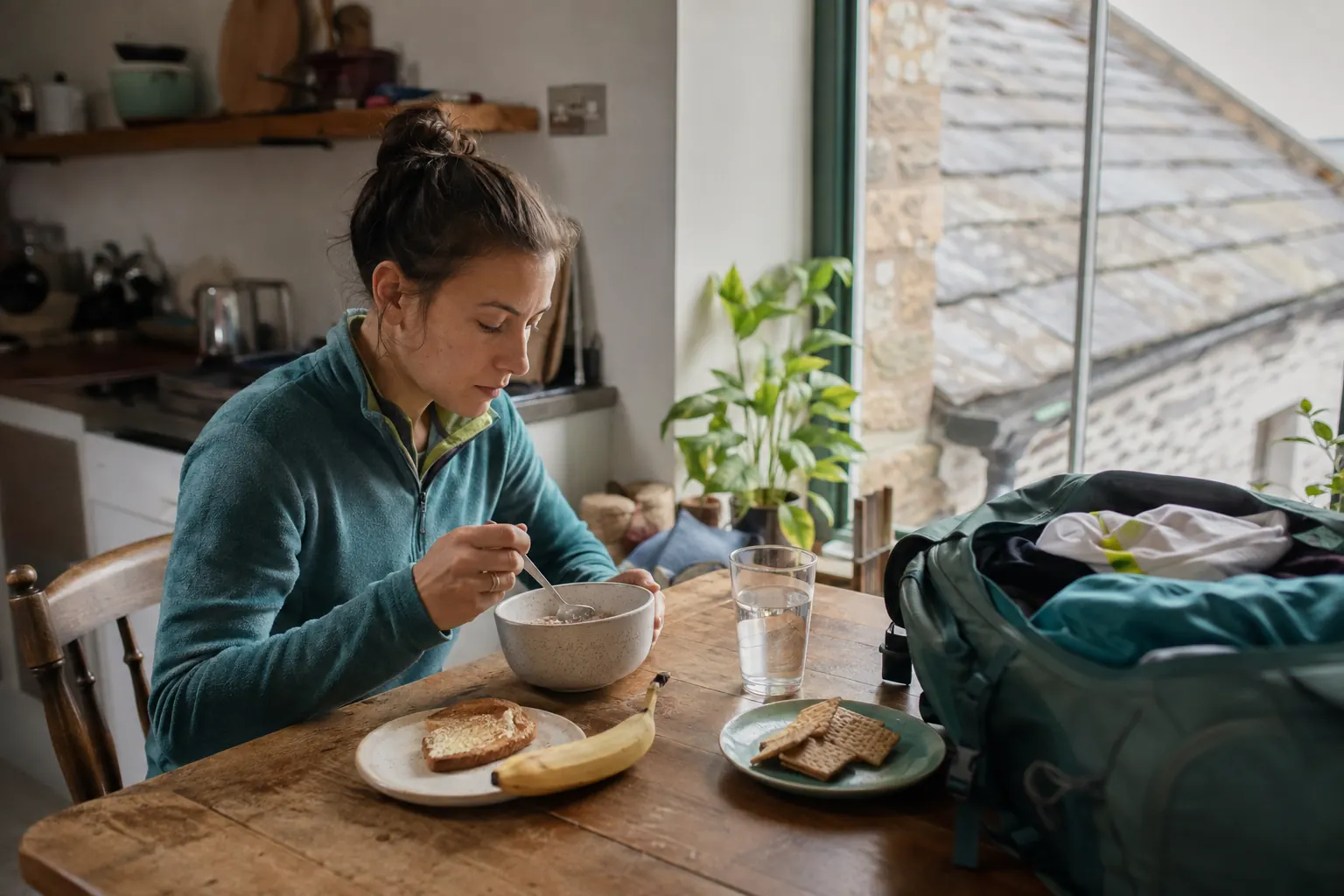
- Dry carbohydrates. Toast, plain crackers, pretzels, a plain bagel, plain cereal or oatmeal. These leave the stomach quickly and soak up acid.
- Gentle fruit. A banana or some applesauce. Skip large portions of citrus if acid bothers you.
- A little easy protein, if it sits well. A boiled egg or plain yogurt keeps you from getting hungry an hour into the trip.
- Water. Start sipping the evening before and keep sipping. Mild dehydration makes the headachy, queasy feeling worse.
Eat
- A small, bland meal an hour or two before leaving
- Dry carbs: toast, crackers, pretzels, plain cereal
- A banana, applesauce, a boiled egg or plain yogurt
- Steady sips of water from the night before onward
- Small refill snacks every couple of hours en route
Skip
- Setting out on a completely empty stomach
- Fried, greasy or extra-spicy anything
- One huge meal right before boarding
- Heavy drinking the night before a boat day
- A large coffee on an empty, nervous stomach
Practical guidance, not measured effects. What settles well is personal.
Ginger: what the evidence supports
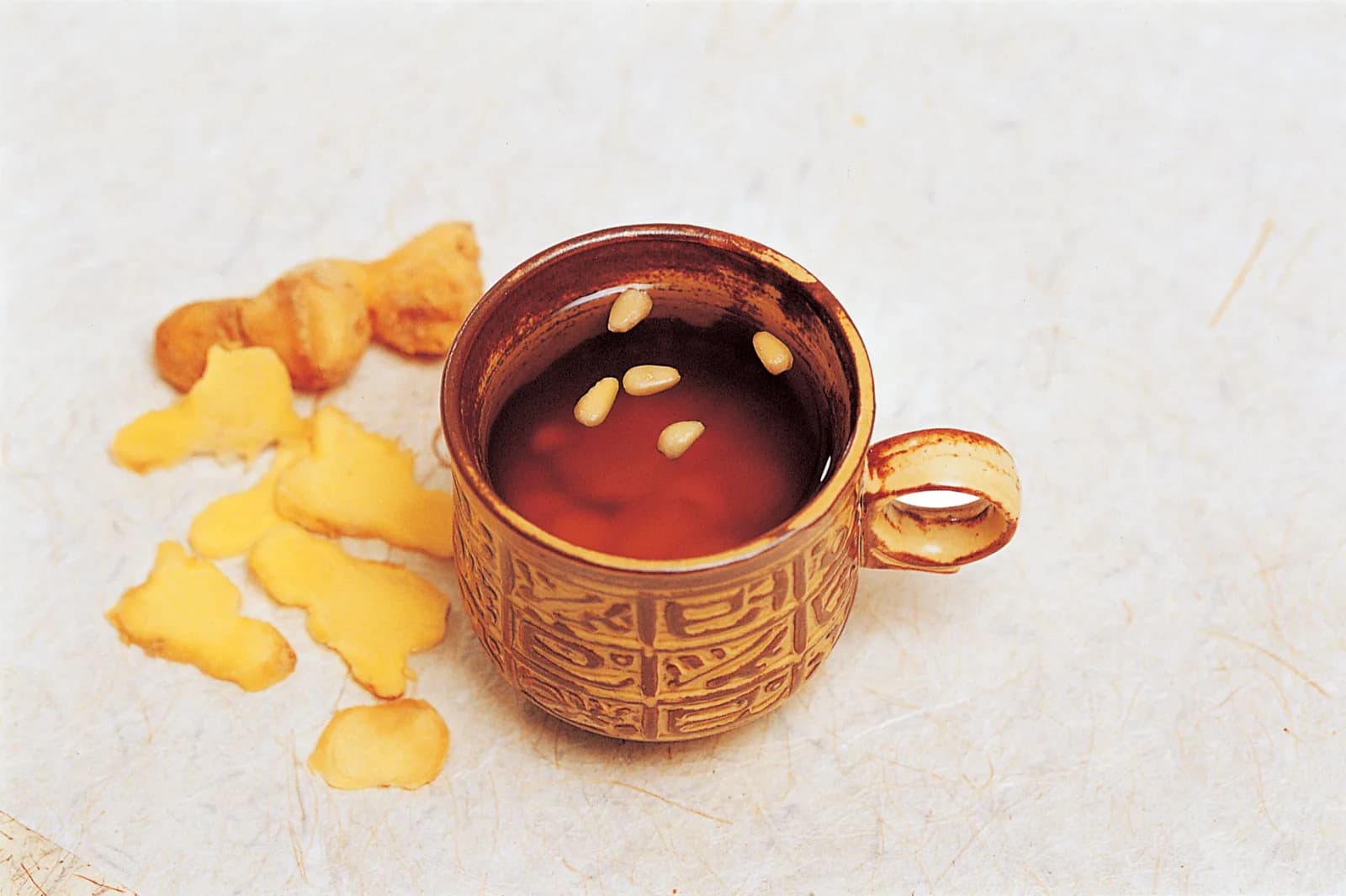
Ginger is the one pre-trip food with real trials behind it, so it deserves an honest summary rather than a cheer. The best-known study gave naval cadets 1 gram of powdered ginger root before sailing in heavy seas, and the ginger group reported less vomiting and less cold sweating than the placebo group. That is genuine evidence, and it is why ginger keeps showing up in travel advice.
It is not the whole picture. The National Center for Complementary and Integrative Health notes that most studies of ginger for motion sickness have not shown it to help, and cautions that some herbs and medicines interact in harmful ways. A chew or candy is also not a measured dose: the trials used weighed powdered root, and the ginger content of a typical sweet is neither standardized nor stated on the tin.
The fair reading: if ginger settles your stomach, it is a pleasant, low-cost thing to eat before and during a trip, and for most adults there is little downside. Just do not rely on it as your only plan, and check with your pharmacist or doctor before adding ginger supplements if you take any medication or are pregnant. The full head-to-head lives at Dramamine vs ginger, and every option we have assessed is on the remedies page.
Drinks: water yes, alcohol and coffee carefully
Water is the easy call. Small, steady sips beat chugging a bottle at the dock, and cold water is often easier to keep down once you feel borderline.
Alcohol is the easy call in the other direction. Skip it on travel day and go easy the night before: a hangover lowers your threshold before the motion even starts. Many over-the-counter motion sickness medicines also carry label warnings about alcohol, so if you plan to take a pill, read the label and ask your pharmacist.
Coffee needs no blanket ban, but be honest about how it treats you. If a large coffee on an empty stomach makes you jittery or acidic on a normal morning, it will do worse on a winding road. Keep it small and drink it with food. Fizzy drinks split people: some find small sips of plain sparkling water settling, while big sugary sodas tend to sit badly.
Snacks worth packing for the trip
The pre-trip meal is half the job. On a long drive, a crossing or a full flight, small amounts at regular intervals beat one big rest-stop meal, because you never swing between empty and stuffed. Pack the snacks before you leave, since the options at the ferry kiosk are usually the greasy ones.
Tick items off as you pack. Ticks are saved in this browser only, for this session.
One habit matters as much as the food itself: in a car, eat at stops or while looking out at the road ahead, not while reading in the back seat. Eyes down plus food plus motion is the classic car sickness trap.
When food strategy is not enough
Everything above changes your starting point, and none of it can pull you back once the wave begins. Motion sickness comes from your inner ear and your eyes disagreeing, and no breakfast reaches that. So the full plan has two halves: eat to raise your threshold, and know what you will do mid-trip when the queasiness starts anyway.
Mid-trip, the basics are the front seat or a deck with a view, eyes on the horizon, cool air, and stopping any reading or scrolling. If you want relief you can reach for after symptoms start, without swallowing anything on a lurching road, sound therapy through headphones is one option: drug-free, no drowsiness, designed to help in about 90 seconds.
For the moment food can't fix
Stop the nausea
A good breakfast lowers the odds. Once nausea starts mid-trip, Dizzout plays precisely calibrated audio through any headphones: drug-free, no drowsiness, about 90 seconds. Free to download, with a paid subscription for full access.
Get your personalized Dizzout plan. Paid subscription for full access.
30,000+ travelers in 30+ countries · How we count

On your phone? Scan to start there.
Comparing apps first? See how the motion sickness apps compare
The bottom line
Small, bland and hydrated beats both fasting and feasting. Ginger is a reasonable extra if it agrees with you, not a sure thing. Pack plain snacks and eat little and often on the way. And if you get sick on nearly every trip no matter what you eat, the two-minute motion sickness test will show you how susceptible you are and what usually helps people in your bracket.
Frequently asked questions
Is it better to travel on an empty or full stomach?
Neither. An empty stomach adds hunger queasiness, acid and low blood sugar on top of any motion sickness, while a large or greasy meal sits undigested once nausea slows your gut. The middle wins: a small, bland, low-fat meal an hour or two before you leave, then small snacks at intervals during the trip.
What foods help with motion sickness?
Dry, bland, low-fat food eaten in small amounts: toast, crackers, pretzels, plain cereal, a banana, applesauce, a boiled egg or plain yogurt. No food prevents motion sickness outright, but this kind of eating keeps your stomach settled so the motion has less to work with. Sip water steadily as well.
Does ginger really help motion sickness?
The evidence is mixed. One well-known trial gave sailors 1 gram of powdered ginger root before heavy seas and found less vomiting than placebo, but NCCIH notes that most studies of ginger for motion sickness have not shown a benefit, and a chew or candy is not a measured dose. It is a low-risk thing to try for most adults; check with your pharmacist or doctor first if you take medication or are pregnant.
What should you not eat before a boat trip?
Skip large, fatty, fried or very spicy meals, very acidic food if it bothers you, and alcohol, including a heavy night before the sailing. All of them either sit in the stomach through the crossing or lower your threshold before the first swell. Eat something small and bland instead of boarding empty.
Can you eat during a long car ride if you get car sick?
Yes, and you probably should: small plain snacks every couple of hours keep you out of the empty-stomach zone without ever making you full. Eat at stops or while looking at the road ahead, not while reading or looking down, since eyes-down eating in a moving car invites the nausea you are trying to avoid.
Someone you know gets motion sick?
Send them this guide. It might be the trip it saves.
Your next question, probably
Does ginger actually beat a pill?
The honest head-to-head
If that is not your question:
About this article
- CDC Yellow Book: Motion Sickness
- MedlinePlus: Motion Sickness
- NCCIH: Ginger, Usefulness and Safety
- Grontved et al., Ginger root against seasickness: a controlled trial on the open sea (Acta Otolaryngologica, 1988)
This article is informational and not a substitute for medical advice. Talk to your doctor or pharmacist before combining ginger or any supplement with medicines, or if you are pregnant. Product and company names are trademarks of their respective owners; Dizzout is not affiliated with or endorsed by them.