The short answer
There is no reliably best cruise line for seasickness. Choose the sailing, not the logo: compare the exact ship, route, season and cabin. A larger modern vessel on an itinerary with less open-ocean exposure usually shifts the odds more than the company name. A low midship cabin is a sensible physics-based preference, not a guarantee, and daily weather can outweigh every booking choice. Board with a relief plan too.
If you get seasick, the worst moment to start managing it is the first night at sea. The best moment is at the kitchen table, deck plan open, before you pay. Most of the motion you will ever feel on a cruise was decided at booking: which ship, which cabin, which route, which month.
This guide walks those decisions in order, biggest lever first. If you are not sure how prone you actually are, the motion sickness test takes two minutes and gives you a risk band to plan around.
Get your personalized Dizzout plan. Drug-free relief on any headphones, about 90 seconds. Pack it before you sail.Starts in your browser · works with any headphones
Stop seasickness on your cruise. Paid subscription for full access.

On your phone? Scan to start there.
Why there is no honest best cruise line for seasickness
Cruise lines do not publish a standardized motion-sickness rate for each ship, and the same company can run a large modern vessel through sheltered island water and a smaller ship across exposed ocean. Those are two different motion environments wearing the same logo.
Choose a line for price, service and itinerary. Judge motion using the specific vessel and sailing date. Our ship-by-ship cruise guide compares the useful unit, and the cruise region guides cover route and season. A brand-level winner would be more confident than the available evidence allows.
The three choices that matter: ship, cabin, route
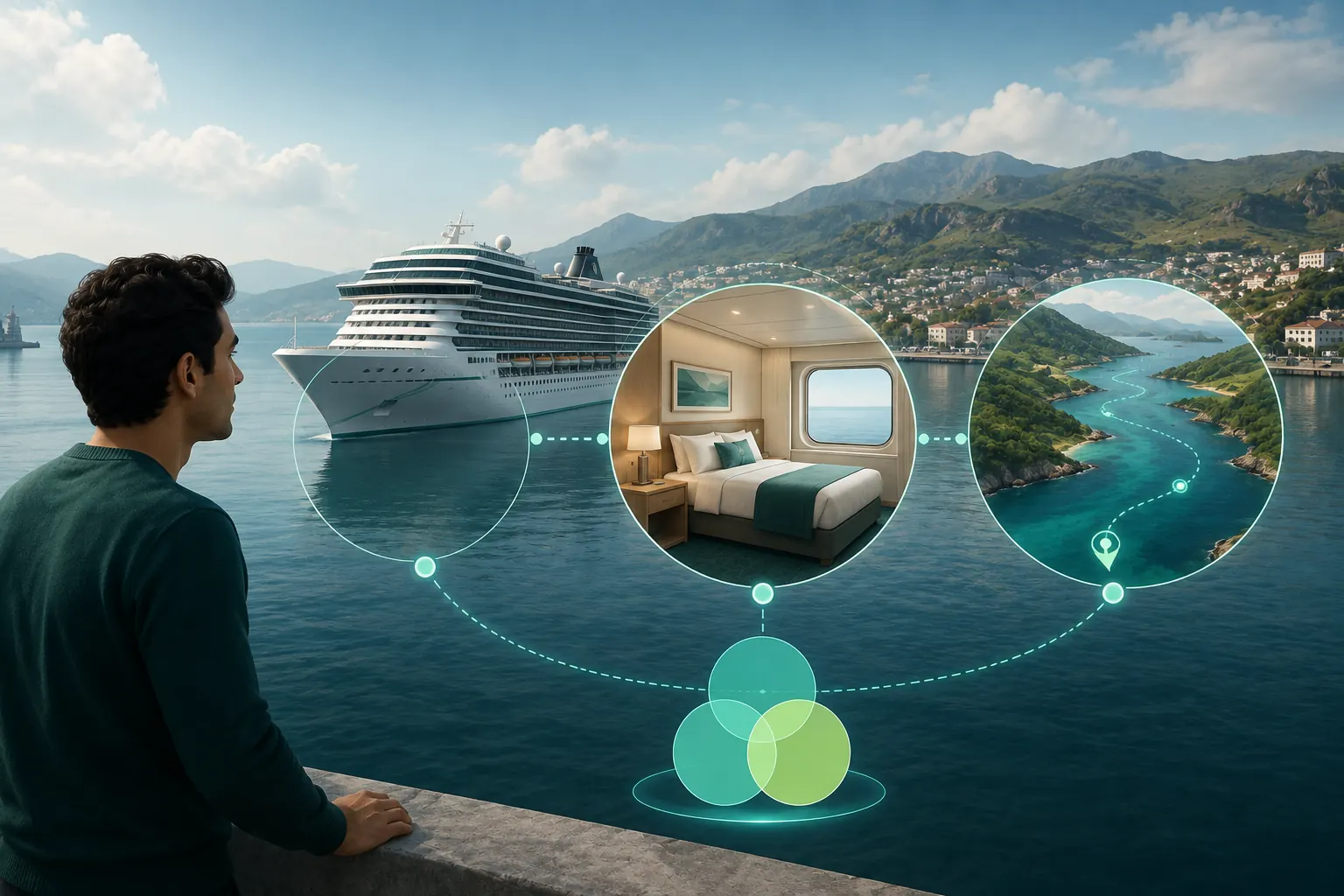
Seasickness starts with motion, so the booking question is simple: how much will this ship, in this cabin, on this water, actually move? Three things set that number. The ship decides how much of the sea's motion gets through to the decks. The cabin decides how much of the ship's motion gets through to you. The route decides how much sea there is to fight in the first place. Get one right and you help yourself; get all three right and many sailings become a non-event.
The order matters too. A calm route on a small ship can still roll. A big ship on the wrong stretch of sea can still pitch. Work through all three before you look at a single price.
Why a larger modern ship can shift the odds
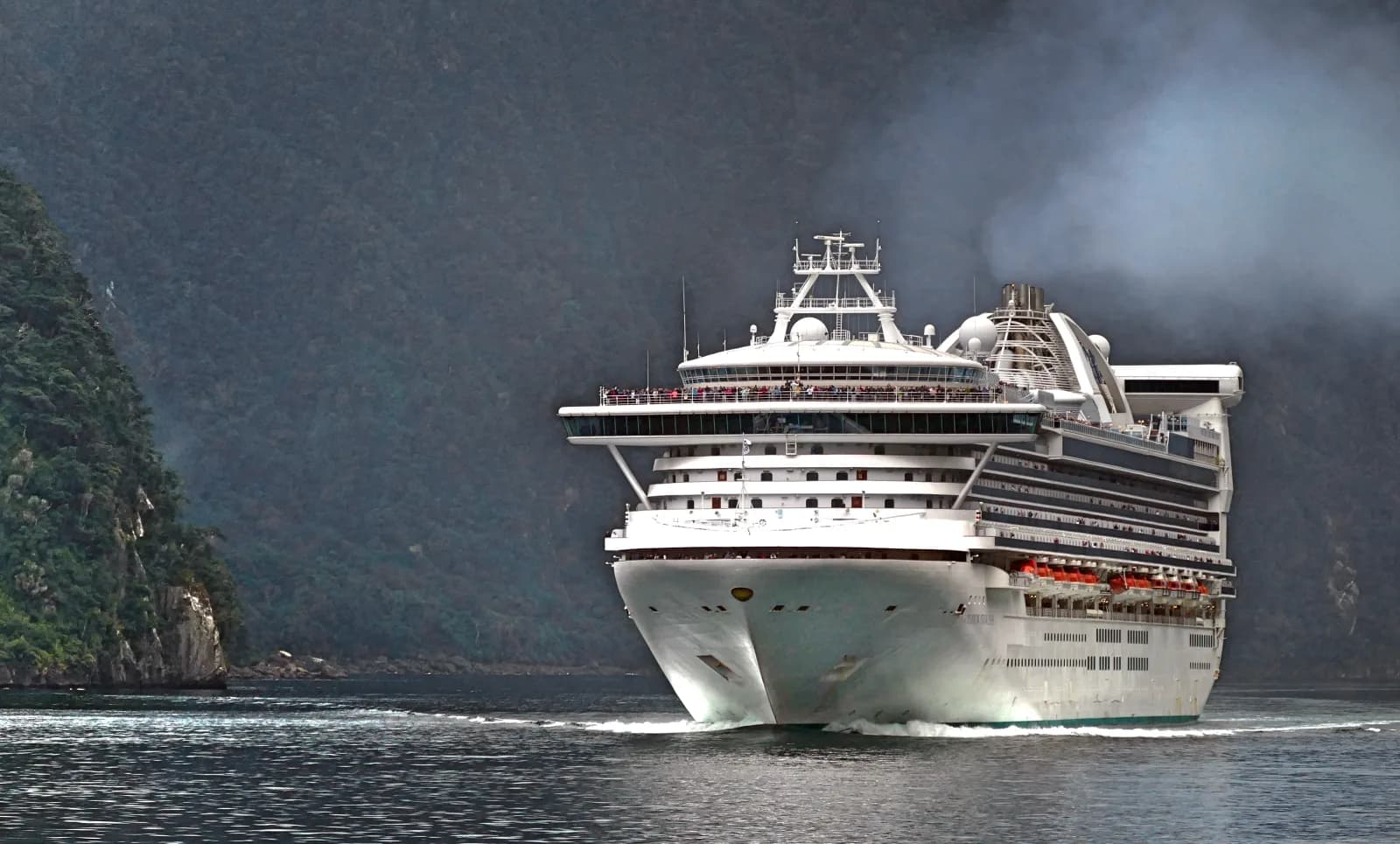
A larger ship has more mass, and modern vessels commonly carry retractable fin stabilizers that reduce roll while underway. That can make a larger modern ship the lower-motion choice when the route and conditions are comparable. Stabilizers do not remove pitch, and a large ship in difficult swell can still move more than a smaller one in protected water.
You do not need a cruise-line ranking. Compare the actual vessels on the sailings you can book, then check the route and month before using size as a tie-breaker. The cruise motion sickness guide covers what to do once aboard.
The midship low deck rule for cabins
A ship pitches and rolls around its center, like a seesaw around its pivot. The farther your cabin sits from that center, the bigger the arc it swings through. Far forward and far aft swing the most fore-and-aft. High decks swing the most side-to-side. The CDC's traveler guidance says it plainly: avoid the locations of maximum motion, like the bow.
So the standard preference is two words long: midship, low. On the deck plan, that means the middle third of the ship's length on a lower passenger deck. The geometry is sensible, but real-world passenger studies have not consistently found cabin location alone predicts who becomes sick. Use it as a tie-breaker alongside access to fresh air and a horizon view, not as a guarantee.
Balcony, ocean view or inside when you are prone
Seeing the horizon helps. CDC guidance lists a visual horizon reference as protective on ships, and MedlinePlus gives the same advice in plain words: look out into the distance instead of at something inside the vehicle. A balcony or ocean view cabin lets you do that without leaving your room, which matters most on sea days and rough evenings.
An inside cabin takes that anchor away, but it is not automatically worse. Inside cabins cluster on the lower decks where motion is smallest, and some prone travelers sleep better with nothing moving in view. One honest complication: balconies rarely start on low decks. If you want both the horizon and the low position, the compromise is a midship cabin on the lowest balcony deck, or an ocean view cabin lower still.
Calm itineraries and the ones to avoid
Route is the lever people skip, and it can be the biggest one. Protected water, with land breaking the swell, behaves differently from open ocean. River cruises sit at the calm extreme: no swell at all. Alaska's Inside Passage threads between islands for most of its length. Caribbean itineraries hop short distances between islands. The Mediterranean in summer is usually gentle. The Baltic is mostly enclosed sea.
At the other end are long open-water crossings: transatlantic repositioning cruises, the Bay of Biscay on many Europe routes, the Tasman Sea, and the Drake Passage on Antarctica itineraries, which is famous for a reason. If this is your first cruise since discovering you get seasick, do not start there. Check how rough your route's water tends to be before you fall in love with a port list.
Book this
- The biggest, newest ship that fits your budget
- A midship cabin on a low passenger deck
- Protected water: rivers, the Inside Passage, island hops
- A sailing outside the region's rough season
- A check of your exact cabin position on the deck plan before paying
Skip this
- A high cabin at the bow or stern because it was cheap
- A long open-ocean crossing as your first cruise back
- A balcony on deck 14 as the whole seasickness plan
- A departure at the height of hurricane season if you can avoid it
Booking rules of thumb from this article. None of them zero the risk.
Time of year: sailing around rough seasons
Every region has a season when its water is angrier. For the Caribbean, the fixed fact is the Atlantic hurricane season: NOAA puts it at June 1 through November 30, with the peak around September 10. Ships route around storms rather than through them, so the danger is not the storm itself. The cost is the detour: rerouting can mean longer stretches of open water and bigger leftover swell. If your dates are flexible, late winter through spring buys the calmest odds there.
The same logic applies elsewhere. The Mediterranean is gentlest in summer and choppier in winter, and the North Atlantic in winter is a hard ride, worth knowing before booking a cheap November crossing. No month promises flat water, but the calendar shifts the odds more than most bookers expect.
Use the cabin picker before you pay
Deck plans are where this gets concrete, and where mistakes happen. "Midship" on a booking site can stretch surprisingly far toward the bow, and two cabins in the same category can sit six decks apart. Our free cruise cabin picker turns the rules in this article into a position check: tell it where a cabin sits and it tells you how that spot ranks for motion. Run your shortlist through it before you hand over a deposit, not after.
Your day one plan on board
Booking well lowers the risk. It cannot zero it, because the sea gets a vote. So decide before you board what you will do if the queasiness starts anyway. The good news from CDC guidance: habituation is the most effective countermeasure there is, which is why the first day or two at sea are usually the hardest and it gets easier from there. Your job is to get through those first days comfortably.
- Spend the first evening midship and low, where you booked your cabin to be. Save the high forward observation deck for later in the week.
- Use the horizon early. At the first hint of queasiness, get somewhere with a view of the sea and let your eyes and inner ear agree again.
- Eat light and go easy on alcohol the first night. A heavy first dinner in a moving dining room is a common way to lose day two.
- If you plan to use medication, sort it out before you sail. The common options can cause drowsiness, at different strengths. Check timing and side effects with your pharmacist or doctor, not the ship's gift shop.
- Have drug-free relief in your pocket. Sound therapy through headphones is one option designed to help calm the response in about 90 seconds, with no drowsiness, so a rough patch does not cost you the rest of the evening.
The one thing booking cannot control
Stop the nausea
Even the right ship, the right cabin and the right route meet a swell somewhere. Dizzout plays precisely calibrated audio through any headphones, one option to have ready before the first rough patch. Drug-free, no drowsiness, about 90 seconds. Free to download on iOS and Android.
Get your personalized Dizzout plan. Paid subscription for full access.
30,000+ travelers in 30+ countries · How we count

On your phone? Scan to start there.
Comparing apps first? See how the motion sickness apps compare
Not travelling yet? Remind me the day before my trip
The bottom line
Specific modern ship. Less exposed itinerary, in its typically calmer season. Low midship cabin when the room and price still work for you. Those choices shift the odds without controlling the sea. Make them deliberately, run the shortlist through the cabin picker, and bring one form of relief you trust.
Frequently asked questions
Which cruise ships are best for people who get seasick?
The biggest and newest ships you can book. A heavier ship tilts less in the same swell, and modern fin stabilizers actively damp roll. You do not need a specific brand: within any cruise line, the larger and newer class will usually ride smoother than the older, smaller one. Pair that with a calm itinerary and the ship choice does most of its work.
Where is the best cabin location for motion sickness?
Midship, on a low deck. A ship pitches and rolls around its center, so cabins near the middle of its length and close to the waterline swing through the smallest arc. The worst spots are high cabins far forward or far aft. CDC traveler guidance says the same thing in general terms: avoid the locations of maximum motion, like the bow.
Is a balcony or inside cabin better for seasickness?
A balcony or ocean view cabin lets you look at the horizon from your room, and a visual horizon reference is listed as protective in CDC guidance. An inside cabin removes that anchor, but inside cabins sit on the lower decks where motion is smallest, and some prone travelers sleep better with nothing moving in view. Since balconies rarely start on low decks, the practical compromise is midship on the lowest balcony deck, or an ocean view cabin lower still.
Which cruise itineraries have the calmest water?
Itineraries that stay in protected or short-hop water: river cruises, Alaska's Inside Passage, Caribbean island hops, the summer Mediterranean and the mostly enclosed Baltic. The roughest rides are long open-ocean crossings, such as transatlantic repositioning cruises, routes through the Bay of Biscay, the Tasman Sea and the Drake Passage. If you are prone, make your first cruise a protected-water one.
What time of year are seas calmest for cruising?
It depends on the region. For the Caribbean, NOAA puts the Atlantic hurricane season at June 1 through November 30 with a peak around September 10, so late winter through spring offers the calmest odds. The Mediterranean is gentlest in summer, and the North Atlantic is at its roughest in winter. No month promises flat water, but the calendar shifts the odds meaningfully.
Someone you know gets motion sick?
Send them this guide. It might be the trip it saves.
Your next question, probably
Which exact cabins should you shortlist?
Interactive deck-position tool
If that is not your question:
About this article
by the Dizzout editorial team.
- CDC Yellow Book: Motion Sickness
- MedlinePlus: Motion Sickness
- NOAA National Hurricane Center: Tropical Cyclone Climatology
This article is informational and not a substitute for medical advice. If you plan to use motion sickness medication on a cruise, check timing and side effects with your pharmacist or doctor before you sail.