The short answer
Probably less than you fear, and there is a fair chance you will feel nothing at all. A modern cruise ship is enormous, sails with active stabilizers, and steers around bad weather, so on most days the floor under you barely moves. Some people still feel it, usually on the first night out of port or on long open-sea stretches, and most of them adapt within the first few days. If you are prone to motion sickness, the answer is preparation, not cancellation.
This question almost never gets asked out of idle curiosity. You have booked, or someone booked for you, and now a memory has surfaced: the ferry crossing that ruined a holiday, the winding road that ruins every drive. You are staring at a confirmation email and wondering whether you just paid for a week of nausea.
Here is the honest version, from how these ships actually move: what the ship itself does to protect you, who still feels it and exactly when, how fast bodies adapt, and the backup plan that fits in a jacket pocket.
Get your personalized Dizzout plan. A backup plan that packs itself: an app plus the headphones already in your bag. Drug-free, about 90 seconds.Starts in your browser · works with any headphones
Stop seasickness on your cruise. Paid subscription for full access.

On your phone? Scan to start there.
The honest answer: probably less than you fear
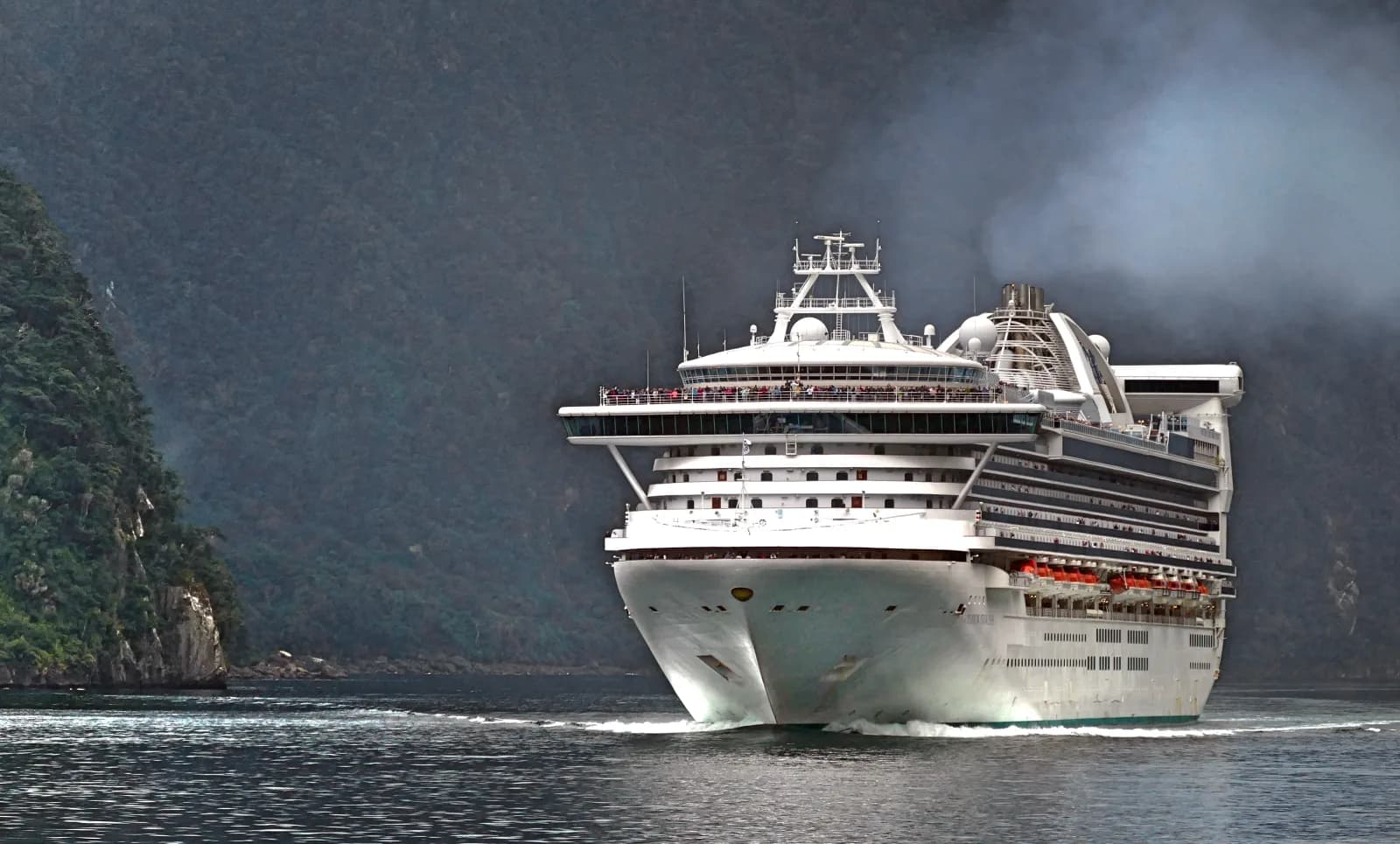
Ask first timers afterwards and the surprise usually runs the other way: they braced for the ocean and mostly could not find it. On a calm sea, a large modern ship feels closer to a hotel with an occasional slow lean than to anything you would call a boat. You notice the movement in specific moments, a long corridor, a shower, lying still in bed at night, more than you feel it while eating dinner or watching a show.
That said, real susceptibility is real. MedlinePlus puts about one in three people in the highly susceptible group for motion sickness in general, and almost anyone gets sick if the motion is strong enough. So the honest framing is this: the odds favor you, the swell occasionally does not, and it costs little to plan for both. If you want your own baseline before you board, the two-minute motion sickness test gives you a risk band, not a guess.
What stabilizers on a modern megaship actually do
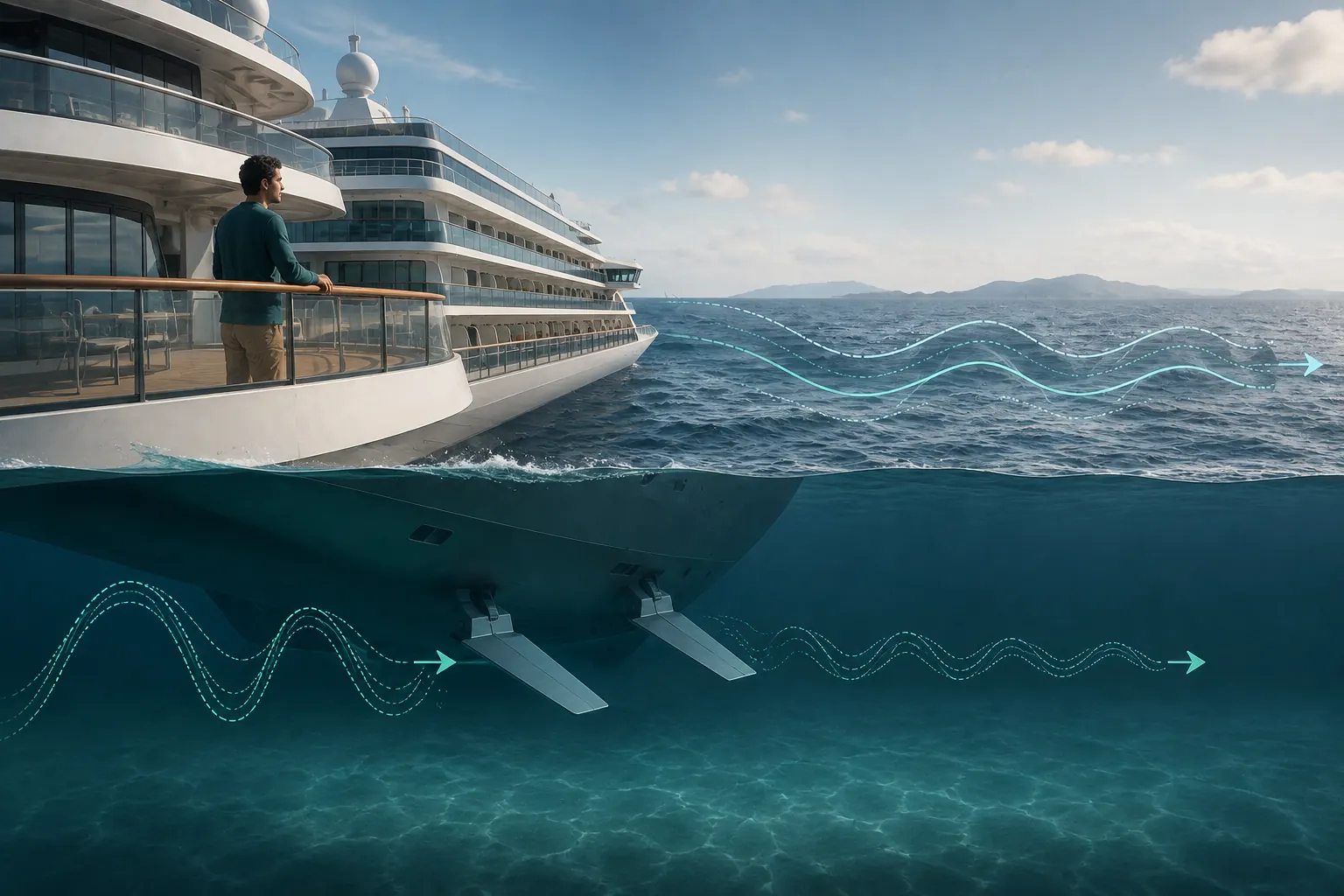
Below the waterline, a modern cruise ship carries retractable fin stabilizers: wing-shaped surfaces that extend from the hull and tilt against the sea, the way an aircraft wing tilts against air. Their job is to fight roll, the side-to-side rocking that drives most seasickness. In ordinary seas they smother most of it before you ever feel it.
Two honest limits. Stabilizers do much less against pitch, the slower rise and fall of the bow in a head-on swell. And they cannot cancel a genuine storm. Which is where the other half of the system comes in: captains read the weather days ahead and change course, speed, or even ports to sail around rough water. A skipped port is annoying. It is also the crew choosing your stomach over the itinerary, and it happens more often than first timers realize.
Who still gets seasick, and when it hits
Susceptibility is not evenly spread. Travel-medicine guidance, the CDC Yellow Book among it, lists the groups that feel motion sooner:
- Children and young teens. Susceptibility peaks between about ages 7 and 12, then falls through adulthood.
- Women, particularly during pregnancy or menstruation, or on hormonal medication.
- People with migraines. The two conditions travel together.
- Anyone with a vestibular or inner-ear disorder. This group should talk to a doctor before booking, which is a different conversation from ordinary motion sickness.
- People with a track record. If cars, coaches, or small ferries reliably get you, you are more likely to notice the ship. Notice, not necessarily suffer: a cruise ship moves far less than any of those.
The first night and the open sea stretches
Seasickness on a cruise is not a constant risk. It concentrates in a few predictable windows. The biggest is the first night, when the ship leaves sheltered port water for open sea while your body is still calibrated to land. If you are going to feel anything, this is usually when.
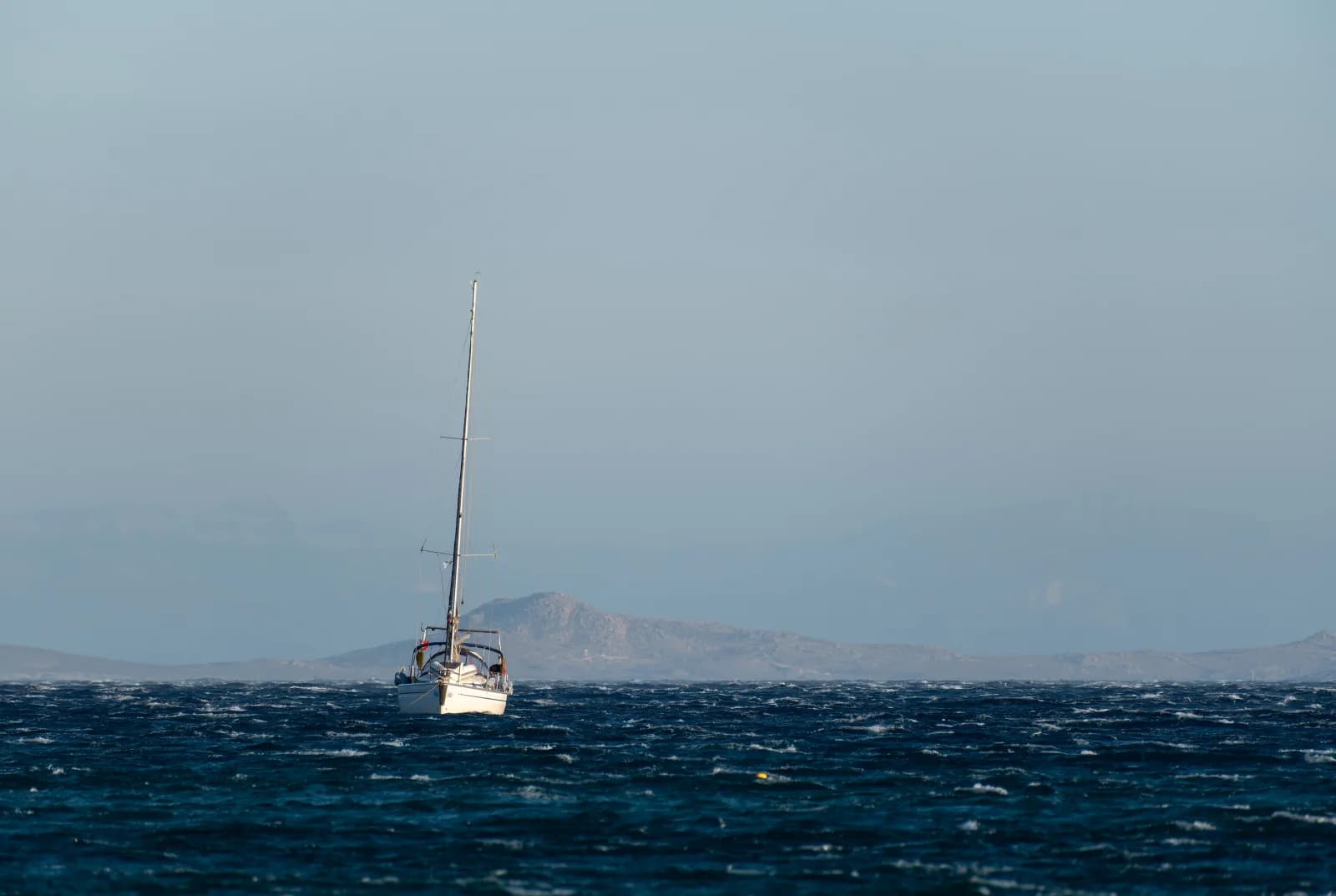
After that, risk tracks the itinerary. Full days on open water move more than days spent hopping between close ports. Ocean crossings move more than coastal routes. Tender rides, the small boats that shuttle you ashore where the ship cannot dock, move more in ten minutes than the ship does all week; plan for them separately. And the specific body of water matters more than the ship's brochure admits, which is why we track how rough each sea actually runs, month by month. Ships differ too: a bigger, newer ship generally rides steadier, and the ship-by-ship reports show the spread.
How fast most bodies adapt on board
Here is the part the worried booker rarely hears: seasickness on a cruise is mostly a front-loaded problem. Sailors call the fix getting your sea legs, and it is a documented adaptation, not folklore. Researchers who followed novices at sea watched their balance and posture adjust to the ship's motion with time aboard. The CDC's travel guidance calls habituation the most effective countermeasure there is.
In practice, most people who feel rough early in a cruise feel noticeably better within the first few days as the brain recalibrates, and the trip gets easier from there, not harder. The caveats: a minority stay sensitive for the whole sailing, and a rough sea day can briefly bring symptoms back even after you have adapted. Neither undoes the pattern. Day one is the hill; the week is not.
Itineraries and seasons that stay calm
If this is your first cruise and you are nervous, you can stack the deck before you ever pack:
- Sheltered water beats open ocean. Alaska's Inside Passage, river cruises, and port-dense coastal routes keep land close and swell small.
- Season matters. The Caribbean is generally gentle outside Atlantic hurricane season, which runs June through November. The Mediterranean tends calmer in summer than in winter.
- Save the famous crossings for later. Transatlantic runs, the Bay of Biscay, and the Drake Passage to Antarctica are the routes sailors themselves brace for. They are wonderful trips. They are not first-timer trips for a sensitive stomach.
- Check your actual route. The sea-by-sea guide covers the water your itinerary crosses in the month you cross it.
Your backup plan if it happens anyway
The reassured booker still deserves a plan B, because the sea does not read forecasts. Four moves cover it:
- Book the right cabin. Low deck, midship, where the ship pivots least. The cabin picker turns that into a deck and position for your ship in about a minute.
- Pack one medication option. Over-the-counter antihistamines such as dimenhydrinate or meclizine are the standard travel picks; many cause drowsiness, so check with your pharmacist or doctor before the trip, not on night one.
- Use the ship when it starts. Go to an outside deck, face forward, and hold the horizon. Skip reading and scrolling in the cabin until it passes.
- Carry drug-free relief. If it has already set in, sound therapy through the headphones you packed anyway is one option designed to help calm the response in about 90 seconds, with no drowsiness to write off the next shore day. The full on-board playbook lives in the cruise guide.
Do
- Book low and midship, the pivot point of the ship
- Pick sheltered water and a calm season for the first sailing
- Get on deck and hold the horizon when it starts
- Pack a backup: a pharmacist-approved option, plus drug-free relief on your phone
Don't
- Take a famous open-ocean crossing as your first cruise
- Book a high cabin at the bow or stern to save money
- Read or scroll in the cabin once you feel queasy
- Wait until nausea peaks before doing anything
Practical strategies, not measured effects. Which ones matter most depends on your route and your body.
The backup plan that packs itself
Stop the nausea
You cannot pack a calmer sea. You can pack relief: Dizzout plays precisely calibrated audio through any headphones, one option designed to help calm the response in about 90 seconds. Drug-free and no drowsiness, so a rough patch tonight does not cost you tomorrow's port. Free to download, with a paid subscription for full access.
Get your personalized Dizzout plan. Paid subscription for full access.
30,000+ travelers in 30+ countries · How we count

On your phone? Scan to start there.
Comparing apps first? See how the motion sickness apps compare
Not travelling yet? Remind me the day before my trip
When motion sickness should not stop you booking
Which is nearly always. Ordinary motion sickness, even the kind that makes you dread car journeys, is a planning problem on a cruise, not a disqualifier: choose sheltered water for the first trip, book low and midship, pack a backup, and let your body do the adapting it is built to do. The one genuine exception is a diagnosed vestibular condition or vertigo attacks, where the conversation belongs with your doctor before the deposit, not after.
And if you are reading this from a cabin rather than a sofa, skip the theory: the 60-second protocol is the page you want.
Frequently asked questions
How likely is it to get seasick on a cruise?
There is no reliable published number for cruise passengers specifically, so be wary of anyone quoting one. What is known: about one in three people are highly susceptible to motion sickness in general, modern ships suppress most of the motion with stabilizers and weather routing, and first timers commonly report feeling less than they feared. Your own history in cars and on small boats is the best predictor you have.
Do you feel the ship moving on a large cruise ship?
On calm seas, barely. Most of the time it feels like a very large hotel with an occasional slow lean, and you notice it most in quiet moments: a long corridor, the shower, lying still in bed. In a swell you feel a slow roll or the bow rising and falling, but it rarely resembles a small boat. The first night out of port is when most people notice it most.
How long does it take to get your sea legs on a cruise?
Most people who feel rough early on improve within the first few days at sea as the brain adapts to the ship's motion. Sea legs are a documented adaptation, not sailor folklore, and travel-medicine guidance calls habituation the most effective countermeasure. A minority stay sensitive for the whole sailing, and a rough sea day can briefly bring symptoms back, but the trend runs toward easier, not harder.
Which part of a cruise is most likely to make you seasick?
The first night, when the ship leaves sheltered port water while your body is still tuned to land. After that: full days on open water, ocean crossings, tender-boat rides to shore, and rough-season sailings. Where you sleep matters too, since high cabins at the bow or stern swing through more motion than a low midship cabin.
Can people with motion sickness go on cruises?
Almost always, yes, with preparation instead of luck: a sheltered itinerary in a calm season for the first trip, a low midship cabin, a backup remedy in the bag, and a few days' patience while the body adapts. The exception is a diagnosed vestibular disorder or recurring vertigo, which is worth a conversation with your doctor before booking.
Someone you know gets motion sick?
Send them this guide. It might be the trip it saves.
Your next question, probably
Which cabin should you book?
Deck and position, picked in a minute
If that is not your question:
About this article
- CDC Yellow Book: Motion Sickness (risk factors and habituation)
- MedlinePlus Genetics: Motion sickness (susceptibility)
- Stoffregen TA, et al. Getting your sea legs. PLoS ONE, 2013
This article is informational and not a substitute for medical advice. Talk to your pharmacist or doctor before taking any medication for motion sickness, and see a doctor before booking if you have a diagnosed vestibular condition. Brand names are trademarks of their respective owners.