
Airport shuttle motion sickness: surviving the people mover
In short
Face along the car, feet wide, bag on the floor, phone away. The hop is short and the next train is right behind.
If every leg of a trip sets you off, not just this one, the free 2-minute test on this page scores how prone you are and what your travel days actually need.
Zones of motion sickness probability
Prone to motion sickness? Dizzout is drug-free sound therapy through any headphones, with relief in about 90 seconds.Starts in your browser · works with any headphones
Get your personalized Dizzout plan. Paid subscription for full access.

On your phone? Scan to start there.
Why motion sickness happens on a shuttle train
The trains that shuttle you between terminals are built for throughput, not comfort: short hops, firm programmed acceleration and braking, and automated control that gives you no cues about when either is coming. Atlanta's Plane Train, the busiest airport people mover in the world at more than a quarter of a million passengers a day, runs entirely underground with trains only minutes apart. You usually ride standing side on, gripping a pole with one hand and a bag with the other, often straight off a flight that has already stirred up your inner ear.
How to stand on a shuttle train
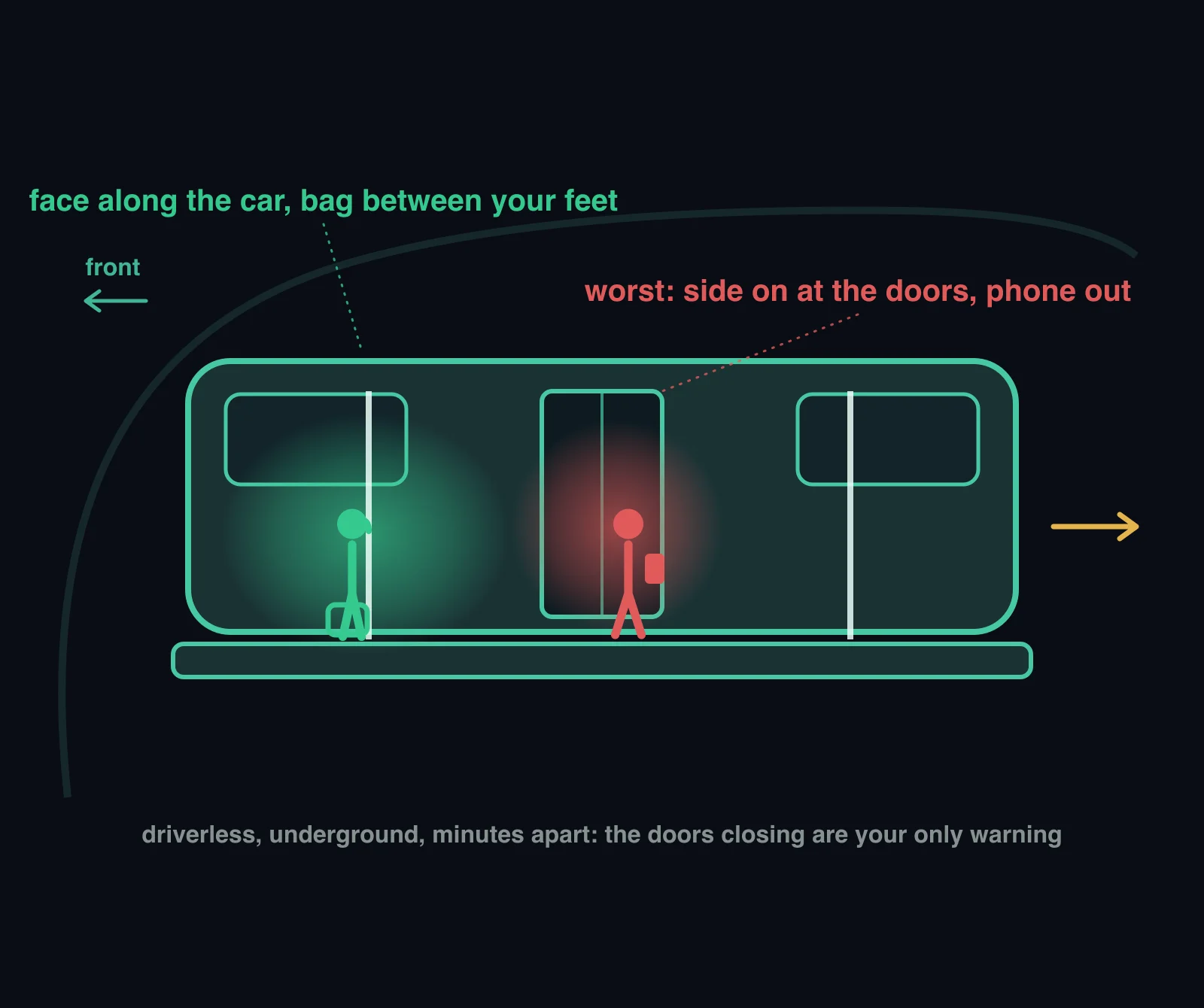
Standing aligned with the direction of travel, holding a pole, feet shoulder width apart, bag on the floor between them. Facing along the car turns the brake and accelerate cycle into a front-to-back sway your legs already know how to absorb.
If there are seats, take one facing the direction of travel. On lines with a front window, standing where you can see the tunnel or guideway ahead gives your eyes the same preview a windshield does.
Avoid: Standing sideways at the doors reading your phone. Side on, every speed change hits you laterally, and the boarding pass reflex keeps your eyes at reading distance exactly when they need the far end of the car.
Best way to ride an airport shuttle train
Put the phone away for the two minutes, face down the length of the car, and soften your knees before each stop. The door announcements are the only preview of the motion you get, so use them: doors closing means acceleration is next.
🎧 Before you travel: Pre-Conditioning mode
Listen to the Dizzout Pre-Conditioning Sound for about 90 seconds before you start moving, while you still feel fine.
Know someone who dreads this trip?
Send them this guide before they board: seats, settings and what to do if it starts.
Already feeling sick on the shuttle train
Early signs often come before nausea: yawning, pale skin, extra saliva, a cold sweat, burping and loss of appetite.
Step off at the next stop rather than powering through, since the next train is usually only a couple of minutes behind. Stand still on the platform with your eyes on the far end of the concourse and let it settle. If you have just landed and the shuttle tipped you over the edge, the flight primed it, and walking the rest of the way usually calms it down.
Feeling it right now? Get the 60-second protocol →
Already feeling sick?
Open Dizzout in 'I'm feeling sick' mode and listen. Dizzout states relief in about 90 seconds. Drug-free, works on any headphones.
What about motion sickness medication?
Some travelers use over-the-counter options like dimenhydrinate (Dramamine) or meclizine (Bonine); the common trade-off reported on their labels is drowsiness, and they're generally taken before travel rather than after symptoms start. Our plain-English medication guide covers what each one is, side effects, and who should check with a doctor or pharmacist first (it's educational, not medical advice). Prefer to skip pills? Dizzout is a drug-free option that works through any headphones: see how it works.
Frequently asked questions
Why do I get motion sickness on a shuttle train?
The trains that shuttle you between terminals are built for throughput, not comfort: short hops, firm programmed acceleration and braking, and automated control that gives you no cues about when either is coming. Atlanta's Plane Train, the busiest airport people mover in the world at more than a quarter of a million passengers a day, runs entirely underground with trains only minutes apart. You usually ride standing side on, gripping a pole with one hand and a bag with the other, often straight off a flight that has already stirred up your inner ear.
What is the best seat to avoid motion sickness on a shuttle train?
Put the phone away for the two minutes, face down the length of the car, and soften your knees before each stop. The door announcements are the only preview of the motion you get, so use them: doors closing means acceleration is next.
How do I stop motion sickness once it starts?
Step off at the next stop rather than powering through, since the next train is usually only a couple of minutes behind. Stand still on the platform with your eyes on the far end of the concourse and let it settle. If you have just landed and the shuttle tipped you over the edge, the flight primed it, and walking the rest of the way usually calms it down. Sound therapy through the Dizzout app is a drug-free option, and Dizzout states relief in about 90 seconds.
Why do airport trains make me feel sick after a flight?
Because you board them primed. A flight has already worked your inner ear, and the shuttle then delivers hard stop-start cycles while you stand sideways holding luggage, with no horizon anywhere underground. Face along the direction of travel, put the bag between your feet, hold the pole and let your knees absorb the stops. The hops are short, and if you are still off balance in the terminal, that lingering part usually fades as you walk.
Where should you stand on an airport people mover?
Mid car, facing along the direction of travel, with a hand on a pole and your feet shoulder width apart. That stance turns the braking into a forward sway you can ride instead of a side-on lurch. The worst position is side on at the doors with your eyes on a phone. If a seat facing the direction of travel is free, take it.
Related guides
- Dizziness after flying: why it lingers
Why the ground keeps moving after you land, and how long it should last.
- Riding a shuttle bus instead? The bus seat guide
Where to sit on a bus, with a clear view and alternatives for rough roads.
- Air sickness: the full pillar guide
The full flying guide: the steadiest seat to book, and what to do mid-flight.
- Metro & subway motion sickness
Seat options, phone use and stop-start motion on a metro.