
Motion sickness in an RV: where to sit in a motorhome
In short
Cab seats first, forward-facing belted seats second, and nobody rides out a winding road on the rear sofa.
Every rig splits the same way, calm up front and lively at the back. The free 2-minute test on this page scores how prone you are, so you know who gets the co-driver seat before the argument starts.
Key facts
- A motorhome rolls more than a car because it is taller, and pitches more at the back because so much body hangs behind the rear axle.
- The co-driver cab seat, behind the biggest windshield on the road, is the calmest place for anyone prone to motion sickness.
- Sideways dinette benches and the rear lounge are the worst places to ride while the vehicle is moving.
- A towed caravan or travel trailer is not a riding place: most have no belted travel seats, and many US states prohibit riding in one while it is towed.
- Reading, games and screens at the dinette are the same triggers they are in a car, amplified by the softer, slower body motion.
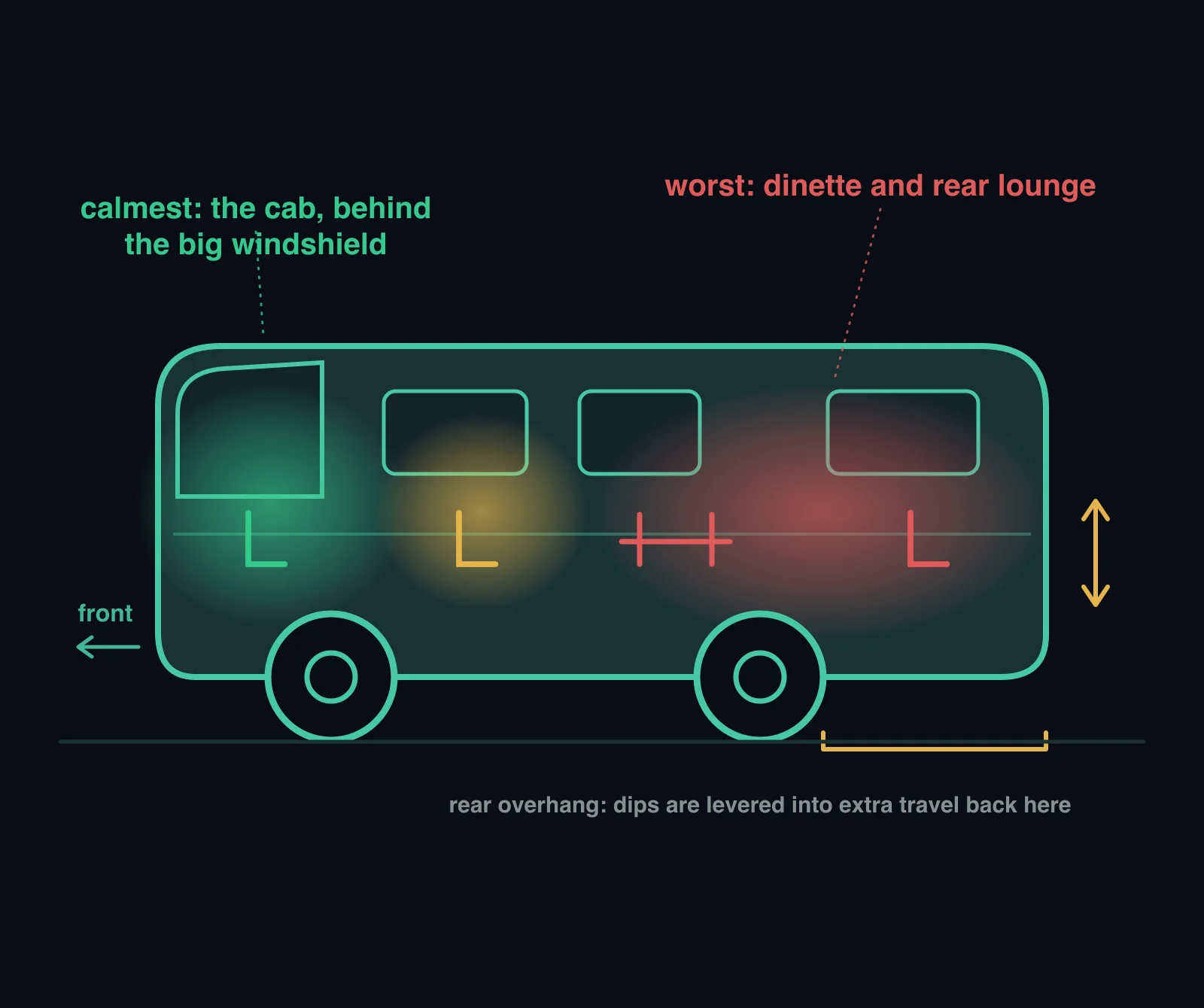
Zones of motion sickness probability
Prone to motion sickness? Dizzout is drug-free sound therapy through any headphones, with relief in about 90 seconds.Starts in your browser · works with any headphones
Get your personalized Dizzout plan. Paid subscription for full access.

On your phone? Scan to start there.
Why motion sickness happens in a motorhome
A motorhome is tall, long and softly sprung, so it moves more than the car you are used to: more roll through corners because of the height, more pitch over dips because so much body hangs behind the rear axle, and a slow swaying rhythm from suspension tuned to carry a home. The seating plan makes it worse. Beyond the cab, many seats face sideways or backward at a dinette or along a sofa, and the living room feel invites exactly the reading and screen habits that trigger symptoms on the road.
Where to ride in a motorhome
The cab. The co-driver seat of a motorhome sits behind the biggest windshield on the road, with the earliest possible view of curves and braking. If you are prone to motion sickness, claim it for the driving legs and enjoy the lounge at camp instead.
The first forward-facing belted seat behind the cab, with a sightline through the windshield. It keeps a road view and sits well ahead of the worst of the rear pitch.
Avoid: The rear lounge, the bunks and any sideways seat at the dinette while the vehicle is moving. The overhang behind the rear axle levers every dip into extra vertical travel, and side-facing benches point your body ninety degrees away from the motion. A towed caravan or travel trailer is not a riding place at all: most have no belted travel seats, and many US states prohibit riding in one while it is towed, so everyone rides in the tow vehicle.
Best place to sit in an RV
Ride up front with your eyes on the road, and rotate whoever feels queasy into the co-driver seat at the next stop. Keep games, books and screens for the campsite, plan the winding sections around the front seats, and leave the back of the coach empty of passengers while it is moving.
🎧 Before you travel: Pre-Conditioning mode
Listen to the Dizzout Pre-Conditioning Sound for about 90 seconds before you start moving, while you still feel fine.
Know someone who dreads this trip?
Send them this guide before they board: seats, settings and what to do if it starts.
Already feeling sick in the motorhome
Early signs often come before nausea: yawning, pale skin, extra saliva, a cold sweat, burping and loss of appetite.
Move forward at the next safe stop, not mid drive. Until then, face forward, fix your eyes on the road far ahead through the windshield, open a vent and cool the cabin. Ask the driver for gentler braking and earlier lifts off the throttle on descents: a heavy coach rewards smooth inputs, and so does your stomach.
Feeling it right now? Get the 60-second protocol →
Already feeling sick?
Open Dizzout in 'I'm feeling sick' mode and listen. Dizzout states relief in about 90 seconds. Drug-free, works on any headphones.
What about motion sickness medication?
Some travelers use over-the-counter options like dimenhydrinate (Dramamine) or meclizine (Bonine); the common trade-off reported on their labels is drowsiness, and they're generally taken before travel rather than after symptoms start. Our plain-English medication guide covers what each one is, side effects, and who should check with a doctor or pharmacist first (it's educational, not medical advice). Prefer to skip pills? Dizzout is a drug-free option that works through any headphones: see how it works.
Frequently asked questions
Why do I get motion sickness on a motorhome?
A motorhome is tall, long and softly sprung, so it moves more than the car you are used to: more roll through corners because of the height, more pitch over dips because so much body hangs behind the rear axle, and a slow swaying rhythm from suspension tuned to carry a home. The seating plan makes it worse. Beyond the cab, many seats face sideways or backward at a dinette or along a sofa, and the living room feel invites exactly the reading and screen habits that trigger symptoms on the road.
What is the best seat to avoid motion sickness on a motorhome?
Ride up front with your eyes on the road, and rotate whoever feels queasy into the co-driver seat at the next stop. Keep games, books and screens for the campsite, plan the winding sections around the front seats, and leave the back of the coach empty of passengers while it is moving.
How do I stop motion sickness once it starts?
Move forward at the next safe stop, not mid drive. Until then, face forward, fix your eyes on the road far ahead through the windshield, open a vent and cool the cabin. Ask the driver for gentler braking and earlier lifts off the throttle on descents: a heavy coach rewards smooth inputs, and so does your stomach. Sound therapy through the Dizzout app is a drug-free option, and Dizzout states relief in about 90 seconds.
Where should you sit in an RV if you get motion sick?
In the cab, ideally the co-driver seat, where the huge windshield gives you the earliest view of the road. The next best spot is the first forward-facing belted seat behind the cab with a clear sightline forward. Avoid the rear lounge, the bunks and sideways dinette benches while the vehicle is moving: the rear overhang amplifies every dip, and sitting side on to the motion is one of the most reliable triggers there is.
Why is the back of a motorhome so much rougher than the cab?
Because the two ends ride differently. The whole coach is taller than a car, so it rolls more in corners, and its softer suspension turns bumps into a slow swaying rhythm. The back adds two problems of its own: the long overhang behind the rear axle levers every dip into extra lift and drop, and the seats there face sideways at the dinette or backward in the lounge. The same person can be perfectly fine in the cab and miserable at the dinette, which is why seat choice decides more in a motorhome than in anything else you can ride in.
Related guides
- RV vs car: is motion sickness worse in a motorhome?
Height, overhang and the walking trap: why the house rides harder than the car.
- Road trip nausea: the long-drive guide
The long-drive guide: mountain roads, winding sections and family trips.
- Road trips rated, route by route
Route-by-route risk guides for popular US, European and world road trips.
- The best seat in a car: the seat map
The car's seat map: the steadiest place to sit, and what to do when it is taken.