
RV vs car: is motion sickness worse in a motorhome?
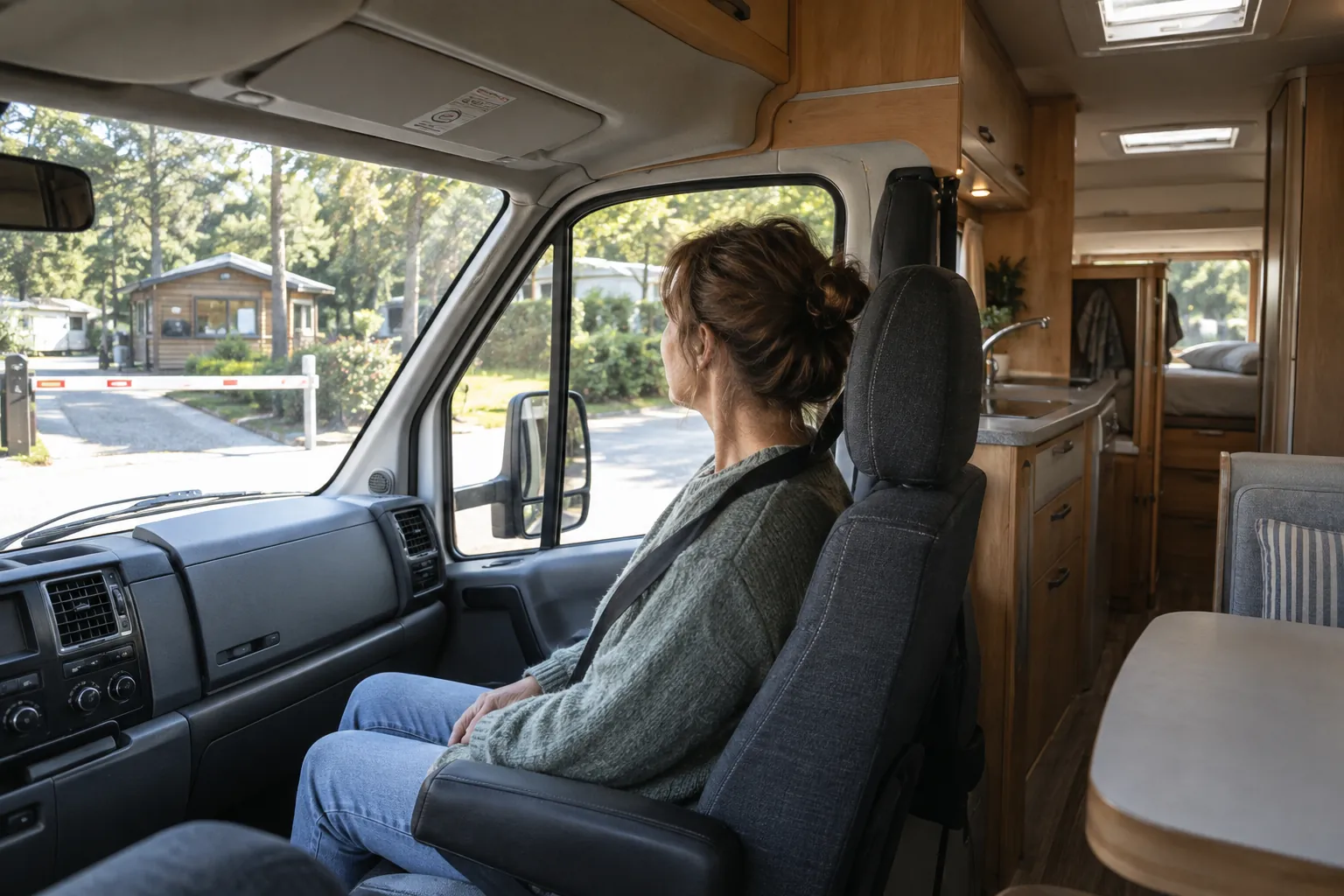
For most queasy passengers, an RV is a harder ride than a car: it is tall and softly sprung, so it rolls and sways more; seats behind the rear axle amplify every dip and rebound; dinettes face sideways or backwards with poor window views; and the freedom to walk around mid-drive is a trap, since moving through a moving cabin stacks provocations fast. The honest exception sits right up front: a big motorhome's cab seats put you high over a panoramic windshield with the best road view in the family fleet, and some carsick travellers ride there better than in any car.
Motorhome forums are full of the same surprised question: someone who manages ordinary car journeys signs up for the RV holiday and discovers the rolling house treats their stomach differently. The physics says it should. An RV is heavier, taller and longer than a car, on suspension tuned for comfort, with passengers distributed everywhere from the panoramic cab to a bench over the rear overhang.
Where you sit in an RV changes the experience more than in any other road vehicle, which is why the honest answer to this comparison is split: worse than a car in most seats, surprisingly decent in a couple of them.
Whichever option you pick, Dizzout is a drug-free backup for the moment nausea starts: precisely calibrated sound on any headphones, free to download on iOS and Android.
Get your personalized Dizzout plan. Paid subscription for full access.

On your phone? Scan to start there.
RV vs car for a motion-sensitive passenger
| Factor | RV or motorhome | Car |
|---|---|---|
| Body roll and sway | Large: tall, softly sprung | Modest |
| Worst seats | Rear lounge, sideways dinette | Middle back seat |
| Best seat | Cab, panoramic windshield, high view | Front passenger |
| Rear-axle seesaw effect | Real on long overhangs | Minimal |
| Temptation to move around | Constant, and it backfires | None |
| Stops and resets | Easy, you brought the kitchen and bathroom | Easy |
Why the house on wheels moves more
Three mechanical facts work against an RV passenger. Height: the cabin rides high above the wheels, and the higher you sit above a vehicle's roll motion, the further you swing with every corner and crosswind correction. Suspension: motorhomes are sprung softly to protect the structure and the crockery, and soft springs trade sharp jolts for slow, large swaying, exactly the motion profile inner ears dislike. Length: anyone seated behind the rear axle sits on the long end of a seesaw, where a modest dip in the road becomes a pronounced lift and drop.
Crosswinds add a fourth ingredient on open highways, pushing the tall body into small repeated corrections that everyone aboard feels as sway. A car has none of these amplifiers to the same degree.
The seating map, honestly
The cab seats are the RV's redemption. Up front you sit over or ahead of the front axle with a windshield the size of a shop window, watching the road arrive; that continuous preview is the strongest protection a passenger can have, and it is why some people who struggle in car back seats ride happily in a motorhome cab. If a prone traveller is aboard, that seat belongs to them.
Behind the cab the picture degrades. Dinette benches often face sideways or rearward, pairing amplified motion with a sideways view of the world sliding past, and window sight lines from mid-cabin seats are often interrupted by cabinetry. The rear lounge on large models combines the axle-overhang seesaw with distance from any forward view. Belted travel seats are where they are, so the realistic move is claiming the best of what your layout offers and treating the worst seats as off-duty space for parked time.
The walking trap and the driving style lever
An RV invites people to treat it like a house: grab a snack, use the bathroom, stretch. In motion, that is the worst thing a queasy passenger can do. Walking through a swaying cabin means your head moves with every step on top of the vehicle's own roll, with no fixed visual anchor, and forum veterans consistently name mid-drive walking as the moment their sickness started. Stay belted and seated while rolling, and use stops for everything else; an RV can pull over almost anywhere, which is its quiet advantage.
Driving style is the other big lever. Slower, earlier braking and gentle cornering matter more in a tall soft vehicle than in any car, and the driver feels the least of it, so say it out loud before the trip. Plan winding sections for the morning, keep the cabin cool, and give the sensitive passenger the cab seat and the horizon.
When to use which
Choose the car for pure transport when a highly motion-sensitive traveller is aboard and the RV would seat them mid-cabin. Choose the RV when the trip is the point, and run it on rules: the prone traveller rides in the cab with eyes on the road, everyone stays seated while rolling, the driver corners like the crockery is loose, and winding roads get driven in the cool of the morning. Use the vehicle's superpower, stopping anywhere, early and often. A motorhome trip with those habits is very doable for most queasy travellers; the same trip improvised usually is not.
Try drug-free motion sickness relief
Get your personalized Dizzout plan · iOS and Android · any headphones.
Frequently asked questions
Why do I get motion sick in an RV but not in my car?
An RV amplifies the motions your car keeps small. You sit high above the wheels, so body roll swings you further; soft suspension turns bumps into slow swaying; and seats behind the rear axle rise and fall like the end of a seesaw over dips. Add a mid-cabin seat with a broken window view, or a sideways dinette bench, and the same road delivers several times the provocation your car would. The cab seats, with their huge windshield, are the exception.
What is the best place to sit in a motorhome if I get carsick?
The cab. The front seats sit near the front axle with a panoramic windshield, giving you the continuous road preview that protects passengers everywhere, plus a high, commanding horizon view. Among the belted seats behind, forward-facing beats sideways, ahead of the rear axle beats behind it, and a clear window beats cabinetry. Whatever the layout, the sensitive traveller gets first claim on the cab, and seat trades happen at stops, not in motion.
Can I walk around an RV while it is driving?
Legally it depends on where you are and which seats have belts, but for motion sickness the answer is simpler: do not. Walking through a rolling, swaying cabin moves your head unpredictably on top of the vehicle's own motion with no stable visual anchor, and it is one of the most reliably reported triggers among RV travellers. Stay seated and belted while rolling, and use the RV's easy stopping for snacks, bathrooms and leg stretches.
An RV is a car with the motion turned up and a secret weapon at the front. Put the queasy traveller in the cab, keep everyone planted while the wheels turn, drive it gently, and stop like you mean it: the house rides better when nobody treats it like one at speed.
Related comparisons
- Car sickness: the full guide
- Winding roads vs highway
- Where to sit in an RV: the full guide
- Road trip nausea: long-drive strategies
- All motion sickness comparisons
This page is general information, not medical advice; individual reactions vary. Seatbelt laws and travel-seat rules for motorhomes vary by country and layout: follow the law and the manufacturer's seating guidance first.