
Catamaran and seasickness: what to expect
A catamaran is the boat operators point seasick-prone passengers at, and the reason is geometry: two hulls set wide apart resist rolling, so the boat moves through smaller angles than a monohull. Better, not immune.
Twin hull, wide beam, small heel angles · Day charters of 2 to 8 hours, sailing cats also run multi-day · Reported seasickness risk: commonly reported as one of the easier trips in this guide.
- Low
- Moderate
- High
- Very high
Risk summarises what passengers, crews and published marine guidance commonly report for this kind of craft, not a measurement of any one operator's boat.
Key facts
- Dive guidance recommends catamarans for divers prone to seasickness, on the principle that a wider beam makes a more stable platform.
- Catamarans are not immune: anchored in beam swell they still rock, through a smaller angle than a monohull would.
- Catamaran motion is quicker and flatter than a monohull's long roll, and a minority of passengers find that jerkier feel harder in short chop.
Try Dizzout free. Put it on your phone before you go, so it is there when you need it. Drug-free, any headphones.Free · works with any headphones · no account to try
Stop seasickness on the water. Free to try, no card needed. Or go straight to the App Store or Google Play.
Why a catamaran sets people off
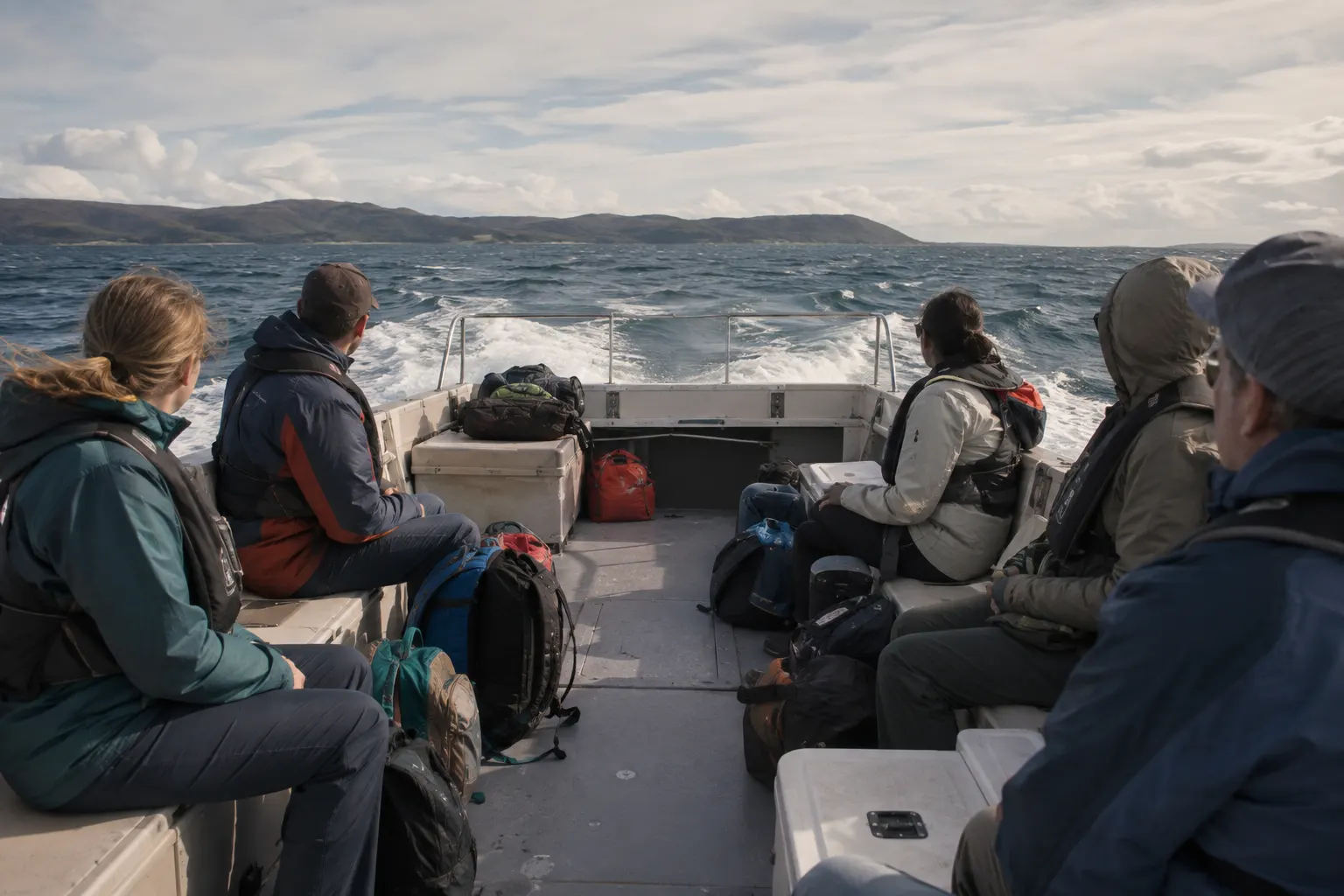
Mostly it does not, which is why it sits in the low band. Twin hulls and a wide beam resist roll both underway and at rest, and dive guidance recommends catamarans specifically for divers prone to seasickness on the principle that the wider the beam, the more stable the platform. The nuance worth knowing is the character of the motion: a cat moves quicker and flatter than a monohull's long roll, so in short steep chop it can hobby-horse between the hulls in a way a minority of passengers find more unsettling rather than less. Anchored in beam swell it still rocks, through a smaller angle.
Stopped or underway: which part is worse
Steadier than a monohull in both states, which is the whole point of the hull form. It still rolls at anchor in leftover swell, and the forward trampolines are where you feel the pitch most in chop.
Where to be on board
The centre of the bridge deck, between the hulls, is the calmest spot on the boat. The forward trampolines exaggerate pitch in chop, so move aft and central if you start feeling it. Fresh air is everywhere on a cat, so use it.
Going on a catamaran? Set it up first
You will not want to be setting up an app once the boat is moving. Dizzout is a drug-free app that plays precisely calibrated audio through any headphones you already own, wired or Bluetooth, with relief in about 90 seconds. Free to try.
Heading out on the water? Check the trip first
Check your tripFree, two minutes, and it scores the trip you actually have ahead.
Put it on your phone before you go
Free to try, no card needed. Or go straight to the App Store or Google Play.
 Scan to open on your phone
On a computer? Dizzout installs on your phone. Scan the code, or open dizzout.com/get on your phone and it'll take you straight to the right store.
Know someone who gets motion sick?
Send them the app that helps stop it, drug-free, in about 90 seconds, works with any headphones. Free to try.
What helps on this trip
- Sit centrally on the bridge deck, between the hulls. That is the calmest part of the boat.
- Move aft and inboard if chop picks up. The forward trampolines look like the best seat and exaggerate the pitch.
- If you are choosing between boats for the same trip, the cat is the steadier platform, and dive guidance makes that recommendation explicitly.
- Do not assume immunity. A cat at anchor in beam swell still rocks, and passengers who expect nothing sometimes get caught by it.
- If it starts anyway, put your earbuds in. Dizzout is drug-free sound therapy designed to help after symptoms start, and it works with any headphones.
For what actually holds up under testing, see the remedy verdicts, and for the water itself rather than the boat, how rough your sea usually is. Anything you take before travelling is a question for a pharmacist or doctor.
Frequently asked questions
Are catamarans better for seasickness than monohulls?
Generally yes, and the reason is geometry rather than marketing. Two hulls set wide apart resist rolling, so a cat heels through much smaller angles and does not develop the long side-to-side roll a monohull can. Dive guidance recommends catamarans for divers who are prone to seasickness on exactly that basis, which is a useful corroboration because it does not come from anyone chartering cats.
Can you still get seasick on a catamaran?
Yes. A cat at anchor in beam swell still rocks, just through a smaller angle, and in short steep chop it can hobby-horse between the hulls with a quicker, flatter motion than a monohull's long roll. A minority of passengers find that jerkier feel harder rather than easier. The honest version is that a catamaran shifts the odds in your favour and does not remove the possibility.
Where should I sit on a catamaran to avoid seasickness?
The centre of the bridge deck, between the hulls, where the motion is smallest. The forward trampolines are the popular spot and the worst one for pitch in chop, because they sit furthest forward on the boat. If you start feeling it, move aft and central, get air on your face and keep the horizon in view, which is easy on a cat because the decks are open.
Other trips and excursions
Related
- What is an M hull boat, and does it stop seasickness?The hull-shopping question answered honestly: builder claims, wide beam, and the steadier pick at anchor.
- Seasickness: the full guideWhy ships do it, the steadiest cabin, and a survival kit for the crossing.
- Is your sea rough? Sea by seaEvery crossing in one table, roughest first, each with a month-by-month page.
- Cruise ships & motion sicknessNamed ships sorted by how much they move, grouped by cruise line.
- Feeling it right now: the 90-second stepsThree steps over 90 seconds, with a timer that waits if you lock the screen.
Sources & further reading
Your next question, probably
Will the water itself be rough?
Sea by sea, month by month
If that is not your question:
Written from operator guidance, marine, aviation and specialist sources, and published passenger and participant reports as of September 2026. Risk levels describe a kind of trip, not any particular operator's craft, and conditions on the day matter more than the category does. Operator and brand names are trademarks of their respective owners; Dizzout is not affiliated with or endorsed by them. Sensitivity varies from person to person; this page is informational and not medical advice.