
White-water rafting and seasickness: what to expect
White-water rafting is one of the least sickening things on this list, and the rapids are not the problem. When queasiness turns up, riders describe it on the flat float stretches in between.
Inflatable raft, high-frequency jolts, riders paddling · Half day to full day on the river · Reported seasickness risk: commonly reported as one of the easier trips in this guide.
- Low
- Moderate
- High
- Very high
Risk summarises what passengers, crews and published marine guidance commonly report for this kind of craft, not a measurement of any one operator's boat.
Key facts
- Rafting outfitters commonly report motion sickness as rare on the river, because what riders see matches what they feel.
- When it does show up, riders describe it on the slow flat stretches between rapids rather than in the whitewater.
- The riverbank gives a constant fixed visual reference, which is something no open-water trip can offer.
Try Dizzout free. Put it on your phone before you go, so it is there when you need it. Drug-free, any headphones.Free · works with any headphones · no account to try
Stop seasickness on the water. Free to try, no card needed. Or go straight to the App Store or Google Play.
Why a rafting trip sets people off
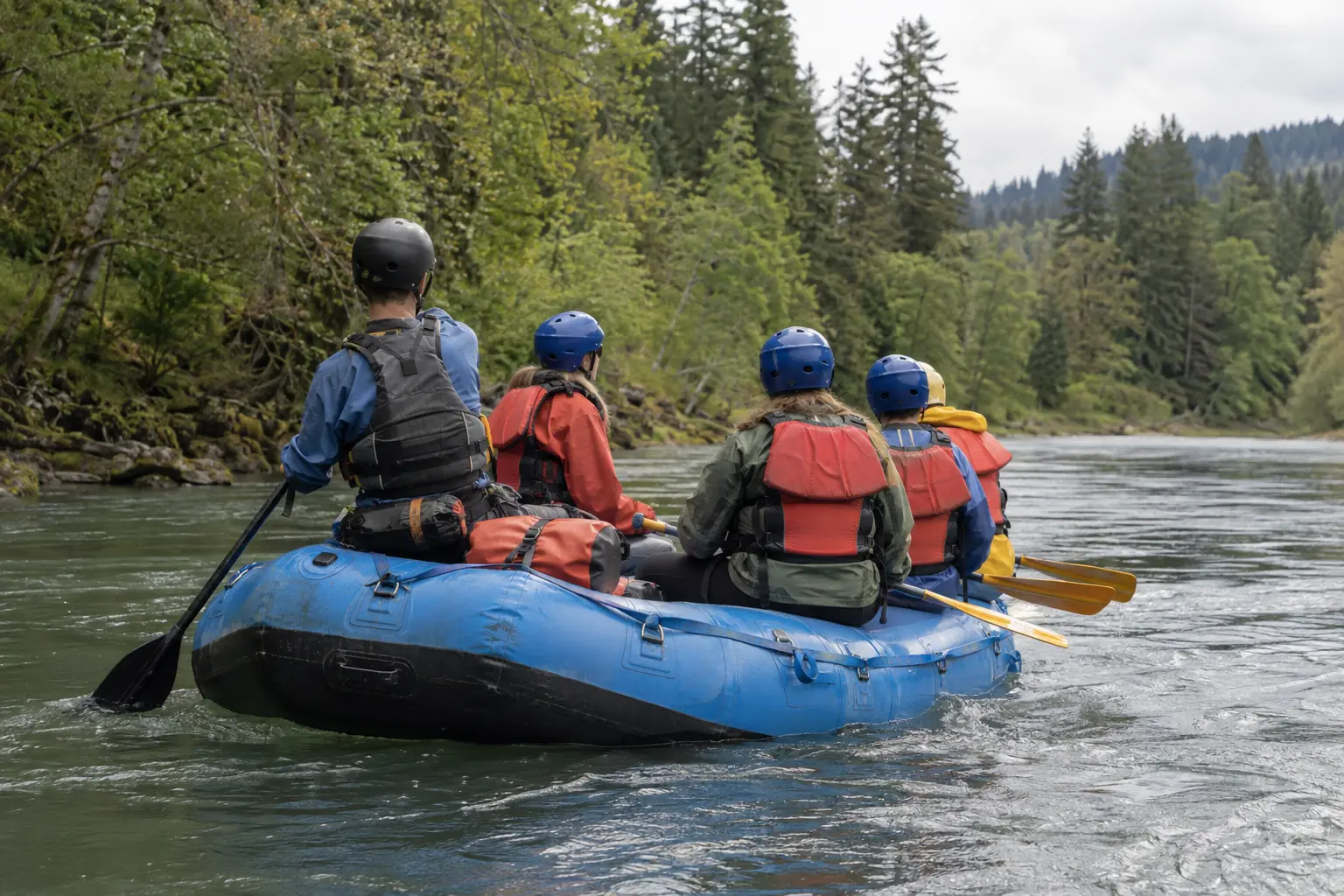
In a rapid your eyes see exactly the motion your body feels. Water, raft and crew all move together, the bank gives you a fixed reference, and you are usually paddling, which adds anticipation on top. Outfitters commonly report motion sickness as a rarity on the river. The flat sections invert all of that: slow rolling current, nothing to brace against, no task to keep you facing forward, and people reach for a phone or a conversation instead of the horizon.
Stopped or underway: which part is worse
The river version of the same rule. Moving water with something to do is the comfortable state; drifting slowly with nothing to do is where it creeps in.
Where to be on board
Paddle when you are invited to: active paddling is anticipation, the same protection a driver gets in a car. On the flat stretches keep your eyes on the banks and on the river ahead rather than down in the boat.
Going on a rafting trip? Set it up first
You will not want to be setting up an app once the boat is moving. Dizzout is a drug-free app that plays precisely calibrated audio through any headphones you already own, wired or Bluetooth, with relief in about 90 seconds. Free to try.
Heading out on the water? Check the trip first
Check your tripFree, two minutes, and it scores the trip you actually have ahead.
Put it on your phone before you go
Free to try, no card needed. Or go straight to the App Store or Google Play.
 Scan to open on your phone
On a computer? Dizzout installs on your phone. Scan the code, or open dizzout.com/get on your phone and it'll take you straight to the right store.
Know someone who gets motion sick?
Send them the app that helps stop it, drug-free, in about 90 seconds, works with any headphones. Free to try.
What helps on this trip
- Paddle whenever the guide invites you to. Doing the work is what turns the motion into something you anticipate.
- On flat stretches, keep your eyes on the bank and the river ahead rather than down into the boat.
- Leave the phone in the dry bag on the float sections. Reading a screen on slow rolling water is the classic way to spoil a good day.
- Plan for the drive, not the river. The winding shuttle road to the put-in is more likely to catch a carsick passenger than the rapids are.
- If it starts anyway, put your earbuds in once you are off the water. Dizzout is drug-free sound therapy designed to help after symptoms start, and it works with any headphones.
For what actually holds up under testing, see the remedy verdicts, and for the water itself rather than the boat, how rough your sea usually is. Anything you take before travelling is a question for a pharmacist or doctor.
Frequently asked questions
Can you get motion sickness white water rafting?
It is possible and it is rare. Outfitters and experienced rafters commonly report almost never seeing it, and the reason is that a rapid is the opposite of a motion sickness trigger: your eyes see the water, the raft and the crew moving exactly as your body feels them, the bank stays fixed in view, and you are usually paddling. The reports that exist come from the slow flat stretches rather than the whitewater.
Why do the rapids bother me less than the calm stretches?
Because the rapids give you everything the calm water takes away. In whitewater the motion is fast, obvious and matched to what you see, and you have a job to do that keeps you facing forward. On a flat float the raft turns slowly in the current, there is nothing to brace against, and people relax into a conversation or a phone, which puts their eyes inside a boat that is quietly rotating.
I get carsick easily, will rafting set me off?
Probably not, and this is the reassuring one in the set. Car sickness is a passenger's problem: motion you did not start and cannot see coming, usually with your eyes inside the vehicle. Rafting inverts that. You paddle, the water is right in front of you, and the bank gives your eyes a fixed reference all the way down. The part worth planning for is the winding shuttle drive to the put-in, which is a car problem rather than a river one.
Other trips and excursions
Related
- Seasickness: the full guideWhy ships do it, the steadiest cabin, and a survival kit for the crossing.
- Is your sea rough? Sea by seaEvery crossing in one table, roughest first, each with a month-by-month page.
- Cruise ships & motion sicknessNamed ships sorted by how much they move, grouped by cruise line.
- Feeling it right now: the 90-second stepsThree steps over 90 seconds, with a timer that waits if you lock the screen.
Sources & further reading
- https://www.outdoorfederation.com/does-white-water-rafting-cause-motion-sickness/
- https://www.advantagegrandcanyon.com/how-to-avoid-motion-sickness-while-rafting/
- https://www.tripadvisor.com/ShowTopic-g33446-i614-k8703872-My_Dear_Wife_gets_sea_sick_pretty_easy_Does_white_water-Glenwood_Springs_Colorado.html
- https://forums.paddling.com/t/motion-sickness/61151
Your next question, probably
Will the water itself be rough?
Sea by sea, month by month
If that is not your question:
Written from operator guidance, marine, aviation and specialist sources, and published passenger and participant reports as of September 2026. Risk levels describe a kind of trip, not any particular operator's craft, and conditions on the day matter more than the category does. Operator and brand names are trademarks of their respective owners; Dizzout is not affiliated with or endorsed by them. Sensitivity varies from person to person; this page is informational and not medical advice.