Tall ship voyage and seasickness: what to expect
A tall ship voyage is the one trip in this cluster where the honest answer has a timeline. Sail training organisations say it plainly: most people who are going to feel seasick do so in the first day or two, and the majority come right as their body adapts. The voyage is usually longer than the sickness.
Square-rigged or gaff sail training vessel · Day sails to multi-day offshore voyages · Reported seasickness risk: mixed, and it depends which part of the trip you are in.
- Low
- Moderate
- High
- Very high
Risk summarises what passengers, crews and published marine guidance commonly report for this kind of craft, not a measurement of any one operator's boat.
Key facts
- Sail training organisations state that most people who feel seasick do so in the first day or two of a voyage, and the majority recover as they acclimatise.
- Being useful on deck is the remedy the training organisations themselves give: work keeps your eyes on the horizon, while lying below removes it.
- Their guidance also warns that anxiety about seasickness, and watching shipmates be ill, genuinely make it more likely.
Try Dizzout free. Put it on your phone before you go, so it is there when you need it. Drug-free, any headphones.Free · works with any headphones · no account to try
Stop seasickness on the water. Free to try, no card needed. Or go straight to the App Store or Google Play.
Why a tall ship voyage sets people off
An offshore voyage takes you into open sea and keeps you there through whatever the passage serves up, which is a bigger dose than any day trip on this list. The first 24 to 48 hours are the exposure window: your balance system has not yet learned the ship's rhythm, and the classic mistakes stack up fast, too long below deck, an empty stomach, watching a shipmate be ill at the rail. Sail training crews treat all of it as routine. Their own guidance says worry and the sight of sick crewmates genuinely make it worse, that fresh air and the horizon help, and that the reliable remedy is the unglamorous one: time aboard.
First day or day three: which part is worse
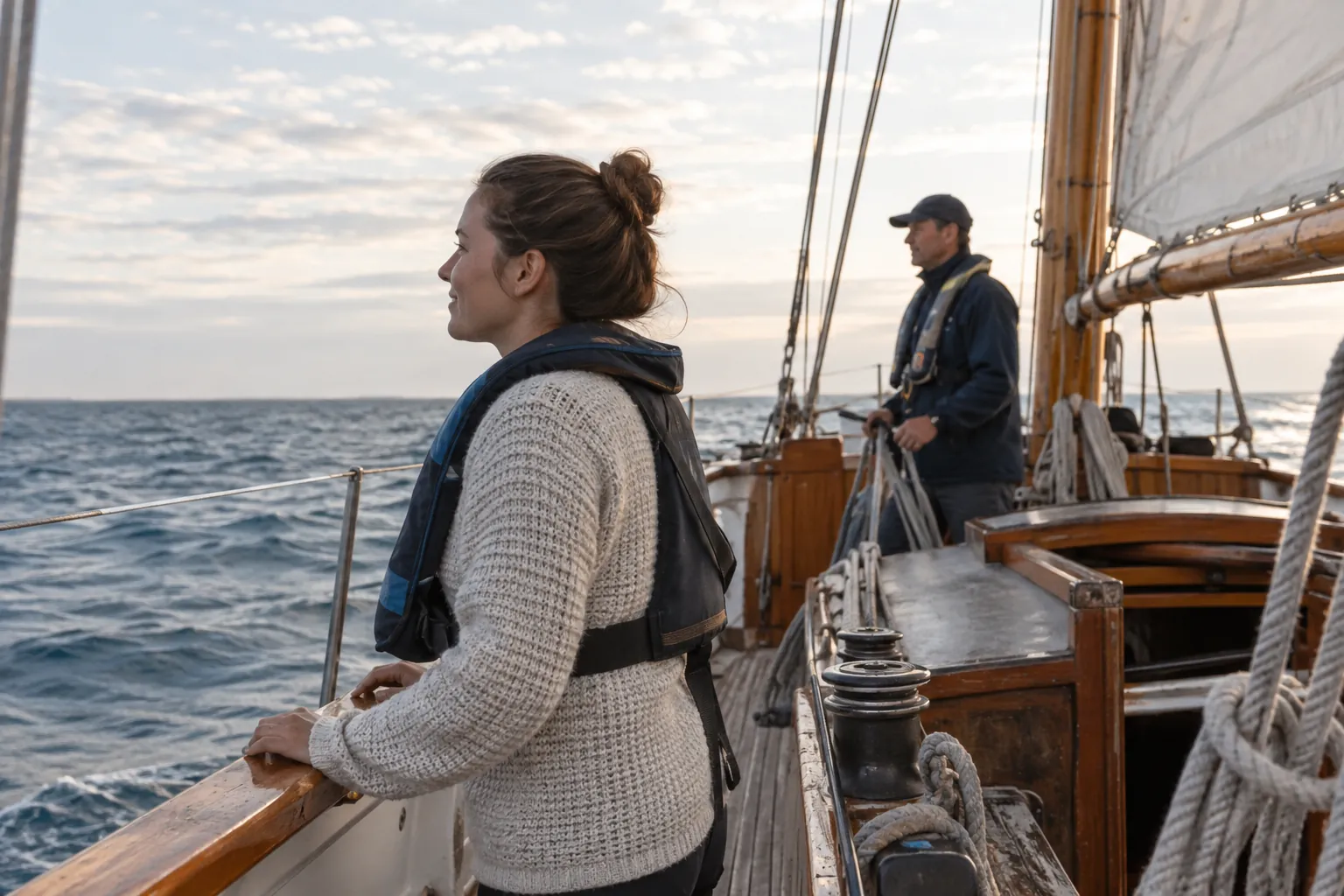
Day one against day three is this voyage's version of the question. The same swell that flattens half the trainees on the first afternoon barely registers by the third morning, because adaptation, the sea legs every sailor talks about, does the work no remedy can. Crews plan for it: the first-night watch rotations assume some of the watch will be at the rail, and nobody aboard treats it as an emergency or an embarrassment.
Where to be on board
On deck, in the working part of the ship, doing something. Sail training guidance is specific on this: being useful on deck, hauling, steering, keeping lookout, beats lying below every time, because it keeps your eyes on the horizon and your mind off your stomach, while the galley and the bunks take both away. When you must go below, make it quick, and get back into the air before the warmth and the closeness catch up with you.
Going on a tall ship voyage? Set it up first
You will not want to be setting up an app once the boat is moving. Dizzout is a drug-free app that plays precisely calibrated audio through any headphones you already own, wired or Bluetooth, with relief in about 90 seconds. Free to try.
Heading out on the water? Check the trip first
Check your tripFree, two minutes, and it scores the trip you actually have ahead.
Put it on your phone before you go
Free to try, no card needed. Or go straight to the App Store or Google Play.
 Scan to open on your phone
On a computer? Dizzout installs on your phone. Scan the code, or open dizzout.com/get on your phone and it'll take you straight to the right store.
Know someone who gets motion sick?
Send them the app that helps stop it, drug-free, in about 90 seconds, works with any headphones. Free to try.
What helps on this trip
- Give it two days before you judge the voyage. The adaptation timeline is real, crews plan around it, and day three commonly feels like a different sea.
- Volunteer for deck work early, especially the helm and lookout. Sail training guidance calls being useful on deck the best remedy aboard.
- Keep eating small and plain, and keep drinking water. The empty stomach makes it worse, per the same guidance.
- Stay out of the galley and away from the rail-side drama. Watching someone else be ill is itself a trigger, and the crews say so.
- Off watch, earbuds work fine in your bunk or on deck. If it starts, put them in: Dizzout is drug-free sound therapy designed to help after symptoms start, and it works with any headphones.
For what actually holds up under testing, see the remedy verdicts, and for the water itself rather than the boat, how rough your sea usually is. Anything you take before travelling is a question for a pharmacist or doctor.
Frequently asked questions
Will I be seasick for my whole tall ship voyage?
Almost certainly not, and this is the point the sail training organisations lead with: seasickness on a voyage is front-loaded. Most people who feel it do so in the first day or two, while their balance system learns the ship, and the majority recover well once acclimatised. Crews see it every voyage, plan the early watches around it, and treat it as weather rather than crisis. If you are choosing between a day sail and a longer voyage, know that the longer trip actually gives adaptation time to work for you.
What do tall ship crews actually do about seasick trainees?
Mostly they keep them on deck and keep them busy. The standard playbook from sail training guidance: fresh air rather than the bunk, eyes on the horizon, small amounts of food and water rather than fasting, and a job to do, because being useful on deck is the best remedy aboard. They also quietly manage the contagion problem, since worry and the sight of other people being ill both make it more likely. What they do not do is turn back: adaptation is the plan.
Is a tall ship worse for seasickness than a modern yacht?
The dose is different rather than the motion being worse. A traditional ship is heavy and slow-rolling, and many sailors find that easier than a light modern hull's quick snap. What makes a voyage harder than a day sail is exposure: you are offshore for days, through night watches and whatever the passage brings, with no afternoon return to the marina. That is exactly why the adaptation story matters here and barely applies to the sailing monohull page's day trips.
Other trips and excursions
Related
- Seasickness: the full guideWhy ships do it, the steadiest cabin, and a survival kit for the crossing.
- Is your sea rough? Sea by seaEvery crossing in one table, roughest first, each with a month-by-month page.
- Cruise ships & motion sicknessNamed ships sorted by how much they move, grouped by cruise line.
- Feeling it right now: the 90-second stepsThree steps over 90 seconds, with a timer that waits if you lock the screen.
Sources & further reading
- https://sailtraininginternational.org/blog/10-top-tips-avoid-seasickness/
- https://sailtraininginternational.org/faqs/
- https://classic-sailing.com/article/getting-ready-for-adventure/
- https://www.maybe-sailing.com/our-ships/before-you-sail/
- https://www.anotherworldadventures.com/embark-on-a-tall-ship-adventure-your-ultimate-guide-to-setting-sail-with-another-world-adventures/
Your next question, probably
Will the water itself be rough?
Sea by sea, month by month
If that is not your question:
Written from operator guidance, marine, aviation and specialist sources, and published passenger and participant reports as of September 2026. Risk levels describe a kind of trip, not any particular operator's craft, and conditions on the day matter more than the category does. Operator and brand names are trademarks of their respective owners; Dizzout is not affiliated with or endorsed by them. Sensitivity varies from person to person; this page is informational and not medical advice.