
Party boat and head boat and seasickness: what to expect
Party boat means two different trips. A fishing head boat anchors or drifts over structure for hours and inherits every problem a fishing charter has. A harbour party cruise stays in protected water and is closer to a dinner cruise.
Offshore head boat of 60 to 100 ft, or a flat harbour party cruiser · Head boats half or full day, harbour cruises 2 to 4 hours · Reported seasickness risk: mixed, and it depends which part of the trip you are in.
- Low
- Moderate
- High
- Very high
Risk summarises what passengers, crews and published marine guidance commonly report for this kind of craft, not a measurement of any one operator's boat.
Key facts
- The name covers two boats: an offshore fishing head boat, which anchors or drifts for hours, and a harbour party cruise, which stays in protected water.
- Head boats fish at anchor or on the drift as standard, so the stopped-hull motion is the trip rather than an interruption to it.
- Operator and marine guidance consistently names alcohol as the avoidable multiplier on both kinds of trip, and the advice is uniform: go easy early.
Try Dizzout free. Put it on your phone before you go, so it is there when you need it. Drug-free, any headphones.Free · works with any headphones · no account to try
Stop seasickness on the water. Free to try, no card needed. Or go straight to the App Store or Google Play.
Why a party boat sets people off
On a head boat you are stopped over a wreck or a reef for hours, rail to rail with other anglers, eyes down on your rig. That is the stopped-boat problem with crowding on top. On a harbour cruise the water is usually flat and the motion mild, but an enclosed dance floor takes away your horizon and the deck is busy. Both kinds share one factor that every operator and marine guidance page names as the avoidable multiplier: alcohol. Their advice is uniform, and it is worth taking on its own terms.
Stopped or underway: which part is worse
On the head boat, worse anchored or on the drift, which is where the fishing happens: anchoring and drifting over structure are the standard modes rather than the exception. On the harbour cruise it barely matters, because protected water is protected water and the wakes of passing traffic are the only real motion.
Where to be on board
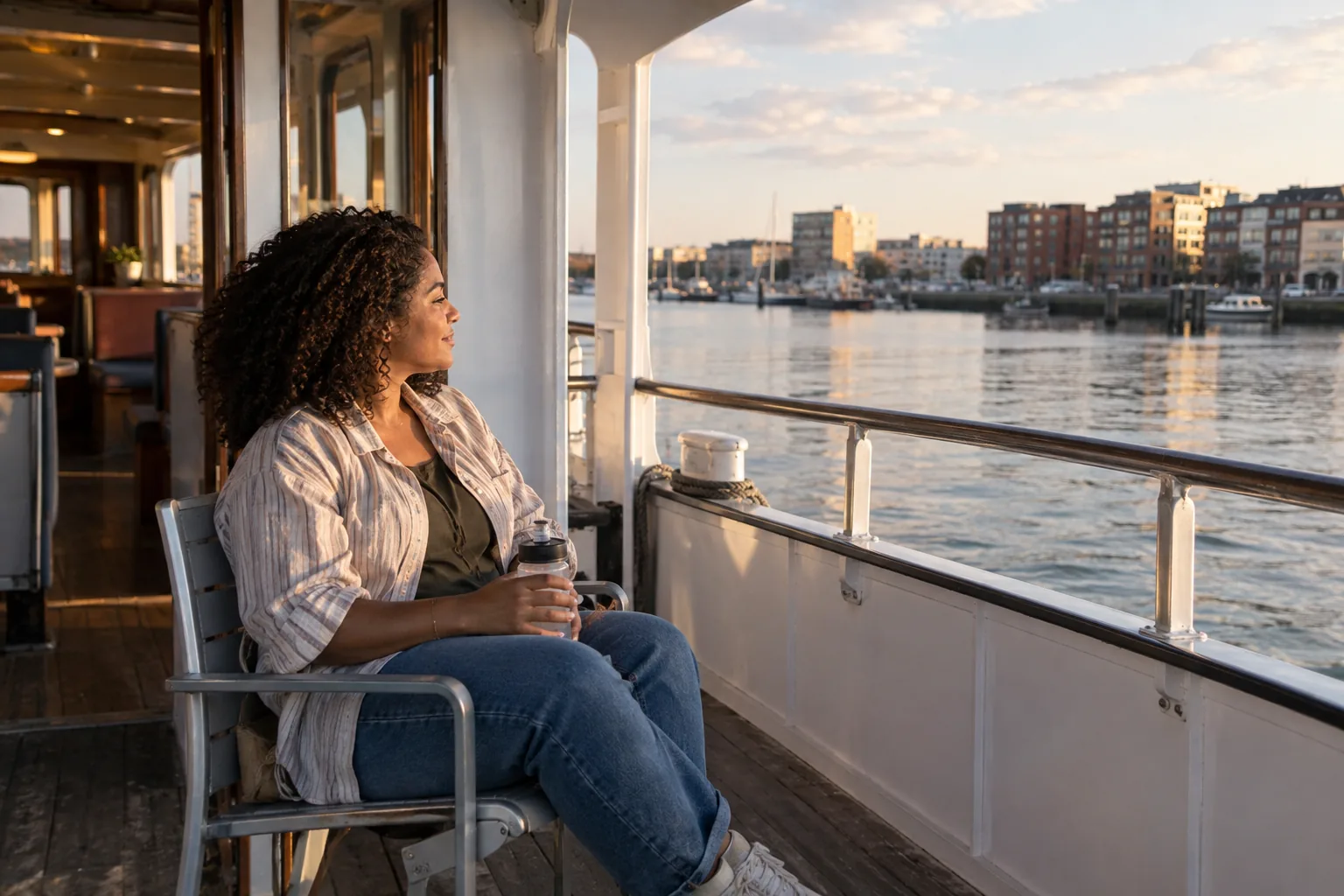
Head boat: fish midships rather than the bow or stern rails, and face the horizon between bites. Harbour cruise: stay on the open deck rather than the enclosed floor, and take a spot at the rail where you can see the shoreline.
Going on a party boat? Set it up first
You will not want to be setting up an app once the boat is moving. Dizzout is a drug-free app that plays precisely calibrated audio through any headphones you already own, wired or Bluetooth, with relief in about 90 seconds. Free to try.
Heading out on the water? Check the trip first
Check your tripFree, two minutes, and it scores the trip you actually have ahead.
Put it on your phone before you go
Free to try, no card needed. Or go straight to the App Store or Google Play.
 Scan to open on your phone
On a computer? Dizzout installs on your phone. Scan the code, or open dizzout.com/get on your phone and it'll take you straight to the right store.
Know someone who gets motion sick?
Send them the app that helps stop it, drug-free, in about 90 seconds, works with any headphones. Free to try.
What helps on this trip
- Work out which boat you booked. An offshore head boat and a harbour party cruise are rated differently here for good reason.
- Every operator tells you the same thing about drinking: go easy early. It is the one factor they all list as avoidable.
- On a head boat, take a rail spot midships rather than at the bow or stern, and lift your eyes to the horizon between bites.
- On a harbour cruise, stay on the open deck. The enclosed floor is warm, busy and horizon-free, which is the combination that catches people.
- If it starts anyway, put your earbuds in. Dizzout is drug-free sound therapy designed to help after symptoms start, and it works with any headphones.
For what actually holds up under testing, see the remedy verdicts, and for the water itself rather than the boat, how rough your sea usually is. Anything you take before travelling is a question for a pharmacist or doctor.
Frequently asked questions
How do I avoid getting seasick on a party boat?
Start by working out which boat it is. An offshore fishing head boat spends hours anchored or drifting over structure, which is the hardest kind of boat motion to sit through, so take a rail spot midships, stay on deck and lift your eyes to the horizon between bites. A harbour party cruise is mild by comparison; there the fix is to stay on the open deck rather than the enclosed floor. On both, operators say the same thing about drinking: go easy, especially early.
Does drinking make seasickness worse on a boat?
Operator and marine guidance is unanimous in advising against it, and it is the one factor every source lists as avoidable. We are not going to dress that up as a physiological mechanism we can point to, but the advice is consistent across the industry and it costs nothing to follow. If you know you are prone and you are heading offshore, the first hour is the one where the drinking is optional.
Is a fishing head boat rougher than a harbour party cruise?
Considerably, and it is not close. A head boat runs offshore and then anchors or drifts over bottom structure for hours, which is the motion people find hardest, and the fishing keeps your eyes down while it happens. A harbour party cruise stays inside sheltered water on a wide flat hull, where the main motion is the wake of passing traffic. Same name, two different days.
Other trips and excursions
Related
- Seasickness: the full guideWhy ships do it, the steadiest cabin, and a survival kit for the crossing.
- Is your sea rough? Sea by seaEvery crossing in one table, roughest first, each with a month-by-month page.
- Cruise ships & motion sicknessNamed ships sorted by how much they move, grouped by cruise line.
- Feeling it right now: the 90-second stepsThree steps over 90 seconds, with a timer that waits if you lock the screen.
Sources & further reading
Your next question, probably
Will the water itself be rough?
Sea by sea, month by month
If that is not your question:
Written from operator guidance, marine, aviation and specialist sources, and published passenger and participant reports as of September 2026. Risk levels describe a kind of trip, not any particular operator's craft, and conditions on the day matter more than the category does. Operator and brand names are trademarks of their respective owners; Dizzout is not affiliated with or endorsed by them. Sensitivity varies from person to person; this page is informational and not medical advice.