
Seaplane and motion sickness: what to expect
Ask people back from a Maldives seaplane transfer what got to them and it is rarely the flying. It is the float dock: boarding a machine that is bobbing on the water, in a cabin that is hot, loud and short on airflow, before and after a flight that is usually the smooth part.
Floatplane on resort transfers and harbour tours · Hops commonly 10 to 30 minutes in the air · Reported motion sickness risk: mixed, and it depends which part of the trip you are in.
- Low
- Moderate
- High
- Very high
Risk summarises what passengers, pilots and operator guidance commonly report for this kind of flight, not a measurement of any one operator.
Key facts
- Maldives transfer veterans report more motion sickness on the water phases, boarding and taxiing at the float dock, than in the air.
- The cabin is loud enough that guides tell you to bring earplugs, and hot, with poor airflow and little more than two small fans up front.
- The hops are short, commonly 10 to 30 minutes in the air, and in fair weather passengers compare the ride to an ordinary commercial flight.
Try Dizzout free. Put it on your phone before you go, so it is there when you need it. Drug-free, any headphones.Free · works with any headphones · no account to try
Stop seasickness on the water. Free to try, no card needed. Or go straight to the App Store or Google Play.
Why a seaplane sets people off
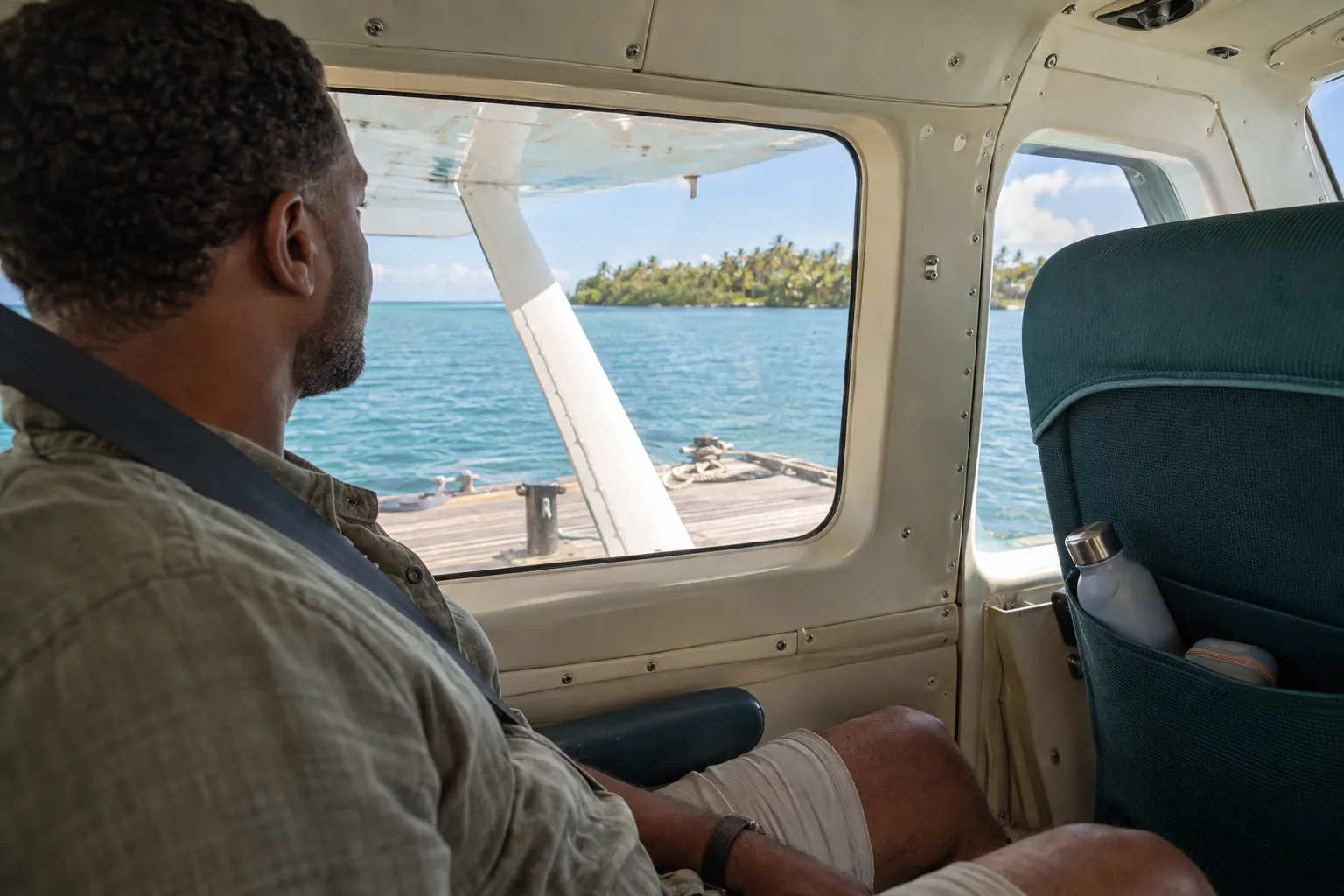
A seaplane spends more of your trip on the water than you expect: taxiing, loading at a floating platform, waiting for its slot, all of it bobbing with whatever chop is running. Travellers report feeling more motion sick on the water than in the air, and the cabin multiplies it: guides warn that it gets extremely loud, sometimes with windows open, and that airflow is poor, with little more than two small fans up front. Heat and noise are both known multipliers for nausea. The air itself is usually the anticlimax: passengers commonly compare the ride to a normal commercial flight, though on windy days these low, light aircraft do get bumped around, which is what the rough-ride threads are about.
On the water or in the air: which part is worse
The water phases are the queasy ones, which makes this the aviation entry that follows the cluster's boat rule most literally. A floatplane at the dock or taxiing is a small boat: it bobs, it swings, and you are inside a warm cabin with the horizon cut off by a wing. Airborne in fair weather it settles into an ordinary short flight. Windy afternoons roughen both halves at once, the chop on the water and the bumps in the air.
Where to be on board
Seating is generally assigned for weight and balance, so work with what you get: keep your face near the window, eyes on the horizon rather than down at a phone, and let the vents or fans reach you if you can. Bring earplugs, which the transfer guides tell you to pack anyway. On the water, treat it like the boat it briefly is: look out, breathe slowly, and remember the flight itself is short.
Going on a seaplane? Set it up first
A seaplane cabin is loud enough that the guides tell you to bring earplugs, so treat the app as a dockside tool rather than a mid-flight one. Put it on your phone for the jetty wait and the minutes after you step off the float. Dizzout is a drug-free app that plays precisely calibrated audio through any headphones you already own, with relief in about 90 seconds. Free to try.
Heading out on the water? Check the trip first
Check your tripFree, two minutes, and it scores the trip you actually have ahead.
Put it on your phone before you go
Free to try, no card needed. Or go straight to the App Store or Google Play.
 Scan to open on your phone
On a computer? Dizzout installs on your phone. Scan the code, or open dizzout.com/get on your phone and it'll take you straight to the right store.
Know someone who gets motion sick?
Send them the app that helps stop it, drug-free, in about 90 seconds, works with any headphones. Free to try.
What helps on this trip
- Pack earplugs. The transfer guides say so for comfort, and cutting the noise also removes one of the two big nausea multipliers in that cabin.
- Dress for heat and take water aboard. The other multiplier is the warm, still air, and there is not much ventilation to help you.
- On the water, use the boat rules: eyes to the horizon out the window, slow breathing, and no phone while it bobs.
- If you get a choice of departure, mornings are commonly the calmer slot, before the wind builds chop on the lagoon and bumps in the low air.
- The flight is loud and short, so the app is a dock and jetty tool here. Use Dizzout while you wait to board and again once you step off the float: it is drug-free sound therapy designed to help after symptoms start, and it works with any headphones.
For what actually holds up under testing, see the remedy verdicts, and for the water itself rather than the boat, how rough your sea usually is. Anything you take before travelling is a question for a pharmacist or doctor.
Frequently asked questions
Are Maldives seaplane transfers rough?
Usually not in the air: travellers commonly compare the flight itself to an ordinary commercial hop, and the legs are short, 10 to 30 minutes between islands. The parts people struggle with are on the water. The plane loads at a floating platform, bobs while it taxis and waits, and the cabin is hot and extremely loud with little airflow. On windy days both halves roughen at once, which is where the genuinely bumpy reports come from.
What should I bring on a seaplane if I get motion sick?
Earplugs first: the guides recommend them for everyone, and noise is a real nausea multiplier in a cabin this loud. Water and light clothing second, because heat and poor airflow are the other multiplier. Beyond that, treat the water phases like a small boat ride: eyes out the window to the horizon, slow breathing, phone away while it bobs at the dock. Anything you would take beforehand is a question for a pharmacist or doctor.
Is a seaplane better or worse than a speedboat transfer for motion sickness?
Travel guides comparing the two generally point sensitive travellers at the seaplane. A speedboat transfer of 45 minutes or more in choppy open water works you the whole way, while the seaplane's rough phases are the short bobbing stretches at each end and the flight is usually the smooth part. Neither is calm on every windy day, but the seaplane's exposure is shorter and the worst of it happens near the dock rather than mid-crossing.
Other trips and excursions
Related
- Seasickness: the full guideWhy ships do it, the steadiest cabin, and a survival kit for the crossing.
- Is your sea rough? Sea by seaEvery crossing in one table, roughest first, each with a month-by-month page.
- Cruise ships & motion sicknessNamed ships sorted by how much they move, grouped by cruise line.
- Feeling it right now: the 90-second stepsThree steps over 90 seconds, with a timer that waits if you lock the screen.
Sources & further reading
- https://periodicadventures.com/maldives-seaplane-transfer/
- https://www.tripadvisor.com/ShowTopic-g293953-i7445-k11290227-How_rough_are_seaplane_rides-Maldives.html
- https://www.tripadvisor.com/ShowTopic-g293953-i7445-k14634242-Seaplane-Maldives.html
- https://www.outofoffice.com/blog/seaplanes-or-speedboats-in-the-maldives-which-is-better/
- https://maldives-magazine.com/general-info/male-airport-maldives-transfers-speedboat-seaplane-domestic-flights.htm
Your next question, probably
Feeling rough right now?
The 60-second protocol: your eyes, the air and your breathing
If that is not your question:
Written from operator guidance, marine, aviation and specialist sources, and published passenger and participant reports as of September 2026. Risk levels describe a kind of trip, not any particular operator's craft, and conditions on the day matter more than the category does. Operator and brand names are trademarks of their respective owners; Dizzout is not affiliated with or endorsed by them. Sensitivity varies from person to person; this page is informational and not medical advice.