
Speedboat and RIB tour and seasickness: what to expect
A RIB tour is jarring rather than nauseating for most passengers, and the queasy moment is not the fast bit. It is the stop, when the boat sits for wildlife or a sight and wallows in its own leftover swell.
Rigid inflatable, planing deep-V · 30 minutes to 2 hours · Reported seasickness risk: mixed, and it depends which part of the trip you are in.
- Low
- Moderate
- High
- Very high
Risk summarises what passengers, crews and published marine guidance commonly report for this kind of craft, not a measurement of any one operator's boat.
Key facts
- RIB passengers commonly report the ride as bumpy rather than nauseating, and back strain is a more documented complaint than sickness.
- Motion research finds slow oscillation, around one rise and fall every few seconds, far more provocative than fast pounding.
- Stern seats take much less slam than bow seats on a planing RIB.
Try Dizzout free. Put it on your phone before you go, so it is there when you need it. Drug-free, any headphones.Free · works with any headphones · no account to try
Stop seasickness on the water. Free to try, no card needed. Or go straight to the App Store or Google Play.
Why a RIB tour sets people off
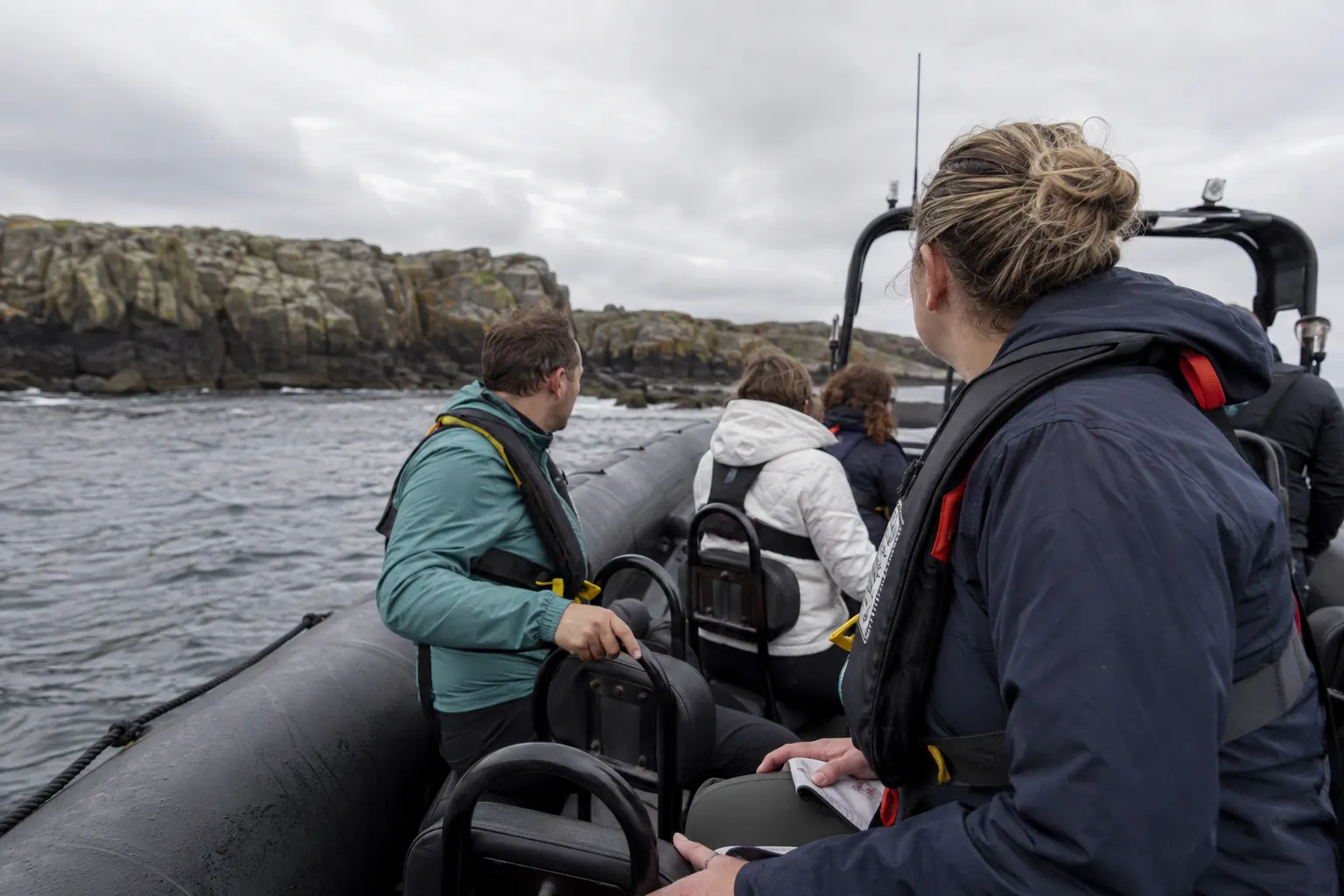
At speed a planing rigid inflatable delivers hard, fast slams, plus wind, spray and an unobstructed horizon. Passengers commonly describe that as bumpy but not sickening, which matches what motion research has found repeatedly: fast, sharp movement is far less provocative than slow rolling. Peak sickness sits with the slow stuff, roughly one long rise and fall every few seconds, and that is exactly what a stopped RIB does while it bobs in its own wake. Back strain is the more documented complaint on these trips than nausea.
Stopped or underway: which part is worse
Same rule as the rest of the fleet, despite the very different ride: the stop is the queasy part. Underway a RIB is fast, breezy and predictable. Stopped, it wallows.
Where to be on board
Seats toward the stern take far less slam than the bow. Face forward, keep your knees bent to absorb the impacts, and watch the water ahead so your body can anticipate each wave, which is the same protection a driver gets.
Going on a RIB tour? Set it up first
You will not want to be setting up an app once the boat is moving. Dizzout is a drug-free app that plays precisely calibrated audio through any headphones you already own, wired or Bluetooth, with relief in about 90 seconds. Free to try.
Heading out on the water? Check the trip first
Check your tripFree, two minutes, and it scores the trip you actually have ahead.
Put it on your phone before you go
Free to try, no card needed. Or go straight to the App Store or Google Play.
 Scan to open on your phone
On a computer? Dizzout installs on your phone. Scan the code, or open dizzout.com/get on your phone and it'll take you straight to the right store.
Know someone who gets motion sick?
Send them the app that helps stop it, drug-free, in about 90 seconds, works with any headphones. Free to try.
What helps on this trip
- Sit toward the stern. The bow takes the hardest slams on a planing hull, and the difference over an hour is large.
- Watch the water ahead rather than the person next to you. Seeing the next wave arrive is what lets your body brace for it.
- Keep your knees bent and stay loose. Riding a RIB stiff is what turns a bumpy trip into a sore one.
- The stops are the part to manage: keep your eyes on the horizon while the boat bobs, rather than down at a camera.
- If it starts anyway, put your earbuds in. Dizzout is drug-free sound therapy designed to help after symptoms start, and it works with any headphones.
For what actually holds up under testing, see the remedy verdicts, and for the water itself rather than the boat, how rough your sea usually is. Anything you take before travelling is a question for a pharmacist or doctor.
Frequently asked questions
Do RIB boat rides make you seasick?
Less often than people expect. The usual passenger report is that a RIB is bumpy, wet and physically jarring but not especially nauseating, because the ride is fast and the horizon, the wind and the water ahead are all right there. The queasy moments come when the boat slows or stops for wildlife and sits bobbing in swell. Operators of these tours make the same case, so read them with that in mind, but the passenger accounts agree.
Is a fast boat better or worse for motion sickness than a slow one?
Slower is not automatically gentler. Motion sickness research has consistently found slow oscillation, roughly one rise and fall every few seconds, to be the most provocative kind of movement, with fast, sharp motion markedly less so. That matches what RIB passengers describe: the high-speed run is jarring but rarely sickening, and the difficult moments are when the boat slows down. It is also why a stopped hull rolling in swell is harder work than the run out to the site.
Where is the smoothest seat on a RIB?
Toward the stern. On a planing hull the bow rises and drops furthest and lands hardest, so the front seats take the worst of the slamming, while the back of the boat rides comparatively flat. Face forward, keep your knees bent so your legs take the impact rather than your spine, and watch the water ahead so each wave is something you saw coming.
Other trips and excursions
Related
- Seasickness: the full guideWhy ships do it, the steadiest cabin, and a survival kit for the crossing.
- Is your sea rough? Sea by seaEvery crossing in one table, roughest first, each with a month-by-month page.
- Cruise ships & motion sicknessNamed ships sorted by how much they move, grouped by cruise line.
- Feeling it right now: the 90-second stepsThree steps over 90 seconds, with a timer that waits if you lock the screen.
Sources & further reading
- https://newenglandecoadventures.com/2024/02/22/the-best-boat-for-seasickness-why-a-rigid-hull-inflatable-boat-rib-is-your-solution/
- https://jessicalynnwrites.com/2026/01/rib-boat-tour-in-norway-what-its-really-like/
- https://www.gransnet.com/forums/chat/1312184-Advice-please-about-trip-on-RIB-rigid-inflatable-boat
- https://pubmed.ncbi.nlm.nih.gov/11277284/
- https://www.ribsforsale.com/rough-water-rib-handling-part-1/
Your next question, probably
Will the water itself be rough?
Sea by sea, month by month
If that is not your question:
Written from operator guidance, marine, aviation and specialist sources, and published passenger and participant reports as of September 2026. Risk levels describe a kind of trip, not any particular operator's craft, and conditions on the day matter more than the category does. Operator and brand names are trademarks of their respective owners; Dizzout is not affiliated with or endorsed by them. Sensitivity varies from person to person; this page is informational and not medical advice.