
Tourist submarine and seasickness: what to expect
A tourist submarine is the strangest risk profile in this cluster: the deeper you go, the calmer it gets. Operators answer the seasickness question the same way everywhere, from Hawaii to Barbados: not a problem once submerged. The trigger windows are the shuttle boat out and the bobbing minutes on the surface while you board.
Battery-powered passenger submarine, shuttle boat transfer · About 90 minutes end to end, roughly half of it submerged · Reported seasickness risk: mixed, and it depends which part of the trip you are in.
- Low
- Moderate
- High
- Very high
Risk summarises what passengers, crews and published marine guidance commonly report for this kind of craft, not a measurement of any one operator's boat.
Key facts
- Operators state that seasickness is not a problem once a submarine submerges: at depth there is very little of the surface's pitching and rolling.
- The reported trigger windows are the shuttle boat crossing and the bobbing surface wait during boarding, and crews keep sick bags aboard for them.
- The big reef tours run about 90 minutes end to end and dive to around 100 feet, and the submerged portion is commonly described as the calmest part.
Try Dizzout free. Put it on your phone before you go, so it is there when you need it. Drug-free, any headphones.Free · works with any headphones · no account to try
Stop seasickness on the water. Free to try, no card needed. Or go straight to the App Store or Google Play.
Why a tourist submarine sets people off
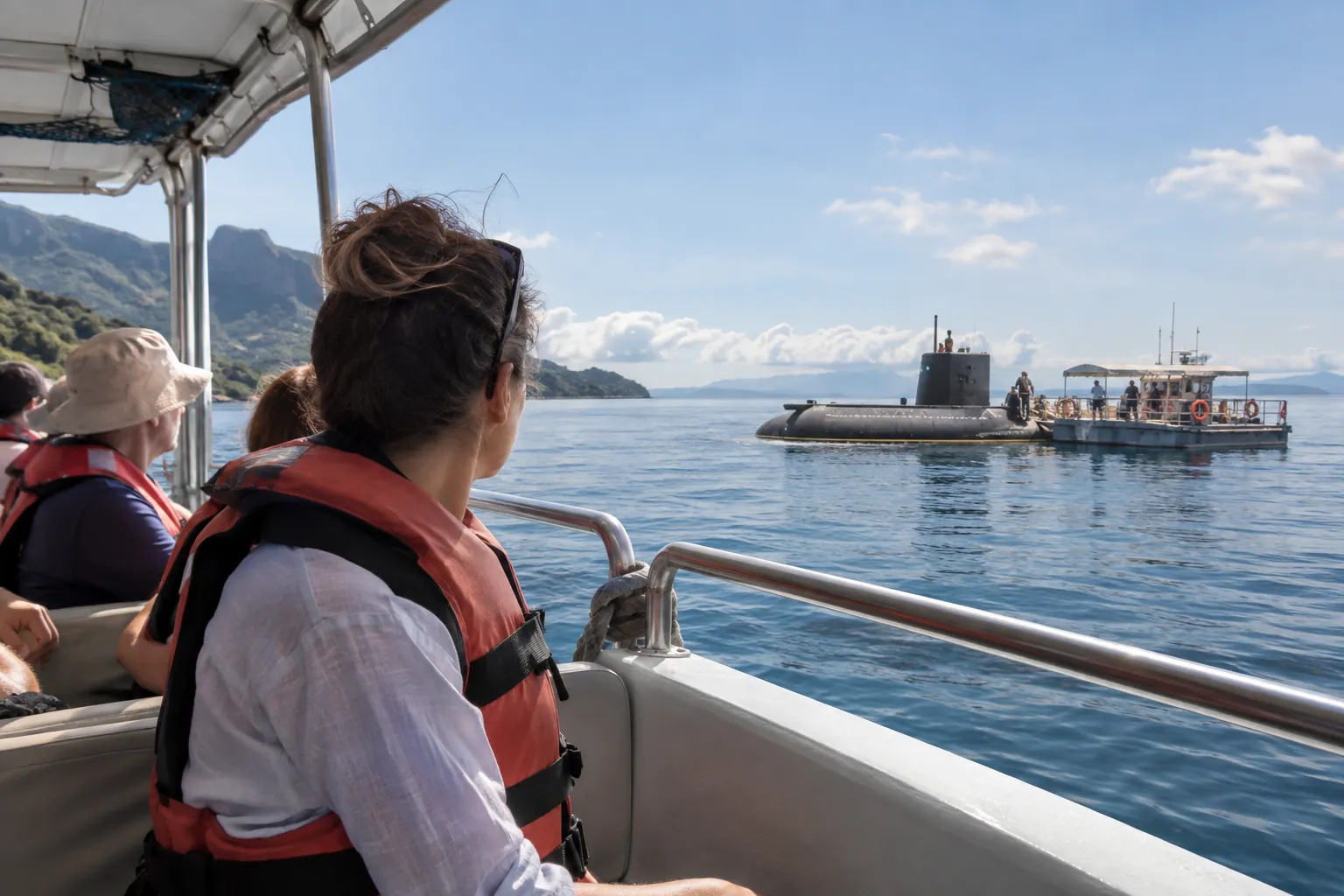
Waves are a surface phenomenon. A submarine at depth moves through water that is far steadier than anything above it, with little of the pitching and rolling that gets people on boats, which is why operators state flatly that seasickness is not a problem inside. Your exposure comes earlier: most tours run a shuttle boat out to the dive site, a short, often choppy crossing, and then transfer you down a ladder into a hull that is still sitting on the surface, rocking in the same chop, while everyone files aboard. That enclosed, portholed wait on the surface is the moment sensitive passengers name, and crews keep sick bags aboard for exactly it.
On the surface or submerged: which part is worse
Backwards, compared with everything else here: the submarine's surface time is its anchored-and-rolling state, and submerging is what getting underway does for a boat. First-person accounts follow the pattern closely, a choppy ten-minute shuttle ride, a rocking transfer, then stillness as the ballast tanks flood and the sea goes quiet around you. Whatever built up on the surface tends to ease once the motion stops, and the ride at depth, around 100 feet on the big reef tours, is commonly described as the calmest part of the day.
Where to be on board
Treat the shuttle boat as the trip: sit midships in the open air with the horizon in view, and board the submarine without lingering in the queue if you can. Inside, seats face the portholes; watching the reef go by gives your eyes a steady reference once submerged, and the descent itself is smooth. The surface wait is short, so slow breathing and a fixed gaze out the porthole cover most of it.
Going on a tourist submarine? Set it up first
You will not want to be setting up an app once the boat is moving. Dizzout is a drug-free app that plays precisely calibrated audio through any headphones you already own, wired or Bluetooth, with relief in about 90 seconds. Free to try.
Heading out on the water? Check the trip first
Check your tripFree, two minutes, and it scores the trip you actually have ahead.
Put it on your phone before you go
Free to try, no card needed. Or go straight to the App Store or Google Play.
 Scan to open on your phone
On a computer? Dizzout installs on your phone. Scan the code, or open dizzout.com/get on your phone and it'll take you straight to the right store.
Know someone who gets motion sick?
Send them the app that helps stop it, drug-free, in about 90 seconds, works with any headphones. Free to try.
What helps on this trip
- Manage the shuttle crossing like any small boat hop: midships, outside, horizon, no phone.
- Keep the surface wait short and calm: board when called, settle into your seat, fix your eyes out the porthole and slow your breathing until the descent starts.
- Once submerged, let the stillness do its work. The motion that caused the trouble is gone, and most passengers settle quickly.
- Book the morning tour if the forecast is breezy: the shuttle crossing and the surface transfer both ride easier before the wind builds.
- Earbuds work fine on the shuttle and in the cabin. If the crossing starts it, put them in: Dizzout is drug-free sound therapy designed to help after symptoms start, and it works with any headphones.
For what actually holds up under testing, see the remedy verdicts, and for the water itself rather than the boat, how rough your sea usually is. Anything you take before travelling is a question for a pharmacist or doctor.
Frequently asked questions
Do you get seasick on a tourist submarine?
Underwater, almost never: operators across Hawaii, the Caribbean and beyond answer this question in their FAQs, and the answer is that a submerged submarine sits in water far steadier than the surface, with very little side-to-side movement. The honest caveats are the edges of the trip: the shuttle boat out to the dive site can be choppy, and the submarine rocks on the surface while passengers board. If you know you are prone, those two short windows are what to prepare for.
Why do I feel better when the submarine dives?
Because the motion that was bothering you belongs to the surface. Waves and chop fade quickly with depth, so as the submarine descends the rocking stops, your inner ear settles, and the porthole gives your eyes a steady reef to hold onto. Divers report the same relief on descent, and the physics is identical. It is the one trip in this cluster where the fix for the queasy part is simply to carry on with the tour.
How do you get on the submarine, and is that part rough?
On most of the big reef tours you ride a shuttle boat from the pier to the dive site, about ten minutes and sometimes choppy, then step across and climb down a ladder while the submarine sits on the surface. That surface stretch is the rockiest part of the day: the hull bobs in the chop while everyone boards. It is short, the crew hands you down, and once the hatch closes and the descent starts the motion fades within moments.
Other trips and excursions
Related
- Seasickness: the full guideWhy ships do it, the steadiest cabin, and a survival kit for the crossing.
- Is your sea rough? Sea by seaEvery crossing in one table, roughest first, each with a month-by-month page.
- Cruise ships & motion sicknessNamed ships sorted by how much they move, grouped by cruise line.
- Feeling it right now: the 90-second stepsThree steps over 90 seconds, with a timer that waits if you lock the screen.
Sources & further reading
- https://www.tripadvisor.com/FAQ_Answers-g60872-d1459434-t2985959-Is_motion_sickness_an_issue.html
- https://www.honolulumagazine.com/we-tried-it-atlantis-submarines-hawaii/
- https://www.tripadvisor.com/FAQ_Answers-g60982-d581506-t8097425-How_about_seasickness_I_have_been_on_a_fishing.html
- https://www.fodors.com/community/united-states/likelihood-of-getting-seasick-on-a-submarine-455279/
- https://www.tripadvisor.com/FAQ_Answers-g147263-d283571-t5464798-Hi_i_want_to_go_on_this_tour_but_my_partner.html
Your next question, probably
Will the water itself be rough?
Sea by sea, month by month
If that is not your question:
Written from operator guidance, marine, aviation and specialist sources, and published passenger and participant reports as of September 2026. Risk levels describe a kind of trip, not any particular operator's craft, and conditions on the day matter more than the category does. Operator and brand names are trademarks of their respective owners; Dizzout is not affiliated with or endorsed by them. Sensitivity varies from person to person; this page is informational and not medical advice.