Venice gondola and seasickness: what to expect
Travellers who get seasick ask about Venice constantly, and the forum consensus is kinder than they expect: in the narrow back canals a gondola barely moves. The one variable that matters is the route, because the Grand Canal adds the wakes of every vaporetto and taxi that passes.
Flat-bottomed lagoon craft, rowed at walking pace · The standard ride is about 30 minutes · Reported seasickness risk: commonly reported as one of the easier trips in this guide.
- Low
- Moderate
- High
- Very high
Risk summarises what passengers, crews and published marine guidance commonly report for this kind of craft, not a measurement of any one operator's boat.
Key facts
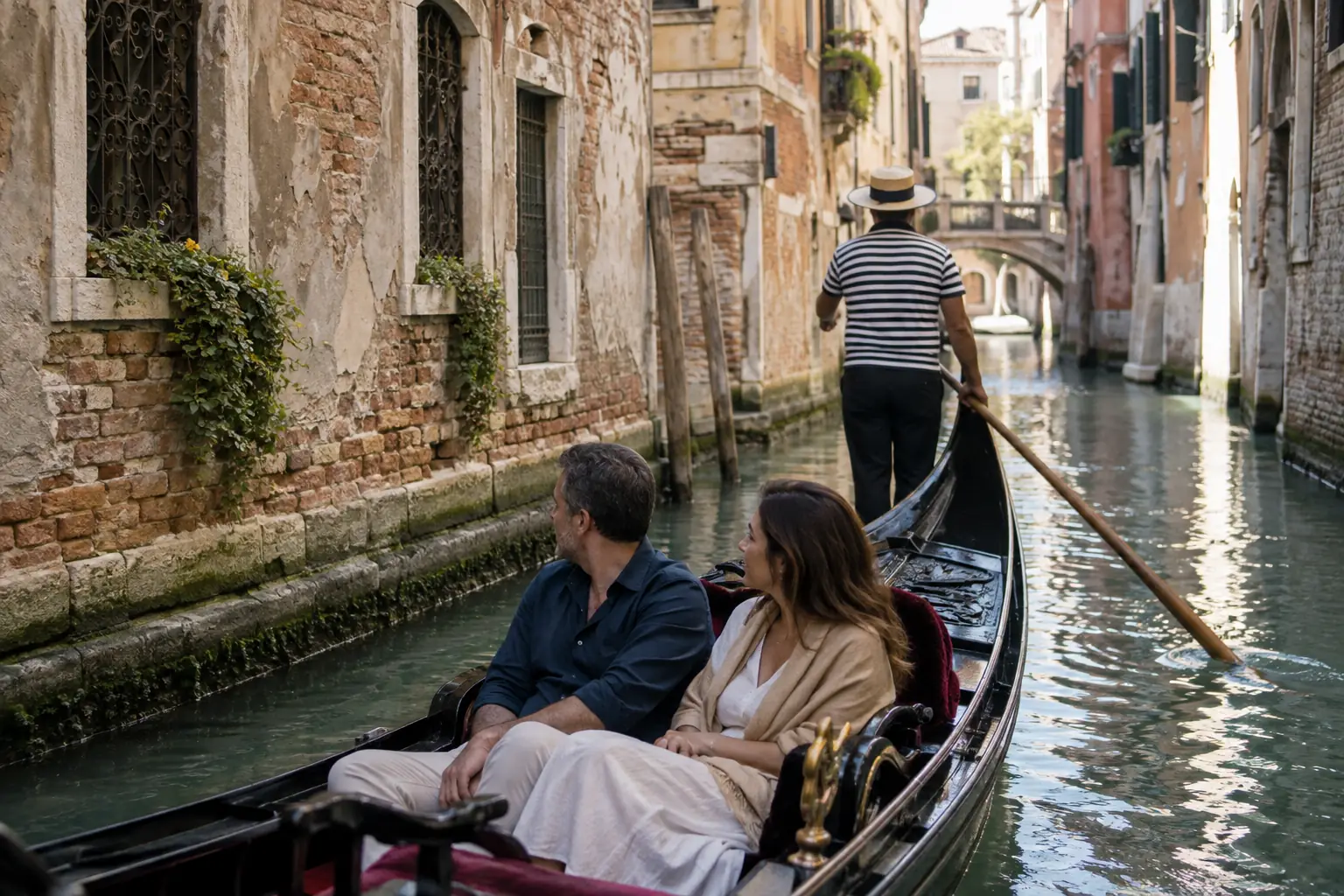
- In the sheltered back canals a gondola ride is commonly reported as near-still, with buildings close on both sides as a constant visual reference.
- The motion travellers do report comes from traffic wakes on the Grand Canal and the open lagoon edges, and from the floating boarding pontoons.
- The standard ride runs about 30 minutes, and morning rides catch the calmest water before the day's boat traffic builds.
Try Dizzout free. Put it on your phone before you go, so it is there when you need it. Drug-free, any headphones.Free · works with any headphones · no account to try
Stop seasickness on the water. Free to try, no card needed. Or go straight to the App Store or Google Play.
Why a gondola ride sets people off
A gondola is a flat-bottomed craft rowed at walking pace, and in the sheltered side canals there is simply not much motion to convert into sickness: the water is close to still, buildings a few metres away give your eyes a constant reference, and the standard ride lasts about half an hour. The exception travellers report is traffic wake. The Grand Canal and the open stretches near the lagoon carry a steady churn of vaporetti, taxis and barges, and their crossing wakes put a bob and slap into the ride that sensitive passengers notice. Some also report the floating boarding pontoons moving more than the boats themselves.
Back canals or the Grand Canal: which ride is worse
Route, not phase, is the split here: back canals against the Grand Canal. A ride that stays in the quiet network behind the main artery is commonly described as barely perceptible motion, while a full Grand Canal transit in mid-afternoon traffic is the version with chop. Morning rides catch calmer water on both, before the day's traffic builds.
Where to be on board
Sit low and settled where the gondolier puts you, and pick your route instead of your seat: ask for the quiet back canals, or a short Grand Canal stretch bracketed by side canals, and go in the morning when the water is calmest. Keep your eyes on the buildings sliding past rather than down at a phone screen while afloat.
Going on a gondola ride? Set it up first
You will not want to be setting up an app once the boat is moving. Dizzout is a drug-free app that plays precisely calibrated audio through any headphones you already own, wired or Bluetooth, with relief in about 90 seconds. Free to try.
Heading out on the water? Check the trip first
Check your tripFree, two minutes, and it scores the trip you actually have ahead.
Put it on your phone before you go
Free to try, no card needed. Or go straight to the App Store or Google Play.
 Scan to open on your phone
On a computer? Dizzout installs on your phone. Scan the code, or open dizzout.com/get on your phone and it'll take you straight to the right store.
Know someone who gets motion sick?
Send them the app that helps stop it, drug-free, in about 90 seconds, works with any headphones. Free to try.
What helps on this trip
- Ask the gondolier for the back-canal route, which regulars recommend to sensitive passengers anyway: it is also the quieter, prettier ride.
- Go in the morning, when travellers report the water at its calmest and the traffic lightest.
- Board deliberately: the floating pontoons and the step into the boat move more than the ride will, so take the offered hand and settle before pushing off.
- Watch the city, not your phone. The buildings a few metres away are the steadiest visual anchor any trip in this cluster offers.
- Earbuds are no crime in Venice. If the lagoon stretch gets to you, put them in: Dizzout is drug-free sound therapy designed to help after symptoms start, and it works with any headphones.
For what actually holds up under testing, see the remedy verdicts, and for the water itself rather than the boat, how rough your sea usually is. Anything you take before travelling is a question for a pharmacist or doctor.
Frequently asked questions
Can you get seasick on a Venice gondola?
It is one of the questions Venice forums field most often from prone travellers, and the consensus is reassuring: in the narrow back canals the ride is close to motionless, and even self-described easy cases report no trouble. The versions that generate complaints involve the Grand Canal and the lagoon edges, where the wakes of passing vaporetti, taxis and barges put a bob into the ride. Pick a back-canal route and a morning slot and there is very little left to feel.
Is the Grand Canal rough in a gondola?
Rough is too strong, but it is the lively version. The Grand Canal is Venice's main road, and every vaporetto, water taxi and delivery barge that passes leaves a wake that a flat-bottomed gondola rides over as a bob and a slap. Mid-afternoon, with traffic at its peak, sensitive passengers notice it; early morning, travellers describe the same stretch as far calmer. If you want the famous views without the churn, ask for a route that crosses the Grand Canal briefly rather than parading down it.
Gondola or vaporetto: which is easier if I get motion sick?
For most prone travellers, the gondola on a back-canal route is the gentler experience: slower, lower, and on stiller water than the main artery the vaporetto lines follow. What travellers report struggling with on the vaporetto side is less the boat than the floating platforms you wait on, which rock underfoot with every wake. Whichever you use, the same two levers apply: quieter water and quieter hours.
Other trips and excursions
Related
- Seasickness: the full guideWhy ships do it, the steadiest cabin, and a survival kit for the crossing.
- Is your sea rough? Sea by seaEvery crossing in one table, roughest first, each with a month-by-month page.
- Cruise ships & motion sicknessNamed ships sorted by how much they move, grouped by cruise line.
- Feeling it right now: the 90-second stepsThree steps over 90 seconds, with a timer that waits if you lock the screen.
Sources & further reading
- https://www.tripadvisor.com/ShowTopic-g187870-i57-k1806619-Is_it_possible_to_get_sea_sick_in_Venice-Venice_Veneto.html
- https://www.fodors.com/community/europe/is-sea-sickness-a-factor-in-venice-260643/
- https://community.ricksteves.com/travel-forum/italy/venice-sea-sickness
- https://fullsuitcase.com/venice-gondola-ride/
- https://www.tripadvisor.com/ShowTopic-g187870-i57-k13376521-Motion_sickness_on_vaparettos-Venice_Veneto.html
Your next question, probably
Will the water itself be rough?
Sea by sea, month by month
If that is not your question:
Written from operator guidance, marine, aviation and specialist sources, and published passenger and participant reports as of September 2026. Risk levels describe a kind of trip, not any particular operator's craft, and conditions on the day matter more than the category does. Operator and brand names are trademarks of their respective owners; Dizzout is not affiliated with or endorsed by them. Sensitivity varies from person to person; this page is informational and not medical advice.