
Canal boat and narrowboat and seasickness: what to expect
People who get seasick ask about canal trips before booking, from Amsterdam tour boats to week-long narrowboat hires, and the honest answer is that this is about the least provocative way to be afloat: still water, a flat-bottomed hull, and a top speed at a brisk walk.
Flat-bottomed inland craft at walking pace · Hour-long city cruises to week-long hires · Reported seasickness risk: commonly reported as one of the easier trips in this guide.
- Low
- Moderate
- High
- Very high
Risk summarises what passengers, crews and published marine guidance commonly report for this kind of craft, not a measurement of any one operator's boat.
Key facts
- Canal water is effectively still and narrowboats travel at about 4 miles per hour, so boating guides call seasickness aboard relatively uncommon.
- The exceptions are the non-canal stretches: river sections with current, wind and passing traffic, and routes that cross natural lakes or lochs.
- City canal tour boats are wide, flat and slow, and sensitive travellers who ask about them beforehand report trouble-free trips.
Try Dizzout free. Put it on your phone before you go, so it is there when you need it. Drug-free, any headphones.Free · works with any headphones · no account to try
Stop seasickness on the water. Free to try, no card needed. Or go straight to the App Store or Google Play.
Why a canal boat sets people off
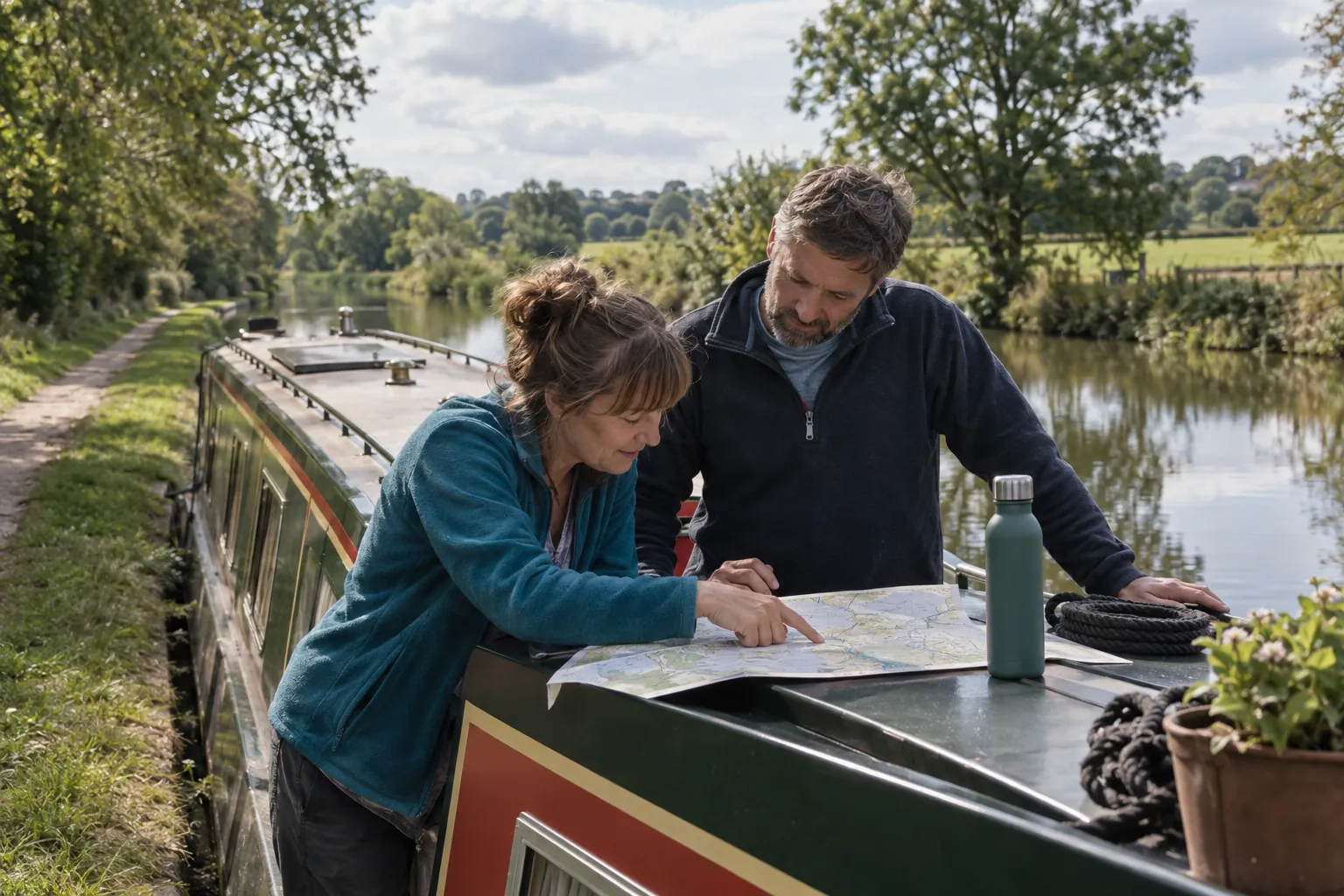
Mostly it cannot. Canal water sits still between locks, a narrowboat's legal crawl is about 4 miles per hour, and the bank with its towpath and trees is never more than a few metres from your eyes, so nothing your inner ear feels lacks a matching visual. Boating guides on exactly this question call seasickness on the canal network relatively uncommon, and the sensitive travellers who ask about city canal tours report coming back fine. The exceptions the same guides name are the places a canal route stops being a canal: river sections, where current, wind and passing traffic put real movement into a mooring, and routes that cross natural lakes and lochs, which carry genuine chop on a windy day.
Canals or river sections: which part is worse
Neither state does much on the canal itself. The distinction that matters is canal against river: a rural canal mooring is as still as water gets, while a river mooring can move all night when tide, rain or wind is working, and boaters describe the difference bluntly. If your hire route includes a river stretch or a loch crossing, that is the section to time for calm weather, and the canal miles either side of it will feel like dry land again.
Where to be on board
Anywhere aboard: at these speeds there is no rough seat. Steer if you are offered the tiller, watch the bank slide past, and treat lock work as the entertainment it is. The only positioning decision with any stakes is where you moor for the night on a river section, and sheltered, slack water is the whole trick.
Going on a canal boat? Set it up first
You will not want to be setting up an app once the boat is moving. Dizzout is a drug-free app that plays precisely calibrated audio through any headphones you already own, wired or Bluetooth, with relief in about 90 seconds. Free to try.
Heading out on the water? Check the trip first
Check your tripFree, two minutes, and it scores the trip you actually have ahead.
Put it on your phone before you go
Free to try, no card needed. Or go straight to the App Store or Google Play.
 Scan to open on your phone
On a computer? Dizzout installs on your phone. Scan the code, or open dizzout.com/get on your phone and it'll take you straight to the right store.
Know someone who gets motion sick?
Send them the app that helps stop it, drug-free, in about 90 seconds, works with any headphones. Free to try.
What helps on this trip
- Book with confidence: this is the trip guides point to when someone seasick-prone still wants a boating holiday.
- Check the route map for river sections and loch crossings, and plan those legs for settled weather rather than pushing through a windy day.
- Moor for the night on canal rather than river when you have the choice, or pick the slackest, most sheltered river spot available.
- Take the tiller. Steering gives you the driver's protection on the one vehicle where learning it takes minutes.
- Keep the earbuds packed anyway. If a loch crossing or a rolly river mooring surprises you, put them in: Dizzout is drug-free sound therapy designed to help after symptoms start, and it works with any headphones.
For what actually holds up under testing, see the remedy verdicts, and for the water itself rather than the boat, how rough your sea usually is. Anything you take before travelling is a question for a pharmacist or doctor.
Frequently asked questions
Can you get seasick on a canal boat?
On the canal itself, barely: the water is still, the boat moves at about 4 miles per hour, and the bank is always in view as a steady reference, which is why the boating guides that field this question call it relatively uncommon. The honest exceptions are the stretches where your route leaves the canal proper: rivers, where current and passing boats put movement into the water, and natural lakes and lochs, which can chop up in wind. A route without those is as close to motion-free as boating gets.
Are Amsterdam canal cruises okay for someone who gets seasick?
The travellers who ask this before booking generally come back reporting no trouble at all, including self-described easy cases. City canal tour boats are wide, flat-bottomed and slow, the water is enclosed and still, and the buildings a few metres away give your eyes constant confirmation of every small movement. It is closer to a moving room than a boat ride. If open water is what undoes you, a ringed city canal has none to offer.
Which parts of a narrowboat holiday have real motion?
The river sections and the big natural waters, and boaters are direct about both. A mooring on a tidal or flowing river can shift and tug all night when wind, rain or passing traffic works on it, where a canal mooring would sit like a shelf. Routes that cross lochs or broad lakes carry real chop on a breezy day. Neither is a reason to skip the trip: they are short sections you can time for calm weather, with dead-still canal on either side.
Other trips and excursions
Related
- Seasickness: the full guideWhy ships do it, the steadiest cabin, and a survival kit for the crossing.
- Is your sea rough? Sea by seaEvery crossing in one table, roughest first, each with a month-by-month page.
- Cruise ships & motion sicknessNamed ships sorted by how much they move, grouped by cruise line.
- Feeling it right now: the 90-second stepsThree steps over 90 seconds, with a timer that waits if you lock the screen.
Sources & further reading
Your next question, probably
Will the water itself be rough?
Sea by sea, month by month
If that is not your question:
Written from operator guidance, marine, aviation and specialist sources, and published passenger and participant reports as of September 2026. Risk levels describe a kind of trip, not any particular operator's craft, and conditions on the day matter more than the category does. Operator and brand names are trademarks of their respective owners; Dizzout is not affiliated with or endorsed by them. Sensitivity varies from person to person; this page is informational and not medical advice.