
Small plane sightseeing flight and airsickness: what to expect
The single most useful thing you can do about airsickness on a small sightseeing plane happens at booking, not on board: take the morning slot. The bumps that get people are thermals rising off sun-heated ground, and a flightseeing route spends its whole flight low, right in the layer where they live.
Piston single or light twin, low over the scenery · Scenic flights usually under an hour in the air · Reported airsickness risk: mixed, and it depends which part of the trip you are in.
- Low
- Moderate
- High
- Very high
Risk summarises what passengers, pilots and operator guidance commonly report for this kind of flight, not a measurement of any one operator.
Key facts
- Thermal turbulence over sun-heated ground builds through the afternoon and is weakest early in the day, which is why pilots' guidance favours morning flights.
- Sightseeing routes fly low and bank repeatedly to put the scenery in your window, both of which raise the dose compared with an ordinary flight.
- Telling the pilot you are prone is standard advice from tour operators: gentler banking on the photo passes is an easy accommodation.
Try Dizzout free. Put it on your phone before you go, so it is there when you need it. Drug-free, any headphones.Free · works with any headphones · no account to try
Stop seasickness on the water. Free to try, no card needed. Or go straight to the App Store or Google Play.
Why a sightseeing flight sets people off
By afternoon on a warm day, the ground has been in the sun for hours and pockets of heated air rise off it like invisible bubbles, with cooler air sinking between them. A light aircraft flying low and slow through that gets jostled continuously, and pilots' own guidance says so: thermal turbulence builds through the day and eases toward evening, and early flights are the smooth ones. Sightseeing adds the second trigger, banking. The route exists to put the glacier or the canyon in your window, so the aircraft turns and circles far more than a normal flight would, often while everyone aboard looks down through a viewfinder instead of out at the horizon.
Morning or afternoon: which flight is worse
Morning is the calm state and afternoon is the rough one, which is this page's version of the stopped-or-underway question. The air over cool morning ground is still; the same route after lunch on a hot day is a washboard. Pilots plan around it, and the operators' scheduling reflects it. If your dates are flexible at all, the first flights of the day are the ones to want, and a cool overcast day flies smoother than a blazing clear one.
Where to be on board
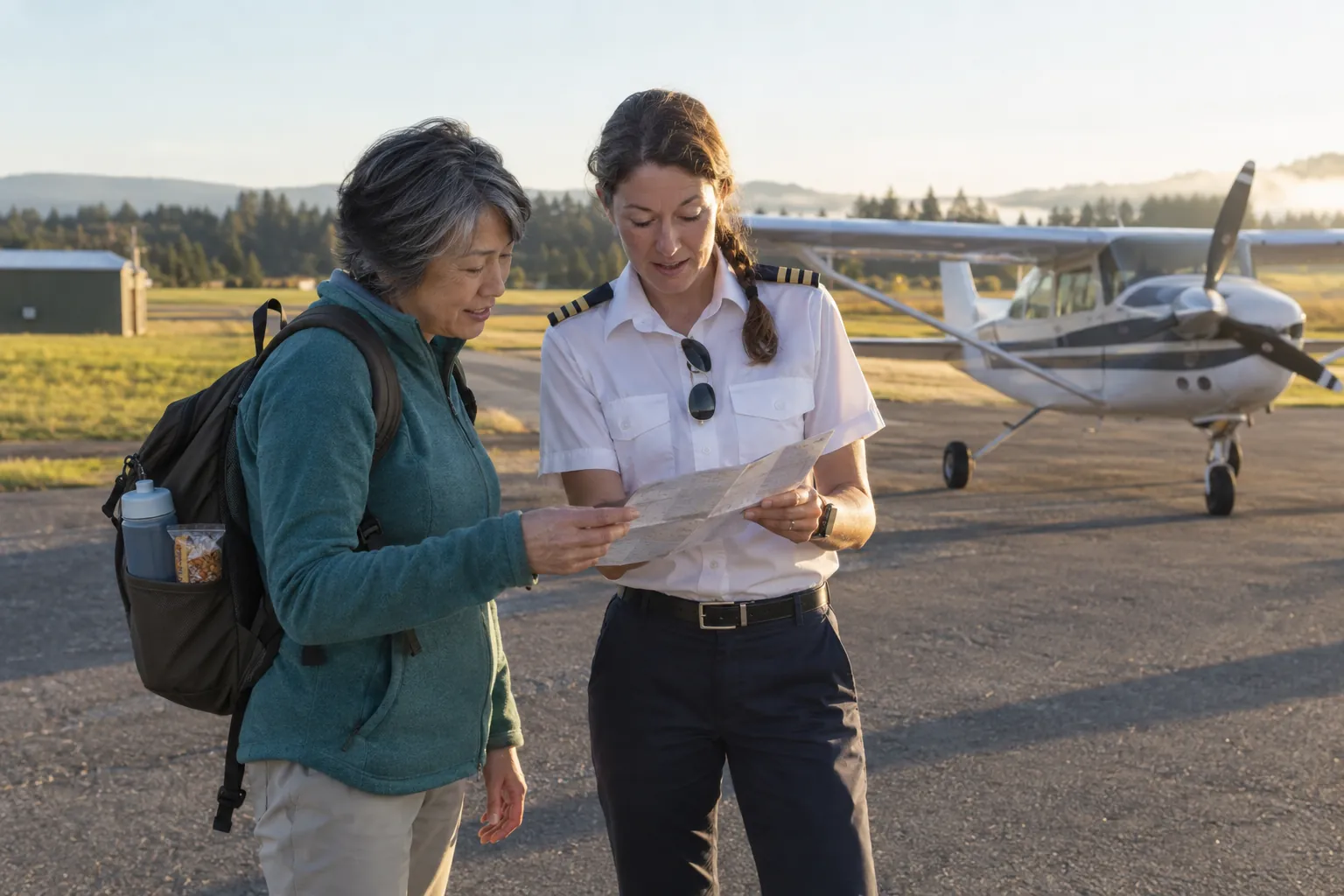
Ask about the front seat when booking: on small charters it is sometimes available, it has the best forward view, and seeing where the aircraft is about to go is the same protection a car's front seat gives. Wherever you sit, keep your eyes out at the horizon between sights rather than living in the camera, and tell the pilot you are prone so the banking over the sights gets flown gently.
Going on a sightseeing flight? Set it up first
A small plane is a headset trip: engine noise means you fly in the operator's intercom headset, not your own earbuds. Put the app on your phone for the drive to the airstrip and the minutes after landing. Dizzout is a drug-free app that plays precisely calibrated audio through any headphones you already own, with relief in about 90 seconds. Free to try.
Heading out on the water? Check the trip first
Check your tripFree, two minutes, and it scores the trip you actually have ahead.
Put it on your phone before you go
Free to try, no card needed. Or go straight to the App Store or Google Play.
 Scan to open on your phone
On a computer? Dizzout installs on your phone. Scan the code, or open dizzout.com/get on your phone and it'll take you straight to the right store.
Know someone who gets motion sick?
Send them the app that helps stop it, drug-free, in about 90 seconds, works with any headphones. Free to try.
What helps on this trip
- Book the earliest flight of the day. The smooth-air window is real, it is free, and it is the biggest single lever you have on this trip.
- Ask for the front seat if the operator can offer it, and take the window otherwise. Forward view is anticipation, and anticipation is protection.
- Ration the camera. The sights are why you came, but alternating a few seconds of viewfinder with a long look at the horizon keeps your reference frame.
- Eat light beforehand rather than nothing: pilots' guidance is consistent that flying on an empty stomach makes airsickness worse, not better.
- Small planes are a headset environment, so the app waits on the ground. Use Dizzout before you board and again after landing: it is drug-free sound therapy designed to help after symptoms start, and it works with any headphones.
For what actually holds up under testing, see the remedy verdicts, and for the water itself rather than the boat, how rough your sea usually is. Anything you take before travelling is a question for a pharmacist or doctor.
Frequently asked questions
Why are small plane flights so much bumpier in the afternoon?
Because the ground has been cooking all day. Sun-heated ground sheds rising pockets of warm air, cooler air sinks around them, and a light aircraft flying low through that alternation gets jostled with every one it crosses. Early in the morning the ground is still cool from the night and the air over it is calm, which is why pilots' own turbulence guidance and the scenic operators' scheduling both favour the first flights of the day.
Where should I sit on a small sightseeing plane?
As far forward as the operator will let you, with a window. On small charters the seat beside the pilot is sometimes offered, and it is worth asking for: the forward view lets you see the aircraft's next move the way a front-seat car passenger does. Weight and balance decides the final layout on small aircraft, so treat it as a request rather than a promise, and put your energy into the two levers that always work: the morning slot, and telling the pilot you are prone.
Other trips and excursions
Related
- Seasickness: the full guideWhy ships do it, the steadiest cabin, and a survival kit for the crossing.
- Is your sea rough? Sea by seaEvery crossing in one table, roughest first, each with a month-by-month page.
- Cruise ships & motion sicknessNamed ships sorted by how much they move, grouped by cruise line.
- Feeling it right now: the 90-second stepsThree steps over 90 seconds, with a timer that waits if you lock the screen.
Sources & further reading
- https://www.tripadvisor.com/ShowTopic-g28923-i349-k4628596-Small_plane_motion_sickness-Alaska.html
- https://www.pilotmall.com/blogs/news/ditch-the-rough-ride-how-to-avoid-turbulence-and-what-to-do-if-you-can-t
- https://pilotworkshop.com/tips/aviation_weather_bumps/
- https://www.pilotsofamerica.com/community/threads/how-to-know-if-ride-will-be-smooth-or-bumpy.78627/
- https://www.flyontario.com/blog/tips-prevent-motion-sickness-flying
Your next question, probably
Feeling rough right now?
The 60-second protocol: your eyes, the air and your breathing
If that is not your question:
Written from operator guidance, marine, aviation and specialist sources, and published passenger and participant reports as of September 2026. Risk levels describe a kind of trip, not any particular operator's craft, and conditions on the day matter more than the category does. Operator and brand names are trademarks of their respective owners; Dizzout is not affiliated with or endorsed by them. Sensitivity varies from person to person; this page is informational and not medical advice.